Vincenzo Rugeri
Cremona, 1663–1719
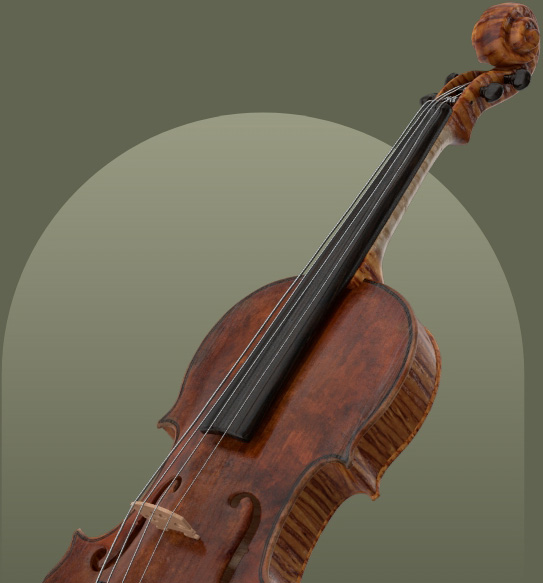
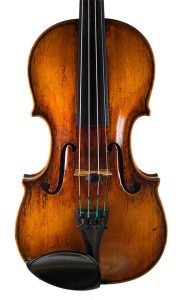
Vincenzo RUGERI (1663-1719) was a significant Cremonese violin maker, son and pupil of Francesco Rugeri. Although often considered a lesser craftsman than his father, he was instrumental in adopting the low Stradivari arching and retained the 'Grand Amati' model. He is known for his distinctive dark red varnish, which sometimes crazes, and also used yellow-brown and brown varnishes. His instruments, particularly his excellent violoncellos, feature gracefully cut scrolls and sound-holes, and fine wood. Vincenzo RUGERI used the appellation "il Per" on his labels and is believed to have potentially mentored Carlo Bergonzi. His legacy includes a viola owned by Beethoven and a Viola da Gamba in the Berlin Royal Collection, and he is considered the last violin maker of his family line.
Auction Price History
Highest auction price
14 results
| Type | Details | Auction house | Sold | Price |
|---|---|---|---|---|
| Labelled Francesco Rugeri detto il Per in Cremona 1695, scroll later possible by Vincenzo Sannino Lot 65 | — | October 2023 | £96,000est. £ 80,000-120,000 | |
| Unlabelled Lot 160 | — | June 2021 | £269,500est. £ 150,000-220,000 | |
| Labelled Andreas Guarneri Cremona, fecit Anno 169..., scroll probably by Giovanni Battista Ruggeri Lot 15 | — | October 2020 | £193,200est. £ 80,000-120,000 | |
| Labelled Francesco Ruger detto il per in, Cremona nell'anno 1675 Lot 70 | — | July 2020 | £346,960est. $ 250,000-400,000 | |
| Labelled Vincenzo Ruger detto il Per In Cremona 1705 Lot 213 | — | November 2017 | £224,418est. $ 250,000-400,000 | |
| Labelled Francesco Ruger detto il Per Cremona, 1686 Lot 217 | — | March 2015 | £140,000est. £ 150,000-220,000 | |
| Labelled Francesco Ruggieri ... Lot 294 | — | October 2014 | £218,240est. $ 300,000-500,000 | |
| Violin | 35.5 cm Cremona, 1717 (the head possibly later) | — | June 2011 | £102,000 |
| Violin | 35.6 cm Attributed to | — | May 2011 | £5,098 |
| Violin | 35.6 cm Cremona, 1695 c. Probably by | — | March 2011 | £133,250 |
| Violin | 35.4 cm Cremona, 1710 Probably by | — | October 2010 | £152,956 |
| Violin | 35.3 cm Cremona, 1690 c. | — | October 2007 | £34,100 |
| Violin | 1704 | — | November 2001 | £65,000 |
| Violin | 1692 c. | — | June 1988 | £13,200 |
No results match those filters.
Maker Overview
Life
Vincenzo RUGERI (1663-1719) was born in 1663 and died in 1719 in Cremona, Italy, as documented by John Dilworth in The Brompton's Book of Violin & Bow Makers. He was the son, pupil, and successor of Francesco Rugeri. Vincenzo RUGERI is considered a significant maker of the mid-classical period. While sources like John Dilworth and Henri Poidras suggest he was regarded as a lesser craftsman than his father, he made notable advancements in his craft. George Hart notes that he worked from about 1700 to 1730, while Karel Jalovec indicates his working period as 1690 to 1735, and Cecie Stainer suggests he worked in Cremona about 1700-1750, also mentioning he was said to have worked in Brescia. Vincenzo RUGERI also used the name "il Per" on his labels, likely to distinguish his work from that of the Rogeri of Brescia. John Dilworth suggests it is very likely that Carlo Bergonzi was a pupil of Vincenzo and may have taken over the workshop briefly after Vincenzo's death in 1719, as his two sons, Francesco and Carlo Giuseppe, were only 16 and 13 years old respectively at that time.
Characteristics
- Archings
- Vincenzo RUGERI made great advances in quickly adopting the low Stradivari arching, moving away from the slightly high, pinched Amatisé arch that characterized his father's work. Henri Poidras also describes his instruments as being slightly arched.
- Model
- He retained the 'Grand Amati' model.
- Varnish
- John Dilworth describes a distinctive dark red varnish used by Vincenzo RUGERI, which has a tendency to craze. This recipe appears in certain late Stradivari works and those of Carlo Bergonzi. Karel Jalovec mentions he applied a beautiful yellow-brown, brown, or red varnish, while Willibald Leo Lütgendorff and Henri Poidras specifically note a yellow-brown varnish.
- Workmanship
- His workmanship is generally described as less careful than his father's. John Dilworth states he was "regarded as a lesser craftsman than his father." Karel Jalovec notes that his instruments are "not characterized by particularly careful workmanship." Cecie Stainer describes his work as "somewhat rough and careless," and Willibald Leo Lütgendorff states his work was "weniger sorgfältig durchgeführt als die der übrigen Mitglieder der Familie" (less carefully executed than other family members). Henri Poidras adds that his work "has not the same value and cannot be compared with that of his father."
- Wood
- The wood used is generally fine, with only a few insignificant exceptions. Willibald Leo Lütgendorff also states his wood is good.
- Scrolls & Sound-holes
- Karel Jalovec notes that the scrolls and small sound-holes are gracefully cut. Henri Poidras describes the scroll as artistically carved.
- Purfling
- The carefully finished purfling is near the edge. Henri Poidras mentions the purfling is a little thick.
- Instruments
- He made many violoncellos, which are considered excellent by Karel Jalovec and Willibald Leo Lütgendorff. Cecie Stainer also notes he made many altos and violoncellos.
- Vincenzo Roger detto il Per
in Cremona, 1714John Dilworth - Vincenzo Rugieri detto il Per
Cremona, 1690John Dilworth
Influence and legacy
- Mentorship: Vincenzo RUGERI was a pupil of his father, Francesco Rugeri.
- Pupils: John Dilworth suggests it is very likely that Carlo Bergonzi was a pupil of Vincenzo RUGERI.
- Notable Owners: Ludwig van Beethoven possessed a viola made by Vincenzo RUGERI in 1690, which was a gift from Prince Lichnowsky.
- Museum Collections: A magnificent Viola da Gamba from 1702, featuring a vaulted back, is held in the Royal Collection of Old Musical Instruments in Berlin (No. 838).
- Family Continuity: Cecie Stainer identifies Vincenzo RUGERI as the last member of his family to make violins.
Further Information
- Labels: Labels used include "Vincenzo Roger detto il Per / in Cremona, 1714" and "Vincenzo Rugieri detto il Per / Cremona, 1690," as cited by John Dilworth. Cecie Stainer also provides examples such as "Vincenzo Rugier (or Ruger) detto il Per m Cremona, 1714" and a similar label dated 1720. George Hart also notes the use of "Vincenzo Ruger detto il Per in Cremona 17—".
- Value: Karel Jalovec indicates a price range of 65,000 to 80,000 Kc for his instruments.
Biographies
The overview above is drawn from the following published accounts. Read them in the original:
John Dilworth+
RUGERI, Vincenzo Born 1663, died 1719 Cremona Italy. Son, pupil, and successor of Francesco Rugeri, above. Significant maker of the mid-classical period. Although regarded as a lesser craftsman than his father, he made great advances in quickly adopting the low Stradivari arching over the slightly high pinched Amatisé arch which characterises Francesco’s work. He retained the ‘Grand Amati’ model, but used a distinctive dark red varnish which has a tendency to craze. This recipe seems to appear in certain late Stradivari works as well as those of Carlo Bergonzi. It seems very likely that Bergonzi was in fact a pupil of Vincenzo, and indeed may have taken over the workshop briefly after Vincenzo’s death in 1720 when his two sons Francesco and Carlo Giuseppe were only 16 and 13 years old respectively. Vincenzo Roger detto il Per / in Cremona, 1714 Vincenzo Rugieri detto il Per / Cremona, 1690
Cecie Stainer+
Son of Francesco Ruggeri. Was working in Cremona about 1700-50, is also said to have worked in Brescia. He made many altos and violoncellos, the work is somewhat rough and careless He was the last member of this family to make violins. He also used ” il Per ” on his labels, for the same reason probably—viz., to distinguish his work from that of the Rogeri of Brescia. Labels “Vincenzo Rugier (or Ruger) detto il Per m Cremona, 1714” ; a similar label is dated 1720.
George Hart+
Also uses the name “II Per.” Worked from about 1700 to 1730. He appears to have made many Violoncellos. Vincenzo Ruger detto il Per in Cremona 17—
Willibald Leo Lütgendorff+
Sohn des Francesco R. Wenn auch weniger bedeutend als der Vater, dessen Beinamen er gleichfalls annahm, so hat er doch einige sehr schöne Geigen, hauptsächlich aber Violoncelli gemacht. Sein Holz ist gut, der Lack gelbbraun. Eine prachtvolle Viola da Gamba von ihm aus dem Jahre 1702, die merkwürdiger Weise schon einen gewölbten Boden hat, besitzt die kgl. Sammlung alter Musikinstrumente in Berlin (No. 838). Im Allgemeinen ist seine Arbeit weniger sorgfältig durchgeführt als die der übrigen Mitglieder der Familie. Beethoven besass bekanntlich eine Viola von ihm (von 1690), ein Geschenk des Fürsten Lichnowsky.
Henri Poidras+
Son of Francesco Ruggieri. The work of this master has not the same value and cannot be compared with that of his father. Like his brother Giacinto, he used a yellow-brown varnish of good quality. His instruments are slightly arched. The scroll is artistically carved, the purfling a little thick.
Karel Jalovec+
Cremona. 1690 — 1735. Second son of Francesco Ruggeri. Instruments by him are not characterized by particularly careful workmanship, but inasmuch as their tone is concerned, they are good. The wood is, with but few insignificant exceptions, fine; the scrolls and the small sound-holes are gracefully cut; the carefully finished purfling is near the edge. His ‘cellos are excellent. He applied a beautiful yellow-brown, brown or red varnish. Price 65 — 80.000 Kc.
Sell your instrument with Amati
Get started by uploading photos of your instrument for our experts to review.
Sell your instrument with Amati
Get started by uploading photos of your instrument for our experts to review.