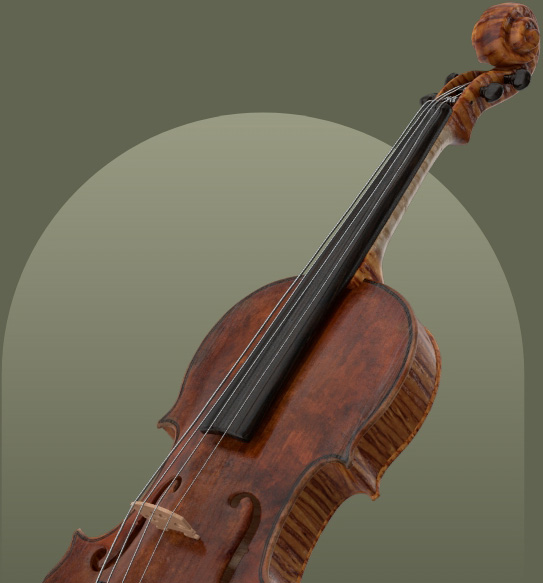
Antonio Siciliano
worked 1800
Antonio SICILIANO was a versatile instrument maker, active primarily in Venice and Bologna during the 17th century, though some sources cite activity as late as 1800 in Ancona. He was known for crafting instruments such as violas da gamba, lutes, theorbos, and chitarrone, often signing his works under variations of his name like "Antonius Bononiensis" or "Ciciliano." His instruments are noted for their quality and can be found in various European museums and collections.
Maker Overview
Life
Antonio SICILIANO was a maker active in Venice about 1600 in A Dictionary of Violin Makers. Karel Jalovec, in Italian violin makers, states he worked in Venice from 1630 to 1660 and was a native of Bologna. He sometimes referred to himself as "Antonius Bononiensis" or "Ciciliano" on his labels. Willibald Leo Lütgendorff, in Die Geigen- und Lautenmacher vom Mittelalter bis zur Gegenwart, notes that his surviving works reveal him to be a capable master. Sources contain conflicting information regarding his working period; John Dilworth, in The Brompton's Book of Violin & Bow Makers, cites a violin dated 1800 from Ancona, Italy, though other sources place his activity much earlier, around 1600 to 1660 in Venice and Bologna. Due to the variations in his name, Vidal mistakenly identified three different masters: Ant. Ciciliano, Ant. Siciliano, and Ant. Bononiensis, though these names all refer to the same individual.
Characteristics
- Skill
- Willibald Leo Lütgendorff describes him as a "tüchtigen Meister" (capable master), and Karel Jalovec characterizes him as a "dexterous and assiduous master".
- Instruments
- He produced a variety of instruments including tenors, bass violas da gamba, lutes, theorbos, violas, and chitarrone.
- Characteristics
- A gamba in the Museum des Lyceo filarmonico in Bologna features "abgerundeten Ecken" (rounded corners). A chitarrone in Berlin's royal collection (No. 722) is noted for its "zierlicher, geschmackvoller Rose" (elegant, tasteful rose). John Dilworth mentions a violin with a "large model with thick red-brown varnish," though this description is associated with the later 1800 date.
Biographies
The overview above is drawn from the following published accounts. Read them in the original:
John Dilworth+
SICILIANO, Antonio Worked circa. 1800 Ancona Italy. One violin dated 1800 cited in Prof. I. Billè Gli Strumenti ad arco e i loro autori quoted by Vannes. Henley describes a large model with thick red-brown varnish. Work presently unknown.
Cecie Stainer+
A maker in Venice about 1600. A tenor and a bass viola da gamba are in the Modena Museum, Vienna.
Willibald Leo Lütgendorff+
Arbeiten von ihm sind mehrfach erhalten, die ihn als tüchtigen Meister erkennen lassen. Er stammte aus Bologna und nannte sich daher zeitweise auch kurzweg »Antonius Bononiensis«, z. B. auf dem Zettel einer Gamba mit abgerundeten Ecken im Museum des Lyceo filarmonico in Bologna. In einer Bassviola da Gamba (in derselben Sammlung) schreibt er seinen Namen Ciciliano. Vidal macht drei verschiedene Meister daraus: 1. Ant. Ciciliano, 2. Ant. Siciliano, und 3. Ant. Bononiensis. Eine Chitarrone (rom. Theorbe) in Berlin (kgl. Sammlung) mit zierlicher, geschmackvoller Rose (No. 722). In der Sammlung des Grafen Correr in Venedig befindet sich eine Viola da Gamba von ihm. Eine Theorbe mit doppeltem Wirbelkasten bewahrt das städtische historische Museum in Frankfurt a./M. (1,95 m lang). De Piccolellis führt nur den Namen Siciliano ohne weitere Bemerkungen an.
Karel Jalovec+
Venice. 1630—1660. Native of Bologna who called himself also “Antonius Bononiensis” or, in other instruments Siciliano (or even Ciciliano). Because of these names, Vidal quoted three masters, though all three refer to the same man. A dexterous and assiduous master who made lutes, theorbos and violas.
Sell your instrument with Amati
Get started by uploading photos of your instrument for our experts to review.
Sell your instrument with Amati
Get started by uploading photos of your instrument for our experts to review.