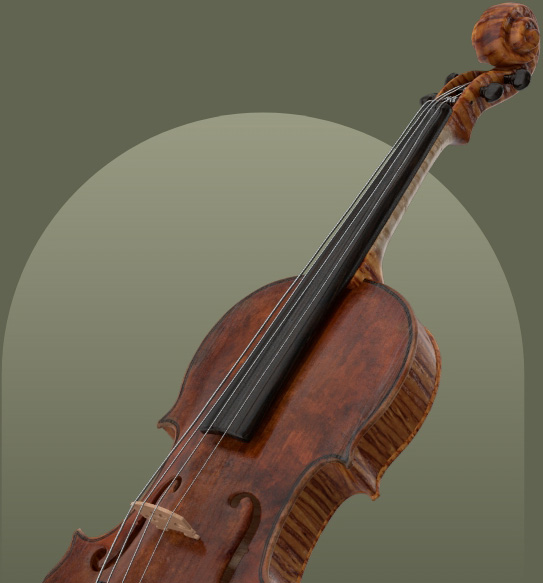
Gasparo Assalone
Maker Overview
History
Gasparo Assalone (circa 1695-1740) worked in Pesaro and Rome, Italy. The name 'Assalone' is possibly a corruption of 'Gasparo da Salò' and is considered highly dubious, according to John Dilworth. Cecie Stainer notes he was a maker in Rome in 1740. Willibald Leo Lütgendorff states he is believed to have worked around 1690 and lived until about 1740. Dilworth mentions that Henley gives the impression of several extant instruments in 'Amatise-Klotz' and 'Brescian' styles, but there is no other confirmation of this. Strocchi claims a treatise on instrument making was written by Assalone, which would be the earliest account of the craft if it exists, though it is not recorded in any other source.
Craft
- Model: His instruments are described as being made on the Amati pattern, but with too much arching, as noted by Cecie Stainer and Willibald Leo Lütgendorff.
- Workmanship: George Hart and Willibald Leo Lütgendorff describe the workmanship as rough or 'unsauber'.
- Varnish: The varnish is characterized as yellow and of poor quality by Cecie Stainer, and thin yellow by George Hart.
Further Information
- Labels: Boalch lists a clavichord bearing the label 'Gaspare Assalone fecit Romae Anno MCDDXXXII', which John Dilworth notes is a nonsensical date, possibly intended as 1632 or 1732. This label is considered a 19th-century fake by Franciolini. Willibald Leo Lütgendorff suggests that labels bearing his name are likely forgeries.
Summary
Gasparo Assalone was an Italian instrument maker, believed to have worked in Pesaro and Rome between approximately 1695 and 1740. His existence and the authenticity of instruments bearing his name are highly debated among historians, with some suggesting his name is a corruption of 'Gasparo da Salò' and that labels are likely forgeries. Instruments attributed to him are described as following the Amati pattern but with excessive arching, rough workmanship, and poor quality yellow varnish.
Biographies
John Dilworth
ASSALONE, Gasparo Worked circa. 1695-1740 Pesaro & Rome Italy. The name is possibly a corruption of ‘Gasparo da Salò’ and is highly dubious. Henley (as is often the case) gives the impression that there are several instruments extant of differing types: ‘Amatise-Klotz’ and ‘Brescian’ styles, but there is no other confirmation of this. Strocchi claims there is a treatise on instrument making written by this man, which would be the earliest account of the craft if it exists. It is not recorded in any other source. Boalch lists a clavichord bearing the label ‘Gaspare Assalone fecit Romae Anno MCDDXXXII’ which unfortunately is a nonsensical date, possibly intended to be 1632 or 1732, and considered a 19th century fake by Franciolini. [Henley]
Sell your instrument with Amati
Get started by uploading photos of your instrument for our experts to review.
Sell your instrument with Amati
Get started by uploading photos of your instrument for our experts to review.