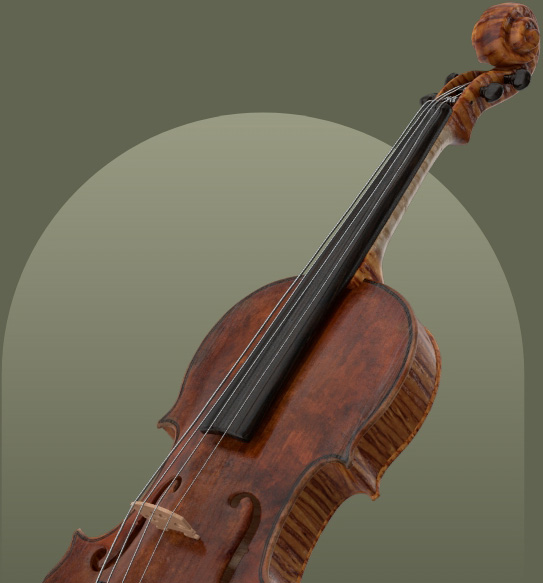
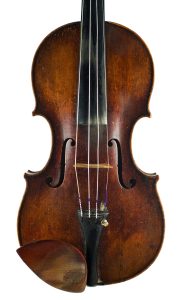
J. A. Co. Baader
Mittenwald, d. 1934
J. A. Co. Baader was a prominent and significant firm in Mittenwald, Germany, known for its extensive production of plucked and bowed instruments. Founded around 1770 or 1790, the company operated until at least 1934, with its factory located at 155 Obere Markstrasse. The firm, led by figures such as Johann Paul Baader and later Max Baader, was recognized for producing good quality instruments, including violins and zithers, at competitive prices, and exported them worldwide. Both Johann Paul and Max Baader held the esteemed title of Royal Warrant Holder. The company also played a crucial role in employing many local violin makers in Mittenwald.
Auction Price History
Highest auction price
26 results
| Type | Details | Auction house | Sold | Price |
|---|---|---|---|---|
| Violin | Labelled J. A. Baader ... Lot 637 | Gardiner Houlgate | December 2012 | £240est. £ 120-180 |
| Violin | Labelled J.A. Baader & Co, Mittenwald a Isar ..., of a golden amber brown colour Lot 133 | Bonhams | October 2012 | £1,375 |
| Violin | 35.4 cm | — | December 2010 | £456 |
| Violin | 36.3 cm Mittenwald, 1880 c | — | December 2009 | £1,177 |
| Violin | 31.0 cm Mittenwald, 19th C. Pochette | — | November 2008 | £599 |
| Violin | 35.9 cm Mittenwald, 1908 | — | October 2007 | £403 |
| Violin | 33.8 cm Child's size | — | May 2006 | £111 |
| Violin | — | March 2005 | £420 | |
| Violin | 1900 c. | — | February 2005 | £151 |
| Violin | 1926 c. | — | February 2005 | £656 |
| Violin | Mittenwald, 1930 | — | February 2004 | £397 |
| Violin | 1927 | — | May 2000 | £1,494 |
| Violin | 1926 | — | May 1999 | £246 |
| Violin | 1917 | — | May 1998 | £335 |
| Violin | 1850 c. | — | November 1993 | £706 |
| Violin | 1922 | — | April 1992 | £220 |
| Violin | 1920 c. | — | January 1992 | £440 |
| Violin | 1906 | — | June 1991 | £308 |
| Violin | 1900 c. 1/4 Size | — | March 1991 | £264 |
| Violin | 1910 | — | November 1990 | £660 |
| Violin | 1903 | — | December 1989 | £506 |
| Violin | 1897 | — | November 1989 | £1,980 |
| Violin | 1895 | — | March 1989 | £616 |
| Violin | 1888 c. | — | March 1989 | £440 |
| Violin | 1910 | — | November 1988 | £330 |
| Violin | 1910 c. | — | May 1988 | £99 |
No results match those filters.
Maker Overview
Life
J. A. Co. Baader was a prominent firm in Mittenwald, Germany. Sources contain conflicting information regarding its founding date;, the firm could trace its establishment to 1770, while a label cited by John Dilworth indicates a founding in 1790. The company's operations are noted by John Dilworth to have spanned from approximately 1790 until 1934. The firm's factory production was located at 155 Obere Markstrasse in Mittenwald. Willibald Leo Lütgendorff describes J. A. Co. Baader as the most significant firm in Mittenwald, alongside Neuner & Hornsteiner. The long-standing owner, Johann Paul Baader, passed away on June 24, 1899, at the age of 89. His successor was Max Baader, born on January 18, 1843., the firm was well-known for manufacturing violins at the lowest possible prices and exported instruments globally to regions including America, Switzerland, Russia, and England.
Characteristics
- Production
- The firm manufactured all forms of plucked and bowed instruments, offering various grades from machine-made to hand-crafted.
- Quality
- Willibald Leo Lütgendorff states that despite their unusually low prices, the violins produced were quite good, featuring beautiful wood and either oil or spirit varnish. The zithers made by the firm also met stringent requirements.
- Models
- Cecie Stainer mentions that some violins made after the Stainer pattern were exhibited in Munich in 1854, and these instruments were praised for their full and beautiful tone.
- Labeling
- The firm used labels bearing its company name.
- Koniglich Bayerische Hof-Saiteninstrumenten Fabrik
von J. A. Baader & Co. Besitzt Max Baader
Gegrundet 1790
in Mittenwald a
Isar. Bayern
No.. 18..John Dilworth
Influence and legacy
- Local Employment: A significant portion of the local violin makers in Mittenwald either worked for or were employed by J. A. Co. Baader.
- Training and Travel: Max Baader, who succeeded Johann Paul Baader, received his training in the family business and undertook further educational travels throughout Germany, England, and America.
- Skilled Workforce: Max Baader worked with highly skilled individuals.
- Royal Warrant Holder: Both Johann Paul Baader and his successor, Max Baader, held the title of Hoflieferant (Royal Warrant Holder), as documented by Willibald Leo Lütgendorff.
Further Information
- Address: The factory production was located at 155 Obere Markstrasse in Mittenwald, Germany, according to John Dilworth.
- Label Inscription: A label from the firm, cited by John Dilworth, reads: "Koniglich Bayerische Hof-Saiteninstrumenten Fabrik / von J. A. Baader & Co. Besitzt Max Baader / Gegrundet 1790 / in Mittenwald a /Isar. Bayern / No.. 18.."
- Exhibitions: Violins made by the firm were exhibited in Munich in 1854, as mentioned by Cecie Stainer.
Biographies
The overview above is drawn from the following published accounts. Read them in the original:
John Dilworth+
BAADER J. A. & Co. Worked circa. 1790 – died 1934 Mittenwald Germany. Factory production located at 155 Obere Markstrasse. Various grades from machine made to hand-crafted. All forms of plucked and bowed instruments manufactured. Koniglich Bayerische Hof-Saiteninstrumenten Fabrik / von J. A. Baader & Co. Besitzt Max Baader / Gegrundet 1790 / in Mittenwald a /Isar. Bayern / No.. 18..
Willibald Leo Lütgendorff+
Neben Neuner & Hornsteiner die bedeutendste Firma in Mittenwald, die
ihre Gründung in das Jahr 1770 setzen kann. Ein grosser Theil der Geigenmacher
des Ortes steht in Diensten dieser Firma oder arbeitet für dieselbe.
Der langjährige Inhaber Johann Paul Baader starb am 24. Juni 1899 im
89. Lebensjahre. Jetzt ist Max B., geb. 18. Jan. 1843, sein Nachfolger. Er
lernte im väterlichen Geschäfte, unternahm zu seiner weiteren Ausbildung
Reisen durch Deutschland, England und Amerika. Er ist, wie sein Vater, Hoflieferant
und arbeitet mit trefflich geschulten Leuten. Seine Geigen sind trotz
ihrer ungewöhnlichen Billigkeit recht gut, das Holz ist schön, ebenso der öl- oder
Spirituslack. Auch die Zithern, die bei ihm hergestellt werden, entsprechen
strengen Anforderungen. Er verwendet Zettel mit seiner Firma.
Cecie Stainer+
Well-known manufacturers of violins for the lowest possible prices, established in Mittenwald. They send instruments to all parts of the world, America, Switzerland, Russia, England &c. Some violins made after the Stainer pattern were exhibited in Münich, 1854, the tone was full and beautiful.
Sell your instrument with Amati
Get started by uploading photos of your instrument for our experts to review.
Sell your instrument with Amati
Get started by uploading photos of your instrument for our experts to review.