Q&A: Apollo’s Fire to light up the Proms
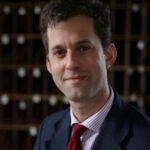
Conductor Jeannette Sorrell was once denied an audition because, she claims, a famous maestro told her the audience would never accept a woman as conductor. Her answer? ‘That’s OK – I want to work with period instruments.’ Now her own ensemble, Apollo’s Fire, is set for a Proms debut on 15 August. Go, Jeannette!
Jeannette, tell us about Apollo’s Fire. You’ve been going since 1992 – how did you first meet and form? And what was the influence from Roger Wright?
In August of 1991, I had just returned to the States after a year of studying harpsichord in Amsterdam with the great Gustav Leonhardt. I had run out of money, so I was house-sitting for a former professor in Oberlin, Ohio. Surprisingly, within two weeks of my arrival, I received a call from the artistic administrator of the Cleveland Orchestra – a British fellow named Roger Wright. He was in charge of their search for an assistant conductor.
I was surprised to receive a call about this, since I hadn’t applied for the job. (I had studied symphonic conducting at a pretty high level at the Tanglewood and Aspen Festivals, but I always knew that I wanted to conduct a period-instrument orchestra.) Roger explained that there was a list of the ’15 up-and-coming young conductors in the country’ and I was on this list, because people in the field had seen my work at Tanglewood and Aspen. The other 14 conductors on the list were young men who had all applied for the Cleveland Orchestra job – and all had been rejected by Christoph von Dohnányi, the music director. I was the only person left.
Roger invited me to an interview with Dohnányi, and if the interview went well, then they would find time with the orchestra for me to audition.
I thought I had nothing to lose, since I had no job anyway. Two days later, I drove to Cleveland for the interview. Roger was there along with Maestro von Dohnanyi. The Maestro chatted with me pleasantly about politics in Germany. Did not ask me a thing about music. Then after about 20 minutes, he said he was sorry to tell me there’s no point in having me audition with the orchestra, because the audience in Cleveland would never accept a woman as a conductor. And I replied, a bit defiantly, ‘That’s ok, sir, because I really want to work with period instruments.’
Afterwards, Roger took me aside, apologized on behalf of the orchestra, and said he loved early music and had always wanted to see a baroque orchestra happen in Cleveland. And he said, ‘I think you’re the person to do it. And if you like, I will help you.’ This was amazing because I had never met him before that day! But Roger is a man of his word. And nine months later, Apollo’s Fire made its debut.
In 2010 when we signed on with AVIE records, our CDs were released into the European market for the first time. And to our surprise, we got quite a bit of attention from the European press, especially in London. A few months later, we made our debut at the Wigmore Hall, and the concert was sold out and four critics were there. So, the last five years since then have seen quite a bit of international touring for us.
What would you say the driving forces of the ensemble are? What are you aiming for in terms of style, especially where the string playing is concerned?
I am quite obsessed with the concept of Affekt, which is what the music writers of the 17th and 18th centuries always talked about. The Affekt is the emotional mood of the music. The role of the performer was to move the “affections” (emotional moods) of the listeners. So when I audition players for Apollo’s Fire, I look for their expressive qualities onstage, in addition of course to a high technical level. In preparing a score, I ask myself what is the mood or rhetorical purpose of each phrase. Is it joyful, questioning, agitated, contemplative, fiery, is it bringing us to rest or building up tension, etc. And this is primarily what I speak about to the players in rehearsal. We are very focused on communication with the audience, and bringing them with us on the emotional journey.
How did you choose the name Apollo’s Fire?
Apollo was of course the Greek god of music, who carries the sun across the sky in his chariot. And he was very popular with baroque composers. There are many baroque works about Apollo. But honestly, the name was chosen by one of our early board members, and I hated it! I thought it sounded like a rock group. I’ve come to appreciate it eventually… We do like to play with fire, so in the end, the name suits us.
Your programmes on the whole seem to balance the popular and the unusual – how do you go about choosing them?
Yes, I’m quite conscious of this balance. I like to draw in new audiences by giving people a window into the music – a contextual theme, which might involve theatrical elements or dance or the history or politics of the time. I find that if people are given a contextual frame for the program, they love and understand the music, even if they’ve never heard the piece before.
My favorite pieces in the world are the Monteverdi Vespers, the Bach Passions, and Mozart. But I also love to arrange traditional folk music, and we have done a number of themed programs of traditional British Isles and early American folk music – presented in an historically informed/artistic aesthetic. Just as Mozart and Beethoven had to earn a living primarily by selling tickets to their concerts, so does Apollo’s Fire. I like that challenge. I think it’s healthy.
What does it mean to you to be playing at the Proms, and at Snape as well?
Of course the Proms festival is famous world-wide, and we are very excited to serve as ambassadors for Cleveland at such a prestigious event. I love the fact that the concerts are not expensive and are very accessible to people from all walks of life. Likewise, Aldeburgh is well known here amongst classical music lovers, thanks to the great legacy of Benjamin Britten. We made our debut at the Tanglewood festival earlier this summer (Tanglewood is thought of here as the ‘Proms of the USA’). We were sold out and the audience was wonderful – it was a very fun night. So playing at the Proms feels like the next natural step!
Your Proms programme again includes some well-known pieces and some more unusual repertoire. Tell us about Telemann’s version of Don Quixote?
Telemann was a wonderful composer of character pieces, and the Don Quixote suite is a charming evocation of Cervantes’ novel. There are depictions of the attack on the windmills and Sancho Panza being tossed in a blanket by rogues. We are a group that loves storytelling through music, so we have fun with this piece.
The Sephardic Journey CD you’re working on sounds most intriguing. How did you devise this and what can we expect from its music?
When the Sephardim were evicted from Spain in 1492, they dispersed to Italy, Turkey and North Africa. So their music took on the exotic colors of those very different cultures. Our Sephardic program evokes the joys and sorrows of daily life – it falls into sections called The Temple, Love & Romance, Feasting & Celebrations, and The Sabbath. The folk pieces are interwoven with pieces by the 17th-century Jewish baroque composer, Salamone Rossi.
I worked with a wonderful team for this program. The program features three soloists, our professional chamber choir, and a colorful band of instruments including oud, harp, and shawm as well as theorbo and strings. Soprano Nell Snaidas, who is deeply steeped in Sephardic music, served as co-director with me and Ladino pronunciation coach for the singers. And baritone Jeffrey Strauss, who grew up in the Jewish cantorial tradition, helped me choose and translate the Hebrew texts and served as Hebrew diction coach. My role was to arrange the music and shape the program, as well as conducting the ensemble.
The program premiered in Cleveland in 2014 in five sold-out concerts. The CD will be released in February 2016.
How do you like London?
This will be our third time playing in London, and we are thrilled that we are beginning to develop a relationship with the London audience. Our last London appearance, in May 2014 at St John’s Smith Square, resulted in us being chosen by the Daily Telegraph as one of the ‘5 Best Classical Music Moments of 2014.’ London has such a rich concert life, so we are honored to be a part of it!
First published in the Amati Magazine, August 2015.
Share this: