Ludwig Christian August Bausch
Leipzig, Naumburg, 1805–1871
Request an expert valuation or learn how our global auctions achieve the highest prices for your instruments.
Auction Price History
Highest auction price
23 results
| Type | Details | Auction house | Sold | Price |
|---|---|---|---|---|
| Viola Bow | Nickel mounted, round stick stamped to the bottom facet L. Bausch Lot 26 | Tarisio | October 2022 | £837est. € 800-1.200 |
| Violin Bow | Nickel mounted, round stick stamped L. Bausch. Leipzig Lot 16 | Brompton’s | January 2021 | £900est. £ 200-400 |
| Violin Bow | Silver mounted Lot 69 | Brompton’s | October 2020 | £1,140est. £ 500-800 |
| Violin | Two-piece back of faint medium curl, varnish of a light reddish colour on a golden ground Lot 75 | Gardiner Houlgate | October 2018 | £1,260est. £ 1,200-1,800 |
| Viola Bow | Nickel mounted, octagonal stick stamped L. Bausch. Leipzig Lot 157 | Brompton’s | December 2017 | £552est. £ 300-500 |
| Violin Bow | Gold mounted Lot 38 | Brompton’s | October 2017 | £2,640est. £ 2,500-3,500 |
| Violin Bow | Silver mounted, round stick stamped L. Bausch Lot 90 | Tarisio | February 2017 | £2,887est. $ 2,000-3,000 |
| Cello Bow | Gold mounted, round stick unstamped Lot 175 | Brompton’s | June 2016 | £2,160est. £ 2,000-3,000 |
| Violin Bow | Nickel mounted, round stick stamped L. BAUSCH. LEIPZIG, without tip Lot 212 | Skinners | May 2016 | £632est. $ 600-800 |
| Violin Bow | Nickel mounted, stamped L. Bausch, partially haired Lot 1248 | Gardiner Houlgate | March 2016 | £504est. £ 120-160 |
| Violin Bow | Silver mounted, round stick stamped L. Bausch Leipzig Lot 36 | Brompton’s | June 2015 | £2,280est. £ 400-600 |
| Violin Bow | Silver mounted, round stick stamped under the frog L Bausch Lot 172 | Brompton’s | June 2013 | £1,560est. £ 300-500 |
| Violin Bow | Nickel mounted, round stick stamped L. Bausch Leipzig Lot 146 | Brompton’s | March 2013 | £660est. £ 200-300 |
| Violin Bow | Silver mounted, octagonal stick bearing the maker's brand, ebony frog with Paris eye, silver button Lot 155 | Millon & Associés | October 2012 | £2,323est. € 2,000-2,500 |
| Violin Bow | S/E 56.5 g. | — | October 2011 | £3,564 |
| Violin | 35.5 cm Leipzig, 1860 c. Ascribed to & probably by | — | March 2011 | £4,200 |
| Violin Bow | S/E 54.5 g. without hair and fine winding | — | December 2009 | £3,808 |
| Violin Bow | S/E 56.5 g. Leipzig, 1850 c. without hair | — | October 2009 | £2,215 |
| Violin Bow | S/E 64.5 g. Germany, 1860 c. | — | October 2007 | £1,967 |
| Violin Bow | S/E 63.5 g. Leipzip, 1850 c. | — | February 2006 | £1,680 |
| Cello Bow | S/E 76 g. | — | May 2005 | £1,560 |
| Violin Bow | S/E 58.5 g. | — | February 2005 | £1,920 |
| Viola Bow | S/E 66 g. | — | March 2002 | £1,800 |
No results match those filters.
Maker Overview
Life
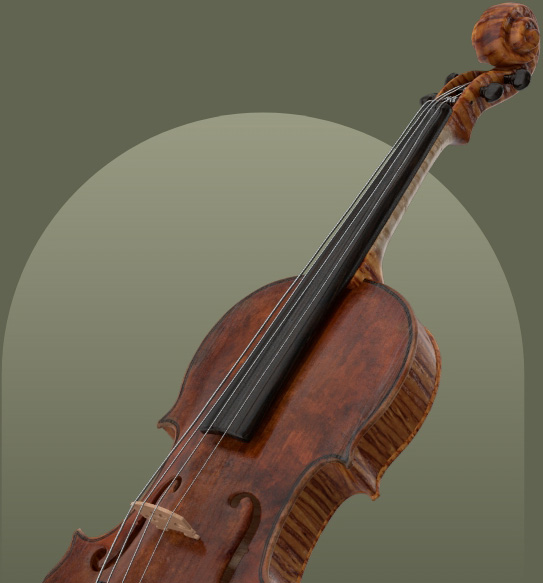
Ludwig Christian August Bausch (1805-1871) was born on January 15, 1805, in Naumburg and passed away on May 26, 1871, in Leipzig, Germany. He was a pupil of B. Fritzsche in Dresden from 1818 to 1822. Following his apprenticeship, he worked for Engleder in Munich in 1822. Bausch established his independent workshop in Dresden from 1826 to 1828, then moved to Dessau where he worked from 1828 to 1839. His career continued in Leipzig from 1839 to 1860, followed by a period in Wiesbaden in 1861, and a return to Leipzig in 1863. Willibald Leo Lütgendorff states that he became the ducal Nassau court instrument maker in Wiesbaden on November 1, 1861. In his early career, Bausch produced a few violins as 'rather ordinary' and influenced by J. B. Fritsch. He also made guitars with the assistance of J. Schmirler. From 1836, encouraged by the renowned musician Spohr, Bausch dedicated himself primarily to bow making.
Characteristics
- Instruments
- In his early career, Ludwig Christian August Bausch made a few violins, which John Dilworth describes as 'rather ordinary' and influenced by J. B. Fritsch. He also produced guitars with the assistance of J. Schmirler.
- Bow Making
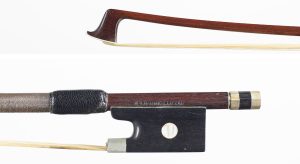
- From 1836, encouraged by Spohr, Bausch dedicated himself to bow making, achieving significant success and admiration for his work. His bows were crafted in the style of Tourte, earning him the epithet 'German Tourte,' as noted by both John Dilworth and Willibald Leo Lütgendorff.
- Characteristics
- John Dilworth describes his bows as having dark brown, usually round sticks, which were sometimes a little long. They are considered to be of very fine quality and are much appreciated. Lütgendorff adds that his bows and bridges are still imitated today as exemplary.
- Supplies
- It is thought that Bausch supplied bows to Kittel.
- Ludwig Bausch
in Neustedt, Dresden
Ao.1820John Dilworth - No. 6 Ludwig Bausch
Neustedt, Dresden
1825John Dilworth
Influence and legacy
- Mentorship: Ludwig Christian August Bausch was a pupil of B. Fritzsche in Dresden, a fact corroborated by John Dilworth, Willibald Leo Lütgendorff, and Cecie Stainer. He also worked for Engleder in Munich.
- Artistic Influence: His violins were made under the influence of J. B. Fritsch.
- Encouragement: The renowned musician Spohr encouraged Bausch to dedicate himself to bow making from 1836.
- Stylistic Inspiration: Bausch's bow making was significantly influenced by the style of Tourte.
- Recognition: Ludwig Christian August Bausch was highly successful and much admired for his bow making, earning him the title of the 'German Tourte,' a distinction noted by John Dilworth and Willibald Leo Lütgendorff.
- Awards: He received a silver medal at the Dresden Exhibition in 1840.
- Official Appointment: On November 1, 1861, he became the ducal Nassau court instrument maker in Wiesbaden.
- Enduring Impact: John Dilworth notes that Bausch's name has become generic and is now found branded on thousands of factory-produced bows, indicating the widespread recognition and influence of his work.
Further Information
- Workshop Locations: Ludwig Christian August Bausch established his independent workshop in Dresden (1826-1828), Dessau (1828-1839), Leipzig (1839-1860, 1863), and Wiesbaden (1861).
- Branding: Authentic examples of his bows are branded 'BAUSCH LEIPZIG' or 'L. BAUSCH LEIPZIG.'
- Violin Labels: His manuscript violin labels include 'Ludwig Bausch / in Neustedt, Dresden / Ao.1820. No. 6' and 'Ludwig Bausch / Neustedt, Dresden / 1825.'
Biographies
The overview above is drawn from the following published accounts. Read them in the original:
John Dilworth+
BAUSCH, Ludwig Christian August Born 1805 Naumburg, died 1871 Leipzig Germany. Bow maker. Pupil of Fritzsche in Dresden 1818-1822. Worked for Engleder in Munich 1822. Established independently in Dresden 1826-1828, Dessau 1828-1839, Leipzig 1839-1860, Wiesbaden 1861, and Leipzig 1863. A few rather ordinary violins under the influence of J. B. Fritsch. Also made guitars in early career, with assistance from J. Schmirler. From 1836, encouraged by Spohr, dedicated to bow making. Very successful and much admired work in the style of Tourte, becoming known himself as the ‘German Tourte’. Thought to have supplied bows to Kittel. Dark brown, usually round, sticks, sometimes a little long. Very fine quality and much appreciated. Silver medal at Dresden Exhibition 1840. The name has become generic and is now found branded on thousands of factory produced bows. Authentic examples branded: BAUSCH LEIPZIG or L. BAUSCH LEIPZIG. Manuscript violin labels: Ludwig Bausch / in Neustedt, Dresden / Ao.1820. No. 6 Ludwig Bausch / Neustedt, Dresden / 1825
Cecie Stainer+
b Jan. 15, 1805, at Naumburg; d. May 26, 1871, at Leipzig. Pupil of B. Fritsche in Dresden, then settled in Leipzig as a violin bow maker. Other members of the firm were Ludwig Bausch and Otto Bausch (b. 1841). Bausch was a celebrated maker of violin bows in Dessau. It is said that Spohr gave him advice as to the construction of the bow. 1840, he received a silver medal at the Dresden Exhibition.
Willibald Leo Lütgendorff+
Schüler von B. Fritzsche in Dresden. Hauptsächlich als Bogenmacher berühmt
Er liess sich zuerst in Dresden, später in Dessau nieder, ging dann nach
Leipzig und am 1. Nov. 1861 nach Wiesbaden, wo er herzoglich nassauischer
Hofinstrumentenmacher wurde. Seine Bögen sowohl als seine Stege werden
noch heute als mustergültig nachgeahmt, er wurde gerne der deutsche »Tourte«
genannt.
Sell your instrument with Amati
Get started by uploading photos of your instrument for our experts to review.
Sell your instrument with Amati
Get started by uploading photos of your instrument for our experts to review.