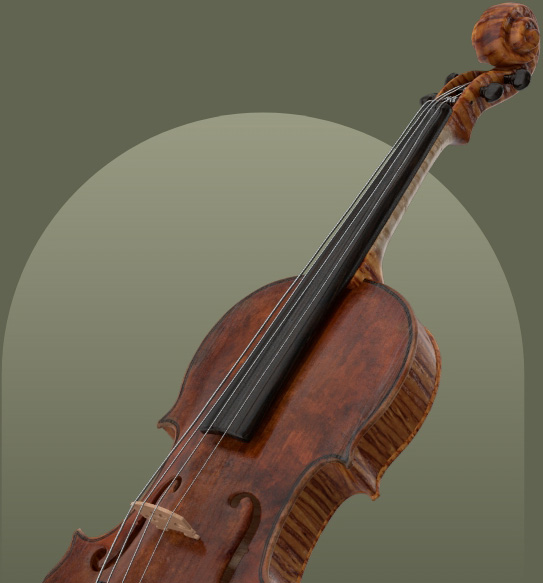
Bolles
Bolles was a highly esteemed English maker of viols and lutes during the 17th century. His instruments, particularly his bass viols, were renowned for their quality, with one famously valued at £100 by John Mace in his 1676 work, Musick's Monument. Despite his significant reputation, no instruments definitively attributed to Bolles are known to exist today.
Request an expert valuation or learn how our global auctions achieve the highest prices for your instruments.
Maker Overview
Life
Bolles was an early English viol maker active in the 17th century in the UK. His reputation is primarily known through John Mace's Musick's Monument, published in 1676, which states that viols by Bolles were among "the highest in esteem" and that a bass viol of his was valued at £100. Mace further noted that "these were old," implying Bolles's activity predated 1676. in The Brompton's Book of Violin & Bow Makers, the mention of Ross, or Rose, father and son, active around 1530-1600, suggests Bolles was of a similar period. William Meredith Morris, in British Violin Makers, also highlights Mace's statement regarding the £100 valuation of a bass viol. Cecie Stainer's A Dictionary of Violin Makers places him as one of the earliest makers of lutes and viols in London in the beginning of the 17th century. Willibald Leo Lütgendorff's Die Geigen- und Lautenmacher vom Mittelalter bis zur Gegenwart also identifies him as one of the most famous English viol and lute makers of his time, noting the £100 valuation in 1676. Despite his renown, no instruments by Bolles are currently known to exist. A letter from Arthur Hill in 1937 mentions a viol by "Boles of Oxford" with an attributed date of 1675, though this may refer to a different maker or be a later attribution. Sir Robert Bolles of Scampton, Lincolnshire (1619-1663), was a significant collector of viols, and his son, Robert (II), received music instruction from the renowned viol player Christopher Simpson; however, any direct connection between this family and the viol maker Bolles mentioned by Mace remains speculative.
Characteristics
- Instrument Type
- Bolles was a celebrated maker of viols and lutes.
- Reputation
- His viols were considered "the highest in esteem" during his time in 1676.
- Valuation
- A bass viol made by Bolles was known to be valued at £100, a significant sum for the period.
- Surviving Instruments
- Despite his historical renown, no instruments attributed to Bolles are currently known to have survived.
Biographies
The overview above is drawn from the following published accounts. Read them in the original:
John Dilworth+
BOLLES 17th century UK. Early English viol maker known only from Mace’s Musick’s Monument (1676) which states (of viols) ‘the highest in esteem are Bolles and Ross’ and that a bass viol of Bolles was valued at £100. He goes on to say that ‘these were old’; Ross, or Rose, father and son, were active c.1530-1600, implying that Bolles was of similar period. No instruments currently known and all references to the name come from the 17th century. A letter from Arthur Hill in 1937 mentions a viol by Boles of Oxford, to which he attributes a date of 1675. Sir Robert Bolles of Scampton, Lincolnshire (1619-1663) was a significant collector of viols, and his son Robert (II) was given instruction in music by the renowned viol player Christopher Simpson, though any connection with Mace’s viol maker remains speculative. [Fleming]
William Meredith Morris+
A celebrated maker of lutes and viols, and the most celebrated, judging from a statement in Mace’s ” Musick’s Monument,” which conveys the information that the writer had seen a bass of his valued at £100.
Cecie Stainer+
One of the earliest makers of lutes and viols in London in the beginning of the 17th century. Mace (” Musick’s Monument,” publ. 1676), speaking of a good “chest of viols, ‘ says : ” Yet the highest in esteem are Bolles . . . (one Bass of Bolles’s I have known valued at £100) . . . these were old &c.”
Willibald Leo Lütgendorff+
Th. Mace bezeichnet ihn als einen der berühmtesten englischen
Violen- und Lautenmacher seiner Zeit und schätzt den Werth einer
Bassviola dieses Meisters schon damals (1676) auf 100 £. Sehr
bedauerlicher Weise scheinen sich gerade von ihm keinerlei Arbeiten erhalten zu haben.
Sell your instrument with Amati
Get started by uploading photos of your instrument for our experts to review.
Sell your instrument with Amati
Get started by uploading photos of your instrument for our experts to review.