Thomas Cahusac
Auction price history
Highest auction price
£5,263
| Type | Details | Sold | Price |
|---|---|---|---|
| Violin | 35.6 cm London, 1795 c. | November 2011 | £5,263 |
| Violin | 35.5 cm cirac 1780 (restorations) [Attributed to] | June 2011 | £720 |
| Violin | 35.5 cm London, 1782 | June 2011 | £2,880 |
| Violin | 35.3 cm London, 1790 c. [Probably by] | March 2008 | £2,375 |
| Violin | London, 1798 | May 2005 | £1,185 |
| Violin | 1790 | February 2001 | £920 |
| Violin | 17-- | May 1997 | £220 |
| Violin | 1789 | June 1996 | £1,610 |
| Violin | 1798 | October 1990 | £506 |
| Violin | 1800 c. | November 1988 | £770 |
| Violin | 1796 | September 1987 | £462 |
| Violin | 1798 | June 1987 | £385 |
| Violin | 1795 | May 1986 | £220 |
| Violin | 1798 | September 1984 | £308 |
| Cello | 17-- | June 1984 | £906 |
| Violin | 17-- | November 1982 | £496 |
Maker Overview
History
Thomas Cahusac (1755-1798) worked from 1755 and died in 1798 in London, UK. He was a music publisher and musical instrument maker, operating from the sign of the "Two Flutes and Violin" in the Strand, near St. Clement's Church. Of Huguenot extraction, his business ran from 1755 to 1798. According to John Dilworth, he advertised flutes, violins, viols, and various keyboard and other instruments, alongside sheet music. His obituary notice described him as 'the oldest musical instrument maker in and near London'. He worked in association with Benjamin Banks from 1780 to 1792, supplying flutes to Banks' Salisbury shop and selling Banks' violins in London. His sons, Thomas Jr. and William Maurice, also established an independent business nearby at 196 Strand. Thomas Jr. married Banks' daughter Anne and worked briefly in Minster Street, Reading, Berkshire, before returning to the 196 Strand address in 1789 and later being found at 41 Haymarket in 1801. The business continued as 'Cahusac & Sons' until 1816.
Craft
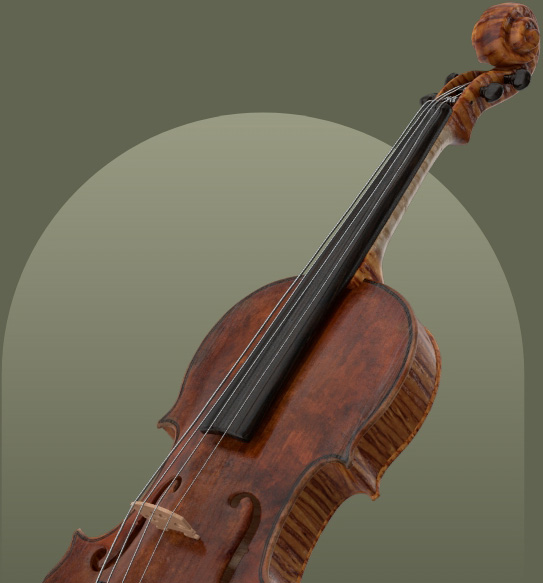
- Workmanship: Violins produced by Thomas Cahusac are generally considered of trade quality, with some examples being quite eccentric, such as one having the upper bouts broader than the lower, as noted by John Dilworth.
- Materials and Finish: Instruments are often made without purfling from cheaper materials and feature thin spirit varnish.
- Archings: They frequently exhibit high, exaggerated Stainer archings.
- Quality Variation: Despite the general trade quality, there are superior instruments, indicating that good craftsmen were employed by the firm at various times.
- Styling: Typical of London fashion, his instruments are generally of Amati or Stainer form with dark varnish.
- German Style: According to Willibald Leo Lütgendorff, Thomas Cahusac adhered to the German style; his model is highly arched, and while the purfling is absent, his amber-brown varnish is beautiful.
- Copies: Saxon copies labeled Cahusac are dated up to 1820, with Paris given as the origin.
Influence
- Collaboration: Thomas Cahusac worked in association with Benjamin Banks from 1780 to 1792, supplying flutes to Banks' Salisbury shop and selling Banks' violins in London, as detailed by John Dilworth.
- Family Ties: His son, Thomas Jr., married Benjamin Banks' daughter Anne.
- Association with Banks' Sons: Willibald Leo Lütgendorff states that he worked almost exclusively with Banks' sons. William Meredith Morris notes that nothing is known of him except his association with the sons of Benjamin Banks for some time. Cecie Stainer also confirms he worked in association with the sons of Banks in London about 1788.
Legacy
- Business Continuation: The business continued under the name 'Cahusac & Sons' until 1816.
- Son's Specialization: According to Willibald Leo Lütgendorff, his son ('Cahusac Son') became known as a maker of oboes.
Further Information
- Workshop Locations: Thomas Cahusac operated from the sign of the "Two Flutes and Violin" in the Strand, near St. Clement's Church. His sons established an independent business at 196 Strand. Thomas Jr. worked briefly in Minster Street, Reading, Berkshire, before returning to 196 Strand and later being found at 41 Haymarket in 1801.
- Labels and Inscriptions: Examples of labels include "Cahusac / No.76 near St. Clement's Church Strand. London. / 1795" and "Thos Cahusac / Flute Maker / at the Two Flutes and Violin / Opposite to St Clements Church in ye Strand / London No. 196 Opposite St. Clement's Church Strand 17 London 96".
Summary
Thomas Cahusac (1755-1798) was a notable London-based music publisher and musical instrument maker of Huguenot extraction, operating from the "Two Flutes and Violin" in the Strand from 1755 until his death. Renowned for producing a variety of instruments, including flutes, violins, and viols, he was recognized as 'the oldest musical instrument maker in and near London' at the time of his passing. His violins, often of trade quality, featured distinctive Stainer archings and dark varnish, though superior examples also exist. Cahusac maintained a significant association with Benjamin Banks, exchanging instruments between their respective shops. His business legacy continued through his sons as 'Cahusac & Sons' until 1816.
Biographies
John Dilworth
CAHUSAC, Thomas Worked from 1755, died 1798 London UK. Music publisher and musical instrument maker at the sign of the ‘Two Flutes and Violin’ in the Strand, near St. Clement’s Church. Of Hugenot extraction. In business from 1755-1798. Advertised flutes, violins, viols, and various keyboard and other instruments, alongside sheet music. His obituary notice described him as ‘the oldest musical instrument maker in and near London’. Worked in association with Benjamin Banks 1780-1792, supplying flutes to Banks’ Salisbury shop, and selling Banks’ violins in London. Sons Thomas and William Maurice also established an independent business nearby at 196 Strand. Thomas jr. married Banks’ daughter Anne, and worked briefly in Minster Street, Reading, Berkshire before returning to the 196 Strand address in 1789 and is found at 41 Haymarket in 1801. The business continued as ‘Cahusac & Sons’ until 1816. Violins are generally of no more than trade quality, some quite eccentric, one example having the upper bouts broader than the lower. Generally they are made without purfling from cheaper materials and thin spirit varnish and often high, exaggerated Stainer archings. There are superior instruments however, and good craftsmen were employed by the firm at various times. Typical of London fashion, they are generally of Amati or Stainer form with dark varnish. Saxon copies labelled Cahusac are dated up to 1820, with Paris given as the origin. Cahusac / No.76 near St. Clement’s Church Strand. London. / 1795 Thos Cahusac / Flute Maker / at the Two Flutes and Violin / Opposite to St Clements Church in ye Strand / London No. 196 Opposite St. Clement’s Church Strand 17 London 96
Sell your instrument with Amati
Get started by uploading photos of your instrument for our experts to review.
Sell your instrument with Amati
Get started by uploading photos of your instrument for our experts to review.