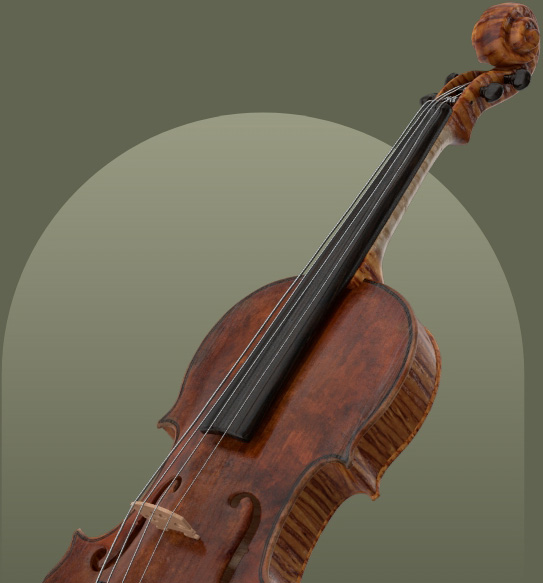
Ambroise De Comble
Tournai Mid, Tournay, Tourney
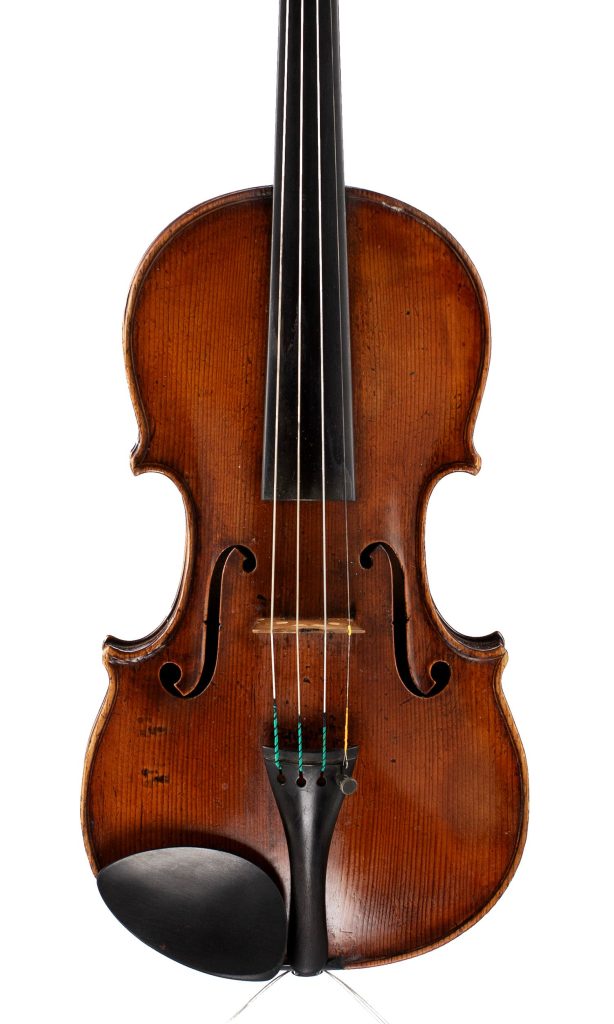
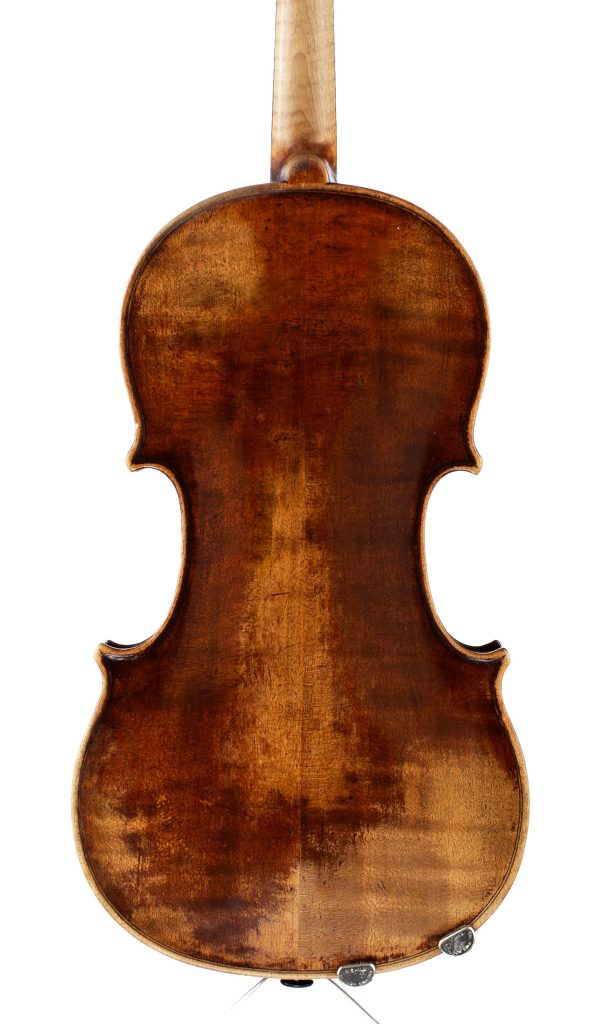
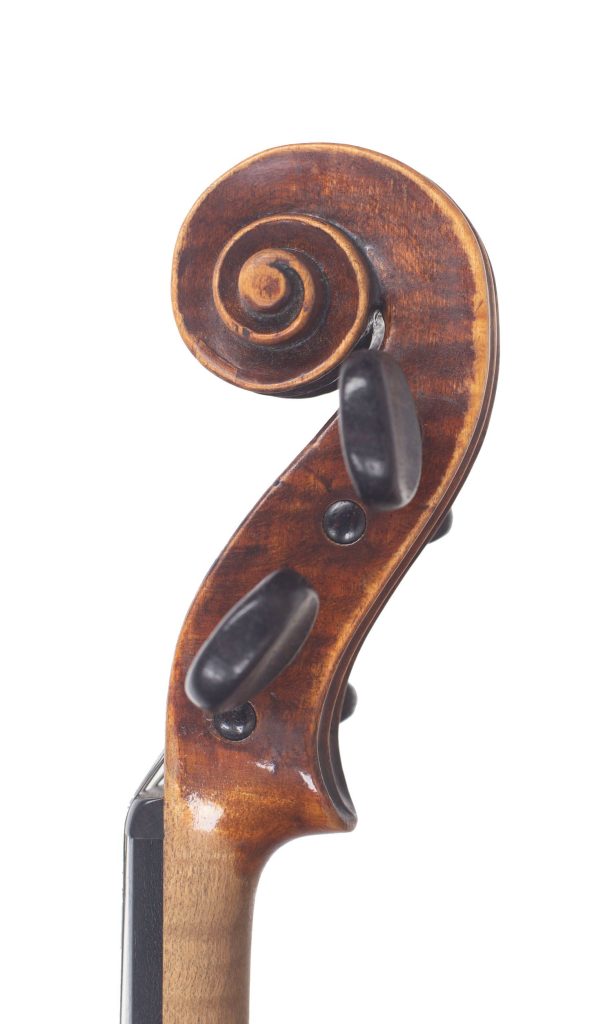
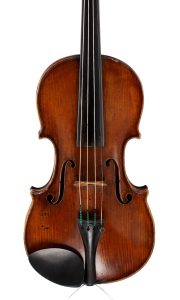
Ambroise De Comble was a prominent Flemish violin maker from Tournai, Belgium, active from the late 17th century until around 1760. Although some sources claim he was a pupil of Antonio Stradivari, this is disputed by others, who point to his distinct working style and timeline. De Comble's instruments, which are now scarce, were built on Italian models, often exhibiting a large pattern and flat arching. His varnish was typically a rich red or red-brown, and his instruments are known for their full, rich tone, despite some inconsistencies in workmanship and wood selection.
Auction Price History
Highest auction price
21 results
| Type | Details | Auction house | Sold | Price |
|---|---|---|---|---|
| Violin | Unlabelled, head possibly later Lot 91 | Tarisio | May 2024 | £15,477est. € 12.000-18.000 |
| Cello | F-holes reblocked and trimmed Lot 112 | Vichy | November 2023 | £12,458est. € 5.000-6.000 |
| Small Cello | Labelled Fait a Tournay par Ambroise de Comble 1767 Lot 17 | Tarisio | March 2023 | £41,833est. € 40.000-60.000 |
| Violin | Labelled Fait a Tournay par Ambroise de Comble, 1754 Lot 114 | Tarisio | March 2023 | £11,504est. € 20.000-30.000 |
| Small Cello | 3/4 size violoncello Lot 124 | Vichy | December 2022 | £4,285est. € 4.000-5.000 |
| Small Cello | Labelled Fait a Tournay par Ambroise De Comble 1764 Lot 22 | Tarisio | October 2022 | £36,617est. € 25.000-40.000 |
| Violin | Unlabelled Lot 24 | Tarisio | October 2022 | £28,800est. £ 25,000-40,000 |
| Violin | Labelled Fait a Tournay par Ambroise de Comble, 1753 Lot 120 | Tarisio | April 2022 | £19,844est. € 20.000-30.000 |
| Violin | cleats on back center seam Lot 140 | Skinners | November 2019 | £3,113est. $ 2,000-3,000 |
| Violin | 36.2 cm Tournai, Mid-18th C. | — | February 2007 | £9,600 |
| Violin | Tournay, 1800 c. | — | December 2005 | £5,588 |
| Violin | 1760 | — | October 2003 | £8,319 |
| Violin | 1796 | — | December 2002 | £9,459 |
| Violin | 1757 | — | October 1998 | £4,600 |
| Cello | 1762 | — | May 1995 | £2,185 |
| Violin | 1760 c. | — | March 1992 | £2,750 |
| Violin | 1760 c. | — | November 1991 | £4,620 |
| Violin | 1770 c. | — | September 1991 | £7,920 |
| Cello | 69.9 cm 1850 c. | — | November 1990 | £2,090 |
| Violin | 1750 | — | April 1989 | £320 |
| Violin | 1772 | — | June 1984 | £2,444 |
No results match those filters.
Maker Overview
Life
Ambroise De Comble was a renowned Flemish violin maker, born in Tournai, Belgium, towards the end of the 17th century, and active until approximately 1760. He hailed from an old family of musicians and was himself a musician, possibly traveling to Italy as a scholarship recipient in his youth in Die Geigen- und Lautenmacher vom Mittelalter bis zur Gegenwart. Sources contain conflicting information about his training; while George Hart and Cecie Stainer mention the claim that he was a pupil of Antonio Stradivari in Cremona, Lütgendorff refutes this, citing De Comble's work and verifiable lifespan as counter-evidence. His instruments are now considered scarce.
Characteristics
- Models
- Ambroise De Comble built instruments following Italian models, often described as having a large pattern and a flat model. His violins and altos generally followed the Stradivari pattern, often well arched, with thick edges and corners. His violoncellos were frequently made on a small pattern, more arched than his violins.
- Wood
- While Lütgendorff notes that De Comble was sometimes careless in his choice of wood, Stainer describes his instruments as being made of excellent wood.
- Workmanship
- Sources present varied descriptions of his workmanship. Hart notes that his instruments are inclined to roughness and are not always pleasing to the eye, with details sometimes neglected. Lütgendorff also describes his work as 'unsauber' (unclean) and states he neglected 'Nebensachen' (secondary matters). Conversely, Hart also states the workmanship is skillful, and Stainer describes his instruments as 'extremely well made'.
- Varnish
- His varnish was generally considered good, often a rich red or a beautiful red-brown color, sometimes described as a little dry by Stainer, but also as soft and flexible by Hart. Lütgendorff notes he often applied a yellow varnish to the top and a red varnish to the back and sides.
- Purfling
- The purfling on his instruments was typically very narrow and fine.
- Tone
- The tone of his instruments is almost always described as full and good, large, and rich, often possessing a quality admired in Italian works. Stainer notes the tone is equally good in all strings but may lack brilliancy.
- Labels
- He used labels such as "Ambroise De Comble a Tournay, 1741" and manuscript labels like "Fait a Tournay par Ambroise de Comble, 1750", with similar labels dated 1753 and 176-.
Influence and legacy
- Mentorship: It was claimed by some, including Fétis, that Ambroise De Comble was a pupil of Antonio Stradivari in Cremona. However, Willibald Leo Lütgendorff disputes this, citing discrepancies in De Comble's working style and known timeline. George Hart suggests that, judging by the character of the work and varnish, it is not unlikely he received instruction from the great Cremonese maker.
- Stylistic Influence: Despite the debate over direct mentorship, De Comble's instruments were built after Italian models, and his forms show a resemblance to Stradivari's instruments made after 1732, suggesting he copied these later instruments.
- Collections: Instruments by Ambroise De Comble have been noted in significant collections. Violins and violoncellos were listed in the Selhof's auction catalog in The Hague in 1759. A violoncello from the Snoeck collection (No. 587) is housed in Berlin. Prince Caraman-Chimay once owned a string quartet made by him.
- Scarcity: His instruments are now considered scarce.
Biographies
The overview above is drawn from the following published accounts. Read them in the original:
George Hart+
It is said that he worked in the shop of Antonio Stradivari, and judging Fait a Tournay par from the character of Ambroise de Comble, 1750 the work, together with that of the varnish, it is not unlikely that he did receive instructions from the great Cremonese maker. The varnish is very like Italian; the colour often a rich red, with much body. His instruments are inclined to roughness as regards workmanship, and therefore are not pleasing to the eye. There is a resemblance to the instruments of Stradivari after 1732 in form though not in workmanship, and he would therefore seem to have copied those late instruments. They may be described as of large pattern, flat model, and having an abundance of wood. They are deserving of attention both from the professor and the amateur, the workmanship being skilful and the material excellent. The tone is large, and frequently possesses the richness so much admired in the works of the Italians. This quality is traceable to the soft and flexible nature of the superior varnish with which these instruments are covered. Several Violas and Violoncellos are extant which were made by De Comble.
Cecie Stainer+
b at Tournai, Belgium, towards the end of the 17th century. He worked till about 1760. Said to have been in his youth a pupil of Antonio Stradivari at Cremona. His instruments are now scarce. They are extremely well made, of excellent wood, and have a rich full tone, equally good in all the strings, but lacking in brilliancy; the varnish, generally red, is a little dry; the purfling is always in extremely narrow fine threads.
His violins and altos generally follow the Stradivari pattern, well arched, edges and corners rather thick, the purfling very narrow, and the varnish, a beautiful red-brown colour, of good quality.
His violoncellos are especially well made, generally on a small pattern, more arched than that of the violin, the sound-holes and the corners are well cut, but the plates of wood used are too thin. One violoncello has yellow varnish on the front and red varnish on the back and sides, it is well made, although the details are somewhat neglected; it is labelled “Ambroise De Comble a Tournay, 1741 he also used the MS. label: ” Fait a Tournay par Ambroise de Comble, 1750”; labels similar to the latter are dated 1753 and 176—
Willibald Leo Lütgendorff+
Einer der berühmtesten vlämischen Geigenbauer, der einer alten Musikerfamilie
entstammte. Er war jedenfalls auch selbst Musiker und ist als solcher
in seiner Jugend als Stipendiat möglicher Weise nach Italien gekommen. Dass
er aber ein Schüler von Stradivari gewesen sei, wie Fétis (der den Name irrig
De Combre schreibt), behauptet, dagegen spricht sowohl die Arbeit De Comble’s,
als auch die Zeit, in der er nachweisbar gelebt hat. Immerhin baute er nach
italienischen Vorbildern, aber er war sorglos in der Wahl des Holzes, vernachlässigte
alle Nebensachen und war unsauber in der Arbeit; dagegen war
sein Lack meist gut. Er gab der Decke gerne einen gelben und dem Boden
und den Zargen einen rothen Lack. Sein Patron ist eher gross als klein, die
Wölbung flach, der Rand dick und die Einlage ungewöhnlich dünn. Der Ton
ist fast immer voll und gut. Im Selhof’schen Auctionsverzeichniss (Haag 1759)
werden Geigen und Violoncelli von ihm aufgezählt; ein Violoncell befindet sich aus der
Snoeck’schen Sammlung (No 587) in Berlin. Ein Streichquartett von ihm besass der Prinz Caraman-Chimay.
Sell your instrument with Amati
Get started by uploading photos of your instrument for our experts to review.
Sell your instrument with Amati
Get started by uploading photos of your instrument for our experts to review.