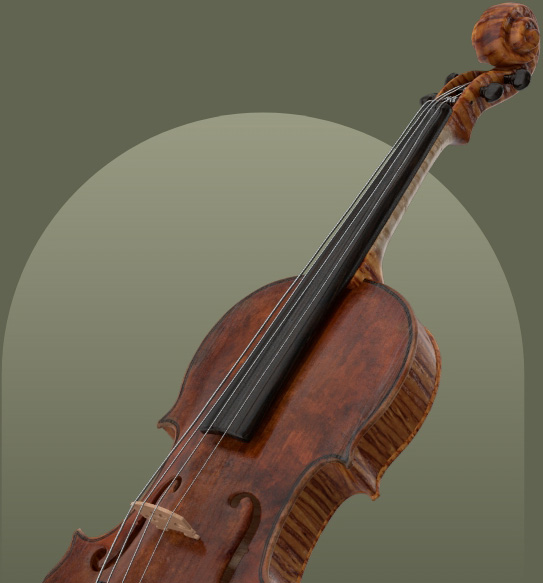
George Duncan
Glasgow, Kingston-on-Spey, b. 1855
George Duncan (1855-?) was a Scottish violin maker born in Kingston-on-Spey. He was a pupil and successor to Walter Plain, establishing his own workshop in Glasgow in 1875. Duncan was known for his disciplined work on Stradivari and Guarneri models, featuring distinctive archings and fine oil varnish. His instruments, particularly from 1883 onwards, were praised for their magnificent appearance and rich tone. He received a gold medal at the London Inventions Exhibition in 1885. In 1892, he emigrated to North America, though sources differ on whether it was Canada or America.
Request an expert valuation or learn how our global auctions achieve the highest prices for your instruments.
Auction Price History
Highest auction price
11 results
| Type | Details | Auction house | Sold | Price |
|---|---|---|---|---|
| Violin | Two-piece back of faint broad curl, varnish of a plum red colour on a golden ground Lot 1397 | Gardiner Houlgate | December 2017 | £1,860est. £ 800-1,200 |
| Violin | 35.4 cm Glasgow, 1880 | — | June 2011 | £1,320 |
| Viola | 42.3 cm Glasgow, 1886 | — | March 2008 | £8,500 |
| Violin | 1882 | — | June 2000 | £1,725 |
| Violin | 1891 | — | November 1991 | £2,530 |
| Violin | 1888 | — | June 1991 | £2,090 |
| Violin | 1884 | — | September 1986 | £396 |
| Violin | 1887 | — | May 1986 | £756 |
| Violin | 1887 | — | March 1986 | £918 |
| Violin | 1883 | — | May 1981 | £770 |
| Violin | 1889 | — | May 1981 | £1,100 |
No results match those filters.
Maker Overview
Life
George Duncan (1855-?) was born in 1855 in Kingston-on-Spey, Scotland, UK. He was initially a cabinetmaker before opening his workshop as a violin maker in Glasgow in 1875. He worked in Glasgow from 1875, first at 21 Brunswick Street, which had previously been the premises of Walter Plain, and subsequently at 33 Queen Street. Cecie Stainer indicates he was a maker in Glasgow from about 1875 to 1887. In 1892, he emigrated, with John Dilworth stating he moved to Canada, while William Meredith Morris and Willibald Leo Lütgendorff state he emigrated to America. Sources contain conflicting information about his exact emigration destination.
Characteristics
- Workmanship
- George Duncan's work was very disciplined, focusing on Stradivari and Guarneri models. Willibald Leo Lütgendorff noted that his violins are very good and impeccably made, working after various models.
- Archings
- Like those of his predecessor Walter Plain, Duncan's archings featured a distinct flatness to the center bouts, which rose rather abruptly from deeply sunk edges.
- Varnish
- He used a fine textured oil varnish of various tints, sometimes shaded and slightly 'distressed' in imitation of age, as detailed by John Dilworth. William Meredith Morris added that this beautiful oil varnish was usually of a golden orange-red tint. Willibald Leo Lütgendorff also mentioned his use of a good oil varnish.
- Materials
- William Meredith Morris observed that the wood in some of Duncan's specimens featured a broad figure in the back and a medium grain in the front table.
- Tone
- , the tone of his instruments is large, rich, and free.
- Labels
- An example label cited by John Dilworth reads: "No. 31. Made by George Duncan / Glasgow. 18.." Another label example provided by William Meredith Morris is: "NO, 37 MADE BY GEORGE DUNCAN, GLASGOW, 1884".
- Made by George Duncan
Glasgow. 18..John Dilworth
Influence and legacy
- Mentorship: George Duncan was a pupil and successor to Walter Plain.
- Awards: George Duncan won a gold medal at the London Inventions Exhibition in 1885, surpassing the silver medal awarded to Bela Szepessy. William Meredith Morris confirmed this, noting he received the gold medal for an exhibit of two violins at the London Exhibition of Inventions and Music in 1885. Willibald Leo Lütgendorff also reported he received a gold medal at the Inventions Exhibition in London in 1885. Lütgendorff further noted that Duncan was awarded a silver medal in Edinburgh in 1886 but rejected it.
- Appreciation: William Meredith Morris expressed hope that Duncan's talents would be appreciated on the other side of the Atlantic, predicting that his work would improve with age and become valuable.
Further Information
- Workshop Locations: George Duncan worked in Glasgow, UK, initially at 21 Brunswick Street and later at 33 Queen Street.
- Emigration: He emigrated in 1892, with sources differing on whether he went to Canada or America.
Biographies
The overview above is drawn from the following published accounts. Read them in the original:
John Dilworth+
DUNCAN, George Born 1855 Kingston-on-Spey, Scotland UK. Pupil and successor to Walter Plain. Worked in Glasgow from 1875 at 21 Brunswick Street, previously the premises of Walter Plain. Subsequently at 33 Queen Street. Won gold medal at the London Inventions Exhibition 1885, over the silver medal awarded to Bela Szepessy. Emigrated to Canada 1892. Very disciplined work on Stradivari and Guarneri models, the arching (like Plain’s) has a distinct flatness to the centre bouts, which rise rather abruptly from deeply sunk edges. Fine textured oil varnish of various tints, sometimes shaded and slightly ‘distressed’ in imitation of age. No. 31. Made by George Duncan / Glasgow. 18..
William Meredith Morris+
He was born Jan. 17, 1855, and emigrated to America in 1892. His instruments from about 1883 on are magnificent. They are on the model of Stradivari and Guarneri, varnished with a beautiful oil varnish usually of a golden orange red tint. The wood in some specimens is of a broad figure in the back, and of a medium grain in the front table. The tone is large, rich, and free. He was awarded the gold medal for an exhibit of two violins at the London Exhibition of Inventions and Music in 1885. These two violins were of a beautiful appearance, though I did not have the pleasure to try their tone. Duncan is a born artist, and his work will improve with age and become valuable. It is to be hoped that his talents will be appreciated on the other side of the Atlantic to the extent they deserve. Label : —
NO, 37 MADE BY GEORGE DUNCAN, GLASGOW, 1884
Cecie Stainer+
A maker in Glasgow about 1875-87.
Willibald Leo Lütgendorff+
Er war zuerst Tischler und eröffnete 1875 in Glasgow seine Werkstatt als Geigenmacher. Er arbeitete nach verschiedenen Modellen und verwandte einen guten Öllack. Seine Geigen sind sehr gut und tadellos gemacht. 1885 erhielt er auf der Inventions Exhibition in London eine goldene Medaille; eine silberne, die er 1886 in Edinburgh zuerkannt erhielt, wies er zurück. 1892 wanderte er nach Amerika aus.
Sell your instrument with Amati
Get started by uploading photos of your instrument for our experts to review.
Sell your instrument with Amati
Get started by uploading photos of your instrument for our experts to review.