Bernhard Simon Fendt
Fussen, London, 1769–1832
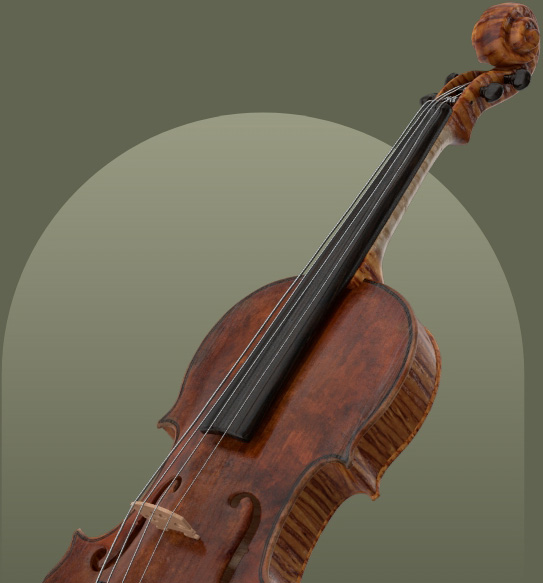
Bernhard Simon Fendt (1769-1832) was a distinguished German luthier who became a pivotal figure in London's violin-making scene. Trained by his uncle François Fent in Paris, he moved to London in 1798, working first for Thomas Dodd and later for John Betts. Fendt was renowned for his exceptional copies of Italian masters like Amati and Stradivari, characterized by their beautiful regulation and distinctive dark ground, rich red-brown varnish. His versatility extended to highly appreciated cellos, contralto violas, and double basses. His influence was significant, shaping a new generation of English makers, including his four sons who followed in his craft.
Auction Price History
Highest auction price
17 results
| Type | Details | Auction house | Sold | Price |
|---|---|---|---|---|
| Violin | Probably made with the collaboration of Fendt's son Bernard Simon II, unlabelled Lot 23 | — | March 2026 | £18,000est. Estimate £ 10,000-15,000 |
| Cello | Labelled T. Dodd, Violin, Viola, Violoncello & Bow Maker, New Street, Covent Garden Lot 120 | Ingles & H. | March 2025 | £66,000est. £ 40,000-60,000 |
| Small Violoncello | Labelled T. Dodd, Violin, Violoncello & Bowmaker New Street Covent Garden 6219 Lot 29 | Tarisio | November 2024 | £60,249est. $ 50,000-80,000 |
| Cello | Unlabelled Lot 18 | Tarisio | October 2024 | £42,000est. £ 30,000-50,000 |
| Violin | Labelled and inscribed Réparé par Salf à Coulon 1845 Lot 145 | Ingles & H. | March 2024 | £5,400est. £ 4,000-6,000 |
| Violin | Labelled Fendt 1800 Lot 15 | Ingles & Hayday | November 2021 | £28,800est. £ 18,000-25,000 |
| Viola | Unlabelled Lot 7 | Tarisio | July 2020 | £10,800est. £ 10,000-15,000 |
| Violin | Labelled BERNARD S. FENDT / LONDON 1817 Lot 119 | Skinners | June 2019 | £6,811est. $ 8,000-12,000 |
| Violin | Unlabelled Lot 111 | Ingles & Hayday | March 2019 | £8,400est. £ 8,000-12,000 |
| Violin | partially reglued back center seam Lot 139 | Skinners | November 2018 | £3,789est. $ 5,000-8,000 |
| Violin | Unlabelled Lot 8 | Ingles & Hayday | March 2018 | £18,000est. £ 10,000-15,000 |
| Violin | Unlabelled Lot 154 | Ingles & Hayday | March 2018 | £12,000est. £ 10,000-15,000 |
| Violin | Unlabelled Lot 102 | Brompton’s | November 2015 | £9,600est. £ 8,000-12,000 |
| Violin | Unlabelled Lot 121 | Brompton’s | March 2015 | £19,200est. £ 6,000-10,000 |
| Violin | Labelled Fendt 1800 Lot 6 | Ingles & Hayday | October 2014 | £20,400est. £ 10,000-15,000 |
| Violin | Unlabelled, later table Lot 75 | Brompton’s | June 2012 | £3,840est. £ 4,000-6,000 |
| Viola | Lot 129 | Bonhams | October 2011 | £3,125 |
No results match those filters.
Maker Overview
Life
Bernhard Simon Fendt (1769-1832) was born in 1769 in Füssen, Germany, and passed away in 1832 in London, UK., he was the nephew and pupil of François Fent, working at his workshop in Paris from approximately 1783 until François' death in 1796. Cecie Stainer and Willibald Leo Lütgendorff also note his early training with his uncle in Paris, with Stainer suggesting he arrived as a seven-year-old boy. In 1798, Fendt moved to London, a move potentially influenced by the events of the French Revolution, and immediately joined the workshop of Thomas Dodd, working alongside J. F. Lott. He remained with Dodd for eleven years. When Dodd relocated his shop from Covent Garden to St Martin’s Lane in 1809, Fendt transitioned to working for John Betts in the Royal Exchange, serving as his workshop foreman. Following a dispute with Betts in 1825, he left to establish a partnership with Betts’ nephew, Charles Vernon, at 37 Cornhill. Stainer specifies his death occurred in Aylesbury Street, Clerkenwell, and he was buried in Clerkenwell Churchyard.
Characteristics
- Versatility
- Bernhard Simon Fendt was a remarkable and versatile craftsman, highly skilled in producing a range of stringed instruments.
- Italian Copies
- He was particularly renowned for making some of the best copies of antique master instruments seen at the time, specifically emulating the works of Amati and Stradivari, as detailed by John Dilworth and Cecie Stainer. George Hart further emphasizes that Dodd guided Fendt to use the great Italian masters as models.
- Regulation and Varnish
- His copies were beautifully regulated and commonly featured a dark ground with a rich red-brown textured varnish. However, instruments made for Thomas Dodd often bore Dodd's label, with Dodd himself invariably applying the varnish.
- Instrument Specialization
- His cellos were particularly appreciated, and excellent contralto violas are relatively common and highly effective. His double basses were also highly prized.
- Collaboration
- He frequently made instruments with J. F. Lott, whom he persuaded to transition from cabinet-making to violin-making.
- Labeling
- Very little of Fendt's work carries his own label; instruments made for Dodd and Betts typically bore their respective names.
- Bernard Simon Fendt
fecit Jany 30th 1811 for (illegible) LondiniJohn Dilworth
Influence and legacy
- Early Training: He was the nephew and pupil of François Fent, working in his Paris workshop from around 1783. Willibald Leo Lütgendorff also suggests he may have learned violin making in Tyrol.
- Mentorship: Upon his arrival in England, Thomas Dodd played a crucial role in guiding Fendt's talent, steadfastly presenting the originals of the great Italian masters as models for his workmen.
- Family Continuity: Bernhard Simon Fendt had four sons, all of whom became violin makers, ensuring the continuation of his craft.
- Valued Instruments: The copies of Amati instruments he made for John Betts are highly valued.
- Impact on Craft: George Hart states that Fendt's distinctive style of work, influenced by Italian masters, gave rise to a new and independent class of makers in England.
Further Information
- Workshop Locations: Fendt worked at Thomas Dodd's shop (initially in Covent Garden, later St Martin’s Lane), John Betts' establishment in the Royal Exchange, and later partnered with Charles Vernon at 37 Cornhill.
- Personal Label: The only recorded example of his personal ticket is dated 1811, which reads: "Bernard Simon Fendt / fecit Jany 30th 1811 for (illegible) Londini" [BVMA].
- Style Evolution: Although German by birth, his style of work is not considered German in character, having been shaped by his early training in Paris and subsequent guidance in England towards Italian models, as observed by George Hart.
Biographies
The overview above is drawn from the following published accounts. Read them in the original:
John Dilworth+
FENDT, Bernhard Simon (I) Born 1769 Füssen Germany, died 1832 London UK. Nephew and pupil of François Fent at whose workshop in Paris he worked from about 1783 until François’ death in 1796. In 1798 moved to London, perhaps propelled by the events of the French Revolution, and immediately joined the shop of Thomas Dodd alongside J. F. Lott. In 1809 Dodd moved his shop from Covent Garden to St Martin’s Lane and Fendt joined John Betts in the Royal Exchange as his workshop foreman. In 1825, after a dispute with Betts, he left to become the partner of Betts’ nephew Charles Vernon at 37 Cornhill. Very little of his work carries his own label. Only recorded example of his ticket is the one dated 1811, below. A remarkable and versatile craftsman who made for Betts some of the best copies of antique master instruments hitherto seen. Beautifully regulated copies of Amati and Stradivari, commonly with a dark ground and rich red-brown textured varnish. Cellos particularly appreciated. Excellent contralto violas are relatively common and highly effective. Double basses also highly prized. Bernard Simon Fendt / fecit Jany 30th 1811 for (illegible) Londini [BVMA]
George Hart+
He was evidently a born Fiddlemaker, genius being stamped in a greater or less degree upon all his works. To Thomas Dodd belongs the credit of bringing his talent into play. Dodd obtained the services of Fendt upon his arrival in England, which the latter reached at an early age. He remained with Dodd many years, frequently making instruments with John Frederick Lott. The instruments so made bear the label of Thomas Dodd. Lott being also a German, reciprocity of feeling sprung up between him and Fendt, which induced Lott to exchange the business to which he was brought up for that which his fellow countryman Fendt had adopted, and henceforth to make Violins instead of cabinets. By securing the services of these admirable workmen, Dodd reaped a rich harvest. He found in them men capable of carrying out his instructions with an exactness that could not have been surpassed. Dodd was unable to use the tools himself, but in Fendt and Lott he had men who were consummate masters of them. When the instruments were finished as far as construction was concerned, they were clothed in coats of the master’s livery— “Dodd’s varnish,” the secret of making which he kept carefully to himself. With these coats of varnish upon them the work was doubly effective, and every point of excellence was made to shine with the happiest effect. Upon leaving the workshop of Thomas Dodd, Bernard Fendt worked for John Betts, making many of those copies of Amati which are associated with the name of Betts, and which have so high a value. Although Fendt was German by birth, his style of work cannot be considered as German in character. Having early quitted his post of trade in Paris for England, and having in this country placed himself under the guidance of Dodd, who steadfastly kept before his workmen the originals of the great Italian masters for models, his work acquired a distinctive stamp of its own, and in its turn gave rise to a new and independent class of makers.
Cecie Stainer+
A nephew of François Fent, of Paris: b. 1735-6, at Innsbruck, in the Tyrol . d. 1832-3, in Aylesbury Street, Clerkenwell. aged 57, and was buried in Clerkenwell Churchyard. When seven years old he left Innsbruck for Paris to live with his uncle there ; later he went to England, and entered the employ of Thomas Dodd in Jan., 1798, remaining with him for eleven years.
He persuaded J. F. Lott (also a German) to leave his trade of cabinet-making in order to make violins with him under Dodd; their instruments always have Dodd’s label in them, the latter invariably doing the varnishing himself. Fendt. on leaving Dodd, worked for John Betts, making those excellent copies of Amati which are so highly valued ; they all bear the name of Betts. Betts died in 1823, but Fendt continued to work for the same firm. He had four sons, also violin makers.
Willibald Leo Lütgendorff+
Er war ein Neffe des Pariser Fendt und soll den Geigenbau in Tyrol erlernt
haben. Er ging dann auf die Wanderschaft, und es ist nicht unmöglich, dass er
in Italien, vielleicht auch in Cremona gearbeitet hat, was nicht viel sagen will,
da die italienische Schule damals schon ganz in Verfall gerathen war. Nach
Anderen soll er schon als siebenjähriger Knabe zu seinem Oheim nach Paris
gekommen sein und bei diesem gelernt haben. In den letzten Jahren des
18. Jahrh. kam er nach London und arbeitete von 1798—1809 bei Th. Dodd.
Hierauf war er für Betts beschäftigt, und die meisten seiner trefflichen Amati oder
Stradivaricopien tragen Betts’ Namen. Er ist in der Aylesbury Street,
Clerkenwell, gestorben und hinterliess vier Söhne, die alle Geigenmacher waren.
Sell your instrument with Amati
Get started by uploading photos of your instrument for our experts to review.
Sell your instrument with Amati
Get started by uploading photos of your instrument for our experts to review.