Johann Karl Klotz
Mittenwald, 1709–1769
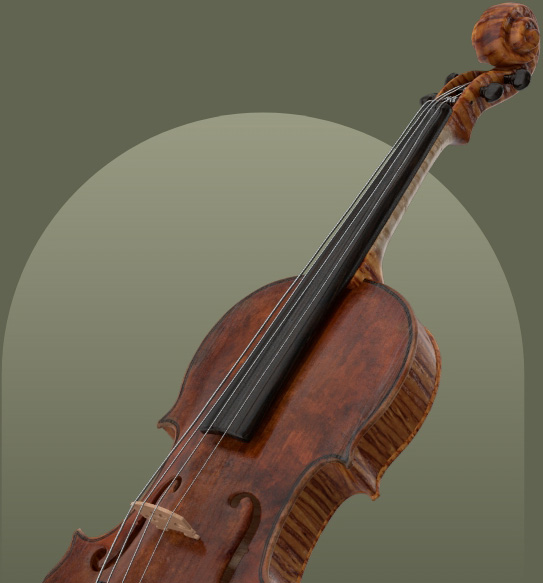
Johann Karl Klotz (1709-1769) was a German violin maker from Mittenwald, son of Mathias Klotz (I). He was a pupil of his half-brother Sebastian Klotz and trained Phillip Sailer, as well as his sons Wolfgang and Michael. His instruments are characterized by Cremonese soundholes, a distinctive head, and thin, intensely coloured varnish, sometimes golden-brown or dark brown. While John Dilworth noted his execution as "less well disciplined," other sources like Willibald Leo Lütgendorff and Cecie Stainer consider his work among the best of the Klotz family. He used both manuscript and printed labels, and a violin of his is part of the Sammlung Snoeck in Berlin.
Auction Price History
Highest auction price
21 results
| Type | Details | Auction house | Sold | Price |
|---|---|---|---|---|
| Violin | Labelled Ioan. Carol. Kloz, in Mittenwald An. 1785, and The seal of quality Ferron & Kroeplin ... Lot 155 | Tarisio | November 2021 | £8,894est. $ 10,000-15,000 |
| Violin | Labelled Ioan. Carol. Kloz, in Mittenwald, An. 1756 Lot 1 | Ingles & Hayday | March 2017 | £10,200est. £ 4,000-6,000 |
| Violin | 35.9 cm Mittenwald, 1760 | — | September 2011 | £7,800 |
| Violin | 35.6 cm Mittenwald, 1780 c. | — | October 2010 | £2,640 |
| Violin | Mittenwald, 1769 | — | November 2005 | £4,342 |
| Violin | — | November 2005 | £2,053 | |
| Violin | 1750 c. | — | May 2005 | £1,622 |
| Viola | 38.5 cm 1790 | — | November 2002 | £4,182 |
| Violin | 1795 | — | March 2001 | £1,645 |
| Violin | 1779 | — | June 2000 | £1,955 |
| Viola | 38.2 cm 1786 | — | March 2000 | £1,840 |
| Violin | 1770 c. | — | February 1998 | £1,732 |
| Violin | 17-- | — | July 1997 | £1,800 |
| Violin | 1760 c. | — | November 1996 | £3,680 |
| Violin | 1782 | — | November 1995 | £2,760 |
| Violin | 1750 c. | — | November 1994 | £1,867 |
| Violin | 1775 | — | March 1994 | £747 |
| Violin | 1776 | — | November 1992 | £2,090 |
| Violin | 1782 | — | June 1991 | £2,860 |
| Violin | 1752 | — | June 1990 | £1,540 |
| Viola | 38.6 cm 1793 | — | May 1981 | £1,540 |
No results match those filters.
Maker Overview
Life
Johann Karl Klotz (1709-1769) was born in Mittenwald, Germany, the son of Mathias Klotz (I) and Ursula, née Schlaucher. His godfather was Andreas Jais, described as a "lediger Lautenmacher" (unmarried lutenist). He resided in the lower market in a half-house that previously belonged to Thomas Nebel. Johann Karl Klotz was married to Margaretha Knilling. Sources contain conflicting information regarding his death; John Dilworth states he died in 1769, while Cecie Stainer notes he "died young" and that his instruments are rare.
Characteristics
- Model
- He worked after a model described as "similar" to others in his family, and also as a "small, an Amati erinnernden Modell" (small, Amati-reminiscent model).
- Soundholes
- His instruments featured Cremonese soundholes.
- Head
- A characteristic head with a small inner volute and an extended last turn was typical of his work.
- Varnish
- The varnish he used is described as thin and intense in colour, with some examples showing a more Amati-like golden-brown hue. Willibald Leo Lütgendorff notes he used "dunkelbraunen Lack" (dark brown varnish), while Cecie Stainer observed a "dark varnish, almost black in colour."
- Workmanship
- John Dilworth describes his execution as "less well disciplined... than some others of the family," however, Willibald Leo Lütgendorff considered him "einer der besten Geigenmacher seiner Familie" (one of the best violin makers of his family), and Cecie Stainer states his instruments are "among the best of those made by the Klotz family."
- Labels
- He used manuscript labels up to 1750, thereafter transitioning to printed labels. Examples include: "Ioan. Carol Kloz, in / Mittenvvald, An 1752.", "Johan Carl Klotz fecit / in Mittenwald, 1754", and "Joan Carol Klotz in Mittenwald, an. 1750".
- Manuscript labels up to 1750; thereafter printed: Ioan. Carol Kloz, in
Mittenvvald, An 1752John Dilworth - Johan Carl Klotz fecit
in Mittenwald, 1754John Dilworth - Joan Carol Kloz
in Mittenwald, An 1780John Dilworth
Influence and legacy
- Training: He is thought to have been a pupil of Sebastian Klotz, his half-brother.
- Apprentices: Johann Karl Klotz trained Phillip Sailer between approximately 1737 and 1742.
- Family Tradition: He also trained his own sons, Wolfgang and Michael Klotz.
- Collections: A violin made by Johann Karl Klotz from the Sammlung Snoeck (Collection Snoeck), numbered 516, is housed in Berlin.
- Rarity: Cecie Stainer notes that his instruments are rare and "but little known."
Further Information
- Workshop Location: Johann Karl Klotz worked in Mittenwald, Germany.
Biographies
The overview above is drawn from the following published accounts. Read them in the original:
John Dilworth+
KLOTZ, Johann Karl (Joan Carol) Born 1709, died 1769 Mittenwald Germany Son of Mathias Klotz (I), below. Thought to have been the pupil of Sebastian, his half-brother. He himself trained one apprentice, Phillip Sailer c.1737-1742, and his own sons Wolfgang and Michael, below. Less well disciplined in execution than some others of the family but similar model. Cremonese soundholes, characteristic head with small inner volute and extended last turn. Varnish thin and intense in colour, some more Amati-like golden-brown. Manuscript labels up to 1750; thereafter printed: Ioan. Carol Kloz, in / Mittenvvald, An 1752. Johan Carl Klotz fecit / in Mittenwald, 1754 Joan Carol Kloz / in Mittenwald, An 1780 [Layer, Baader, Senn]
Cecie Stainer+
Worked in Mittenwald about 1740-55. He died young; his instruments are rare and but little known, but are said to be among the best of those made by the Klotz family. In a very well made violin with dark varnish, almost black in colour, is the label: ” Joan Carol Klotz in Mittenwald, an. 1750″; a similar label was dated 1753.
Willibald Leo Lütgendorff+
Sohn von Math. Klotz und von dessen Frau Ursula geb. Schlaucher. Sein
Taufpathe war Andreas Jais, »lediger Lautenmacher«. Er wohnte im unteren
Markte in einem halben Hause, das früher Thomas Nebel gehörte. Verheirathet
war er mit Margaretha Knilling. Er galt als einer der besten Geigenmacher
seiner Familie, arbeitete nach einem kleinen, an Amati erinnernden Modell und verwendete dunkelbraunen Lack. Eine Violine von ihm befindet sich aus der Sammlung Snoeck (No. 516) in Berlin.
Sell your instrument with Amati
Get started by uploading photos of your instrument for our experts to review.
Sell your instrument with Amati
Get started by uploading photos of your instrument for our experts to review.