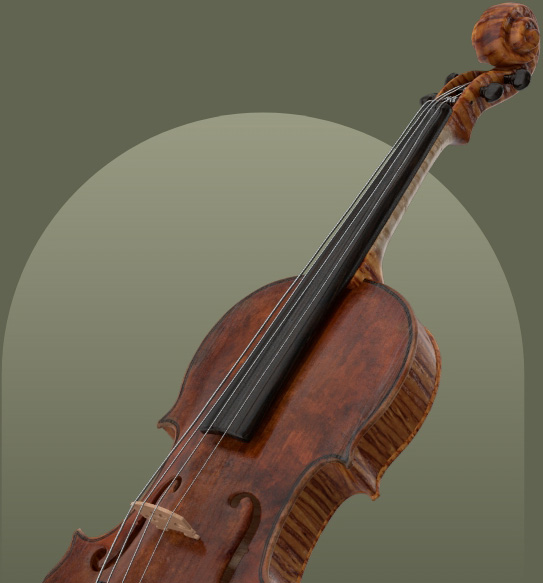
Edward (I) Lewis
London, d. 1717
Edward (I) Lewis was a highly regarded British violin maker active in London from 1687 to 1717. Known for his rare and magnificent instruments, his work is characterized by excellent wood, precise workmanship, and superior varnish, though descriptions of its color vary among historical accounts. He produced violins, cellos, and viols, with instruments like an "excellent tenor" and a "rare good" bass-violin noted in Thomas Britton's Collection.
Request an expert valuation or learn how our global auctions achieve the highest prices for your instruments.
Auction Price History
Highest auction price
2 results
| Type | Details | Auction house | Sold | Price |
|---|---|---|---|---|
| Violin | 1701 | — | October 2001 | £851 |
| Violin | 1704 | — | March 1981 | £2,959 |
No results match those filters.
Maker Overview
Life
Edward (I) Lewis (1687-1717) was a highly esteemed British violin maker who worked in London. He was active from 1687 until his death in 1717, initially working on London Bridge and later at the sign of the Harp in St Paul's Alley. William Meredith Morris describes him as a magnificent maker whose work is very rare, placing him in the front rank of early makers. Willibald Leo Lütgendorff also characterizes him as an outstandingly capable violin maker, highly regarded by his contemporaries.
Characteristics
- Workmanship
- His work is described as magnificent, showing great accuracy and finish, with excellent wood and well-executed throughout, and George Hart.
- Models
- William Meredith Morris observed one of his violins approximating the model of Maggini, and did not believe he copied the Stainer model, suggesting his taste would not allow him to imitate the German high arch.
- Varnish
- Sources contain conflicting information about his varnish. William Meredith Morris described an oil varnish of a rich golden-red colour, perfectly transparent, and soft as velvet to the touch. Cecie Stainer noted his use of very fine varnish, generally a light yellow colour, but sometimes red with a golden ground. John Dilworth mentions yellow or brown varnish. Willibald Leo Lütgendorff also described his mostly light yellow, sometimes reddish lacquer on a golden-yellow ground as very good.
- Tone
- The tone on the higher strings of his violins was beautifully clear and brilliant.
- Instruments
- He made violins, cellos, and viols. Thomas Britton's catalogue of 1714 listed a 'Bass violin' and a 'tenor' by him.
- Edward Lewis
fecit, London Bridge, 1704John Dilworth - Edward Lewis
in St. Paul Allay in London, 1687John Dilworth - Edward Lewis at
The Harp in St Paul’s
Ally in London 1702John Dilworth - Edward Lewis att
The Harp in St
pauls Ally in
London. 1703John Dilworth
Influence and legacy
- School: John Dilworth states that his workmanship was of the Nathaniel Cross school.
- Associations: Willibald Leo Lütgendorff mentions an unproven association with Th. Jay.
- Rarity: His work is considered very rare, with William Meredith Morris having seen only one of his violins in twenty-five years of connoisseurship. Cecie Stainer also notes his violins are rare but very beautiful.
- Collections: Thomas Britton's Collection included an "excellent tenor by Mr Lewis" and a "rare good" bass-violin, as cited by Cecie Stainer and Willibald Leo Lütgendorff.
Further Information
- Workshop Locations: He worked on London Bridge and later at the sign of the Harp in St Paul's Alley in London.
- Known Labels: Known label inscriptions include: "Edward Lewis / fecit, London Bridge, 1704", "Edward Lewis / in St. Paul Allay in London, 1687", "Edward Lewis at / The Harp in St Paul's / Ally in London 1702", and "Edward Lewis att / The Harp in St / pauls Ally in / London. 1703".
Biographies
The overview above is drawn from the following published accounts. Read them in the original:
John Dilworth+
LEWIS, Edward (I) Worked from 1687, died 1717 London UK. Worked on London Bridge and later at the sign of the Harp in St Paul’s Alley. Violins, cellos, and viols. Workmanship of the Nathaniel Cross school with yellow or brown varnish. ‘Bass violin’ and ‘tenor’ listed in the catalogue of Thomas Britton 1714. Edward Lewis / fecit, London Bridge, 1704 Edward Lewis / in St. Paul Allay in London, 1687 Edward Lewis at / The Harp in St Paul’s / Ally in London 1702 Edward Lewis att / The Harp in St / pauls Ally in / London. 1703 [BVMA]
George Hart+
The work is well executed throughout, and the varnish superior.
William Meredith Morris+
A magnificent maker, whose work is very rare. In the course of twenty-five years’ connoisseurship I have seen only one of his violins, which was on a model approximating to that of Maggini. In this instrument, wood, workmanship, and tone combined to give the maker a high position in the front rank of our early makers. The varnish was an oil one, of a rich golden-red colour, perfectly transparent, and soft as velvet to the touch. The tone on the higher strings was beautifully clear and brilliant. I have never heard of a violin of his on the Stainer model, and I do not think he copied that maker at all. Judging from the single instance referred to, I do not think his taste would allow him to imitate the German high arch.
No label of his is known.
Cecie Stainer+
A maker in London about 1700. His work was most excellent, showing great accuracy and finish ; he used good wood and very fine varnish, generally a light yellow colour, but sometimes red with golden ground.
His violins are rare, but are very beautiful. In Thomas Britton’s Collection was an “excellent tenor by Mr Lewis” and a ” rare good” bass-violin.
Willibald Leo Lütgendorff+
Ein hervorragend tüchtiger und auch bei seinen Zeitgenossen hochangesehener
Geigenmacher. Seine Arbeit ist tadellos, wie sein Holz; auch sein meist hellgelber,
manchmal röthlicher Lack auf goldgelbem Grund ist sehr gut, Form und
Ausstattung geschmackvoll. Er soll, was nicht bewiesen ist, mit Th. Jay zusammen gearbeitet haben. Th. Britton’s Katalog zählt einen »ausgezeichneten Tenor« und eine »besonders gute« Bassvioline von ihm auf.
Sell your instrument with Amati
Get started by uploading photos of your instrument for our experts to review.
Sell your instrument with Amati
Get started by uploading photos of your instrument for our experts to review.