How to buy an instrument: Alban Gerhardt

The acclaimed German-born cellist gives some honest advice about the challenges and rewards of the quest for a perfect instrument – and why it might just change the way you play
Whether you have the means to buy a modern instrument (starting at €25,000), a fine old Italian (from something like €250,000 and up into the sky) or a nice elderly French, German or English instrument (somewhere in between), you can drive yourself crazy in trying to find the ‘right one’. The amateur, the student and the professional player all face similar problems.
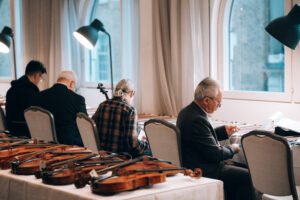
Firstly, we hardly ever get to try all the available instruments at the same time. We have to travel to see and try them in different acoustics and under different circumstances. This makes it almost impossible to compare them, as we rely entirely on our memory, which is awfully subjective and selective. On top of that, every space has its own feel and sound, and most players (including myself) feel different even with their own instruments every other day – how can we make a fair judgement over the stretch of maybe a year?
Secondly, we have no idea how any given instrument sounds even a couple of metres away from us, let alone in a big concert hall, playing chamber music or a solo concerto. We totally depend on what we hear while playing (which most of the time has absolutely nothing to do with the actual sound in the hall) and what the people who are present (friends, fellow musicians, dealers) tell us about the instrument we are trying. We can’t trust our own feelings, and we should trust the person who wants to sell us the instrument even less. Obviously there are exceptions to this rule, but finally we all want to be flattered, and while trying an instrument we do want to hear how wonderful we make it sound. It’s only human – just don’t buy an instrument based on flattery. I have played on so many bad instruments (in great-sounding rooms) which I have been told never sounded as good previously – but unfortunately for the salesman, I shut off completely when I hear praise. It’s a kind of self-protection, I guess.
But who should we trust? Some unscrupulous dealers have even been known to offer money to teachers so that they might persuade their students to buy certain instruments, so even the advice of a teacher might not always be totally objective. And yes, friends are helpful, but who can come and hear every single instrument you want to try?
Some musicians like to try instruments in an empty hall, which I find rather useless since halls tend to sound nicest when they are empty. Try it in a dry room, or if you have a chance, do it while your pianist is playing the piano, possibly in a Brahms sonata, so a trusted friend can hear how well your sound projects over the thick texture of the piano part. We don’t need a loud instrument – we need one that can be heard and can fill a room while other instruments are playing as well.
The third problem is maybe the biggest: most musicians try to find an instrument that ‘fits’ them, that is easy to play, and that has a huge sound and great personality. This instrument doesn’t exist! We have to be ready to make compromises and take into account that a truly great instrument will change the player – but we have to be open and ready to make adjustments in our own playing. There are limitations to all instruments I have ever played on, so I have had to learn to search for the quality in the instrument and try to work with it, make the best of it and at some point stop worrying about it. I love a story that my father told me: when David Oistrakh performed with his orchestra (the Berlin Philharmonic), at some point he and many other musicians gave Oistrakh their fiddles to play on (which back then were not so great). My father claims that they suddenly all sounded equally beautiful. A great player makes any instrument work, so in order to achieve that, practise!
First published in the Amati Magazine, 13 June 2014. Written by Alban Gerhardt.
Share this: