John Barrett
London, worked 1713–1743
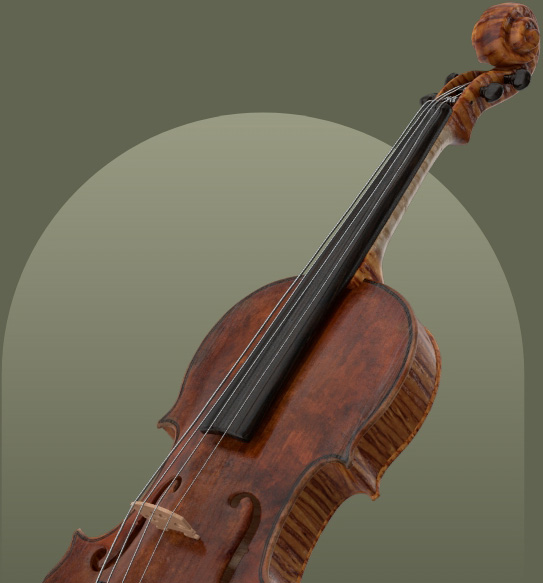
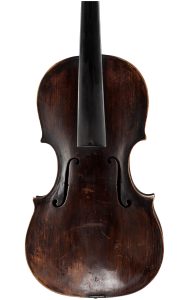
John Barrett was an English luthier working in London from circa 1713 to 1743, known for copying Stainer's style and operating from various locations including the 'Harp and Crown' in Piccadilly. His work, which included violins, cellos, and double basses, often featured ink-lines instead of purfling and a distinctive yellow to orange-red varnish, though sources conflict on its appearance and the overall tone quality of his instruments.
Request an expert valuation or learn how our global auctions achieve the highest prices for your instruments.
Auction Price History
Highest auction price
21 results
| Type | Details | Auction house | Sold | Price |
|---|---|---|---|---|
| Violin | Labelled Made, Sold, or Mended by John Barrett; at the Harp & Crown in Pickadily London: All Sorts ... Lot 105 | Tarisio | July 2021 | £4,782est. $ 5,000-8,000 |
| Violin | Unlabelled Lot 193 | Brompton’s | October 2017 | £5,760est. £ 4,000-6,000 |
| Violin | Labelled Made by John Barrett ... Lot 29 | Gardiner Houlgate | October 2017 | £336est. £ 300-500 |
| Violin | partially reglued center seam Lot 166 | Skinners | May 2017 | £479est. $ 800-1,200 |
| Violin | Two-piece back of narrow curl, table of fine grain, varnish of a reddish brown colour on a golden ground Lot 19 | Gardiner Houlgate | November 2015 | £2,100est. £ 1,800-2,200 |
| Violin | Labelled John Barrett at ye Harp, Crown in Pickadilly, London, 1722, inscribed to the inside back 92628 Lot 238 | Tarisio | April 2012 | £5,191est. $ 5,000-8,000 |
| Violin | 35.5 cm London, 1730 c. Attributed to | — | March 2010 | £600 |
| Violin | 35.9 cm 1729 | — | March 2010 | £5,400 |
| Violin | 35.2 cm London, 1730 c. | — | October 2006 | £1,811 |
| Violin | 35.5 cm 1730 c. | — | February 2006 | £4,200 |
| Violin | London, 1770 c. Attributed to | — | March 2004 | £3,107 |
| Cello | 1727 | — | June 2002 | £12,500 |
| Violin | 1728 | — | June 1996 | £2,300 |
| Violin | 1728 | — | October 1995 | £1,150 |
| Violin | 1734 | — | May 1995 | £1,869 |
| Violin | 1730 | — | May 1995 | £506 |
| Violin | 1728 | — | October 1994 | £920 |
| Cello | 1717 | — | December 1993 | £1,012 |
| Violin | 1739 | — | April 1993 | £2,415 |
| Violin | 1730 c. | — | July 1991 | £465 |
| Cello | 1741 | — | June 1991 | £6,050 |
No results match those filters.
Maker Overview
Life
John Barrett (circa 1713-1743) worked in London, UK, establishing his business from 1713 'next the Standard in Piccadilly', as detailed in John Dilworth's The Brompton's Book of Violin & Bow Makers. He later operated from the 'Crown and Anchor' and, from 1721, at the 'Harp and Crown, Coventry Street', a sign also associated with Robert Cuthbert's shop. Barrett's business encompassed all aspects of music and accessories, a common practice among many early English luthiers.
Characteristics
- Copying Style
- John Barrett was an early copyist of Stainer in England, often exaggerating Stainer's arching in British Violin Makers. Willibald Leo Lütgendorff notes he used an elongated, highly arched model more reminiscent of Stainer than Amati.
- Model
- He worked on a modified Stainer pattern, which was long, narrow, grooved, and highly arched. Cecie Stainer also mentions he made instruments on a long and arched pattern.
- Purfling
- Instead of purfling, he commonly used ink-lines, or 'ink-lines instead of purfle'. Lütgendorff also notes he drew lines at the edge instead of inlay.
- Workmanship
- John Dilworth states that some of his work featured rather mundane painted purfling, while other pieces displayed exquisite workmanship in the manner of Wamsley. William Meredith Morris describes his workmanship as fair, but Cecie Stainer indicates he made some good instruments. Lütgendorff characterizes his work as good but ordinary.
- Varnish
- Sources contain conflicting information about his varnish. John Dilworth describes it as golden-brown or orange-red and of good consistency. However, William Meredith Morris states it was yellow and 'hungry looking', contributing to a 'cheap look'. Lütgendorff suggests his varnish was likely yellow but had darkened considerably to brownish. Cecie Stainer also describes the varnish as a yellow colour.
- Tone
- William Meredith Morris states the tone of his instruments is 'very small and muffled', though he acknowledges a report of a violoncello with a 'beautiful tone'. Cecie Stainer notes the tone of his violins is 'sweet but not powerful'. Lütgendorff describes the tone as noble, though not large.
- Instruments Made
- He made cellos of compact size and at least one double bass, which was listed on the inventory of the Duke of Chandos in 1720. A violoncello of his make with a beautiful tone is mentioned by William Meredith Morris and Cecie Stainer.
- John Barrett, at the Harp and Crown
in Piccadilly,1722John Dilworth - Made by John Barrett
at Ye Harp and Crown
in Pickadilly, London, 1731John Dilworth
Influence and legacy
- Influences: John Barrett was an early copyist of Stainer.
- Contemporaries: He was a contemporary of Barak Norman and Nathaniel Cross. Willibald Leo Lütgendorff suggests he was probably a pupil of the same master as N. Cross.
- Valuation: In 1802, his instruments were valued at 6 guineas, later increasing to 8 or 10 guineas.
Further Information
- Labels: John Barrett used labels such as 'John Barrett, at the Harp and Crown / in Piccadilly, 1722' and 'Made by John Barrett / at Ye Harp and Crown / in Pickadilly, London, 1731', as cited by John Dilworth. William Meredith Morris provides examples like 'JOHN BARRETT, AT THE HARP AND CROWN IN PICCADILLY, 1720' and 'MADE BY JOHN BARRETT, AT YE HARP & CROWN IN PICCADILLY, LONDON, 1730'. Willibald Leo Lütgendorff notes two types of labels: an older, simply printed one, and a later one featuring a crowned lyre.
- Wood Selection: Cecie Stainer notes that the wood used in his instruments was well selected.
Biographies
The overview above is drawn from the following published accounts. Read them in the original:
John Dilworth+
BARRETT, John Worked circa. 1713-1743 London UK. An early copyist of Stainer in England. Established from 1713 ‘next the Standard in Piccadilly’, later at the ‘Crown and Anchor’, and from 1721 at the ‘Harp and Crown, Coventry Street’, this last having also been the sign of Robert Cuthbert’s shop. Barrett’s business covered all aspects of music and accessories, like many other early English luthiers. Some rather mundane work with painted purfling, but others of exquisite workmanship in the manner of Wamsley. Varnish of a golden-brown or orange-red colour, of good consistency. Also made cellos of compact size and at least one double bass, listed on the inventory of the Duke of Chandos in 1720. John Barrett, at the Harp and Crown / in Piccadilly,1722 Made by John Barrett / at Ye Harp and Crown / in Pickadilly, London, 1731
William Meredith Morris+
He copied Stainer, and very often exaggerated his arching. He also worked on a modified Stainer pattern, which was long, narrow, grooved, and highly arched. The workmanship is fair, but the tone is very small and muffled. As a rule, he used ink-lines instead of purfle. The varnish is yellow and hungry looking, and helps to give a cheap look to the instrument. Somebody reports having seen a violoncello of his make somewhere, which had a beautiful tone. It is possible that he did make good work, but it has not been the fortune of any of it to come down to our days. He was a contemporary of Barak Norman and Nathaniel Cross. Labels : —
JOHN BARRETT, AT THE HARP AND CROWN IN PICCADILLY, 1720.
MADE BY JOHN BARRETT, AT YE HARP & CROWN IN PICCADILLY, LONDON, 1730
Cecie Stainer+
Worked about 1714-30 at the ” Harp and Crown ” in Piccadilly, London. A contemporary of Barak Norman and Nathaniel Cross. He made some good instruments on a long and arched pattern, but they all have ink-lines instead of purfle, and the fluting where the ink-lines are is very acute, forming almost the inner half of a circle; the tone of his violins is sweet but not powerful, the wood well selected, the varnish a yellow colour. 1802, they were valued at 6 guineas, later at 8 or 10. A violoncello is mentioned as of beautiful tone.
Willibald Leo Lütgendorff+
Wahrscheinlich ein Schüler des gleichen Meisters wie N. Cross. Er verwendete
ein längliches, hochgewölbtes Modell, das mehr an Stainer wie an
Amati erinnert. Statt der Einlage zeichnete er am Rande Linien ein. Der
Lack, den er verwendete, dürfte gelb gewesen sein, ist aber stark ins Bräunliche
nachgedunkelt. Der Ton ist edel, wenn auch nicht gross, die Arbeit gut
aber gewöhnlich. Von ihm sind zweierlei Zettel bekannt, der ältere einfach gedruckt,
der spätere zeigt noch eine gekrönte Lyra.
Sell your instrument with Amati
Get started by uploading photos of your instrument for our experts to review.
Sell your instrument with Amati
Get started by uploading photos of your instrument for our experts to review.