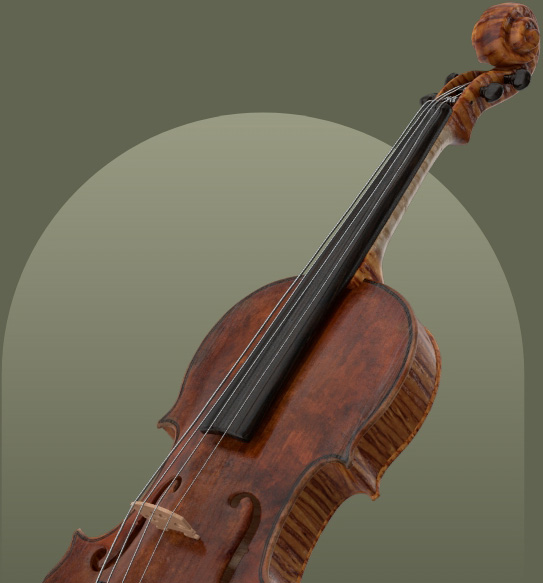
James William Briggs
Glasgow, Wakefield, 1855–1935
Pupil of Tarr in Manchester from 1869. Established in Wakefield from 1878. Won gold medal at Leeds exhibition 1890, then diplomas at Paris and Vienna. Moved to Glasgow 1893. Very fine maker and distinguished connoisseur, unique in being elected to the Violin Maker’s Association of Germany. — John Dilworth
Request an expert valuation or learn how our global auctions achieve the highest prices for your instruments.
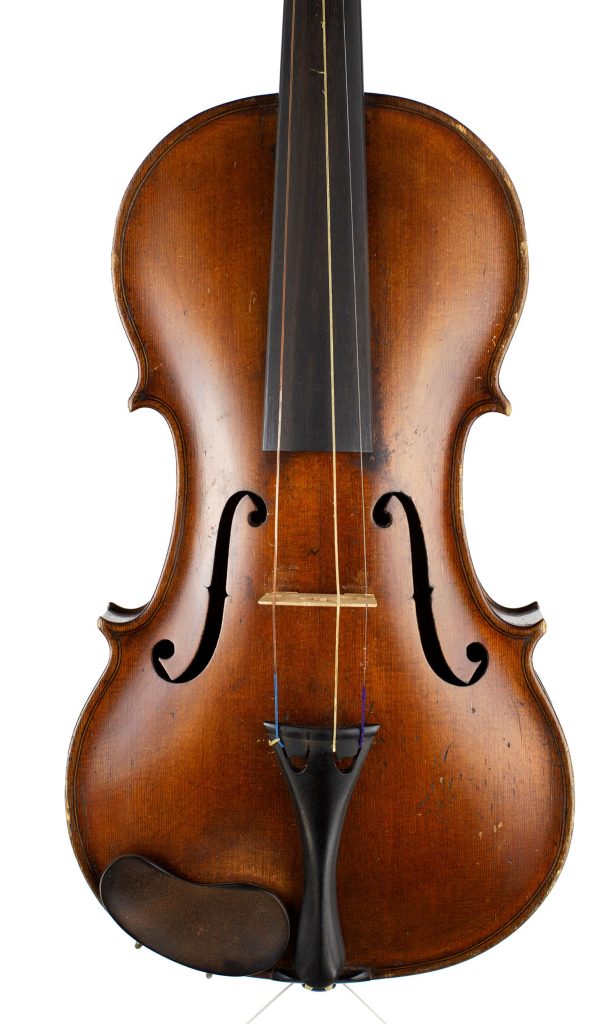
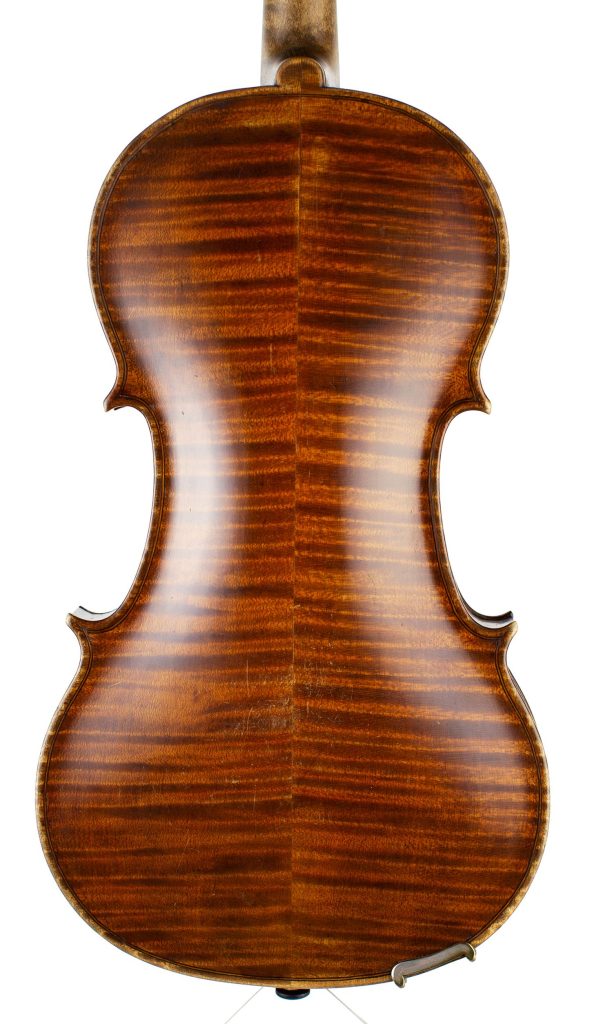
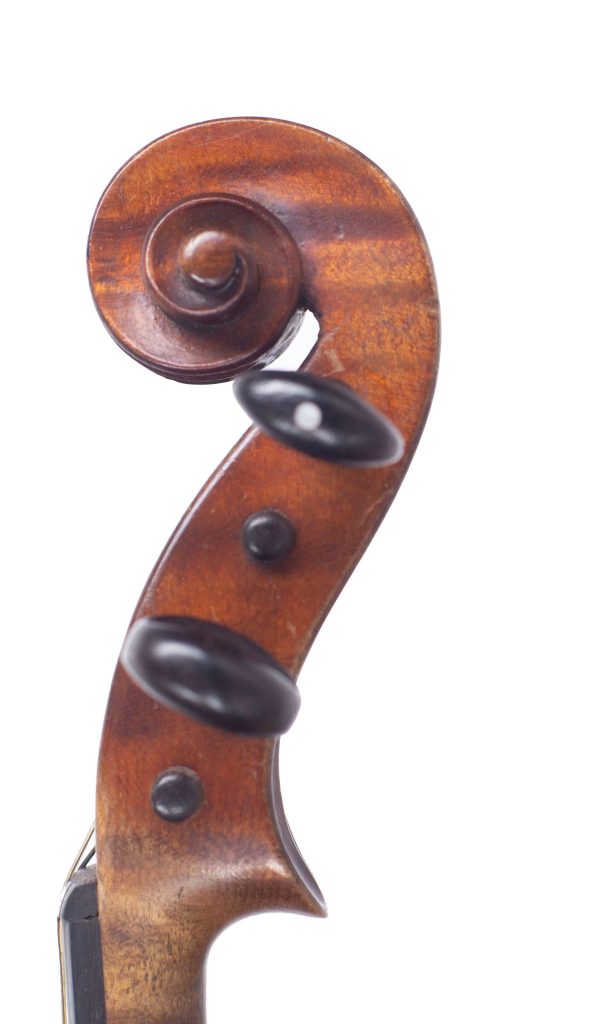
Instruments
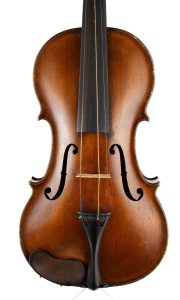
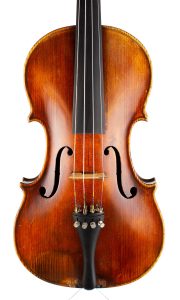
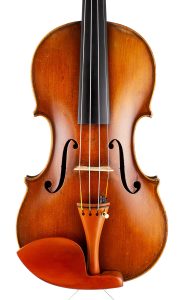
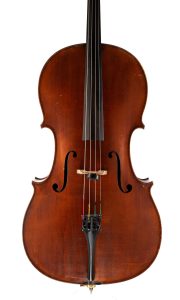
Auction Price History
Highest auction price
38 results
| Type | Details | Auction house | Sold | Price |
|---|---|---|---|---|
| Cello | A cello by James W. Briggs, Glasgow, 1924 over 100 years old Lot 1 | Amati | June 2025 | £12,640est. £ 10,000-20,000 |
| Violin | A violin by James Briggs, Glasgow, 1922 Lot 61 | Amati | November 2023 | £6,320est. £ 5,000-10,000 |
| Violin | A violin by James William Briggs, Wakefield, 1888 Lot 97 | Amati | November 2023 | £2,022est. £ 1,800-3,000 |
| Violin | A violin by James William Briggs, Glasgow, 1924 Lot 44 | Amati | June 2023 | £6,952est. £ 3,000-5,000 |
| Violin | Labelled Augustus Pollastri, Raphaelis Fiorini Alumnus, fecit Bononiae an. 1905, signed twice to the top Lot 22 | Tarisio | October 2022 | £6,600est. £ 5,000-8,000 |
| Violin | Labelled James W. Briggs, Glasgow, 1909, inscribed James W. Briggs Glasgow 1909 internally Lot 176 | Ingles & Hayday | March 2022 | £4,800est. £ 4,000-6,000 |
| Violin | Bearing an original label dated 1921 Lot 88 | — | October 2014 | £3,360est. £ 3,000-5,000 |
| Violin | One-piece back of narrow curl, table of fine width grain, varnish of a reddish colour on a golden ground Lot 22 | — | October 2013 | £3,839est. £ 3,000-4,000 |
| Violin | Bearing the maker's manuscript label Lot 35 | — | April 2013 | £1,593est. $ 3,000-5,000 |
| Violin | After del Gesù, bearing an original manuscript label dated 1923 Lot 110 | — | March 2013 | £5,400est. £ 4,000-6,000 |
| Violin | Labelled James Briggs, Glasgow, 1927 Lot 117 | Tarisio | March 2012 | £6,600est. £ 1,800-2,500 |
| Viola | 41.9 cm Glasgow, 1908 1/2 size | — | November 2011 | £6,766 |
| Violin | 35.6 cm Glasgow, 1899 | — | June 2011 | £2,640 |
| Violin | 36.0 cm Glasgow, 1897 | — | October 2009 | £4,200 |
| Violin | 35.7 cm 1929 | — | June 2008 | £4,800 |
| Cello | 1890 c. Workshop | — | April 2004 | £2,693 |
| Violin | 1921 | — | November 2000 | £4,600 |
| Violin | 1908 | — | November 1999 | £3,265 |
| Violin | 1908 | — | June 1998 | £2,760 |
| Violin | 1888 | — | February 1997 | £805 |
| Cello | 1924 | — | November 1996 | £13,800 |
| Cello | 1925 | — | November 1996 | £9,775 |
| Violin | 1931 | — | March 1996 | £3,105 |
| Violin | 1909 | — | October 1995 | £2,645 |
| Cello | 1897 | — | June 1995 | £9,775 |
| Violin | 1909 | — | November 1994 | £3,105 |
| Violin | 1905 | — | October 1994 | £2,645 |
| Violin | 1924 | — | June 1994 | £2,875 |
| Violin | 1898 | — | June 1994 | £1,955 |
| Violin | 1921 | — | March 1994 | £3,960 |
| Violin | 1891 | — | March 1993 | £2,530 |
| Violin | 1924 | — | November 1992 | £3,080 |
| Violin | 1908 | — | November 1992 | £2,860 |
| Violin | 1905 | — | November 1991 | £5,060 |
| Violin Bow | S/E 55 g. | — | March 1990 | £330 |
| Cello | 1924 | — | March 1988 | £3,410 |
| Viola | 41.9 cm 1927 | — | April 1984 | £1,760 |
| Viola | 42.4 cm 1900 | — | April 1982 | £1,375 |
No results match those filters.
Maker Overview
Life
James William Briggs (1855-1935) was born in Wakefield, Yorkshire, on July 9, 1855, and died in Glasgow, Scotland, in 1935. He received his elementary education at the Friends' School in Rawdon, where his father, a Quaker, provided him with a strong foundation in commercial subjects. Briggs supplemented this early training with extensive reading throughout his life. He was a pupil of William Tarr in Manchester from 1869, and established his own workshop in Wakefield by 1878. By 1876, he had become self-employed. Briggs moved to Glasgow in 1893, where he worked at 122 Sauchiehall Street. He was a very fine maker and a distinguished connoisseur, uniquely elected to the Violin Maker's Association of Germany. Philip Schreiber served as his assistant for over fifty years. Briggs was also the author of Instructions on Fiddle-making (Cassel). Instruments made in his final years in Wakefield were subsequently relabeled as originating from Glasgow.
Characteristics
- Models
- James William Briggs worked on the Stradivari and Guarneri models, as well as an original design. His original model featured a body length of 14 3/16 inches, an upper bout width of 6 3/4 inches, middle bout width of 3 7/16 inches, and lower bout width of 8 1/4 inches. The C-bouts measured 3 1/8 inches in length, and the sound-holes were 3 1/16 inches long. The lower rib had a depth of 1 1/4 inches, and the upper rib 1 3/16 inches, with a distance of 1 9/16 inches between the sound-holes.
- Outline and Features
- The outline of his instruments was bold and assertive, moderately pronounced. The scroll, though original, was much in the manner of Joseph (Del Gesu). The button was well-designed, described as a trifle more circular than Stradivari's. The corners were full and piquant, contributing to a broad conception when viewed with the widened waist. The sound-holes were original, beautifully cut with a firm hand, representing a compromise between those of Stradivari and Joseph.
- Materials
- Briggs generally used excellent materials, though often incorporating locally sourced pine for the fronts, which possessed a fine structure. The wood for the backs and ribs of his instruments was exhibited as timber at the Paris Exhibition of 1880 and the Vienna Exhibition of 1890, where it received a gold medal. The bellies were crafted from wood three hundred years old, sourced from an old church in Warsaw, Poland.
- Varnish
- He applied an oil varnish of his own composition, characterized by a golden amber color with a rose flush. Willibald Leo Lütgendorff notes his use of an amber-oil varnish.
- Tone
- The instruments produced a strong, bright, and bell-like tone.
- Production
- By the end of January 1899, Briggs had made eighty-four violins, eleven violas, eleven cellos, and nine double-basses. He produced over 300 instruments in total, including violins, violas, cellos, and basses.
- Copying Style
- When working as a copyist, Briggs was considered a member of the Vuillaume school, with the exception of artificially seasoning the wood. His copies of classical instruments were noted for their fineness and correctness, sometimes even replicating every scratch and patch.
- Internal Markings
- Instruments were numbered internally on a small label located near the upper block. Manuscript labels typically read: "James W. Briggs / Glasgow, 18.."
- James W. Briggs
Glasgow, 18..John Dilworth
Influence and legacy
- Training: James William Briggs was a pupil of the renowned double-bass maker William Tarr of Manchester.
- Family Involvement: His son, Harry Briggs, carved the scrolls for the last ten instruments made by James William Briggs up to 1899, indicating a collaborative aspect within the workshop.
- Awards and Recognition: James William Briggs won a gold medal at the Leeds exhibition in 1890, followed by diplomas at Paris and Vienna. In 1891, he received another gold medal. He was uniquely elected to the Violin Maker's Association of Germany.
- Exhibitions: He presented the largest and, in many respects, the finest exhibit of instruments at the Glasgow Exhibition.
- Appreciation: His instruments, including over 300 violins, violas, cellos, and basses, are all well-appreciated.
Further Information
- Workshop Location: James William Briggs worked at 122 Sauchiehall Street, Glasgow.
- Labeling: Instruments were numbered internally on a small label near the upper block. Manuscript labels typically read: "James W. Briggs / Glasgow, 18.." Instruments made in his later years in Wakefield were relabeled as originating from Glasgow.
- Dealer Activity: He was also a significant dealer in old instruments.
Biographies
The overview above is drawn from the following published accounts. Read them in the original:
John Dilworth+
BRIGGS, James William Born 1855 Wakefield, Yorkshire, died 1935 Glasgow, Scotland UK. Pupil of Tarr in Manchester from 1869. Established in Wakefield from 1878. Won gold medal at Leeds exhibition 1890, then diplomas at Paris and Vienna. Moved to Glasgow 1893. Very fine maker and distinguished connoisseur, unique in being elected to the Violin Maker’s Association of Germany. Employed Philip Schreiber as assistant for over fifty years. Many fine copies of classical instruments with richly-hued varnish of good texture, including an imitation of cellist Pablo Casals’ Gofriller cello. Excellent materials generally, but often with locally sourced pine in the fronts, albeit of fine structure. Over 300 violins, violas, cellos, and basses all well-appreciated. Author of Instructions on Fiddle-making (Cassel). Instruments numbered internally on small label near the upper block. Instruments made in last years in Wakefield relabelled as from Glasgow. Manuscript label: James W. Briggs / Glasgow, 18..
William Meredith Morris+
He works at 122 Sauchiehall Street, Glasgow, and was born at Wakefield on July 9, 1855. He received elementary education at the Friends”‘ School, Rawdon. His father, who is a worthy old Quaker, gave the son a sound grounding in various subjects on commercial lines. Mr. Briggs has supplemented his early training with wide and varied reading in after life.
He is a pupil of the late William Tarr, of Manchester, the famous double-bass maker.
Up to the end of January 1899 he had made eighty-four violins, eleven violas, eleven ‘cellos, and nine double-basses. All the work is personal, with the exception of the scrolls of the last ten instruments, which have been carved by his son Harry.
He works on the Stradivari and Guarneri model, and also on an original one. The measurements of the original model are as follows : —
Length of body … 14 3/16ins,Width across upper bouts … 6 3/4ins,Width across middle bouts … 3 7/16ins,Width across lower bouts … 8 1/4ins,Length of C’s … 3 1/8ins, Length of sound-holes … 3 1/16ins,Depth of lower rib … 1 1/4ins, Depth of upper rib … 1 3/16ins, Distance between sound-holes … 1 9/16ins,
The outline is bold and assertive, and moderately pronounced. The scroll, although original, is much in the manner of Joseph (Del Gesu). The button is well designed, but a trifle more circular than that of Strad’s. The corners are full and piquant, and when viewed in con- junction with the widened waist, they give the instrument a breadth of conception. The sound-holes also are original ; they are beautifully cut with a firm hand, and are a sort of compromise between those of Strad and Joseph.
The varnish is an oil one, of the maker’s own com- position. Colour : golden amber with a rose flush. The tone is strong, bright, and bell-like.
When Mr. Briggs works as a copyist, he may be said to be a member of the Vuillaume school, except in the matter of artificially seasoning the wood. His copies of some of the classical violins are, indeed, very fine and correct — too correct, perhaps. It is questionable whether the time spent in copying every little scratch and patch be time profitably spent. A facsimile copy, like that of Mr. Briggs’ Paganini-Joseph, requires immense skill and patience, and it also requires a length of time. To exercise the greatest skill and patience is commendable, but to consume over-much valuable time is against the interests of the art. The fiddle world cannot afford to allow a born artist to dally with scratches and patches.
Mr. Briggs had the largest exhibit of instruments at the Glasgow Exhibition, and in many respects the finest. The wood of the backs and ribs was exhibited as timber at the Paris Exhibition of 1880, and also at Vienna in 1890, where it was awarded a gold medal. The bellies were made from wood three hundred years old, taken from an old church in Warsaw, Poland,
As an original worker, Mr. Briggs is remarkably free from conventionality, and allows his genius unlimited liberty. At one moment he worships at the shrine of old Antonio, and at the next he is an uncompromising iconoclast. Genius ever was a mystery.
Willibald Leo Lütgendorff+
Schüler von William Tarr, machte sich 1876 selbstständig und baut sowohl
nach Stradivari und Guarneri als auch nach einem eigenen Modell und verwendet
einen Bernstein-Öllack. Seine Geigen sind vorzüglich gearbeitet, und schon 1891 erhielt er eine goldene Medaille dafür. Er ist auch als Händler mit alten Instrumenten bedeutend und soll auch in Leeds gewohnt haben.
Sell your instrument with Amati
Get started by uploading photos of your instrument for our experts to review.
Sell your instrument with Amati
Get started by uploading photos of your instrument for our experts to review.