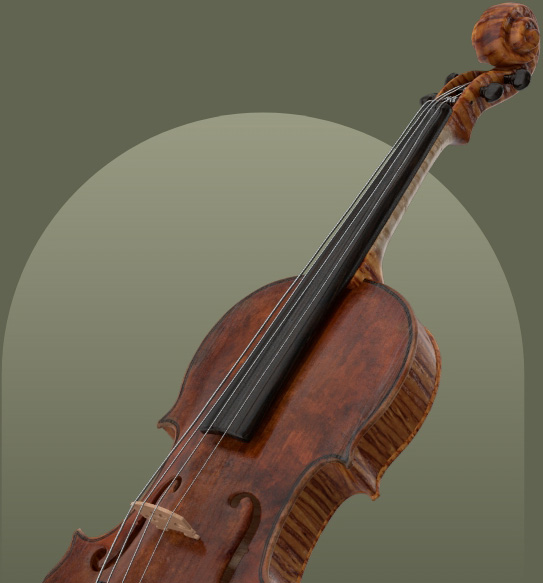
Gioffredo Cappa
Saluzzo, 1644–1717
Gioffredo Cappa (1644-1717) was a significant early luthier of the Turin school, known for instruments crafted in an Amati-influenced style. While John Dilworth places his life between 1644 and 1717 in Saluzzo, Turin, historical accounts, particularly from Lancetti and Count Cozio di Salabue, suggest a possible earlier period of work in Cremona as a pupil of the Amatis, though this is contested by Dilworth. Cappa's craftsmanship is characterized by distinctive sloping soundholes, a rich, soft varnish, and an evolution from Tyrolean rib-setting techniques to more conventional methods. Despite inconsistencies in material choice and some criticisms of his purfling and sound-hole execution, his instruments, particularly his cellos, are highly regarded and considered desirable concert instruments. The historical record is complicated by the widespread use of fake labels and conflicting dates, leading to a misperception of his output and origins.
Request an expert valuation or learn how our global auctions achieve the highest prices for your instruments.
Auction Price History
Highest auction price
27 results
| Type | Details | Auction house | Sold | Price |
|---|---|---|---|---|
| Violin | Many table restorations including the sound post crack, back blemish, head restoration Lot 75 | Laurent | December 2024 | £45,562est. € 25.000-30.000 |
| Violin | Labelled Jofredus Cappa Fecit Salutus Anno 1690, head probably by a member of the Kloz family Lot 175 | Ingles & H. | October 2024 | £57,600est. £ 50,000-70,000 |
| Violin | Featured on pp. 126-127 in The Strad in October 1943 as Giovanni Tononi; head probably by S. Serafino Lot 156 | Ingles & H. | March 2024 | £96,000est. £ 70,000-100,000 |
| Violin | 36 cm 18th C. Attributed to | — | March 2011 | £5,625 |
| Violin | Saluces, 1695-1700 c. (many restorations, head replaced) | — | June 2010 | £111,845 |
| Violin | 35.6 cm Saluzzo, 1700 c. (the head later) | — | October 2009 | £37,250 |
| Violin | 35.6 cm Saluzzo, 1690 c. | — | October 2006 | £71,155 |
| Violin | 35.3 cm 1700 c. Attributed to | — | February 2006 | £9,840 |
| Violin | 35.5 cm Saluzzo, 1695 c. | — | February 2006 | £108,000 |
| Cello | Saluzzo, 1690 c. | — | October 2005 | £88,250 |
| Violin | Saluzzo, 1680 c. | — | February 2005 | £26,400 |
| Violin | Saluzzo,1680c. 7/8 size (the head later) | — | October 2004 | £17,495 |
| Violin | 1690 | — | December 2001 | £49,172 |
| Violin | 1680 | — | November 1996 | £29,900 |
| Violin | 1700 c. | — | December 1994 | £21,378 |
| Violin | 1680 | — | June 1994 | £41,100 |
| Violin | 1670 | — | November 1991 | £39,600 |
| Violin | 1700 c. | — | April 1991 | £24,200 |
| Cello | 16-- | — | November 1990 | £19,250 |
| Violin | 1690 c. | — | June 1988 | £20,900 |
| Cello | 1700 c. | — | November 1987 | £15,400 |
| Violin | 1690 | — | April 1987 | £35,200 |
| Violin | 1681 c. | — | June 1985 | £20,465 |
| Violin | 1691 | — | April 1984 | £14,300 |
| Violin | 1680 | — | April 1983 | £20,900 |
| Violin | 1703 | — | November 1981 | £4,620 |
| Violin | 169- | — | March 1980 | £14,046 |
No results match those filters.
Maker Overview
Life
Gioffredo Cappa (1644-1717) was an early maker of the Turin school, working in an Amati-influenced style., he was born in 1644 and died in 1717 in Saluzzo, Turin, Italy. However, sources contain conflicting information regarding his origins and working dates. George Hart notes that—who received his information from Count Cozio di Salabue—Gioffredo Cappa was always regarded in Piedmont as a pupil of Antonio and Girolamo Amati, and therefore worked in Cremona during his early years. Hart further states that Count Cozio failed to discover information relative to the name of Cappa in connection with the records of Saluzzo, leading him to conclude that Cappa was Cremonese, given the existence of families with that name in Cremona. Cecie Stainer also suggests he was probably born at Cremona and was working there under the Amatis about 1590, and later, about 1640, in Saluzzo (Piedmont), dates which significantly predate those provided by Dilworth. Hart clarifies that confusion has arisen from dates on Cappa labels extending from 1590 to 1712, some from Saluzzo and others from Turin, and that Count Cozio informed Lancetti, "I cannot ascertain the real Christian name of the first nor of the other Cappa, because two at least worked in succession in Piedmont, judging from the difference of style and make." John Dilworth, however, asserts that Cappa's workmanship is "quite alien to all known Cremonese techniques," despite Count Cozio's conviction that Cappa was a significant maker with connections to Amati. A fake Cappa label was extensively used in the past, leading to the misconception that he was far more prolific than he actually was. With more accurate appraisal, his instruments are ranked among the best provincial work of the late 17th century in Italy.
Characteristics
- Style
- Gioffredo Cappa's work is described as Amati-influenced, featuring distinctive sloping soundholes and a deeply colored but softly textured varnish.
- Construction Technique
- His teachers initially utilized the technique peculiar to northern European makers of setting the ribs into a channel cut into the inner edge of the back. Cappa soon revised this, making instruments in a more conventional way.
- Sound-holes
- The sound-hole is sometimes large and quite out of keeping with the elegant outline of Amati, often larger and more obliquely set in the instrument, and sometimes described as "hässlich und zu weit offen" (ugly and too wide open) by Willibald Leo Lütgendorff, or "badly cut" by Cecie Stainer.
- Materials
- Cappa was not greatly consistent in his choice of materials; backs can be of various cuts and species, while tops are not always of the finest straight Alpine growth. Lancetti remarks upon the difference in wood between instruments made in Cremona (foreign growth) and those made in Piedmont (local, coarse, and plain wood). Backs are either whole or in two parts, seldom cut on the cross.
- Varnish
- The varnish is frequently of very rich quality, its color resembling that of Amati in many instances, generally golden or yellow, but varying a good deal.
- Purfling
- The purfling is sometimes carelessly done.
- Pattern
- The pattern was often too large and had later to be cut down. Instruments are of two patterns, one larger than the other, with the large one being flatter and altogether better finished.
- Instrument Quality
- His violas are considered better than his violins, and his violoncellos are among his best work, though sometimes too much arched.
- Jofredvs Cappa
fecit Salutiisanno 1680John Dilworth - Joffridus Cappa
fecit Salutiis anno 1692John Dilworth - Jofredus Cappa
in Saluzzo, fecit anno 1698John Dilworth
Influence and legacy
- Teachers: His teachers were almost certainly of Tyrolean origin, notably Enricus Catenar and Andrea Gatto.
- Alleged Mentorship:, who received his information from Count Cozio di Salabue, Gioffredo Cappa was always regarded in Piedmont as a pupil of Antonio and Girolamo Amati.
- School Perpetuation: Cappa's style was perpetuated in Turin by Spiritus Sorsana and Joannes Franciscus Celoniatus.
- Reputation: Many of Count Cozio di Salabue's early acquisitions were credited to Cappa in his accounts, an assessment that Cozio believed made Cappa a very significant maker.
- Notable Users: Both Pugnani and Viotti were said to have been familiar with his violins.
- Value: His instruments are fine and highly desirable concert instruments. Cellos are somewhat rare. George Hart noted that Cappa's instruments, though not prized at the time, "must ultimately command prices proportionate to their real value."
- Historical Confusion: The extensive use of fake Cappa labels and the wide range of dates attributed to him (from 1590 to 1712) led to considerable confusion regarding his parentage and prolificacy.
Further Information
- Label Inscriptions: Examples of his labels include "Jofredvs Cappa / fecit Salutiisanno 1680", "Joffridus Cappa / fecit Salutiis anno 1692", and "Jofredus Cappa / in Saluzzo, fecit anno 1698".
- Instrument Types: He made both large and small violins, with the large instruments being preferable. His violoncellos are among the best of the second-class Italian instruments.
Biographies
The overview above is drawn from the following published accounts. Read them in the original:
John Dilworth+
CAPPA, Goffreddo Born 1644, died 1717 Saluzzo, Turin Italy. An early maker of the Turin school working in an Amati influenced style. His teachers were almost certainly of Tyrolean origin, notably Enricus Catenar and Andrea Gatto, who utilised the technique peculiar to northern European makers of setting the ribs into a channel cut into the inner edge of the back. Cappa soon revised this, and made instruments in a more conventional way, but with distinctive sloping soundholes and a deeply coloured but softly textured varnish. His style was perpetuated in Turin by Spiritus Sorsana and Joannes Franciscus Celoniatus, but the Turin school subsequently fell into decline until its revival in the early nineteenth century by Joannes Franciscus Pressenda. A fake Cappa label was extensively used in the past, leading to the idea that he was far more prolific than he actually was. Many of Count Cozio di Salabue’s early acquisitions are credited to Cappa in his accounts, but this was probably an optimistic assessment. Cozio convinced himself that Cappa was a very significant maker with connections to Amati, but his workmanship is quite alien to all known Cremonese techniques. With more accurate appraisal his instruments can be ranked amongst the best provincial work of the late 17th century in Italy, and are fine and highly desirable concert instruments. Both Pugnani and Viotti were said to have been familiar with his violins. Cellos are somewhat rare. He was not greatly consistent in choice of materials, and backs can be of various cuts and species, while tops are not always of the finest straight Alpine growth. Jofredvs Cappa / fecit Salutiisanno 1680 Joffridus Cappa / fecit Salutiis anno 1692 Jofredus Cappa / in Saluzzo, fecit anno 1698
George Hart+
According to Lancetti—who received his information from Count Cozio di Salabue – Gioffredo Cappa was always regarded in Piedmont as a pupil of Antonio and Girolamo Amati, and therefore worked in Cremona during his early years. He removed to Piedmont, possibly, that he might have greater scope for the exercise of his talents, it being, no doubt, difficult for him to obtain any important patronage, surrounded as he was at Cremona by so many famous men engaged in the same occupation as himself. Count Cozio failed to discover any information relative to the name of Cappa in connexion with the records of the town of Saluzzo, and he concluded that Cappa was a Cremonese, there having existed in Cremona families of the name. The instruments of Cappa are, even now, little known in England, and twenty years since were recognized only by the most intelligent connoisseurs. The greater number of them consist of works of high merit, and, although not prized at present, must ultimately command prices proportionate to their real value. Their likeness to the instruments of the Amatis is in some instances peculiarly striking, but in others there is a marked dissimilarity. Particularly this is the case in the form of the sound-hole and scroll. The sound-hole is sometimes large, and quite out of keeping with the elegant outline of Amati. The points of difference may be summed up as follows :—the sound-hole is larger, and more obliquely set in the instrument; the upper portion of the body has a more contracted appearance; the head, as is the case with most makers, differs most, and, in this instance, in no way resembles Amati. There are few specimens of Cappa that bear their original labels; most of them are counterfeit ” Amatis,” and hence the great confusion which has arisen concerning their parentage. Lancetti says, ” Foreign professors and amateurs, and particularly the English—though connoisseurs of the good and the beautiful—in buying the instruments of Cappa thought they had acquired those of Amati, the out- line and character of the varnish and the quality of the tone resembling in some measure the instruments of the Brothers Amati. It is, however, reserved to a few Italian connoisseurs to distinguish them. Those of large pattern, and even of medium size, that have not been injured by unskilful restorers, are scarce, and realize high prices.” These remarks, suggested sixty years since, by so able a connoisseur as Count Cozio, possess a peculiar interest, and cannot fail to interest the reader. As Lancetti remarks, they are of two patterns, one larger than the other. The large one is, of course, the more valuable; it is flatter, and altogether better finished. The Violoncellos of Cappa are among the best of the secondclass Italian instruments, and are well worthy the attention of the professor and amateur. The varnish is frequently of very rich quality, its colour resembling that of Amati in many instances. Lancetti remarks upon the difference between those instruments of this make, as regards wood, made in Cremona, and those made in Piedmont, the firstnamed being made of wood of foreign growth, and the last with that of home growth, which is coarse and plain. The backs are whole, or in two parts, seldom cut on the cross. Cappa —. Confusion has arisen from the dates on the Cappa labels extending, it is said, from 1590 to 1712, some dating from Saluzzo, others from Turin. To credit one maker with this long line of manufacture would—associating mighty names with a subordinate one—dwarf the artistic achievements of Stradivari at the age of ninety-three, and of Titian at ninety-six. Upon turning to the information given by Count Cozio to Lancetti relative to Cappa, we have the following words : ” I cannot ascertain the real Christian name of the first nor of the other Cappa, because two at least worked in succession in Piedmont, judging from the difference of style and make.”
Cecie Stainer+
Probably born at Cremona. Was working there under the Amatis about 1590, and later, about 1640, in Saluzzio (Piedmont). Made both large and small violins, more valuable as specimens of old Italian work than for their tone; the large instruments are preferable. His violoncellos show some of his best work, but are too much arched, and the sound holes are badly cut; the wood varies, that used in Cremona was of foreign growth, but in Piedmont he used locally grown wood, of coarse fibre; the varnish is generally golden or yellow colour, but varies a good deal; the purfling is carelessly done. The pattern was often too large and had later to be cut down.
Willibald Leo Lütgendorff+
Wahrscheinlich ein Sohn von Giuseppe Francesco C. und wohl auch aus
dessen Schule hervorgegangen. Fétis macht ihn zu einem Amatischüler und
giebt allerlei unhaltbare Daten an, so dass de Piccolellis mit Recht fragt, woher
der berühmte Musikgelehrte , der Cappa’s Namen nicht einmal sicher kannte,
das Behauptete eigentlich wissen will. Cappa’s Arbeit erinnert wohl an Amati,
weist aber doch allerlei Verschiedenheiten auf. Er wählte sein Holz ohne Sorgfalt
und lässt auch in der Arbeit oft die nöthige Sauberkeit vermissen; die
F-Löcher sind hässlich und zu weit offen. Seine Violen sind besser als seine
Violinen, und am besten gelangen ihm seine Violoncelli. Der Werth von Cappa’s
Arbeiten beruht gewöhnlich mehr auf ihrem Alter als auf ihrer Güte, doch werden für bessere Geigen von ihm immerhin 1200 bis 2000 M. bezahlt.
Sell your instrument with Amati
Get started by uploading photos of your instrument for our experts to review.
Sell your instrument with Amati
Get started by uploading photos of your instrument for our experts to review.