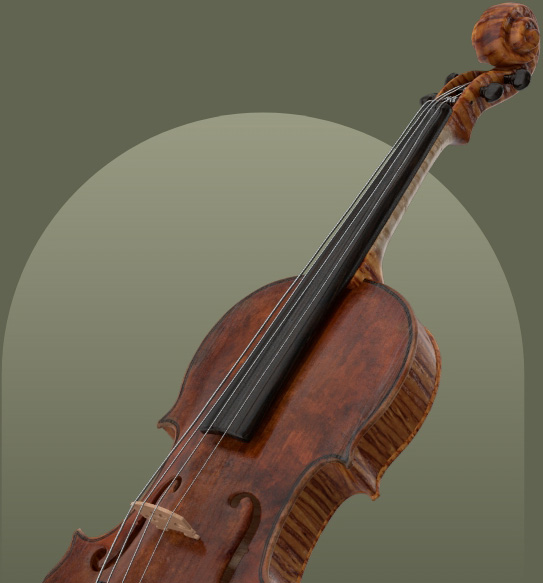
Frederick William Channon
London, Totnes, 1862–1946
Frederick William Channon (1862-1946) was a distinguished English violin maker of the early 20th century, born in Totnes and active in Devonport, Plymouth, London, and Weybridge. Initially trained as a cabinet maker, he transitioned to violin making, establishing his own business and becoming a technical instructor. Known for his meticulous craftsmanship, he won numerous awards for tone quality and workmanship, often copying Stradivari and Guarneri models with his distinctive varnish. His instruments are praised for their grand and grave tone, combining the sweetness of Amati with the plaintiveness of Maggini.
Request an expert valuation or learn how our global auctions achieve the highest prices for your instruments.
Auction Price History
Highest auction price
11 results
| Type | Details | Auction house | Sold | Price |
|---|---|---|---|---|
| Violin | 35.9 cm London, 1915 | — | March 2011 | £3,600 |
| Violin | 35.6 cm 1934 | — | July 2007 | £1,020 |
| Violin | 1936 | — | June 1993 | £770 |
| Violin | 1925 | — | November 1991 | £825 |
| Violin | 1929 | — | April 1991 | £990 |
| Violin | 1896 | — | November 1989 | £990 |
| Violin | 1907 | — | June 1989 | £715 |
| Violin | 1896 | — | March 1989 | £880 |
| Violin | 1913 | — | November 1986 | £550 |
| Violin | 1913 | — | July 1985 | £660 |
| Violin | 1936 | — | November 1981 | £286 |
No results match those filters.
Maker Overview
Life
Frederick William Channon (1862-1946) was born in 1862 in Totnes and died in 1946 in Weybridge, UK. He was apprenticed as a cabinet maker in Devonport and established himself as a violin maker in Plymouth from 1897. In 1913, he moved to London, briefly establishing himself in Wells Street before relocating to Byfleet, Essex, and finally to Weybridge, Surrey., he worked at Portland House, Portland Place, and made rapid progress in the cabinet-making trade, becoming a foreman of one of the largest cabinet shops in Devonport at the age of twenty, overseeing about thirty men and apprentices. At twenty-five, he started his own business and was appointed technical instructor for two classes in carpentry and carving in a local district. Around 1887, he formed an acquaintance with the connoisseur Mr. Francis Codd, which led to a mutual desire to fashion a fiddle, with Codd imparting the art's lore to Channon.
Characteristics
- Workmanship
- He won various medals and awards for tone quality and workmanship.
- Models
- He copied particular Stradivari instruments, occasionally Guarneri, and his outline was almost identical to that of the Tuscan Strad.
- Arching
- His arching combined the lines of Strad and Joseph.
- Varnish
- His own varnish consisted of resin, dragon's blood, gamboge, turpentine, and boiled linseed oil.
- Scroll
- The scroll was beautifully carved, described as "correct and compact," though perhaps the boss of the volute was not brought out to the same piquant prominence as in the work of Stradivari.
- Corners
- His corners were "sweet and sober," differing from the average modern copy that affects Amatise protrusiveness.
- Sound-holes
- His sound-holes were "beautiful conceptions" and showed the "luthier-poet in every line," with full margins and strong edges that were not as rounded as typical in the best modern British school work.
- Wood
- The wood used was of the orthodox kind and of excellent quality.
- Tone
- The tone was described as grand and grave, possessing something of the inimitable tone of Maggini, and aimed to combine the sweetness of Amati with the plaintiveness of Maggini.
- Labels
- Instruments were labeled "Made by Fred. W. Channon / No.18 Plymouth Made by 1893" or "Fred. W. Channon / No. 1 Devonport."
- Made by Fred. W. Channon
No.18 Plymouth Made by 1893
Fred. W. Channon
No. 1 DevonportJohn Dilworth
Influence and legacy
- Apprenticeship: He was apprenticed early in life to the cabinet-making trade.
- Mentorship: Around 1887, he formed an acquaintance with the connoisseur Mr. Francis Codd, who imparted to Channon the "lore of the art" of fiddle making.
- Awards: He won various medals and awards for tone quality and workmanship.
- Reputation: He is considered one of the best English makers of the early 20th century.
- Early Achievements: In his early days, he exhibited several specimens of fine art cabinet work and consistently secured the highest awards.
Further Information
- Workshop Locations: He worked at Portland House, Portland Place, and established himself in Plymouth, London (Wells Street), Byfleet, Essex, and Weybridge, Surrey.
- Measurements: Principal measurements for his violins include a length of 14 1/8 inches, width across upper bouts of 5 5/8 inches, width across middle bouts of 4 3/8 inches, width across lower bouts of 8 1/4 inches, length of sound-holes of 3 1/16 inches, length of C's of 3 1/8 inches, depth of ribs at bottom of 1 1/4 inches, and depth of ribs at top of 1 3/16 inches.
- Thickness: The thickness of the back was 3/16 inches, diminishing to 1/8 inches, and the belly was 1/8 inches all over.
Biographies
The overview above is drawn from the following published accounts. Read them in the original:
John Dilworth+
CHANNON, Frederick William Born 1862 Totnes, died 1946 Weybridge UK. Apprenticed as a cabinet maker in Devonport. Established as a violin maker in Plymouth from 1897. Moved to London in 1913 and established briefly in Wells Street before moving again to Byfleet, Essex, and finally Weybridge, Surrey. Won various medals and awards for tone quality and workmanship. Copied particular Stradivari instruments, occasionally Guarneri. Own varnish of resin, dragon’s blood, gamboge, turpentine, and boiled linseed oil. One of the best English makers of the early 20th century. Made by Fred. W. Channon / No.18 Plymouth Made by 1893 / Fred. W. Channon / No. 1 Devonport
William Meredith Morris+
He works at Portland House, Portland Place, and was born at Totnes in 1862. He was apprenticed early in life to the cabinet- making trade, and made such rapid progress that, at the age of twenty, he became foreman of one of the largest cabinet shops in Devonport, where he had about thirty men and apprentices under him. At the age of twenty-five he commenced business on his own account, and he was appointed at the same time technical instructor for two classes in carpentry and carving in a local district.
About 1887 he formed the acquaintance of the well-known connoisseur, the late Mr. Francis Codd, and a warm friendship sprung up between them. This resulted in a mutual desire to fashion a fiddle, so Codd imparted to Channon the lore of the art, and Channon initiated Codd into the mysteries of keen-edged tools. Good results were bound to follow genuine enthusiasm of this sort. Channon from a boy had a strong predilection for art and craft. In his early days he exhibited several specimens of fine art cabinet work, and he never failed to secure the highest award.
He has made several violins and a few violas, but unfortunately his time is mostly taken up with repairs. His outline is almost identical with that of the Tuscan Strad, and his arching combines the lines of Strad and Joseph. The principal measurements are : —
Length … 14 1/8ins,Width across upper bouts … 5 5/8ins,Width across middle bouts … 4 3/8ins,Width across lower bouts … 8 1/4ins,Length of sound-holes … 3 1/16ins,Length of C’s … 3 1/8ins,Depth of ribs at bottom … 1 1/4ins,Depth of ribs at top … 1 3/16ins,
The thickness of the back is 3/16, diminishing to 1/8ins, and the belly is an 1/8 all over. The ensemble shows breadth of intellectual view. The scroll is beautifully carved, and may be described as ” correct and compact.” Perhaps the boss of the volute is not brought out to the same piquant prominence as in the work of Stradivari. The corners are sweet and sober — totally different from the average modern copy, which affects Amatise protrusiveness, without possessing Amatise compensating curves. There was much solidity of feeling, and withal gracefulness of expression in the quaint and quiet corners of old Maggini. When Stradivari waked Maggini’s corners from their slumber, he did all that true art dare do. Many of his imitators have added two pairs of miniature wings to their productions, and their instruments look like flying odonatas.
Herein lies the difference between the artist and the copyist. The artist takes hold of any crucial point and is able to modify without “mythifying” it. The mere copyist is the “myth-maker ” — a would-be reconciler of contradictories.
Mr. Channon’s sound-holes are beautiful conceptions and show the luthier-poet in every line. The margins are full and the edges strong. The latter are not so rounded as is usual in the best work of the modern British school, but they are, nevertheless, very pretty. The wood is of the orthodox kind, and of excellent quality.
The tone is grand and grave, and has something of the inimitable tone of Maggini about it. Nothing can be more divine than the broad, dreamy, weeping, and withal sweet tones of the Brescian maestro. The notes drop off the strings like tears trickling down the beard of a weeping god. No virtue ought to be more commended in a modern maker than the passion for combining the sweetness of Amati with the plaintiveness of Maggini.
Sell your instrument with Amati
Get started by uploading photos of your instrument for our experts to review.
Sell your instrument with Amati
Get started by uploading photos of your instrument for our experts to review.