Georges (I) Chanot
London, Manchester, Mirecourt, Paris, 1801–1883
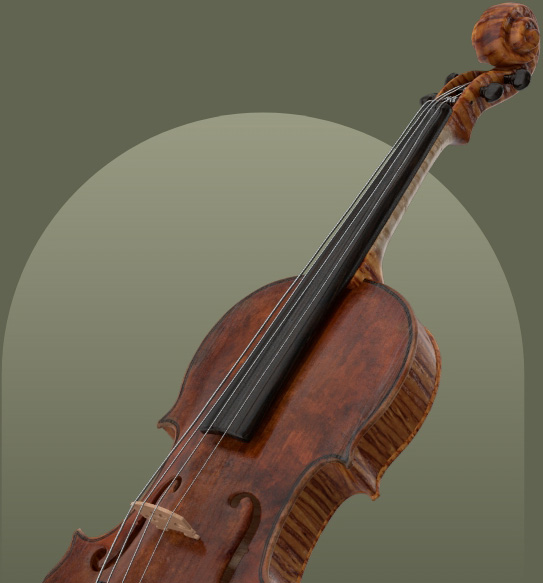
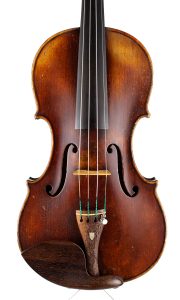
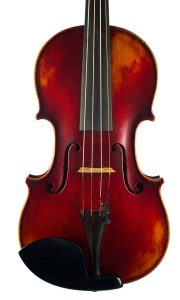
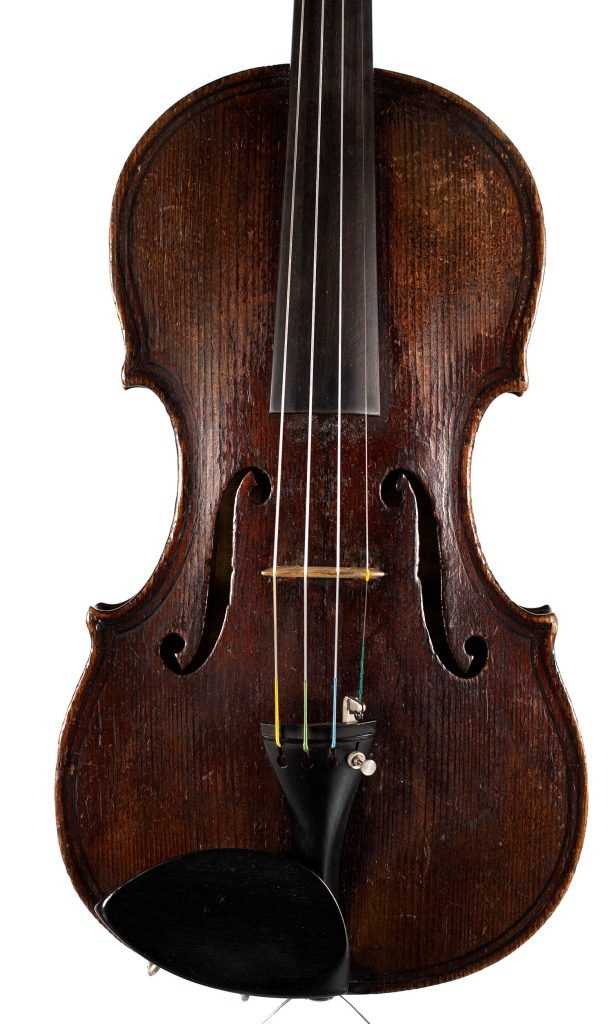
Georges (I) Chanot (1801-1883) was a prominent French violin maker and dealer, born in Mirecourt and active primarily in Paris. Son and pupil of Joseph Chanot, he established his own workshop in 1823 after working for notable makers like Lété, Clement, and Gand. Renowned for his meticulous copies of classical Cremonese and Brescian instruments, particularly Stradivari and Guarneri, his work was characterized by exact workmanship, high-quality materials, and noble tone. He was also an expert dealer, traveling extensively across Europe to acquire old instruments. His first wife, Florentine, was also a violin maker and his pupil. His sons, Adolphe and Georges (II), continued the family's lutherie tradition, with Georges (II) gaining fame in London. His third son, Marie-Joseph (Joseph Chardon), took over the family business, Chanot et Chardon, upon Georges (I)'s retirement in 1872. Chanot received several awards, including silver medals, solidifying his reputation as one of the most brilliant representatives of the 19th-century French school.
Request an expert valuation or learn how our global auctions achieve the highest prices for your instruments.
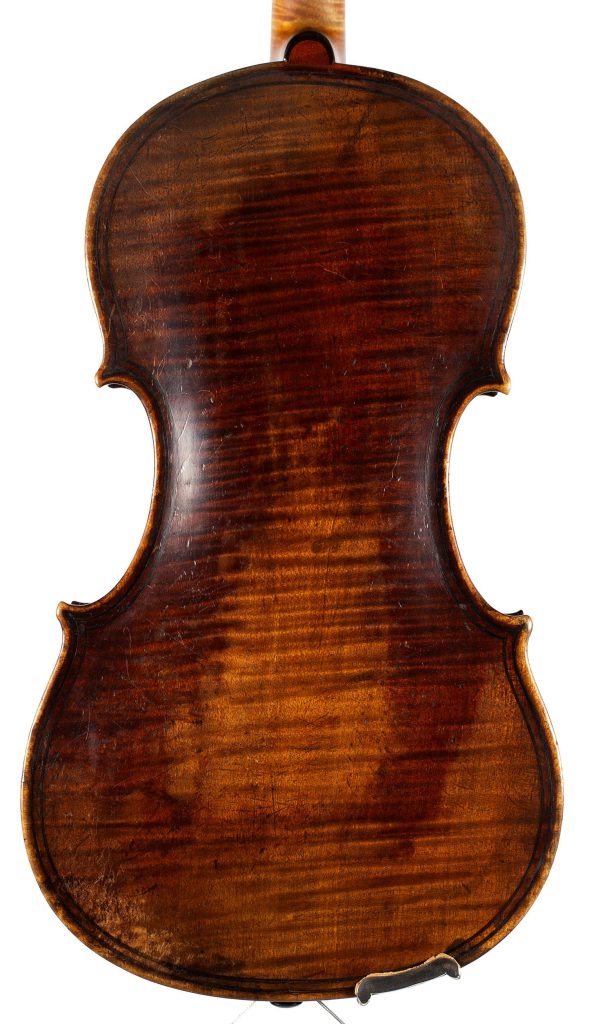
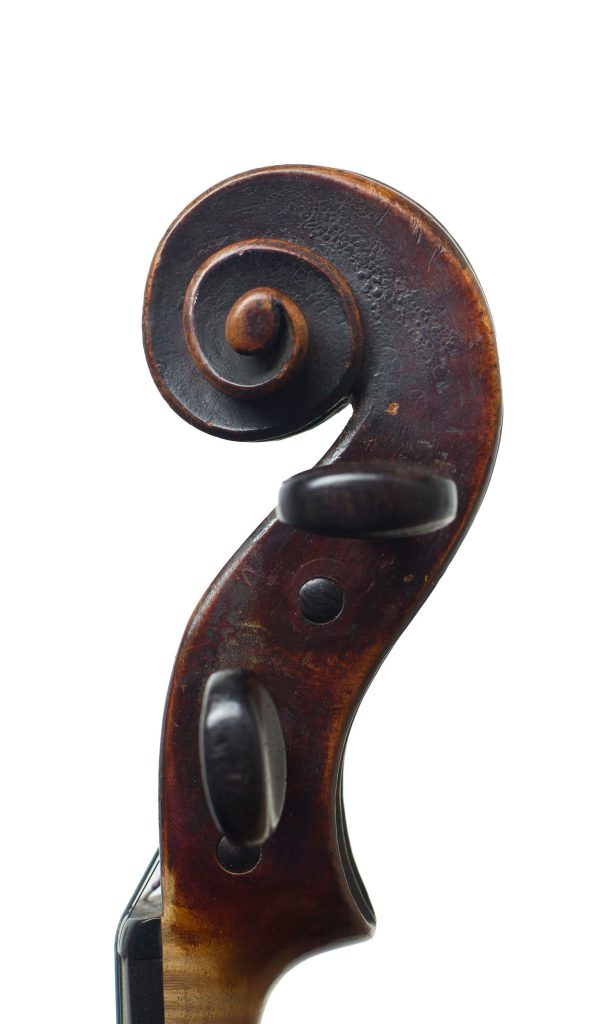
Instruments
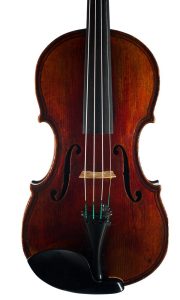
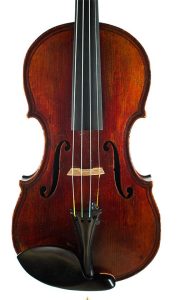
Auction Price History
Highest auction price
68 results
| Type | Details | Auction house | Sold | Price |
|---|---|---|---|---|
| Violin | Labelled Georges Chanot à Paris, I. Quai Malaquais Année 1840 Lot 211 | — | March 2026 | £33,600est. Estimate £ 30,000-50,000 |
| Violin | Labelled Chanot Jeune, rue Oblin N° 6 Année 1822 Lot 60 | Vichy | December 2025 | £38,367est. € 35.000-40.000 |
| Violin | Bearing the maker's signature internally Lot 63 | Aguttes | November 2025 | £24,122est. € 18.000-20.000 |
| Violin | Labelled Joseph Guarnerius fecit Cremonae anno 1727 IHS Lot 195 | Tarisio | November 2025 | £22,057est. $ 30,000-50,000 |
| Violin | Unlabelled Lot 187 | Tarisio | November 2025 | £12,850est. $ 20,000-30,000 |
| Violin | A violin by Georges Chanot, Paris 1844 Lot 121 | Amati | October 2025 | £16,432est. £ 15,000-25,000 |
| Violin | Labelled Chanot Jeune, Rue de Rivoli N° 26 à Paris, anno 1844 Lot 42 | Ingles & H. | March 2024 | £26,400est. £ 25,000-35,000 |
| Violin | Labelled Georges Chanot à Paris 1 Quai Malaquais, Année 1840 Lot 104 | Tarisio | March 2024 | £23,054est. $ 20,000-30,000 |
| Violin | Labelled Antonius Stradiuarius Cremonensis Faciebat Anno 1723 Lot 123 | Tarisio | October 2023 | £25,710est. € 35.000-50.000 |
| Violin | Labelled Georges Chanot, à Paris 1, Ruai Malaquais, Année 1849 GC Lot 95 | Tarisio | June 2023 | £43,412est. $ 30,000-50,000 |
| Violin | Maggini model Lot 355 | Vichy | June 2023 | £5,771est. € 5.000-6.000 |
| Violin | Labelled Chanot Jeune, Rue de Rivoli N°. 26 à Paris, année 1837 Lot 320 | Ingles & Hayday | March 2023 | £42,000est. £ 35,000-45,000 |
| Violin | Bearing the maker's label Lot 275 | Vichy | December 2022 | £37,490est. € 35.000-40.000 |
| Violin | A violin by Georges Chanot, Paris, 1840 Lot 165 | Amati | November 2022 | £7,584est. £ 6,000-10,000 |
| Violin | Labelled N. Lupot Lot 310 | Vichy | December 2021 | £17,942est. € 12.000-15.000 |
| Violin | Literature: Georges Chanot, Maitre Luthier, 1801-1883 by Pierre Vidoudez, 1974 Lot 13 | Ingles & Hayday | November 2021 | £45,600est. £ 25,000-35,000 |
| Cello | Labelled Georges Chanot, à Paris 1. Quai Malaquais Année 1840 Lot 26 | Tarisio | November 2021 | £61,217est. $ 70,000-100,000 |
| Violin | Bearing the maker's label Lot 360 | Vichy | June 2021 | £32,067est. € 22.000-25.000 |
| Violin | Maggini model, labelled Maggini Lot 55 | Vichy | December 2020 | £10,080est. € 10.000-12.000 |
| Violin | A violin by Georges Chanot, Paris, 1835 Lot 108 | Amati | March 2020 | £10,112est. £ 8,000-12,000 |
| Violin | Labelled Georges Chanot, à Paris, 1, Quai Malaquais, Année 1848 GC Lot 17 | Ingles & Hayday | March 2020 | £19,200est. £ 18,000-25,000 |
| Violin | Labelled Georges Chanot à Paris, 1 Quai Malaquais, année 1847 Lot 207 | Tarisio | October 2019 | £27,600est. £ 25,000-40,000 |
| Violin | Labelled Georges Chanot à Paris, 1, Quai Malaquais, Année 1847 GC Lot 117 | Ingles & Hayday | October 2019 | £34,800est. £ 30,000-40,000 |
| Violin | Chanot-Chardon estate, labelled Georges Chanot à ..., head also by the maker but from an earlier period Lot 216 | Tarisio | March 2019 | £29,500est. £ 25,000-40,000 |
| Violin | Millant collection, made in collaboration with his son Adolphe Lot 191 | Vichy | December 2018 | £15,482est. € 15.000-20.000 |
| Cello | Labelled Stradivari Lot 120 | Vichy | June 2016 | £64,113est. € 45.000-50.000 |
| Violin | Labelled Georges Chanot a Paris, 1, Quai Malaquais, Annee 1869 Lot 196 | Tarisio | March 2016 | £36,000est. £ 25,000-40,000 |
| Violin | Bearing the maker's label Lot 375 | Vichy | June 2015 | £35,035est. € 40.000-45.000 |
| Violin | Labelled Georges Chanot a Paris, 1, Quai Malaquais, Annee 1858 Lot 337 | Tarisio | December 2014 | £3,619est. $ 4,000-6,000 |
| Violin | After Guarneri, labelled Georges Chanot à Paris, I Quai Malaquais, Année 1840 Lot 111 | Ingles & Hayday | October 2014 | £30,000est. £ 18,000-25,000 |
| Violin | Bearing the maker's label Lot 270 | Vichy | June 2014 | £31,929est. € 25.000-30.000 |
| Violin | Lot 52 | Bonhams | May 2014 | £9,375 |
| Violin | Bearing the maker's label Lot 170 | Vichy | December 2013 | £15,926est. € 22.000-25.000 |
| Cello | Labelled Georges Chanot, à Paris, Anno 1853 Lot 68 | Tarisio | May 2013 | £19,265est. $ 25,000-40,000 |
| Violin | Unlabelled Lot 139 | Ingles & Hayday | May 2013 | £21,600est. £ 20,000-30,000 |
| Violin | 35.3 cm Paris, 1840 c. after "Del Gesu" | — | March 2011 | £15,600 |
| Violin | 35.8 cm Paris, 1847 | — | April 2010 | £23,568 |
| Violin | 35.8 cm France or England, 1900 c. Attributed to | — | October 2008 | £5,000 |
| Violin | 35.7 cm Paris, 1840 c. | — | June 2008 | £25,067 |
| Violin | 35.8 cm Paris, 1830 | — | March 2008 | £17,300 |
| Violin | 35.5 cm Paris, 1847, after "Amati" | — | March 2008 | £22,100 |
| Violin | 35.7 cm Paris, 1842 (table replaced by "Gand") | — | December 2007 | £5,105 |
| Violin | 35.8 cm Paris, 1850 | — | December 2007 | £35,738 |
| Violin | 36.1 cm Manchester, 1898 | — | October 2006 | £1,839 |
| Violin | Paris, 1840 c. | — | November 2005 | £22,800 |
| Viola | 38.9 cm 1850 | — | May 2005 | £9,981 |
| Cello | Paris, 1855 | — | May 2005 | £36,633 |
| Viola | 40.2 cm Paris, 1841 | — | November 2004 | £15,600 |
| Viola | 39 4 cm Paris,1856 Guitar shaped & inverted scroll | — | November 2004 | £828 |
| Violin | Paris, 1840 c. Probably by | — | July 2004 | £14,400 |
| Cello | 1833 | — | October 2002 | £14,400 |
| Violin | 1825 | — | June 2002 | £7,768 |
| Violin | 1853 | — | June 2001 | £5,520 |
| Violin | 1825 | — | May 2001 | £9,790 |
| Violin | 1835 | — | December 2000 | £23,448 |
| Violin | 1840 | — | September 2000 | £3,910 |
| Violin | 1850 | — | June 2000 | £18,400 |
| Violin | 1822 | — | May 1999 | £14,774 |
| Violin | 1848 | — | November 1998 | £24,150 |
| Violin | 1840 | — | March 1998 | £1,150 |
| Violin | 1850 | — | February 1998 | £19,398 |
| Violin | 1835 | — | October 1997 | £14,950 |
| Violin | 1844 | — | July 1997 | £10,350 |
| Cello | 1856 | — | March 1997 | £31,050 |
| Violin | 1846 | — | December 1994 | £14,744 |
| Violin | 1828 | — | November 1994 | £14,950 |
| Violin | 1832 | — | November 1992 | £16,500 |
| Violin | 1849 | — | January 1992 | £9,020 |
No results match those filters.
Maker Overview
Life
Georges (I) Chanot (1801-1883) was born in Mirecourt in 1801, the son and pupil of Joseph Chanot. He moved to Paris in 1819, initially involved in making guitar-shaped violins with his elder brother, François. He subsequently worked for Lété, Clement, and Gand. Sources contain conflicting information regarding his death; John Dilworth states he died in Paris in 1883, while Cecie Stainer notes his death on January 10, 1883, in Courcelles, near Gif (Seine et Oise). Willibald Leo Lütgendorff also states he retired to Courcelles in 1872.
Chanot established his own shop at 3 Place des Victoires in 1823, having previously worked from addresses such as rue de la Vrillière and 15 rue Passage Choiseul. He moved to 26 rue de Rivoli in 1837. Between 1839 and 1845, he traveled extensively throughout Europe, building his reputation as an expert dealer and a maker of fine copies of classical instruments. He returned to Paris, moving to 1 Quai Malaquais in 1847, where he was active until 1871. He retired from business in 1872 to Courcelles, though he continued to engage in violin making for pleasure.
In his early life, he was assisted by his first wife, Florentine, who suffered from a debilitating illness from 1840 onward and died young. Sources contain conflicting information regarding her death date; Lütgendorff states she died in 1858. Florentine was also a violin maker and his pupil, exhibiting an excellent violin she built in 1827. Georges and Florentine had two sons, Adolphe (1826-1854) and Georges (II) (1831-1893), both of whom became violin makers. Georges (I) subsequently had a son, Marie-Joseph (born 1843), with Antoinette Chardon. Marie-Joseph, known as Joseph Chardon, became his father's deputy, running the shop in his absence and continuing the family business as Chanot et Chardon after Georges's retirement. Stainer notes he was married twice, the second time in 1859, and Lütgendorff specifies he married his sister-in-law, who also became a useful assistant.
Characteristics
- Workmanship
- Georges Chanot's instruments were closely modeled on classical Cremonese and Brescian makers, demonstrating the most exact workmanship and finish.
- Materials
- Materials used were invariably of the highest quality, with the wood being excellent.
- Models
- His new instruments are beautifully made and have a fine tone, chiefly copies of Stradivari and Guarneri. The Stradivari copies are considered the best.
- Expertise
- He made a careful study of old Italian instruments and was excellent at repairing or modifying them. He was a thinking artist and a profound connoisseur of Italian instruments, which he diligently studied and imitated.
- Aesthetics & Tone
- The work, wood, and varnish are impeccable, and the tone is very noble.
- Innovation & Tradition
- He made many attempts to refine the tone of new instruments but eventually rejected anything that deviated from the proven achievements of the Cremonese masters.
- The best may be ranked amongst those of Vuillaume and Lupot. Chanot Jeune à Paris
rue de la Vrillière 1820John Dilworth - Chanot jeune rue Passage
Choiseul No.15 à Paris 1825John Dilworth - Georges Chanot, à Paris
Quai Malaquais Année 18…John Dilworth
Influence and legacy
- Parentage & Training: He was the son and pupil of Joseph Chanot.
- Mentorship: He worked under Clement and was employed by Gand.
- Family Influence: He received valuable inspiration from his elder brother, François Chanot.
- Pupils: His first wife, Florentine, was his pupil and a violin maker.
- Awards: Georges (I) Chanot was awarded a Mention honorable in 1827, silver medals in 1839, 1844, and 1849 (of the second class), and again in 1855.
- Family Continuity: His sons, Adolphe and Georges (II), also became violin makers. Georges (II) moved to London in 1851 and gained a strong reputation for his own Cremonese copies.
- Business Succession: His son Marie-Joseph, known as Joseph Chardon, continued the family business as Chanot et Chardon after Georges (I) retired.
- Reputation: He was one of the most brilliant representatives of the 19th-century French school.
Further Information
- Workshop Locations: Georges (I) Chanot worked from various addresses in Paris, including rue de la Vrillière, 15 rue Passage Choiseul, 3 Place des Victoires (established 1823), 26 rue de Rivoli (from 1837), and 1 Quai Malaquais (from 1847). Other mentioned locations include rue Oblin près de la Halle auble, Place des Victoires (1825-28), Passage Choiseul (1828-37), and rue de Rivoli (1837-48).
- Travels: Between 1839 and 1845, he traveled extensively throughout Europe. He also made repeated major journeys through Italy, Spain, Germany, Austria, and Russia to acquire old violins.
- Labels: Examples of his labels include "Chanot Jeune à Paris / rue de la Vrillière 1820," "Chanot jeune rue Passage / Choiseul No.15 à Paris 1825," and "Georges Chanot, à Paris / Quai Malaquais Année 18…"
Biographies
The overview above is drawn from the following published accounts. Read them in the original:
John Dilworth+
CHANOT, Georges (I) Born 1801 Mirecourt, died 1883 Paris France. Son and pupil of Joseph Chanot, below. Mirecourt violin maker. Once established in Paris after 1819, a rival to J. B. Vuillaume. Initially involved in making guitar-shaped violins with of his elder brother François, he subsequently worked in turn for Lété, Clement, and Gand, and from addresses in rue de la Vrillière and 15 rue Passage Choiseul. His own shop established at 3 Place des Victoires in 1823. In 1837 he moved to 26 rue de Rivoli. Between 1839 and 1845 he travelled extensively throughout Europe, building his reputation as an expert dealer as well as a maker of fine copies of classical instruments. Returning to Paris moved to 1 Quai Malaquais 1847. In early life he was assisted by his wife Florentine, but she died young, having suffered from debilitating illness from 1840 onward. Georges and Florentine had two sons, Adolphe (1826-1854) and Georges (II) (1831-1893) who were also violin makers. Georges (II) moved to London in 1851 and gained a strong reputation for his own Cremonese copies. The elder Georges (I) subsequently had a son by Antoinette Chardon, Marie-Joseph (Born 1843). In baptismal record Georges is described as ‘godfather’ to the child. Marie-Joseph, known as Joseph Chardon, became his father’s deputy, running the shop in his absence and continuing the family business as Chanot et Chardon after Georges retired in 1872 to live in Courcelles. Georges instruments were closely modelled on the classical Cremonese and Brescian makers, demonstrating the most exact workmanship and finish, with materials invariably of the highest quality. The best may be ranked amongst those of Vuillaume and Lupot. Chanot Jeune à Paris / rue de la Vrillière 1820 Chanot jeune rue Passage / Choiseul No.15 à Paris 1825 Georges Chanot, à Paris / Quai Malaquais Année 18…
Cecie Stainer+
A brother of François, b. March 26, 1801, Mirecourt ; d. Jan. 10, 1883, Courcelles, near Gif (Seine et Oise). He first worked in Mirecourt, but in 1819 went to Paris and for a year constructed violins on his brother’s new model; then (1820) worked under Clement, and (1821) was employed by Gand, whom he left in 1823 in order to start business on his own account, living first rue Oblin pres de la Halle auble, then Place des Victoires (1825-28), Passage Choiseul (1828-37), rue de Rivoli (1837-48), and finally quai Malaquais.
He retired from business to Courcelles in 1872. He was twice married, the second time in 1859; his first wife also made violins, working with great assiduity and rendering her husband valuable aid.
Chanot made a careful study of old Italian instruments, and was excellent at repairing or modifying them. His new instruments are beautifully made and have a fine tone, they are chiefly copies of Stradivari and Guarneri; the former are the best, the wood being excellent.
Was awarded: Mention honorable, 1827 ; silver medal, 1839, 1844, 1849 (of the second class), 1855.
Labels: “Chanot jeune, rue Passage Choiseul, No. 15, a Paris, 1825,” and
Willibald Leo Lütgendorff+
Sohn und Schüler von Josef Ch. 1819 kam er nach Paris, wo er in der
Lété’schen Werkstatt Geigen für seinen Bruder nach dessen Modell machte.
Schon im Jahre 1820 wollte er sich auf eigene Füsse stellen, er wohnte Rue de
la Vrillère, — doch scheint man zu dem 19jährigen Meister nicht genug Vertrauen
gehabt zu haben. Er trat daher zunächst wieder bei Clément und dann
bei Ch. F. Gand als Gehilfe ein und machte sich erst 1823 wieder selbstständig.
Er wohnte bis 1825 Rue Oblin près’ de la Halle, bis 1828 Place des Victoires,
bis 1837 Passage Choiseul, bis 1848 Rue Rivoli und zuletzt auf dem Quai
Malaquais, wo er bis 1871 thätig gewesen ist. Er war einer der glänzendsten
Vertreter der französischen Schule des 19. Jahrhunderts und hat zweifellos
werthvolle Anregungen von seinem Bruder empfangen, wenn er auch andere
Wege ging. Er war ein denkender Künstler und ein gründlicher Kenner der
Italiener, die er eifrig studirte und nachahmte, besonders Stradivari und Guarneri.
Arbeit, Holz und Lack sind tadellos und der Ton sehr edel. Ebenso bedeutend
war er als Reparateur und als Händler und hat wiederholt grosse Reisen durch
Italien, Spanien, Deutschland, Österreich und Russland gemacht, um alte Geigen
einzuhandeln. Seine erste Frau ( †1858) war seine Schülerin und konnte schon
1827 eine vorzügliche, von ihr gebaute Geige ausstellen. später heirathete er
seine Schwägerin, und auch diese ward ihm eine brauchbare Gehilfin. Im Jahre
1872 zog er sich vom Geschäfte, das er seinem Schwiegersohne Jos. Chardon
übergab, nach Courcelle (Seine-et-Oise) zurück, wo er sich noch immer zu seinem
Vergnügen mit dem Geigenbau beschäftigte. Auch er machte viele Versuche,
um den Ton der neuen Instrumente zu veredeln; er kam aber schliesslich dahin,
Alles zu verwerfen, was ein Abweichen von den bewahrten Errungenschaften
der Cremoneser bedeutete.
Sell your instrument with Amati
Get started by uploading photos of your instrument for our experts to review.
Sell your instrument with Amati
Get started by uploading photos of your instrument for our experts to review.