William Henry Collins
Marylebone, b. 1860
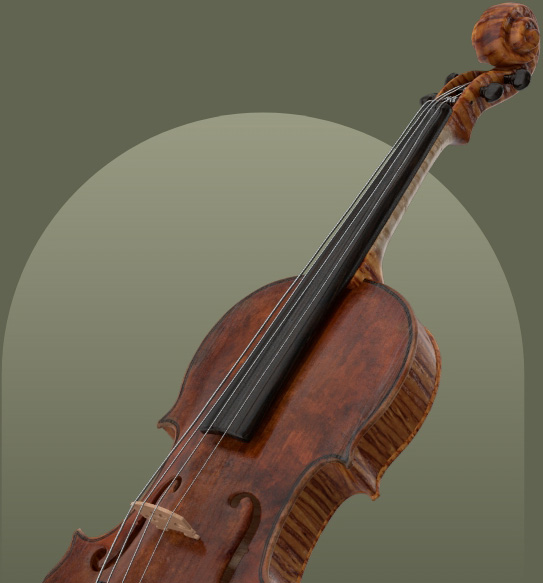
William Henry Collins (1860-Unknown) was a London-based luthier born in Marylebone in 1860. Initially trained as a surgical instrument maker, he developed a passion for violin making in 1890, dedicating a decade to study before commencing production in 1900. Working from 21 Poland Street, W., he crafted violins primarily based on Stradivari and Guarneri models, known for their excellent workmanship, flatter arching, and a unique, permanent orange-red oil varnish of his own composition. His instruments, which he produced slowly due to extensive repair work, were noted for their powerful tone. Collins received two certificates of merit and three prize medals for his contributions to violin making.
Request an expert valuation or learn how our global auctions achieve the highest prices for your instruments.
Maker Overview
Life
William Henry Collins (1860-Unknown) was born in 1860 in Marylebone, London, UK, the second son of Daniel Joseph and Merina Collins. He received his education at the Portland British Schools and studied music from 1879 to 1881. In 1882, he enrolled at the Polytechnic Institute to study painting and drawing, earning the Queen's prize and certificate in these subjects from the Kensington Science and Art Department in 1885. Initially trained as a surgical instrument maker, following his father's calling, he became proficient in working with materials such as pearl, ivory, tortoiseshell, silver, and gold. In 1890, he developed a strong interest in violin making, dedicating approximately ten years to studying available literature and meticulously examining and measuring numerous fine instruments. He began actively making violins in 1900, though John Dilworth notes his activity from 1891. He married Jessie Emma, the youngest daughter of George and Sarah Searles, in 1897. By the time William Meredith Morris documented his work, Collins had produced seven instruments, his slow output attributed to his extensive repair work on other instruments.
Characteristics
- Models
- Collins worked on the Strad model, incorporating slight modifications to the measurements. He also produced instruments based on Guarneri models.
- Measurements (Strad model)
- Length: 14 1/8 inches; Width across upper bouts: 6 9/16 inches; Width across middle bouts: 4 3/8 inches; Width across lower bouts: 8 1/8 inches; Length of C's: 3 1/8 inches; Length of sound-holes: 2 15/16 inches; Depth of ribs at bottom: 1 1/4 inches; Depth of ribs at top: 1 1/8 inches; Distance between sound-holes at top: 1 5/8 inches.
- Arching
- The arching is flatter, particularly in the front table.
- Scroll
- The scroll is excellently carved and captures the spirit of the maestro.
- Sound-holes
- The sound-holes represent a compromise between those of Anthony Stradivari and Joseph Del Gesu.
- Purfling
- The purfling is beautifully inlaid, though in some examples, it is noted to be slightly too near the edge, just under one-eighth of an inch.
- Edge
- The edge is full and nicely rounded.
- Workmanship
- The overall workmanship is described as excellent and in splendid taste.
- Varnish
- Collins developed his own oil varnish through numerous experiments. It is based on fossil amber, is very elastic and transparent, and does not soften, chip, or crack. It is made in a single, permanent orange-red color.
- Wood
- The wood used is of the orthodox kind and of very good quality.
- Tone
- Instruments produced by Collins are noted for their powerful and penetrating tone.
- Production
- He exclusively made violins.
- Price
- His violins were priced at fifteen guineas.
- William Henry Collins
London, 19..John Dilworth
Influence and legacy
- Awards: William Henry Collins received two certificates of merit and three prize medals for his work in violin making. He also earned the Queen's prize and certificate in painting and drawing in 1885.
Further Information
- Workshop Location: William Henry Collins worked at 21 Poland Street, W., London.
- Instrument Focus: He exclusively made violins.
- Label: His instruments bear a facsimile label that reads: "WILLIAM HENRY COLLINS. LONDON".
Biographies
The overview above is drawn from the following published accounts. Read them in the original:
John Dilworth+
COLLINS, William Henry Born 1860 Marylebone, London UK. Active from 1891. Well executed Guarneri- and Stradivari-based models. Orange-red amber varnish. William Henry Collins / London, 19..
William Meredith Morris+
He works at 21 Poland Street, W., and was born in the parish of Marylebone in 1860, being the second son of Daniel Joseph and Merina Collins. He was educated at the Portland British Schools, studied music from 1879 to 1881, and entered the Polytechnic Institute in 1882 as a student in painting and drawing. In 1885 he was awarded the Queen’s prize and certificate in these subjects by the Kensington Science and Art Department. He was brought up to his father’s calling — that of surgical instrument maker, and became a skilled workman in pearl, ivory, tortoiseshell, silver, gold, and other materials. In 1890 he was possessed with the desire to make violins, and he devoured all the books that were obtainable on the subject of the construction of the king of instruments, and he also carefully examined and measured very many fine fiddles. In 1897 he was married to Jessie Emma, youngest daughter of George and Sarah Searles. In 1900, after an extended study of about ten years on the subject, he put into practice his theory of violin-making. Since then he has made seven instruments.
He works on the Strad model, but the measurements are in a few instances slightly modified, as will be seen from the following figures : —
Length … 14 1/8ins,Width across upper bouts . . . 6 9/16ins,Width across middle bouts . . . 4 3/8ins,Width across lower bouts … 8 1/8ins,Length of C’s … 3 1/8ins,Length of sound-holes … 2 15/16ins,Depth of ribs at bottom … 1 1/4ins,Depth of ribs at top … 1 1/8ins,Distance between sound-holes at top 1 5/8ins,
In one specimen examined by me the Strad outline was considerably modified in the inner bouts. The arching is flatter, especially in the front table. The scroll is excellently carved and in the spirit of the maestro but the sound-holes are a sort of compromise between those of Anthony and Joseph (Del Gesu). The purfling is beautifully inlaid, but is rather too near the edge in some examples, where it is just a trifle under one-eighth. The edge is full and nicely rounded. On the whole, the workmanship is excellent and in splendid taste. The varnish is an oil one of Mr. Collins’ own composition — the result of numberless experiments. It has for basis fossil amber. It is very elastic and transparent, and it does not soften, chip, or crack. It is made in one colour, orange red, which is quite permanent.
The wood is of the orthodox kind and very good in quality. The tone is powerful and penetrating.
Mr. Collins has repaired a great number of instruments, hence the slow production of new ones. He has obtained two certificates of merit and three prize medals. He makes only violins, and his price is fifteen guineas. Facsimile label : —
WILLIAM HENRY COLLINS. LONDON
Sell your instrument with Amati
Get started by uploading photos of your instrument for our experts to review.
Sell your instrument with Amati
Get started by uploading photos of your instrument for our experts to review.