Johannes Theodorus Cuypers
Dornick, The Hague, 1724–1808
Request an expert valuation or learn how our global auctions achieve the highest prices for your instruments.
Auction Price History
Highest auction price
52 results
| Type | Details | Auction house | Sold | Price |
|---|---|---|---|---|
| Violin | Labelled Johannes Cuypers fecit s'Hage 1798 Lot 31 | — | March 2026 | £48,000est. Estimate £ 30,000-40,000 |
| Violin | A violin by Johannes Theodorus Cuypers, The Hague, 1790 Lot 68 | Amati | March 2025 | £12,640est. £ 10,000-15,000 |
| Small Cello | Unlabelled Lot 35 | Tarisio | November 2023 | £53,243est. $ 40,000-60,000 |
| Violin | Labelled Johannes Cuypers fecit S. Hage ... Lot 123 | Tarisio | April 2022 | £40,361est. € 25.000-40.000 |
| Violin | Labelled Johannes Cuypers, fecit S. Hage 1782 Lot 29 | Tarisio | March 2022 | £42,000est. £ 25,000-40,000 |
| Cello | Labelled Johannes Cuypers, fecit's Hage, a. 1761 Lot 5 | Tarisio | November 2021 | £84,000est. £ 50,000-80,000 |
| Violin | Labelled Johannes Cuypers, fecit °s Hage A° 1769 Lot 138 | Tarisio | October 2021 | £48,208est. € 35.000-55.000 |
| Viola | Labelled Johannes Cuijpers, fecit s Hage 1786 Lot 41 | Tarisio | October 2020 | £16,520est. £ 20,000-30,000 |
| Violin | Labelled Johannes Cuypers, Fecit S'Hage 1797, Aetatis sua 74 Lot 8 | Tarisio | May 2020 | £40,730est. $ 40,000-60,000 |
| Viola | Labelled Johannes Cuijpers fecit s hage 1787 Lot 252 | Ingles & Hayday | March 2020 | £17,400est. £ 18,000-25,000 |
| Small Cello | Bearing an illegible label Lot 38 | Tarisio | November 2018 | £41,106est. $ 30,000-50,000 |
| Violin | Labelled Johannes Cuijpers fecit si hage 1773 Lot 253 | Tarisio | November 2018 | £24,701est. $ 35,000-50,000 |
| Violin | Lot 80 | Brompton's | June 2018 | £25,200 |
| Violin | Labelled Johannes Cuypers, fecit 's Hage 1773, and Rèparé par L. Bernardel, Amsterdam 1844 Lot 162 | Tarisio | June 2018 | £17,700est. £ 15,000-22,000 |
| Violin | winged back edge at bass side of lower bout Lot 1030 | Skinners | May 2018 | £31,570est. $ 20,000-30,000 |
| Violin | Labelled Johannes Cuypers fecit ... Hage ... 17... Lot 100 | Ingles & Hayday | March 2018 | £20,400est. £ 18,000-25,000 |
| Violin | Unlabelled Lot 27 | Ingles & Hayday | March 2017 | £38,400est. £ 20,000-30,000 |
| Violin | Labelled Johannes Cuypers fecit s hage 1807, aetatis suae 83 Lot 26 | Ingles & Hayday | October 2016 | £26,400est. £ 20,000-30,000 |
| Violin | Unlabelled Lot 88 | Ingles & Hayday | October 2016 | £30,000est. £ 25,000-35,000 |
| Violin | Labelled Johannes Cuypers fecit S'Hage ..., showing the collaboration of his sons Francis & Bernardus Lot 174 | Tarisio | May 2016 | £27,414est. $ 45,000-65,000 |
| Violin | Labelled Johannes Cuypers, ... 17..., ribs and head later Lot 138 | Tarisio | November 2015 | £6,000est. £ 5,000-8,000 |
| Cello | Bearing the manscript label Johannes Cuypers, fecit s hage 1802 atatis sua 78 Lot 78 | Ingles & Hayday | November 2015 | £45,600est. £ 40,000-60,000 |
| Violin | Labelled Johannes Cuypers, 1795 ... Lot 260 | Tarisio | May 2015 | £24,365est. $ 30,000-50,000 |
| Violin | Labelled by the maker including his age 70, of a light golden brown colour Lot 207 | Bonhams | May 2015 | £25,000est. £ 20,000-30,000 |
| Violin | Labelled Johannes Cuypers fecit S'Hage 1797, aetatis suae 73 Lot 212 | Tarisio | March 2015 | £27,600est. £ 25,000-40,000 |
| Violin | Unlabelled Lot 123 | Ingles & Hayday | October 2014 | £24,000est. £ 20,000-30,000 |
| Violin | Labelled Johannes Cuypers fecit S. Hage 1790, inscribed Reparé par L. Bernardel, Amsterdam 1840 Lot 24 | Ingles & Hayday | May 2014 | £36,000est. £ 25,000-35,000 |
| Violin | One-piece back of broad irregular curl, ribs of faint curl, head of narrow curl, table of fine grain Lot 164 | Sunrise | December 2013 | £40,773est. ¥ 7-8,000,000 |
| Viola | Lot 122 | Bonhams | October 2011 | £21,250 |
| Violin | 35.4 cm The Hague, 1792 | — | October 2011 | £30,096 |
| Cello | 73.0 cm the Hague, 1775 c. | — | October 2010 | £11,827 |
| Viola | 40.0 cm The Hague , 1776 | — | October 2009 | £30,000 |
| Violin | 35.5 cm The Hague , 1797 | — | March 2009 | £32,450 |
| Violin | 35.5 cm The Hague, late 18th C. | — | March 2009 | £16,250 |
| Violin | 35.2 cm The Hague, 1780 c. | — | October 2008 | £11,250 |
| Cello | 72.7 cm The Hague, 1775 c. | — | March 2008 | £32,900 |
| Violin | 35.3 cm The Hague, 1760 c. | — | October 2007 | £12,291 |
| Violin | 35.5 cm The Hague, 1783 | — | February 2007 | £26,400 |
| Violin | 35.4 cm The Hague, 1791 | — | May 2006 | £17,854 |
| Violin | The Hague, 1769 | — | November 2005 | £31,200 |
| Violin | The Hague, 1770 c. | — | May 2005 | £12,000 |
| Violin | The Hague, 1770 | — | February 2005 | £7,800 |
| Violin | The Hague, 1773 | — | July 2004 | £15,535 |
| Violin | The Hague, 1807 | — | July 2004 | £18,000 |
| Violin | The Hague, 1802 | — | April 2004 | £11,444 |
| Violin | 1775 | — | November 2001 | £7,500 |
| Cello | 1760 | — | November 2000 | £5,670 |
| Violin | 1765 | — | November 1998 | £17,250 |
| Violin | 1770 | — | June 1997 | £27,600 |
| Cello | 1766 | — | May 1986 | £8,250 |
| Cello | 1763 | — | May 1981 | £2,980 |
| Cello | 1766 | — | November 1980 | £3,740 |
No results match those filters.
Maker Overview
Life
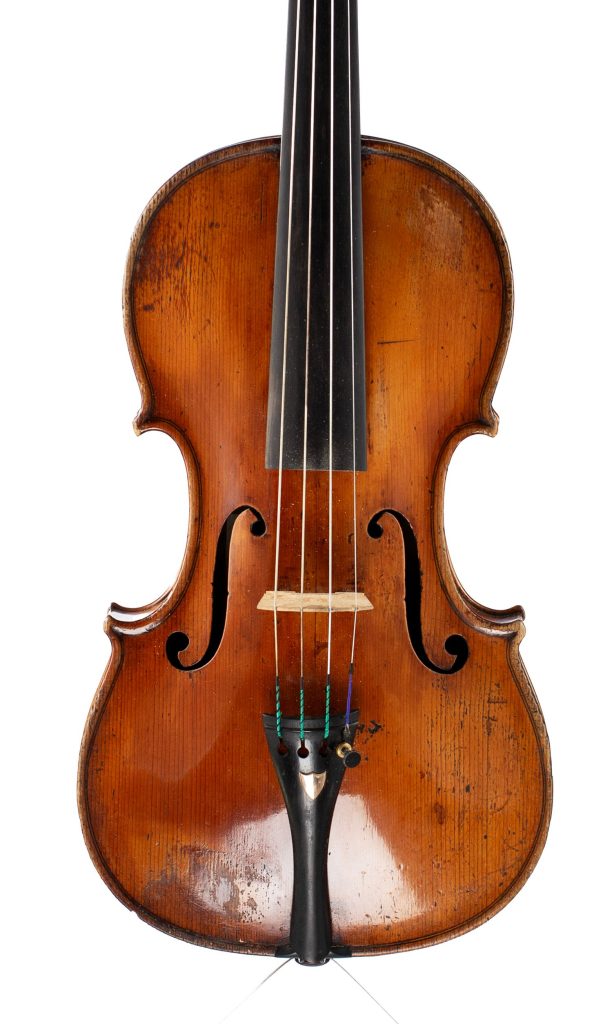
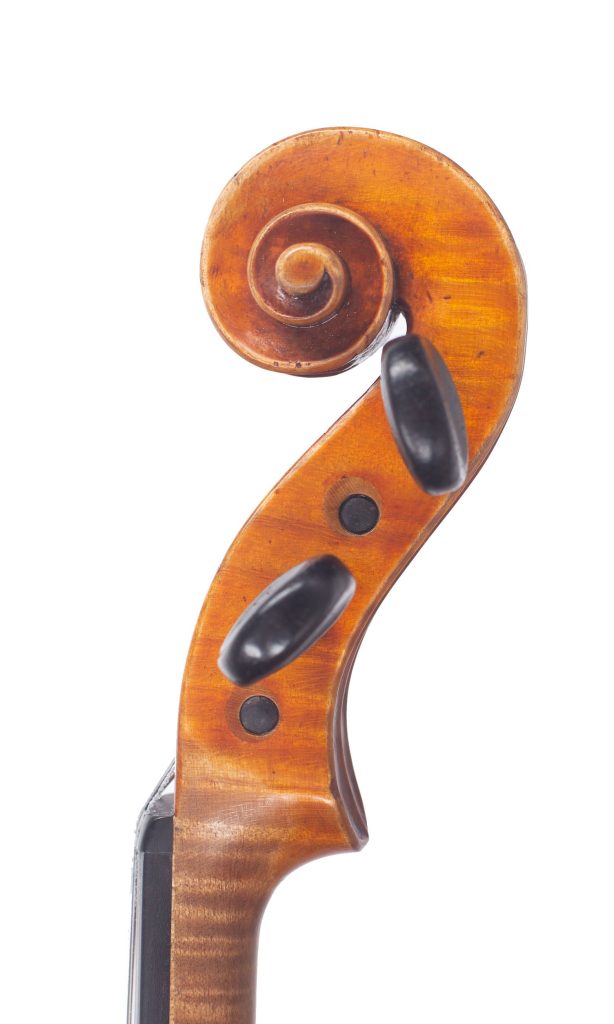
Johannes Theodorus Cuypers (1724-1808) was born in 1724 in Dornick, near Emmerich, Germany, and died in 1808 in The Hague, Netherlands. His earliest documented work dates from The Hague in 1750 in The Brompton's Book of Violin & Bow Makers. Cuypers was a very prolific maker and has been referred to as the "Dutch Stradivari", although his style, was distinctively French in origin, comparable with Guersan. His cellos, in particular, show the influence of Stainer. By 1780, his workmanship became slightly heavier, featuring lower, more Stradivarian arching, a change possibly attributable to the presence of his sons in the workshop. Cecie Stainer, in A Dictionary of Violin Makers, notes that many of his instruments are available and are "excellently made". However, Willibald Leo Lütgendorff, in Die Geigen- und Lautenmacher vom Mittelalter bis zur Gegenwart, states that his work was "less good and mostly heavy in form and too strong in wood" compared to his presumed teacher, Jan C. Lütgendorff also mentions that Cuypers imitated Amati. Dilworth describes his slightly idiosyncratic work, typified by a strongly oval-shaped scroll, as setting the tone for much Netherlands lutherie, characterized by an independent mind, aesthetic, and good honest quality.
Characteristics
- Wood
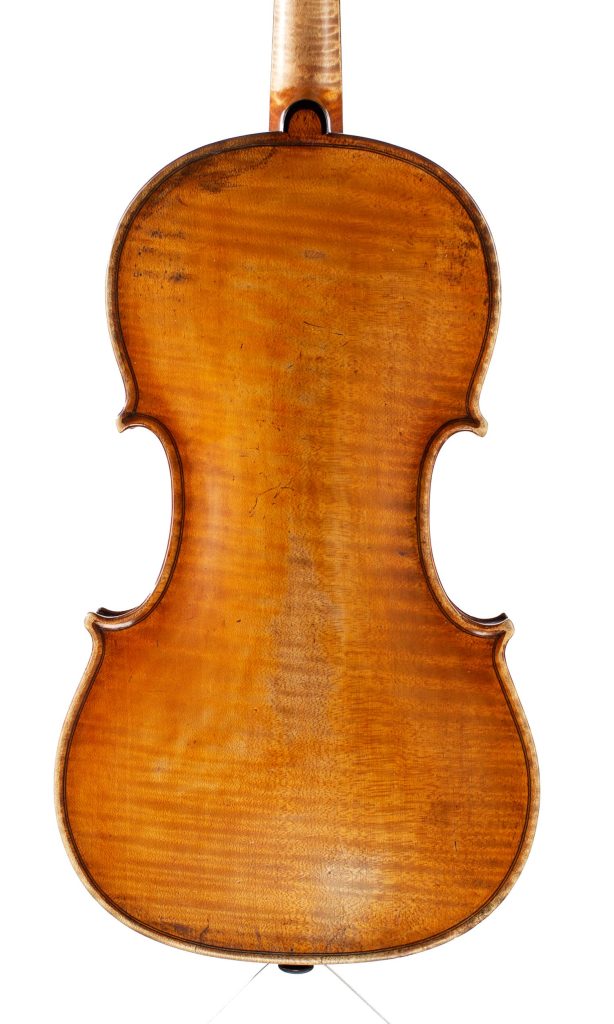
- Johannes Theodorus Cuypers consistently used locally sourced wood, often featuring one-piece tops.
- Varnish
- Dilworth describes his varnish as generally a pale golden yellow and slightly opaque. Cecie Stainer, however, characterizes the yellow varnish as "ugly and of thick quality". Willibald Leo Lütgendorff also notes that the lacquer was "too thick aufgetragen" (applied).
- Workmanship
- By 1780, his workmanship became slightly heavier, with lower, more Stradivarian arching. Lütgendorff describes his work as "weniger gut und meist schwerfällig in der Form und zu stark im Holz" (less good and mostly heavy in form and too strong in wood).
- Scroll
- A consistent and typifying feature of his work is the strongly oval-shaped scroll.
- Models
- He imitated Amati.
- Instruments
- Lütgendorff mentions a violin from 1798 held by Scheurleer and a nine-string guitar in the Museum zu Brüssel, No. 259.
- Johannes Cuypers
Fecit ‘s Hage, Ao. 1769John Dilworth
Influence and legacy
- Mentorship: His early instruction was possibly provided by Jean Joseph Wattier. Willibald Leo Lütgendorff suggests he was a nephew and possibly also a pupil of "the old Jan C."
- Stylistic Influences: His style was distinctively French in origin, comparable with Guersan. His cellos, in particular, show the influence of Stainer. He also imitated Amati.
- Reputation: Johannes Theodorus Cuypers has been called the "Dutch Stradivari".
- Impact: His slightly idiosyncratic work, characterized by the strongly oval-shaped scroll, set the tone for much Netherlands lutherie, embodying an independent mind, aesthetic, and good honest quality.
- Family Involvement: By 1780, the presence of his sons in the workshop may have contributed to a change in his workmanship, which became slightly heavier with lower, more Stradivarian arching.
Further Information
- Workshop Location: He worked in The Hague, Netherlands.
- Labels: Some early labels were handwritten. On later work, his age was also given as 'aetatis suae 78'. An example label reads "Johannes Cuypers / Fecit 's Hage, Ao. 1769".
- Alternative Spelling: He also wrote his name as "Koeuppers".
Biographies
The overview above is drawn from the following published accounts. Read them in the original:
John Dilworth+
CUYPERS, Johannes Theodorus Born 1724 Dornick, nr. Emmerich, Germany, died 1808 The Hague Netherlands Earliest work dated from The Hague in 1750. Early instruction possibly provided by Jean Joseph Wattier. Cuypers was very prolific, and has been called the Dutch Stradivari, although his style is distinctively French in origin, comparable with Guersan, and his cellos in particular show the influence of Stainer. By 1780 his workmanship became slightly heavier, with lower more Stradivarian arching, possibly due to the presence in the shop of his sons. He seems to have used locally sourced wood, which is a consistent feature of his work, along with one-piece tops. Generally a pale golden yellow varnish, slightly opaque. His slightly idiosyncratic work typified by the strongly oval shaped scroll, sets the tone of much Netherlands lutherie: independent of mind and aesthetic, and of good honest quality. Some early labels handwritten. On later work his age is also given as ‘aetatis suae 78’. Johannes Cuypers / Fecit ‘s Hage, Ao. 1769
Cecie Stainer+
A maker at The Hague, 1755-80. Many of his instruments are to be had ; they are excellently made, but the yellow varnish is ugly and of thick quality.
Willibald Leo Lütgendorff+
Neffe und wohl auch Schüler des alten Jan C. Seine Arbeiten sind jedoch
weniger gut und meist schwerfällig in der Form und zu stark im Holz, obwohl er Amati nachahmte. Auch der Lack ist zu dick aufgetragen. Er schreibt seinen Namen auch »Koeuppers«. Seine Arbeiten kommen häufig vor. Eine Geige von 1798 bei Scheurleer, eine neunsaitige Guitarre im Museum zu Brüssel No. 259.
Sell your instrument with Amati
Get started by uploading photos of your instrument for our experts to review.
Sell your instrument with Amati
Get started by uploading photos of your instrument for our experts to review.