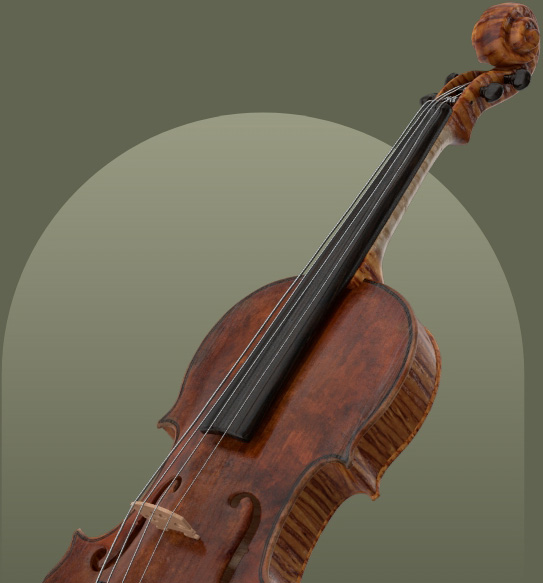
William (III) Forster
London, 1764–1824
William (III) Forster (1764-1824), known as 'Young Forster,' was a British violin, violoncello, tenor, and bow maker, and the son and pupil of William Forster (II). Active from 1779, he became a partner in the family business in 1800. He produced instruments of varying quality, from those comparable to his father's best, featuring amber oil varnish and impressive Stradivari models, to more basic instruments with hard spirit varnish. He served as a maker to the Prince of Wales and Duke of Cumberland and had two sons who also became violin makers.
Request an expert valuation or learn how our global auctions achieve the highest prices for your instruments.
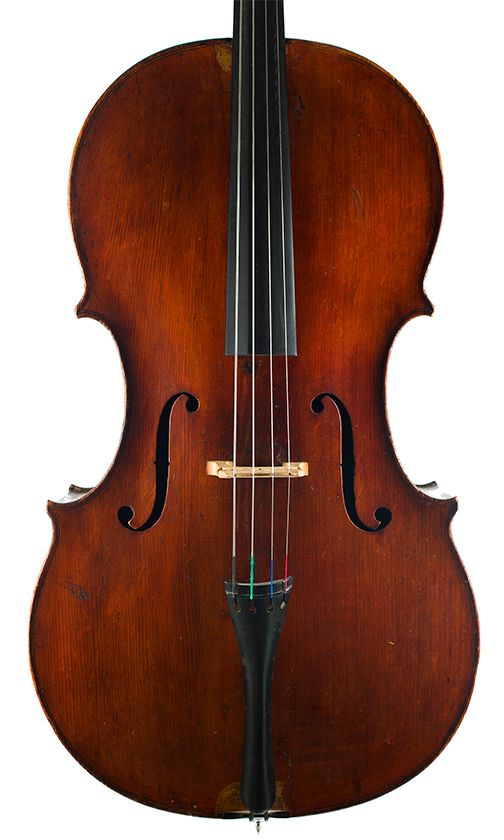
Auction Price History
Highest auction price
30 results
| Type | Details | Auction house | Sold | Price |
|---|---|---|---|---|
| Violin | Labelled William Forster Jun. No. 25 London 1793 Lot 175 | Tarisio | February 2017 | £7,570est. $ 10,000-15,000 |
| Violin | Bearing an inscribed label William Forster Junr. / no. 25. London. 1793 Lot 90 | Skinners | May 2016 | £4,002est. $ 3,000-4,000 |
| Violin | Labelled William Forster ..., lightly craquelled varnish of an aged red brown colour Lot 147 | Bonhams | October 2014 | £3,000est. £ 3,000-4,000 |
| Cello | Cello, 1789 Lot 183 | Bonhams | May 2013 | £66,050est. £ 60,000-70,000 |
| Cello | 74.0 cm London, 1810 c. | — | December 2011 | £26,400 |
| Cello | 75.6 cm London, 1805 | — | October 2011 | £86,400 |
| Violin | 35.3 cm London, 1806 | — | June 2011 | £2,640 |
| Viola | 39.3 cm London, 1800 c. | — | May 2008 | £8,990 |
| Viola | 39.7 cm London, 1810 | — | April 2007 | £11,523 |
| Viola | 39.7 cm England, early 19th C. | — | November 2004 | £7,800 |
| Cello | 1814 | — | March 2001 | £7,200 |
| Violin | 1810 | — | July 2000 | £3,800 |
| Viola | 38.1 cm 18-- | — | April 1998 | £2,530 |
| Cello | 1800 c. | — | March 1998 | £31,740 |
| Viola | 39.0 cm 1807 | — | July 1997 | £2,800 |
| Cello | 1800 c. | — | November 1996 | £10,350 |
| Viola | 38.3 cm 1800 c. | — | November 1995 | £3,450 |
| Cello | 1800 c. | — | November 1995 | £12,650 |
| Cello | 1800 c. | — | March 1994 | £12,100 |
| Cello | 1794 | — | November 1993 | £26,400 |
| Violin | 1800-25 | — | July 1993 | £1,610 |
| Cello | 1790 c. | — | November 1992 | £20,900 |
| Cello | 1823 | — | March 1992 | £9,900 |
| Violin | 1820 c. | — | April 1991 | £3,300 |
| Viola | 39.4 cm 1800 c. | — | June 1990 | £3,850 |
| Viola | 38.1 cm 1807 | — | March 1990 | £4,620 |
| Viola | 38.3 cm 1800 c. | — | November 1989 | £2,860 |
| Viola | 39.4 cm 1800 c. | — | April 1987 | £5,500 |
| Viola | 39.4 cm 1804 | — | April 1983 | £4,104 |
| Viola | 38.1 cm 1807 | — | November 1982 | £2,592 |
No results match those filters.
Maker Overview
Life
William (III) Forster (1764-1824) was born on January 7, 1764, and passed away on July 24, 1824. He was the son and pupil of William Forster (II) and was often referred to as 'Young Forster' or 'Forster Junr.' He began his active career in 1779 and became a partner in the family business in 1800. William (III) Forster married in 1786 and had two sons, both of whom also became violin makers. He maintained, to some extent, the traditions and reputation established by his father. His workshop locations changed over time; in 1803, he moved to York Street, then in 1816 to 87 The Strand, and finally in 1821 to 41 Lisle Street in London.
Characteristics
- Workmanship
- William (III) Forster's work varied significantly in quality; some instruments were considered as good as his father's best, while others were comparable to cheaper factory-made instruments. He developed impressive Stradivari models alongside the more common Stainer copies. He also produced various grades of work to compete with the influx of inexpensive German trade instruments of his era.
- Varnish
- His higher-quality instruments featured his father's amber oil varnish, applied thinly and well polished. However, some of his inferior instruments, particularly those intended for hire, were finished with two or three coatings of a hard spirit varnish.
- Instrument Types
- He made violins, violoncellos, tenors, and bows. He also produced a number of double-basses, primarily for letting out on hire, which were shaped like violoncellos and exhibited inferior workmanship. Some of his inferior instruments were unpurfled.
- Labels
- Two primary label types are noted. One reads: "WILLIAM FORSTER, JUN., VIOLIN, VIOLONCELLO, TENOR, AND BOW MAKER 1815." Another, cited by John Dilworth, includes "William Forster Junr./ Violin, Violoncello, Tenor, and Bow Maker / 1810. Also Music seller No. 43. / to their Royal Highnesses the / Prince of Wales and the Duke of Cumberland. Made and sold at / Forsters Music Warehouse / 41, Lisle Street, Leicester Square, / London, 1824." A similar label, also mentioning "to their Royal Highnesses the Prince of Wales and Duke of Cumberland," is noted by Cecie Stainer and William Meredith Morris. The number of the instrument, the date, and the abbreviation "jun." were typically added in handwriting.
- Conflicting Information
- Sources contain conflicting information regarding the precise wording on some of William (III) Forster's labels; William Meredith Morris's account uses "Royal Richnesses," while John Dilworth and Cecie Stainer cite "Royal Highnesses."
- William Forster Junr.
Violin, Violoncello, Tenor, and Bow Maker
1810John Dilworth - Also Music seller No. 43.
to their Royal Highnesses the
Prince of Wales and the Duke of Cumberland. Made and sold at
Forsters Music Warehouse
41, Lisle Street, Leicester Square,
London, 1824John Dilworth
Influence and legacy
- Training: William (III) Forster was the son and pupil of the renowned William Forster (II).
- Assistants: He was assisted at various times by George Craske and Samuel Gilkes.
- Family Continuity: He had two sons who followed in his footsteps and became violin makers, continuing the family's tradition.
- Royal Appointment: He held the title of "Violin, Violoncello, Tenor, and Bow Maker to their Royal Highnesses the Prince of Wales and Duke of Cumberland."
Further Information
- Workshop Locations: His workshops were located at York Street (from 1803), 87 The Strand (from 1816), and 41 Lisle Street (from 1821).
- Business Activities: In addition to instrument making, he was also a music seller, with one label indicating "Music seller No. 43" and "Forsters Music Warehouse / 41, Lisle Street."
Biographies
The overview above is drawn from the following published accounts. Read them in the original:
John Dilworth+
FORSTER, William (III) Born 1764, died 1824 London UK. Son and pupil of William Forster (II). Known as ‘Young Forster’ or ‘Forster Junr’. Active from 1779; a partner in the business from 1800. In 1803 moved to York Street, in 1816 to 87 to The Strand, and finally in 1821 to 41 Lisle Street. Continued his father’s work and developed very impressive Stradivari models alongside the usual Stainer copies. Also various grades of work in competition with the cheap imports of German trade instruments at the time. Assisted at times by George Craske and Samuel Gilkes. William Forster Junr./ Violin, Violoncello, Tenor, and Bow Maker / 1810. Also Music seller No. 43. / to their Royal Highnesses the / Prince of Wales and the Duke of Cumberland. Made and sold at / Forsters Music Warehouse / 41, Lisle Street, Leicester Square, / London, 1824 [BVMA]
George Hart+
Son of William Forster, the second of the family. Although this maker did not attain to the celebrity of his father, his instruments are often fully as good. The workmanship is very neat, and the modelling excellent; the varnish being equal to that on his father’s instruments.
William Meredith Morris+
“Young Forster,” as he has been called, was the son of the great Forster. He was born Jan. 7, 1764, and died July 24, 1824. He maintained to some extent the traditions and reputation of his father, but he failed (or did not try) to maintain the same standard of excellence throughout. His work varies a great deal ; some of it is no better than the cheapest of the modern factory noise boxes, and some is fully as good as the best of his father’s.
Haweis says there was an erratic vein in the Forster family, which in “old” Forster took the shape of “amazing versatility,” but in the younger members degenerated into ” speculative eccentricity.” I prefer to think of ” old ” Forster as a genius, and of the sons and grandsons as the offspring thereof. And it is a well-nigh universal rule that the offspring of genius are the shipwreck of genius. Genius, as I conceive it, is the abnormal development of some particular gift or faculty, with the other faculties also sufficiently strong to give it support. The offspring of a genius often show the same gift developed in the same abnormal degree, but they have not the other powers of the mind in the necessary state of health and strength to give it equilibrium ; i.e. in other words, they have not sufficient ballast. Genius without the accompanying staying powers of the mind is like a vessel without a helm. We have the children of a dozen geniuses living amongst us to-day, nearly all of whom may be recognised as the sons of their fathers, but they are more or less rudderless sails in a stormy sea. It has been often said that the sons of great men elect to walk the quieter paths of mediocre distinction out of consideration for their fathers, but this is said more in charity than in sincerity. No man puts his candle under a bushel without at the same time extinguishing it, and suicide is not sacrifice. I have seen one or two violins by “young” Forster, which were excellent as regards finish and tone, and they had his father’s amber oil varnish, thinly laid on and well polished. He made a number of inferior instruments, some unpurfled, and with two or three coatings of a hard spirit varnish, which he let out on hire. Labels : —
(1) WILLIAM FORSTER, JUN., VIOLIN, VIOLONCELLO, TENOR, AND BOW MAKER 1815
(2) WILLIAM FORSTER, VIOLIN, VIOLONCELLO, TENOR, AND BOW MAKER TO THEIR ROYAL RICHNESSES THE PRINCE OF WALES AND DUKE OF CUMBERLAND, LONDON
The number of the instrument, the date, and the abbreviation ” jun.” were added in handwriting.
Cecie Stainer+
Son of William Forster (1739-1808), b. Jan. 7, 1764, London ; d. July 24, 1824. His instruments are good but not equal to those of his father ; the varnish is of good quality; some instruments have a fine tone; the work is well and neatly finished. A few double-basses, made chiefly for letting out on hire, were the same shape as a violoncello, and of inferior workmanship.
and “William Forster, violin, violoncello, tenor, and bow-maker to their Royal Highnesses the Prince of Wales and Duke of Cumberland. London.”
To this latter label were added in manuscript the number of the instrument, the date, and the ‘jun.’ He married, 1786, and had two sons, both violin makers.
Willibald Leo Lütgendorff+
Sohn und Schüler von William II. F. Er. Kam in Arbeit und Lack seinem Vater sehr nahe und stand in hohem Ansehen. Er heirathete im Jahre 1786 und hatte zwei Söhne,
die beide Geigenmacher wurden.
Sell your instrument with Amati
Get started by uploading photos of your instrument for our experts to review.
Sell your instrument with Amati
Get started by uploading photos of your instrument for our experts to review.