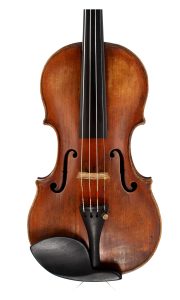
Nicola Gagliano
Naples, d. 1787
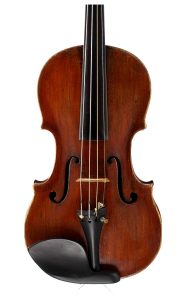
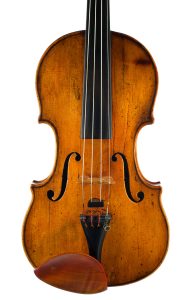
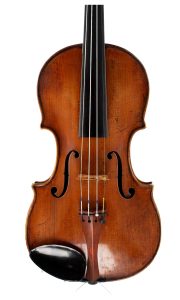
Nicola Gagliano, son of Alessandro Gagliano, was a prolific Neapolitan violin maker active from approximately 1730 to 1787, though sources provide conflicting dates for his birth and death. He is widely regarded as the most admired and sought-after maker of his family. His craftsmanship, often superior to his father's, was characterized by a clever imitation of Stradivari's models, bold archings, and a distinctive Gagliano purfling. He used beautiful, often strongly grained maple, and his varnish varied from golden-yellow to brilliant red. Nicola Gagliano's legacy includes his four sons, all of whom became instrument makers.
Request an expert valuation or learn how our global auctions achieve the highest prices for your instruments.
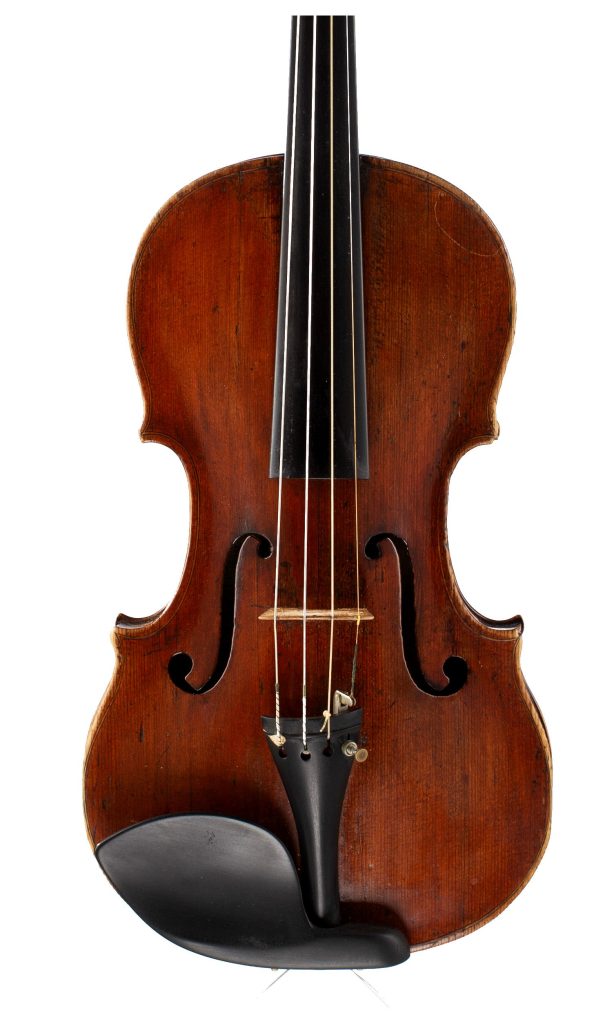
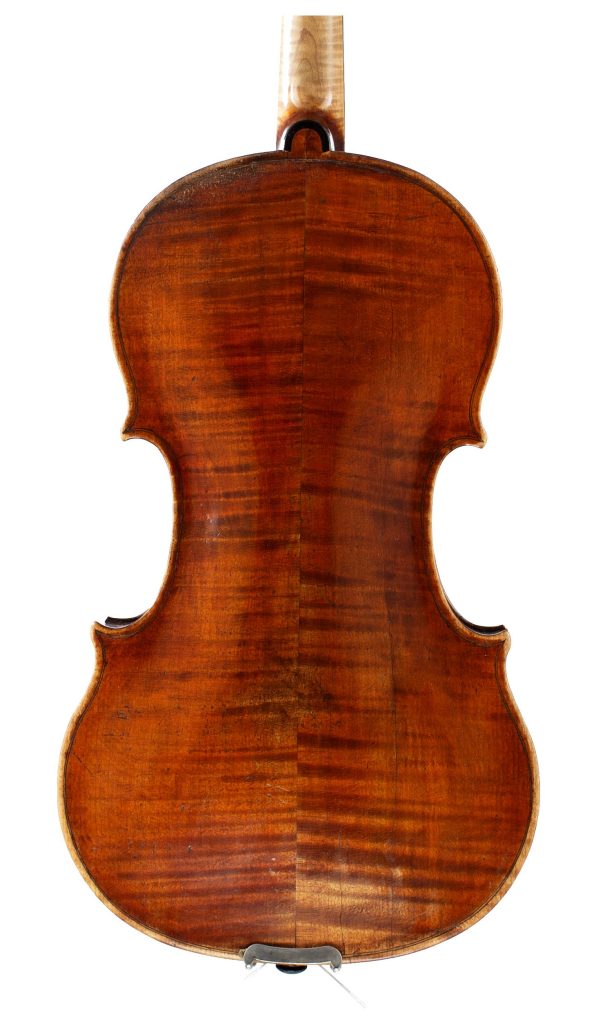
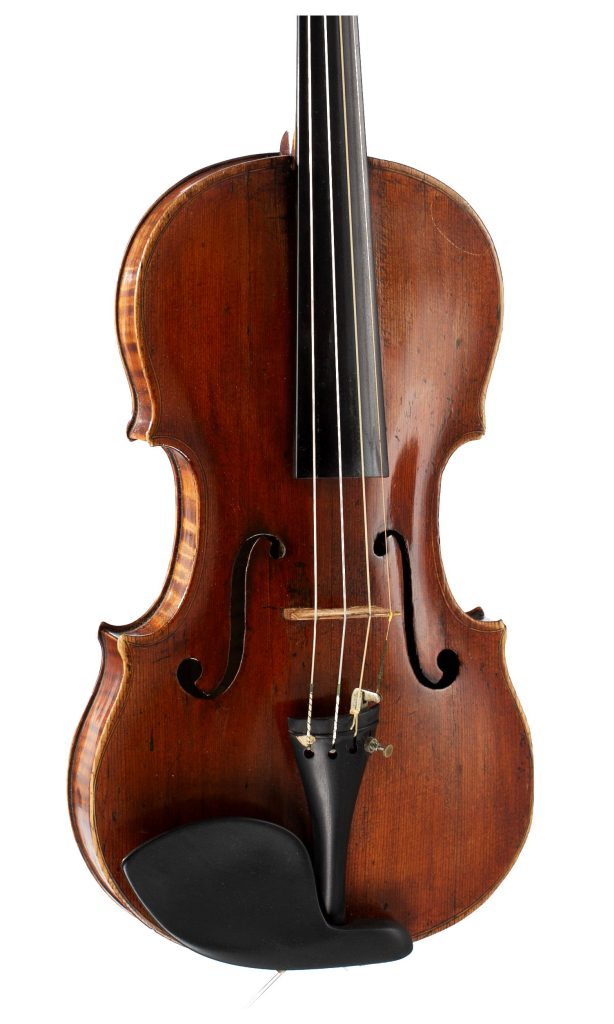
Instruments
Auction Price History
Highest auction price
107 results
| Type | Details | Auction house | Sold | Price |
|---|---|---|---|---|
| Violin | Amati model, labelled Nicolaus Amatus Cremona ..., head later Lot 127 | Tarisio | March 2026 | £62,896est. Estimate $ 50,000-80,000 |
| Violin | Labelled Nicolai Gagliano Fecit in Napoli Anno 17... Lot 206 | Tarisio | November 2025 | £54,317est. $ 70,000-100,000 |
| Violin | A violin by Nicola Gagliano, Naples, circa 1760 Lot 123 | Amati | October 2024 | £120,080est. £ 50,000-70,000 |
| Violin | Labelled Nicolaus Gagliano Filius Alexandri fecit Neap. 1779 Lot 188 | Ingles & H. | October 2024 | £54,000est. £ 45,000-60,000 |
| Violin | A violin by Nicolo Gagliano, Naples, 1777 Lot 97 | Amati | June 2024 | £46,136est. £ 40,000-60,000 |
| Violin | Labelled Nicolaus Gagliano Filius ..., with the collaboration of his son Giuseppe, lower bass rib replaced Lot 147 | Tarisio | May 2024 | £51,830est. $ 60,000-90,000 |
| Violin | Labelled Nicolaus Gagliano filius Alexandri fecit Neap 1765 Lot 118 | Tarisio | March 2024 | £101,596est. $ 150,000-220,000 |
| Violin | Reduced from a small viola, head later, showing the collaboration of his son Giuseppe Lot 59 | Tarisio | October 2023 | £96,000est. £ 35,000-55,000 |
| Violin | Labelled Nicolaus Gagliano Filius Alexandri fecit Neap. 1746 Lot 447 | Ingles & Hayday | March 2023 | £180,000est. £ 100,000-150,000 |
| Small Violin | 3/4 size violin, mentioned in Rare Old Violins by George Withers & Sons, labelled Nicolaus Gagliano ... Lot 200 | Ingles & Hayday | November 2022 | £22,800est. £ 12,000-18,000 |
| Violin | Labelled Nicolaus Gagliano Filius Alexandri fecit Neap. 1758 Lot 166 | Tarisio | November 2022 | £158,864est. $ 200,000-300,000 |
| Violin | Unlabelled Lot 27 | Tarisio | October 2022 | £144,000est. £ 100,000-150,000 |
| Violin | Labelled Nicolaus Gagliano Filius Alexandri fecit Neap. 1758, head later Lot 135 | Tarisio | June 2022 | £262,910est. $ 250,000-400,000 |
| Violin | A violin by Nicola Gagliano, Naples, circa 1775 Lot 16 | Amati | March 2022 | £82,160est. £ 50,000-80,000 |
| Violin | Labelled Nicolaus Gagliano Filius, Alexandri fecit Neap. 1772, head probably original Lot 135 | Tarisio | July 2021 | £257,193est. $ 150,000-220,000 |
| Violin | Labelled Nicolaus Gagliano Filius Alexandri fecit Neap 1732, head later Neapolitan Lot 32 | Ingles & Hayday | October 2020 | £144,000est. £ 100,000-150,000 |
| Violin | Showing the collaboration of his son Giuseppe, labelled Nicolaus Gagliano Filius Alexandri fecit ... Lot 244 | Tarisio | March 2020 | £140,600est. £ 120,000-180,000 |
| Violin | Labelled Nicolaus Gagliano filius Alexandri fecit Neap. 17..., scroll by Ferdinando Gagliano Lot 18 | Ingles & Hayday | March 2020 | £66,000est. £ 60,000-80,000 |
| Violin | Labelled Nicolaus Gagliano Filius Alexandri Neap. 17... Lot 122 | Ingles & Hayday | October 2019 | £192,000est. £ 80,000-120,000 |
| Violin | Millant collection, Nicolò Amati model Lot 185 | Vichy | December 2018 | £205,687est. € 80.000-100.000 |
| Violin | Bernard Millant collection Lot 62 | Vichy | November 2017 | £105,600est. € 80.000-100.000 |
| Violin | Labelled Nicolaus Gagliano Filius Alexandri fecit Neap. 1747 Lot 212 | Tarisio | November 2017 | £198,409est. $ 220,000-300,000 |
| Violin | Shows the collaboration of his son Joseph, labelled Nicolaus Gagliano Filius Alexandri fecit Neap. 1764 Lot 201 | Tarisio | February 2017 | £113,547est. $ 120,000-180,000 |
| Violin | Labelled Nicolaus Gagliano Filius Alexandri fecit Neap. 1738 Lot 27 | Ingles & Hayday | October 2016 | £156,000est. £ 80,000-100,000 |
| Violin | table under edged Lot 117 | Brompton’s | October 2016 | £84,000est. £ 70,000-100,000 |
| Violin | Bearing a maker's label Lot 220 | Vichy | June 2016 | £129,169est. € 130.000-150.000 |
| Violin | Labelled Nicolaus Gagliano Filius, Alexandri fecit Neap. 1753, head later Lot 141 | Tarisio | February 2016 | £94,763est. $ 80,000-120,000 |
| Violin | Lot 239 | Bonhams | October 2014 | £15,000 |
| Violin | Labelled Nicolaus Gagliano Filius Alexandri fecit Neap. 17... Lot 24 | Ingles & Hayday | October 2014 | £84,000est. £ 70,000-100,000 |
| Violin | Bearing an original label Nicholas Gagliano filius Alexandri fecit Neap 1765 Lot 299 | Brompton’s | October 2014 | £96,000est. £ 80,000-120,000 |
| Violin | Violin, 1740-45 c. Lot 320 | Vichy | June 2014 | £87,080est. € 60.000-70.000 |
| Violin | Head later Lot 168 | Tarisio | June 2014 | £70,800est. £ 60,000-90,000 |
| Violin | Labelled Nicolaus Gagliano filius Alexandri fecit Neap 17... Lot 171 | Tarisio | June 2014 | £191,450est. £ 170,000-250,000 |
| Violin | Labelled Nicolaii Gagliano Fecit in Napoli Anno 1732 Lot 172 | Ingles & Hayday | May 2014 | £132,000est. £ 80,000-120,000 |
| Violin | Labelled Nicolaus Gagliano Filius Alexandri fecit, Neap., 1785 Lot 289 | Tarisio | May 2014 | £159,181est. $ 150,000-220,000 |
| Small Violin | Clark collection, two-piece back of narrow curl, varnish of a yellow brown colour Lot 88 | Christie's | May 2014 | £25,058est. $ 20,000-40,000 |
| Violin | Later table probably Turin 19th Century Lot 162 | Tarisio | March 2014 | £48,000est. £ 20,000-30,000 |
| Violin | Made in collaboration with his son Ferdinando, bearing the maker's label Lot 225 | Vichy | December 2013 | £159,264est. € 70.000-80.000 |
| Violin | Amati model, labelled Amati Lot 355 | Vichy | December 2013 | £57,733est. € 45.000-50.000 |
| Violin | Labelled NICOLAUS GAGLIANO FILIUS ALEXANDRI FECIT NEAP 1720 Lot 33 | Skinners | November 2013 | £103,790est. $ 120,000-140,000 |
| Violin | Labelled Nicolaus Gagliano Filius Alexandri fecit Neap. 1761 Lot 132 | Christie's | November 2012 | £91,440est. $ 100,000-150,000 |
| Violin | Unlabelled Lot 304 | Brompton’s | October 2012 | £57,600est. £ 50,000-70,000 |
| Violin | Labelled Nicola Gagliano, Gagliano family head of 18th Century Lot 210 | Vichy | June 2012 | £67,931est. € 50.000-55.000 |
| Violin | 35.2 cm Naples, 1770 c. | — | November 2011 | £97,737 |
| Cello | Naples, 1774 | — | October 2011 | £480,000 |
| Violin | 35.3 cm Naples (original & replacement back) Ascribed to | — | July 2011 | £31,216 |
| Violin | 35.2 cm Naples, Late 18thC. | — | May 2011 | £30,955 |
| Violin | 35.2 cm Naples, 1735 c. | — | April 2010 | £69,045 |
| Violin | 35.4 cm Naples, 1750 c. | — | March 2010 | £55,200 |
| Violin | 35.5 cm Naples, 1776 | — | October 2009 | £121,250 |
| Violin | 35.2 cm Naples, 1740 c. | — | April 2009 | £58,588 |
| Violin | 35.4 cm Naples, 1750 c. | — | March 2009 | £58,500 |
| Violin | 35.5 cm Naples, 1770 c. | — | October 2008 | £67,250 |
| Violin | 35.4 cm Attributed to | — | March 2008 | £8,750 |
| Violin | 35.5 cm Naples, 1740 c. Attributed to & possibly by | — | October 2007 | £39,980 |
| Violin | 35.4 cm Attributed to | — | October 2007 | £9,375 |
| Violin | 35.4 cm Naples, 1775 c. | — | April 2007 | £72,779 |
| Violin | 35.3 cm Naples, 1750 c. | — | November 2006 | £24,059 |
| Violin | 35.5 cm Naples, 1760 c. | — | November 2006 | £48,000 |
| Violin | 35.4 cm Naples, 1750 c. | — | May 2006 | £74,257 |
| Violin | Naples, 1730 c. | — | April 2005 | £37,596 |
| Violin | Naples, 1770 c. | — | February 2005 | £78,000 |
| Violin | Ascribed to | — | November 2004 | £11,711 |
| Viola | 39.0 cm Naples, 1775 | — | November 2004 | £40,800 |
| Violin | 1920 c. Ascribed to | — | October 2004 | £5,090 |
| Violin | 1770 c. Attributed to | — | September 2004 | £9,560 |
| Violin | Naples, 1780 c. | — | July 2004 | £71,700 |
| Violin | 1760 (poor condition) | — | November 2002 | £19,120 |
| Violin | 1759 (poor condition) | — | June 2002 | £10,921 |
| Violin | 1783 | — | November 2001 | £65,000 |
| Violin | 1765 | — | October 2001 | £42,553 |
| Violin | 1728 | — | March 2001 | £97,250 |
| Violin | 1739 | — | November 2000 | £69,500 |
| Violin | 1755 | — | May 2000 | £28,994 |
| Violin | 1731 | — | November 1999 | £84,000 |
| Violin | 1782 | — | November 1999 | £78,500 |
| Violin | 1744 | — | March 1999 | £87,300 |
| Violin | 1752 | — | November 1998 | £43,300 |
| Violin | 1760 c. | — | June 1998 | £49,450 |
| Violin | 1750 c. | — | June 1998 | £60,900 |
| Violin | 1760 c. | — | June 1998 | £43,300 |
| Violin | 1740 c. | — | March 1998 | £52,100 |
| Violin | 1738 | — | June 1997 | £78,500 |
| Violin | 1731 | — | November 1995 | £80,500 |
| Violin | 1770 c. | — | October 1995 | £49,900 |
| Violin | 1761 | — | June 1995 | £73,000 |
| Violin | 1770 c. | — | June 1995 | £47,700 |
| Violin | 1750 c. | — | March 1995 | £47,700 |
| Violin | 1780 c. (scroll later) | — | November 1994 | £25,300 |
| Violin | 1760 | — | March 1994 | £60,500 |
| Violin | 1730 | — | June 1993 | £27,600 |
| Violin | 173- | — | April 1993 | £8,625 |
| Violin | 1765 | — | March 1993 | £71,500 |
| Violin | 1750 c. | — | November 1992 | £24,200 |
| Violin | 1740 c. | — | June 1992 | £28,600 |
| Violin | 175- | — | November 1991 | £48,400 |
| Violin | 1756 | — | November 1990 | £27,500 |
| Violin | 1733 | — | June 1990 | £38,500 |
| Violin | 1750-75 | — | March 1990 | £13,750 |
| Violin | 1750 c. | — | June 1989 | £33,000 |
| Violin | 1735 | — | June 1988 | £27,500 |
| Violin | 1750 c. | — | November 1987 | £26,400 |
| Violin | 1770 c. | — | November 1987 | £22,000 |
| Violin | 1750 c. | — | April 1987 | £36,300 |
| Violin | 1752 | — | April 1987 | £14,300 |
| Cello | 1774 | — | June 1984 | £32,593 |
| Cello | 1782 | — | June 1982 | £21,600 |
No results match those filters.
Maker Overview
Life
Nicola Gagliano (circa 1730-1787), the son of Alessandro Gagliano, worked in Naples, Italy. Sources contain conflicting information about his life dates; John Dilworth states he worked circa 1730 and died in 1787, while Cecie Stainer indicates he was born about 1675 and died about 1745 in Naples. He was more prolific than his brother Gennaro, and, he was considerably more talented than his father, Alessandro. George Hart notes that his violins and violoncellos were crafted with care and displayed a degree of originality.
Characteristics
- Workmanship
- Nicola Gagliano's work, though sometimes inconsistent in quality, often exhibits great distinction. Cecie Stainer describes his instruments as smaller and narrower, with work superior to that of his father.
- Model & Arching
- He produced instruments with bold and well-proportioned archings. His models were high, and he generally imitated the Stradivari models, particularly those from the master's earlier periods. Cecie Stainer specifies that he cleverly copied the Stradivari pattern in outline, thicknesses, and arching. George Hart adds that his instruments were not patterned after his father's, but rather resembled earlier Stradivari works that fall between the true "Amatese" and the long form.
- Materials
- He often utilized maple with a very strongly marked grain, a characteristic seen in the work of most subsequent members of the Gagliano family. Willibald Leo Lütgendorff mentions his use of very beautiful wood, typically leaving the tops very strong and making the backs slightly weaker at the sides.
- Varnish
- The varnish on his instruments could vary from a plain, rather thin golden-yellow to a brilliant red, laid over a good reflective ground. Cecie Stainer describes his varnish as very transparent and rather deep in color, contributing to a very brilliant tone. George Hart notes that his varnish was of a deeper color than Alessandro's and of comparable quality. Willibald Leo Lütgendorff describes the varnish as reddish-brown or brownish-yellow.
- Scrolls
- His scrolls have a distinctive elongated pegbox and a small, tight spiral. Cecie Stainer generally describes the scroll as well-cut, though George Hart observes that they could sometimes be well-formed and at other times somewhat grotesque.
- Soundholes
- The soundholes are very Stradivarian in style and are set quite close to the edge.
- Purfling & Ornamentation
- Nicola Gagliano instigated the typical Gagliano purfling, made of beech wood with stained paper outer strips, which commonly causes a distinctive crazing in the varnish above it. Some instruments feature added decorative inlay around the edges and ribs, somewhat in the manner of decorated Stradivari violins. Cecie Stainer notes that around the purfling, there was sometimes an ornamentation of diamond and lozenge-shaped pieces of ebony, a detail also mentioned by George Hart. Willibald Leo Lütgendorff confirms that the inlays were executed with care and taste. He also sometimes copied the Maggini design on the center of the back of his violins.
- Labels
- His own labels often read: "Nicolaus Gagliano Filius / Alexandri fecit Neap. 17.." or "Nicolaii Gagliano, fecit in Napoli, 1711." An additional label with a religious dedication is often found fixed to the upper rib's inner surface. Cecie Stainer also notes that a certain number of his instruments contain spurious labels of Stradivari. Willibald Leo Lütgendorff mentions that in most Gagliani violins that have not been opened, a label with an inscription can be found inside at the neck joint.
- Instrument Types
- He made a great many violins, violas, and violoncellos, with the latter being especially good and featuring a fine, rich varnish not often seen on other Gagliano family instruments.
- Nicolaus Gagliano Filius
Alexandri fecit Neap. 17..John Dilworth
Influence and legacy
- Family Lineage: Nicola Gagliano was the son of Alessandro Gagliano.
- Stylistic Influences: He skillfully copied the pattern of Stradivari, both in outline, thicknesses, and arching. His instruments were not patterned after his father's, but rather resembled earlier Stradivari works. He also occasionally copied the Maggini design on the center of the back of his violins.
- Reputation: Nicola Gagliano is generally considered the most admired and sought-after maker of the Gagliano family.
- Family Continuity: He had four sons who all became makers: Ferdinando, Giuseppe, Antonio, and Giovanni.
Further Information
- Working Period & Location: He worked in Naples, Italy. John Dilworth states he worked circa 1730 and died in 1787. Cecie Stainer indicates he was born about 1675 and died about 1745.
Biographies
The overview above is drawn from the following published accounts. Read them in the original:
John Dilworth+
GAGLIANO, Nicola (I) Worked circa. 1730- died 1787 Naples Italy. Son of Alessandro Gagliano, above. More prolific than his brother Gennaro, his work is less consistent in quality, but often shows great distinction. Bold and well-proportioned archings. Varnish can vary from plain rather thin golden-yellow to brilliant red, but laid over a good reflective ground. Scrolls have a distinctive elongated pegbox and small tight spiral. Soundholes very Stradivarian, set quite close to the edge. Generally the most admired and sought-after maker of the family, he instigated the typical Gagliano purfling of beech wood with stained paper outer strips, which generally causes a distinctive crazing in the varnish above it. Also often used maple with very strongly marked grain, which is seen in work by most subsequent members of the family. Some instruments with added decorative inlay around the edges and ribs, somewhat after the manner of the decorated Stradivari violins. Additional label with religious dedication often found fixed to upper rib inner surface. Nicolaus Gagliano Filius / Alexandri fecit Neap. 17..
George Hart+
His Violins and Violoncellos were made with care, and show that he possessed some amount of originality. They are not after the pattern of his father’s instruments and similar to those earlier works of Stradivari which come between the true ” Amatese” and the long form. The varnish is of a deeper colour than of Alessandro’s, and its quality is not inferior. The scroll is, in some cases, well formed, in others somewhat grotesque. The model is high. They are sometimes seen ornamented round the purfling with ebony, diamond and lozenge shape.
Cecie Stainer+
Eldest son of Alessandro, b. about 1675, at Naples; d. there about 1745. His instruments are smaller and narrower and his work is superior to that of his father, for he copied the pattern of Stradivari very cleverly, both in outline, in thicknesses, and in arching. His varnish is very transparent and rather deep in colour, the tone is very brilliant, the scroll is generally well-cut; round the purfling is sometimes an ornamentation of diamond and lozenge-shaped pieces of ebony ; he also sometimes copied the Maggini design on the centre of the back of his violins.
He made a great many violins, violas, and violoncellos, the latter being especially good, with a fine rich varnish, not often seen on instruments of the Gagliano family. A certain number of his instruments contain spurious labels of Stradivari, others have his own label: ” Nicolaus Gagliano filius Alexandri, fecit Neap., 17—,” or ” Nicolaii Gagliano, fecit in Napoli, 1711.” He had four sons, all makers — Ferdinando, Giuseppe, Antonio, and Giovanni.
Willibald Leo Lütgendorff+
Ältester Sohn Alessandro’s, aber ungleich talentvoller wie dieser. Er ahmte
im Allgemeinen die Stradivari-Modelle nach, meist die der älteren Perioden des
Meisters, und verarbeitete sehr schönes Holz. Die Deckeliess er gewöhnlich
sehr stark, den Boden machte er an den Seiten etwas schwacher. Der Lack ist
rothbraun oder braungelb. Auch die Einlagen sind mit Sorgfalt und Geschmack
ausgeführt. In den meisten Geigen der Gagliani, die noch nicht geöffnet waren,
findet man innen am Ansatz des Halses einen Zettel mit der Inschrift:
Sell your instrument with Amati
Get started by uploading photos of your instrument for our experts to review.
Sell your instrument with Amati
Get started by uploading photos of your instrument for our experts to review.
Pupils
Giuseppe Gagliano Pupil