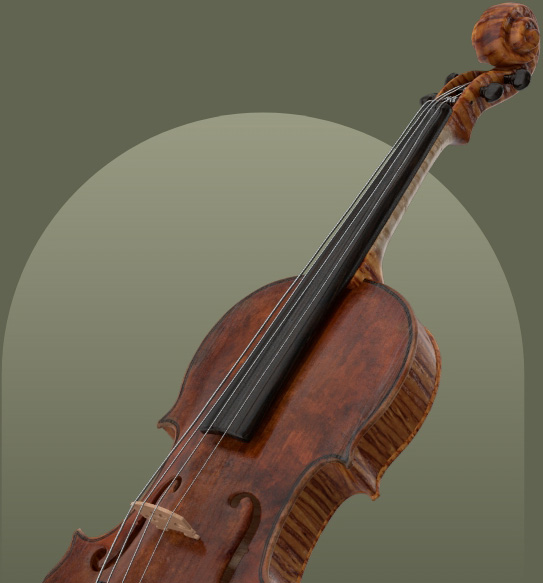
Giovanni Battista (I) Grancino
Milan, 1637–1709
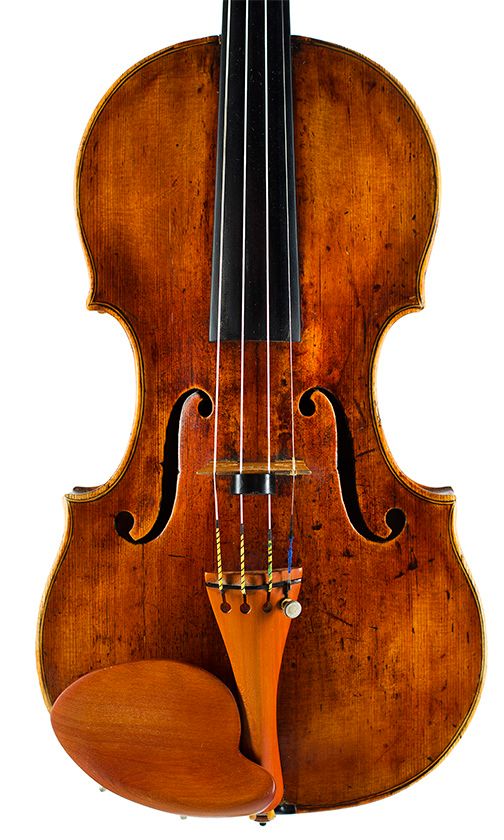
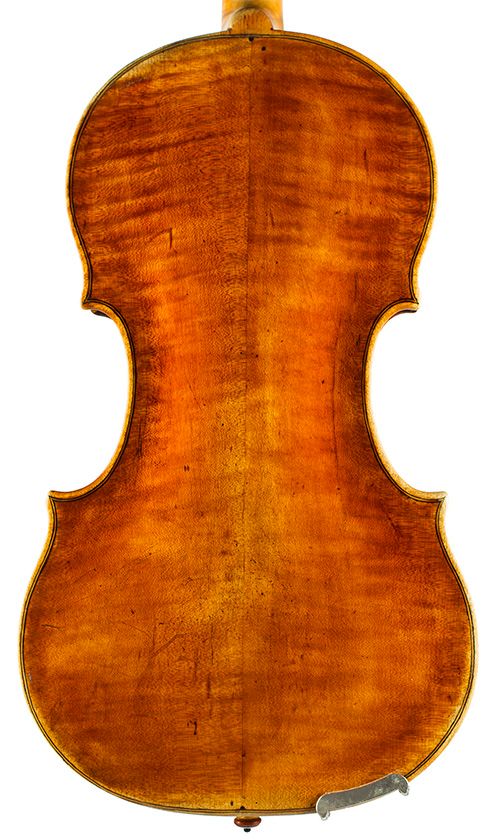
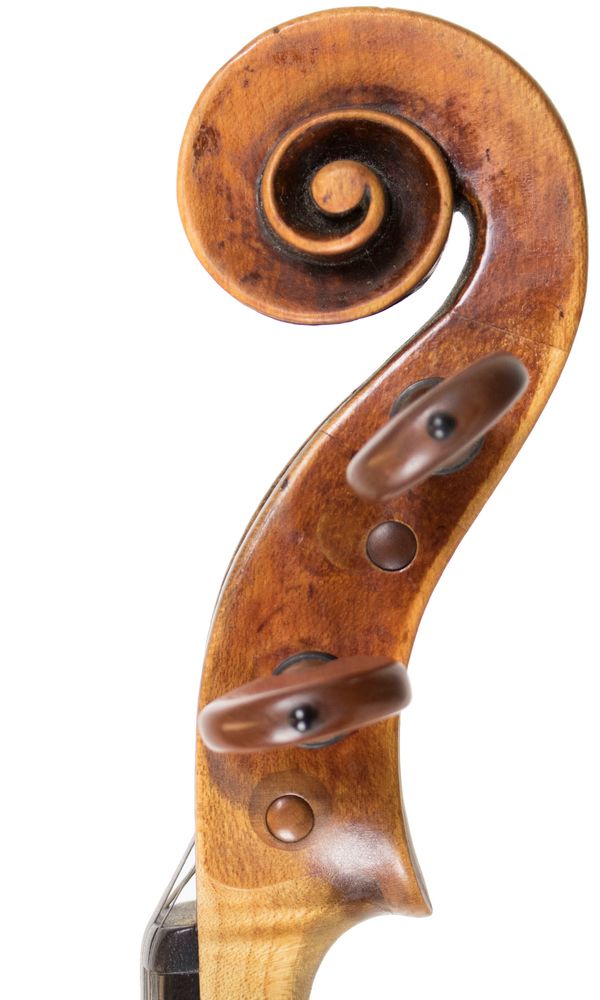
Giovanni Battista (I) Grancino (1637-1709) was a leading Milanese violin maker, known for developing a distinctive and original style that positioned him as the foremost craftsman of the Milan school. He worked in the Contrada Larga, Milan, under the sign 'della Corona'. His instruments are characterized by a narrow edge, delicate drooping upper corners, low arching, Stradivarian-influenced soundholes, and a unique scroll. He used a rich yellow-gold varnish and was noted for his careful wood selection, producing instruments with a powerful tone. He taught Carlo Antonio Testore and his son, Giovanni Battista (II) Grancino, and employed Bartolomeo Pasta.
Instruments
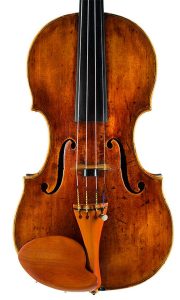
Auction Price History
Highest auction price
71 results
| Type | Details | Auction house | Sold | Price |
|---|---|---|---|---|
| Violin | Labelled Giovanni Grancino in Contrada Largha di Milano al Segno della Corona 1698 Lot 56 | — | March 2026 | £156,000est. Estimate £ 100,000-150,000 |
| Violin | Rosenberg collection, labelled Giouanni Grancino in Contrada Largha di Milano al segno della ... Lot 115 | Ingles & Hayday | June 2023 | £216,000est. £ 100,000-150,000 |
| Violin | Labelled Giouanni Grancino in Contrada Largha di Milano al Segno della Corona 1698 Lot 27 | Ingles & Hayday | March 2023 | £144,000est. £ 100,000-150,000 |
| Violin | Labelled Giouanni Grancino in Contrada Largha di Milano al segno della Corona 1699 Lot 158 | Ingles & Hayday | October 2018 | £120,000est. £ 110,000-150,000 |
| Violin | Bernard Millant collection, bearing the maker's label Lot 58 | Vichy | November 2017 | £200,640est. € 70.000-80.000 |
| Violin | Bearing the maker's label, later back purfling Lot 125 | Vichy | December 2016 | £77,173est. € 60.000-80.000 |
| Violin | Labelled Giovanni Grancino in Contrada Largha di Milano al segno della Corona 172..., head later Lot 248 | Tarisio | October 2016 | £127,993est. $ 100,000-150,000 |
| Small Cello | Modified in size, labelled Sef Gouernarius faciebat anno 17... Lot 149 | Brompton’s | June 2016 | £174,000est. £ 120,000-160,000 |
| Violin | Labelled Giouanni Grancino in Contrada Larga di Milano al segno della Corona 16...9 Lot 25 | Ingles & Hayday | March 2016 | £90,000est. £ 80,000-100,000 |
| Violin | Belongs to the Swiss concert violinist Ursula Bagdasarjanz and has been in her possession since 1955 Lot 176 | Ingles & Hayday | March 2016 | £102,000est. £ 90,000-140,000 |
| Small Cello | Labelled Giouanni Grancino in Contrada Larga di Milano al Segno della Corona 1701 Lot 92 | Ingles & Hayday | November 2015 | £264,000est. £ 100,000-150,000 |
| Cello | Illustrated in Four Centuries of Italian Violinmaking, pp. 278-279; dimensions reduced in the upper bouts Lot 72 | Tarisio | October 2013 | £311,029 |
| Violin | Labelled Andreas Guarnerius Cremonae ..., of an aged lightly craquelled red brown colour Lot 67 | Bonhams | October 2013 | £158,500est. £ 60,000-80,000 |
| Violin | Bearing an original label ...uanni Grancino in Contrada, ...rgha di Milano al fegno della Corona 1699 Lot 215 | Brompton’s | June 2013 | £84,000est. £ 70,000-90,000 |
| Cello | Literature: Albert W. Cooper, The Cooper Collection - Volume I, 1996; dimensions slightly modified Lot 73 | Tarisio | May 2013 | £333,925est. $ 400,000-600,000 |
| Cello | Bearing its original label Giouanni Grancino in Contrada Largha di Milano al ..., head later Milanese Lot 89 | Ingles & Hayday | May 2013 | £168,000est. £ 100,000-150,000 |
| Cello | Labelled Giovanni Grancino in Contrada, Largha di Milano al sigilio della Corona 1697 Lot 25 | Tarisio | March 2013 | £232,000est. £ 150,000-220,000 |
| Violin | Bearing an original label Giovanni Grancino in contrada largha di Milano al ... Lot 113 | Brompton’s | March 2013 | £147,600est. £ 120,000-160,000 |
| Violin | 35.3 cm Milan, 1697 c. (head reported to be from another instrument) | — | November 2011 | £101,496 |
| Cello | 77.3 cm Milan, 1700 c. (later scroll) | — | October 2011 | £121,250 |
| Violin | 35.5 cm Milan, 1690 c. (table & head replaced) | — | June 2011 | £66,129 |
| Violin | 35.3 cm 1698 c. | — | March 2011 | £144,000 |
| Violin | 35.6 cm 1800 c. (the head later) Attributed to | — | December 2010 | £4,561 |
| Viola | 39.8 cm Milan, C 1670 Ascribed to, or by "Ferdinando Alberti" | — | October 2010 | £108,904 |
| Violin | 35.3 cm Milan, 1690 c. | — | April 2010 | £69,045 |
| Violin | 35.5 cm Ascribed to | — | June 2009 | £11,360 |
| Violin | 35.9 cm Mailand, 1697 | — | November 2008 | £66,855 |
| Violin | 35.4 cm Milan, 17… c. (scroll possibly not original) | — | October 2007 | £91,384 |
| Violin | 35.5 cm Attributed to | — | May 2007 | £9,217 |
| Violin | 35.4 cm Milan, 1690 c. | — | May 2006 | £35,257 |
| Cello | Milan, 1693 with 'Provenance' | — | November 2005 | £209,600 |
| Violin | Milan, 1700 c. | — | November 2005 | £80,525 |
| Violin | Milan, 1720 c. Attributed to | — | May 2005 | £21,600 |
| Violin | Milan, 1710 c. | — | May 2005 | £50,437 |
| Violin | Ascribed to | — | April 2005 | £15,038 |
| Violin | Milan, 1695 c. | — | November 2004 | £72,000 |
| Violin | Milan, 1695 c. (worm damage) | — | October 2004 | £46,055 |
| Viola | 39.8 cm Milan, 1710 c. | — | April 2004 | £40,392 |
| Violin | 1700 c. | — | November 2003 | £81,600 |
| Violin | 1690 | — | June 2002 | £36,905 |
| Violin | 1687 | — | November 1999 | £45,000 |
| Violin | 1695 | — | November 1999 | £111,500 |
| Cello | 1693 | — | November 1998 | £184,000 |
| Violin | 1662 | — | June 1996 | £47,700 |
| Violin | 1695 | — | June 1996 | £44,400 |
| Violin | 1700 c. | — | June 1995 | £45,500 |
| Viola | 42.1 cm 1690 c. | — | March 1995 | £52,900 |
| Cello | 1690 c. | — | June 1994 | £39,600 |
| Violin | 1690 c. | — | November 1993 | £31,050 |
| Violin | 1720 c. | — | June 1993 | £36,700 |
| Violin | 1700 c. | — | May 1993 | £27,867 |
| Cello | 1685-90 | — | November 1992 | £9,900 |
| Violin | 1705 c. | — | November 1992 | £24,200 |
| Cello | 70.5 cm 16-- | — | April 1992 | £14,850 |
| Cello | 1700 c. | — | November 1990 | £41,800 |
| Violin | 1719 | — | March 1990 | £41,800 |
| Violin | 1703 c. | — | November 1989 | £41,800 |
| Violin | 1670 c. | — | June 1989 | £29,700 |
| Cello | 1701 | — | November 1988 | £61,600 |
| Violin | 1690 c. | — | November 1988 | £4,620 |
| Cello | 1703 | — | June 1987 | £52,800 |
| Cello | 1690 c. | — | April 1987 | £33,000 |
| Cello | 1700 c. | — | May 1986 | £31,900 |
| Cello | 1695 | — | March 1986 | £28,600 |
| Violin | 1690 c. | — | March 1984 | £6,050 |
| Violin | 1708 | — | January 1984 | £15,156 |
| Violin | 1706 | — | November 1983 | £12,100 |
| Violin | 1723 | — | June 1983 | £7,700 |
| Violin | 1725 | — | November 1982 | £9,350 |
| Cello | 1700-25 | — | April 1982 | £17,600 |
| Cello | 1684 | — | November 1980 | £17,600 |
No results match those filters.
Maker Overview
Life
Giovanni Battista (I) Grancino (1637-1709) was a prominent Milanese violin maker. Sources contain conflicting information regarding his parentage; while John Dilworth states he was the eldest son of Andrea Grancino, Willibald Leo Lütgendorff indicates he was the son of Paolo. He lived and worked in the Contrada Larga in Milan, a common area for Milanese violin makers, and his shop was identified by the sign 'della Corona' according to his labels. Willibald Leo Lütgendorff suggests he initially settled in Ferrara before returning to Milan. After early work with his brother, Giovanni Battista (I) Grancino developed a distinctive and original style, establishing himself as the foremost maker of the Milan school. He taught his son, Giovanni Battista (II), but disinherited him in 1709 due to his involvement in the murder of Antonio Maria Lavazza. However, Cecie Stainer mentions he had two sons, Francesco and Giam Battista, both makers, without detailing the disinheritance.
Characteristics
- Stylistic Development
- His earlier work, was broad and similar to that of Andrea Guarneri, which later evolved into a very personal and elegant model.
- Edges and Corners
- John Dilworth notes his distinctive style included a narrow edge with delicate, slightly drooping upper corners.
- Archings
- His instruments featured a low but pinched arching, and were not as arched as his father's work.
- Soundholes
- John Dilworth highlights beautifully rendered soundholes with a strong Stradivarian influence, characterized by broad wings.
- Scroll
- The scroll is very distinctive, with deeply dished and narrow volutes and a small eye of almost conical shape.
- Varnish
- The varnish is typically of a rich yellow-gold colour, or deep yellow to orange-red.
- Wood Selection
- Willibald Leo Lütgendorff states he surpassed his father in wood choice, a point, who noted his wood was more carefully chosen.
- Tone
- His instruments are known for a large and powerful tone.
- Workmanship
- Cecie Stainer notes that the details of his instruments were not always very carefully finished.
- Violas
- A very fine double-purfled contralto viola is in the collection of the Royal Academy of Music, London, though John Dilworth suggests he rarely made violas without his brother's assistance.
- Cellos
- Cellos are more common but were made on a very large pattern, with most in use today having been cut down.
- General Pattern
- Many of his violins, violas, and violoncellos were made on a large flat pattern.
- Gio. Bapt. Grancino in Contrada
Largha di Milano, anno 16..John Dilworth - Gio. Grancino al Segno della Corona
in Contrada larga di Milano, fece 16..John Dilworth
Influence and legacy
- Teacher: Cecie Stainer identifies him as a pupil of his father.
- Pupils: He was the teacher of Carlo Antonio Testore and his son, Giovanni Battista (II) Grancino.
- Employer: He employed Bartolomeo Pasta, who was previously a pupil of Nicolò Amati in Cremona.
- Stylistic Influences: His early work showed characteristics similar to Andrea Guarneri, and his soundholes exhibited a strong Stradivarian influence.
- Notable Instruments: A double-purfled contralto viola by Giovanni Battista (I) Grancino is held in the collection of the Royal Academy of Music, London.
- Market Value: Willibald Leo Lütgendorff noted that at the time of his writing, Grancino's best works were commanding prices of 2500 Marks.
Further Information
- Shop Sign: His shop was identified by the sign 'della Corona' ('at the sign of the Crown'), which appeared on his labels, as mentioned by John Dilworth and Cecie Stainer.
- Address: He worked in the Contrada Larga in Milan, as indicated on his labels and noted by John Dilworth and Cecie Stainer.
- Labels: Examples of his labels include "Gio. Bapt. Grancino in Contrada / Largha di Milano, anno 16.." and "Gio. Grancino al Segno della Corona / in Contrada larga di Milano, fece 16.." (John Dilworth), and "Giovanni Grancino in Contrada Largha di Milano, al segno della Corona, 1721." (Cecie Stainer).
Biographies
The overview above is drawn from the following published accounts. Read them in the original:
John Dilworth+
GRANCINO, Giovanni Battista (I) Born 1637, died 1709 Milan Italy Eldest son of Andrea Grancino, above. Lived and worked in the Contrada Larga, as did the others of the family and most of the known Milanese violin makers. His shop, presumably inherited from his father, was identified by the sign ‘della Corona’ which is given on his labels. After early work with his brother, Giovanni developed a distinctive and original style, and is the foremost maker of the Milan school. Teacher of Carlo Antonio Testore and employer of Bartolomeo Pasta, previously a pupil of Nicolò Amati in Cremona. He also taught his son, Giovanni Battista (II), below, but disinherited him in 1709 after his involvement in the murder of Antonio Maria Lavazza. The elder Grancino’s earlier broad Andrea Guarneri-like work developed into an elegant and very personal model distinguished by a narrow edge with delicate, slightly drooping upper corners, a low but pinched arching, and beautifully rendered soundholes with a strong Stradivarian influence evident in the broad wings. The scroll too is very distinctive, the volutes deeply dished and narrow with a small eye of almost conical shape. The varnish is of a rich yellow-gold colour. A very fine double-purfled contralto viola is in the collection or the Royal Academy of Music, London, but otherwise he seems not to have made violas without the assistance of his brother. Cellos are more common, but were made on a very large pattern, and most of those in use today have been cut down. Gio. Bapt. Grancino in Contrada / Largha di Milano, anno 16.. Gio. Grancino al Segno della Corona / in Contrada larga di Milano, fece 16..
George Hart+
Son of Giovanni mentioned above. Similar characteristics.
Cecie Stainer+
Worked in Milan about 1690 to 1730. Pupil of his father, and did similar but better work ; his instruments are not so arched, with yellow varnish, and the wood was more carefully chosen ; they have a powerful tone ; the details are not very carefully finished. Many of his violins, violas, and violoncellos are to be met with, usually made on a large flat pattern.
and “Giovanni Grancino in Contrada Largha di Milano, al segno della Corona, 1721.”
He had two sons, Francesco and Giam Battista, both makers.
Willibald Leo Lütgendorff+
Nach seiner eigenen Angabe Sohn des Paolo, den er in der Holzwahl übertrifft.
Das Modell ist flacher, der Lack tiefgelb oder orangeroth, der Ton gross und kräftig. Anfangs scheint er sich in Ferrara niedergelassen zu haben, kehrte aber später doch nach Mailand zurück. für seine besten Arbeiten werden jetzt
2500 M. bezahlt.
Sell your instrument with Amati
Get started by uploading photos of your instrument for our experts to review.
Sell your instrument with Amati
Get started by uploading photos of your instrument for our experts to review.