James (II) Hardie
Aberdeen, Edinburgh, 1836–1916
James (II) Hardie (1836-1916) was a distinguished Scottish luthier, born in Aberdeenshire and trained by his grandfather, Peter Hardie. After a period as a schoolteacher, he established his Edinburgh workshop in 1863, later moving to 117 Nicholson Street where he operated as Jas Hardie & Sons. A prolific maker, he produced thousands of violins, violas, cellos, and basses, often favoring the Maggini model with distinctive double purfling. Hardie was known for his use of fine, acoustically superior wood and his self-made amber oil varnish, which he began using in 1869. His instruments are praised for their rich, telling tone. He received several accolades, including a gold medal at the 1890 Edinburgh Exhibition. However, his reputation also led to authentication challenges, with both his cheaper instruments being re-labeled as other makers' work and copies of his own instruments being forged.
Request an expert valuation or learn how our global auctions achieve the highest prices for your instruments.
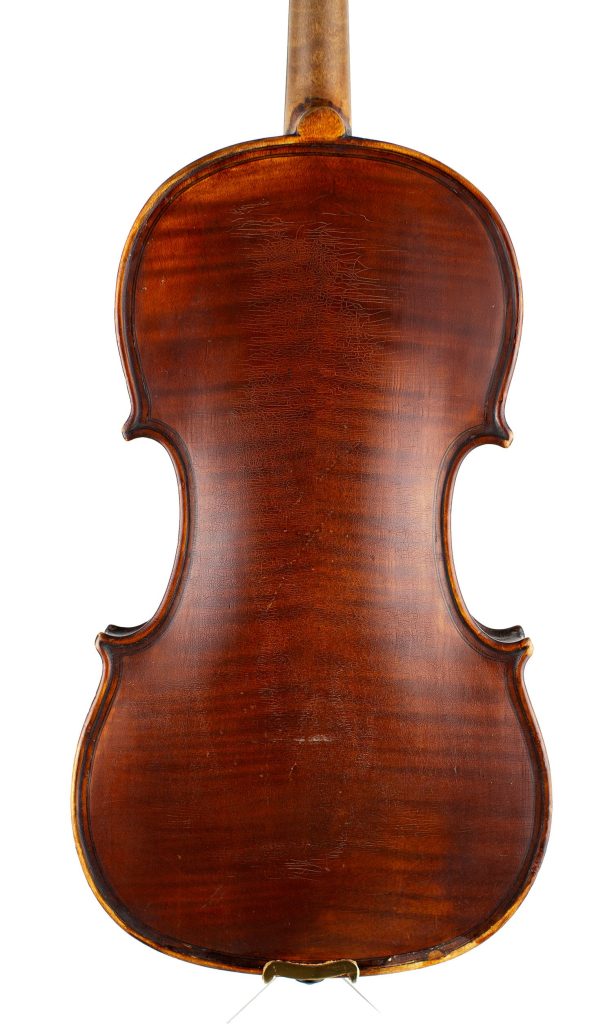
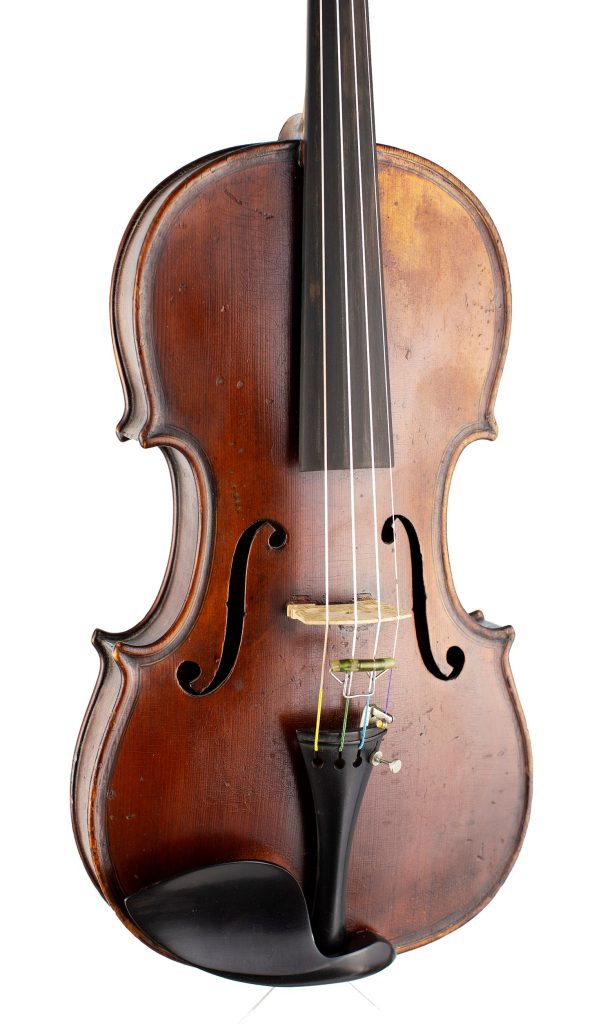
Instruments
Auction Price History
Highest auction price
33 results
| Type | Details | Auction house | Sold | Price |
|---|---|---|---|---|
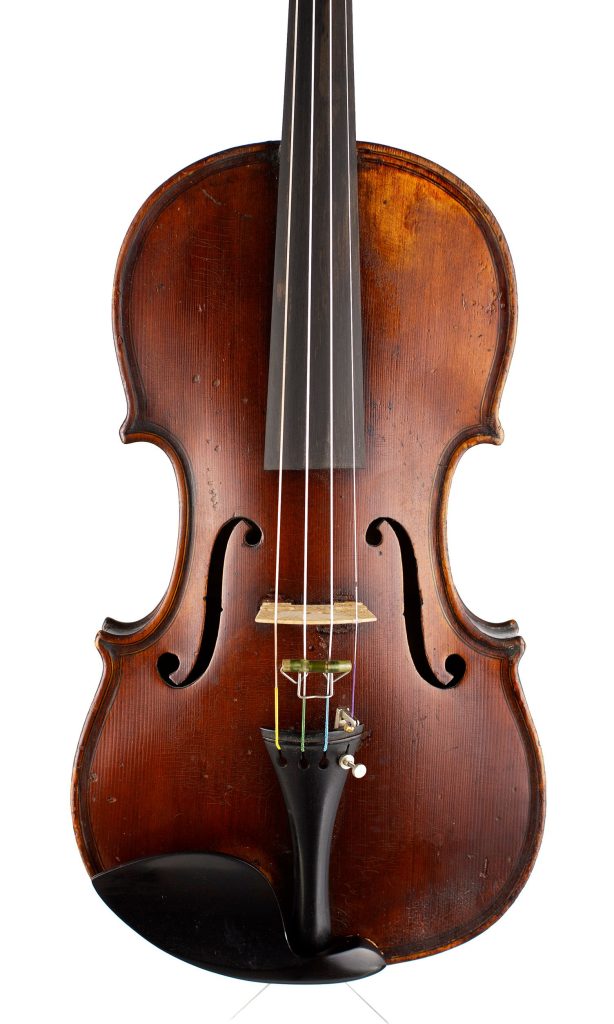
| Violin | Two-piece back, some crazing to the varnish on the back Lot 1063 | McTear’s | June 2025 | £496est. £ 500-800 |
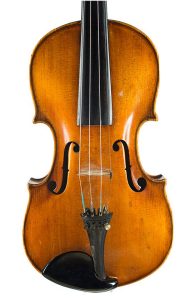
| Violin | A violin by James Hardie & Sons, Edinburgh, 1891 Lot 139 | Amati | November 2023 | £758est. £ 600-1,000 |
| Violin | A violin by James Hardie, Edinburgh, 1885 Lot 95 | Amati | June 2021 | £1,011est. £ 800-1,200 |
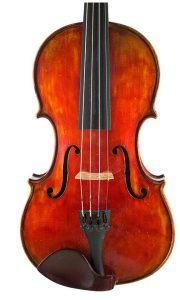
| Violin | Two-piece back of faint broad curl, varnish of a plum red colour on a golden ground, double purfled Lot 2448 | Gardiner Houlgate | December 2019 | £744est. £ 700-1,000 |
| Violin | Labelled Made by James Hardy & Sons, Violin ... Lot 99 | Brompton’s | March 2019 | £708est. £ 800-1,200 |
| Violin | Maggini copy, two-piece back of medium curl, varnish of a reddish brown colour on a golden ground Lot 48 | Gardiner Houlgate | November 2015 | £1,320est. £ 1,000-1,500 |
| Violin | Bearing an original label Lot 478 | Brompton’s | June 2012 | £1,200est. £ 1,200-1,800 |
| Violin | 36.1 cm Edinburgh, 1863 | — | September 2010 | £1,200 |
| Violin | 36.4 cm 1892 | — | September 2007 | £480 |
| Violin | 36.2 cm Edinburgh, 1900 c. | — | September 2007 | £1,080 |
| Violin | Edinburgh, 1888 | — | December 2004 | £713 |
| Violin | 1882 | — | May 2004 | £1,260 |
| Violin | 1860 c. | — | July 2003 | £822 |
| Violin | 1891 | — | March 2002 | £300 |
| Violin | 1896 | — | February 2002 | £700 |
| Violin | 1891 | — | February 1995 | £402 |
| Violin | 1904 | — | June 1993 | £506 |
| Violin | 1870 c. | — | January 1992 | £352 |
| Violin | 1891 | — | February 1990 | £455 |
| Violin | 1870 c. | — | February 1990 | £330 |
| Violin | 1890 c. | — | November 1989 | £528 |
| Violin | 1896 | — | April 1989 | £354 |
| Violin | 1900 | — | April 1989 | £440 |
| Violin | 1891 | — | March 1989 | £660 |
| Violin | 1896 | — | January 1989 | £528 |
| Violin | 1883 | — | October 1988 | £352 |
| Violin | 1893 | — | July 1988 | £610 |
| Violin | 1883 | — | June 1988 | £286 |
| Violin | 1900 | — | June 1988 | £242 |
| Violin | 1899 | — | May 1988 | £121 |
| Violin | 1893 | — | December 1987 | £462 |
| Violin | 1899 | — | July 1987 | £330 |
| Violin | 1891 | — | November 1982 | £108 |
No results match those filters.
Maker Overview
Life
James (II) Hardie (1836-1916) was born on January 1, 1836, in Aquhedley, Parish of Ellon, Aberdeenshire, Scotland, James Hardie was the son of William and Mary Hardie (née Strachan). He was one of thirteen children. He received his education at the Methlic Public School and the Normal College, Edinburgh, as detailed by William Meredith Morris. He was the grandson and pupil of Peter Hardie. Hardie began his first instrument, a violoncello, at the age of nine, copying one belonging to his father. His formal training under his grandfather commenced at age fifteen in Dunkeld.
On January 23, 1862, he married Elsie Milne Davidson in Methlic, with whom he had thirteen children, six of whom died in infancy. His eldest son, James, an accomplished violinist, passed away on April 6, 1898. Hardie continued working as a schoolteacher until 1863, when he established his own workshop at 14 Marshall Street, Edinburgh. In 1895, he relocated his shop to 117 Nicholson Street, where he was assisted by his sons. While the firm became known as Jas Hardie & Sons, Morris clarifies that Hardie personally made all the instruments, with his sons assisting in minor tasks such as regulating and stringing, though his son William did make one violin. James (II) Hardie died in Edinburgh in 1916.
Characteristics
- Prolific Output
- John Dilworth notes he was a prolific maker of over 200 hand-made violins, violas, cellos, and basses. William Meredith Morris states he produced well over two thousand fiddles, along with a goodly number of violoncellos and double-basses, with Willibald Leo Lütgendorff claiming he made around 4,000 violins.
- Models
- Hardie crafted instruments on classical patterns, with a decided preference for the Maggini model, also following Stradivari and Guarneri models. Many of his violins are made on a distinctive large Maggini model featuring double purfling, a characteristic that Morris highlights as a key identifier against forgeries.
- Materials
- He utilized beautiful old wood, selecting the finest quality material primarily for its acoustic properties rather than its aesthetic appearance.
- Varnish
- His instruments feature a dark orange varnish, sometimes with a thicker, crackled texture. Morris elaborates that Hardie used an amber oil varnish, which he began applying in 1869. This varnish, based on fossil amber, varied in color from rich golden yellow to red and ruby, with the golden yellow tints being particularly successful. Hardie consistently made his own varnish.
- Measurements
- Hardie adopted the measurements of the great Brescian maker Maggini, adjusting thicknesses based on the density of the wood.
- Tone
- His instruments are noted for their large, rich, and telling tone, successfully emulating the characteristic Maggini sound.
- Trade Instruments
- In addition to his hand-made instruments, Hardie also labeled and sold approximately 2,000 imported trade instruments.
- Pricing
- , his instruments were priced between £3 and £20.
- Made by
James Hardie & Sons
Violin makers
Edinburgh 1891John Dilworth - James Hardie & Sons Makers
117 Nicholson Street
EdinburghJohn Dilworth
Influence and legacy
- Training: James (II) Hardie was the grandson and pupil of Peter Hardie, under whose instructions he began working at the age of fifteen in Dunkeld.
- Varnish Development: William Meredith Morris notes that Hardie was significantly indebted to Dr. George Dickson for his initiation into the method of dissolving amber for varnish production.
- Awards and Exhibitions: Hardie received a gold medal at the Edinburgh Exhibition in 1890. Morris further details a bronze medal at the Edinburgh International Exhibition in 1886 and an honourable mention at the Glasgow Exhibition in 1886-87, in addition to the 1890 Edinburgh gold medal.
- Authentication Challenges: The authentication of Hardie's instruments can be problematic. Dilworth and Morris both report instances where his cheaper instruments were acquired by individuals (such as a man known as Cooke) and subsequently sold with false labels of makers like Panormo and Fendt. Furthermore, copies of Hardie’s work were produced by later makers. Morris recounts a specific case where a maker of mediocre skill copied a fine Hardie Maggini model, applied a poor yellow oil varnish, inserted forged Hardie tickets, and sold them as genuine, noting that these forgeries were typically single purfled, unlike Hardie's double-purfled Maggini models.
- Family Involvement: The firm operated as Jas Hardie & Sons, indicating the involvement of his sons in the business, though Hardie himself was the primary maker.
Further Information
- Workshop Locations: Hardie's workshop was initially established at 14 Marshall Street, Edinburgh, in 1863, before moving to 117 Nicholson Street, Edinburgh, in 1895.
- Labels: Examples of his labels include "Made by / James Hardie & Sons / Violin makers / Edinburgh 1891" and "James Hardie & Sons Makers / 117 Nicholson Street / Edinburgh [Rattray]".
Biographies
The overview above is drawn from the following published accounts. Read them in the original:
John Dilworth+
HARDIE, James (II) Born 1836 Aguhadley, Aberdeen, died 1916 Edinburgh, Scotland UK. Grandson and pupil of Peter Hardie, below. Continued working as a schoolteacher until 1863, when he established his shop at 14 Marshall Street, Edinburgh. Then moved to 117 Nicholson Street in 1895, where he was assisted by his sons. Fine and prolific maker of more than 200 hand-made violins, violas, cellos, and basses on classical patterns, he also labelled and sold some 2,000 imported trade instruments. Authentication can be problematic. Henley states that many of the cheaper Hardie violins were obtained by a man known as Cooke who sold them with false labels of Panormo, Fendt, and others. Copies of Hardie’s work were also produced by later makers. Awarded gold medal at Edinburgh Exhibition 1890. Many violins made on a distinctive large Maggini model with double purfling. Dark orange varnish, some with a thicker crackled texture. Made by / James Hardie & Sons / Violin makers / Edinburgh 1891 James Hardie & Sons Makers / 117 Nicholson Street / Edinburgh [Rattray]
William Meredith Morris+
He was born at Aquhedley, in the Parish of Ellon, Aberdeenshire, on Jan. 1, 1836 — not in 1837, as stated in some biographical dictionaries. He is the son of William and Mary Hardie, and is one of thirteen children — seven sons and six daughters. His mother’s maiden name was Strachan, and she belonged to Drumnagarrow, Aberdeenshire. She is still alive, and considerably over ninety years of age. Hardie received his education at the Methlic Public School, and in the Normal College, Edinburgh.
He commenced his first instrument, a violoncello, when nine years old ; it was a copy of an instrument belonging to his father, and he made it throughout, except the pegs. This was an exceptionally early age at which to take up the gouge and calipers ; but the real period of work commenced when he was fifteen, at which age he began to work under his grandfather’s instructions at Dunkeld.
On January 23, 1862, he was married to Miss Elsie Milne Davidson, at Methlic. From this union there has sprung a progeny of thirteen, named in order as follows : — Elsie, James, Elsie, William, Mary, Isabella, Mary, William, Alfred, Charles, Isabella, Evelyn, and Maud. Of these, six died in infancy. This accounts for several of the names being the same.
The eldest son, James, who was an excellent violin player, and a leader in the Theatre Royal, Edinburgh, died on April 6, 1898. From the age of fifteen down to the present, Hardie has been constantly at work. He is a prolific maker, and has, according to the strictest account, produced well over two thousand fiddles. He has made himself a goodly number of violoncellos and double-basses. All the work is personal. His sons assist him in minor matters, such as regulating, stringing up, &c., but not in actual making. Mr. William Hardie, however, has made one violin. Out of the two thousand and odd violins made by Hardie, a proportion of about twenty per cent., i.e. something like two hundred, are superior instruments, and reach a high standard of excellence. Many of these, it may be stated without exaggeration, are simply beautiful, and will certainly add lustre to the fame of Scotland’s makers. The material used in them is of the finest quality — chosen more for its acoustic properties than for its artistic appearance. The varnish is very fine, having for its basis fossil amber. It varies in colour from rich golden yellow to red and ruby, but is more successful in the golden yellow than in the other tints.
He commenced to use amber oil varnish in 1869 — just nine years after the first experiments of Dr. George Dickson, whatever may be the significance of the fact. I borrow the statement from Mr. W. C. Honeyman that Mr. Hardie is largely indebted to the Doctor for his initiation into the ???????? – of the method of dissolving amber. Certain it is, however, that Hardie makes, and always has made, his own varnish, Hardie follows the Stradivari, Guarneri, and Maggini models, but has a decided preference for the last named. His measurements are those of the great Brescian, but he varies in the thicknesses according to the density of his wood. All his instruments on the Maggini model are double purfled. This fact will help the average connoisseur to detect forgeries. It is curious that two series of forgeries of a diametrically opposite character have been perpetrated in connection with Hardie’s name.
One is recorded by Mr. Honeyman in his sketches in the People’s Friend. It is this : several of Hardie’s cheaper instruments — “pot-boilers” in fact — were purchased some years ago by a certain individual and labelled ” Panormo ” and ” Fendt,” and then sold in auction rooms.
The other is still more flattering to Hardie. A certain maker (personally known to the author), of mediocre attainments, possessed a fine Hardie fiddle (Maggini model) and made a number of copies of it. He varnished them with a poor oil varnish in glaring yellow, fitted them up, inserted a forged Hardie ticket, and got rid of them at the pawnbrokers. Some of these were sold afterwards for considerable sums. I know the locale of three of these counterfeit ” Hardies ” at the present moment. It has often amused me to watch their role in the little masquerade they carry on. One changed hands recently for £12. These ” Hardie-Maggini ” forgeries are, it should be noted, single purfled. Aliquando bonus dormitat Homerus.
Hardie’s wood is excellent, and his tone is large, rich, and telling. He succeeds well in producing the Maggini tone, and, no doubt, when his violins have been well used, the tone will have the copious ” tears ” of the Brescian maestro. His prices range from £3 to £20.
He has exhibited on several occasions. At the Edinburgh International Exhibition in 1886 he gained a bronze medal; at the Glasgow Exhibition in 1886-87 an honourable mention ; and at the International Exhibition, Edinburgh, in 1890, a gold medal. An Exhibition prize violin is shown in the illustration. Facsimile label : —
Willibald Leo Lütgendorff+
Enkel von Peter H. und seit seinem neunten Jahre dessen Schüler. Ein
tüchtiger Geigenmacher, der bereits an 4000 Geigen gemacht hat. Am liebsten
ahmt er Maggini nach, verwendet schönes altes Holz, Bernsteinlack, und ist viel
fach ausgezeichnet worden. Die Firma lautet jetzt Jas Hardie & Sons, doch hat
er alle Geigen allein gemacht.
Sell your instrument with Amati
Get started by uploading photos of your instrument for our experts to review.
Sell your instrument with Amati
Get started by uploading photos of your instrument for our experts to review.