William Hill
London, 1748–1790
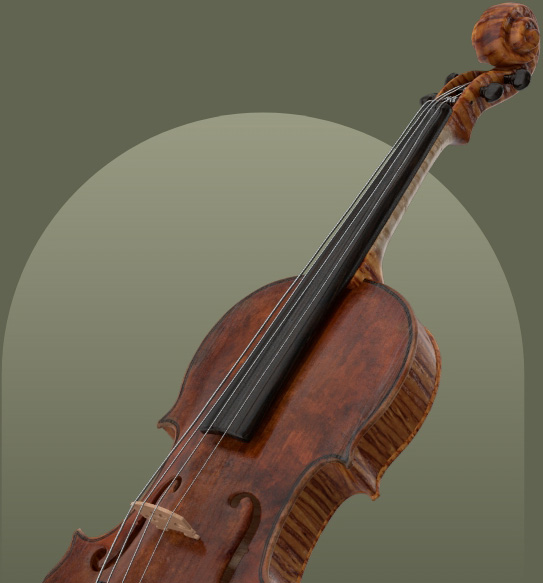
William Hill (1748-1790) was a London-based instrument maker, the son of Joseph Hill. He worked in St James Street and later Poland Street, Carnaby Market, from 1773. Admitted to the Musicians Company and the Royal Society of Musicians, he was also an organist at Trinity Chapel. His instruments, often in the Amatisé style of Joseph Hill (I), featured a distinctive golden-yellow, transparent varnish. While his workmanship was considered good, the tone of his violins was noted as not powerful, though improvable.
Request an expert valuation or learn how our global auctions achieve the highest prices for your instruments.
Instruments
Maker Overview
Life
William Hill (1748-1790) was the third son and assistant of Joseph Hill (I)'s The Brompton's Book of Violin & Bow Makers. Sources contain conflicting information about his parentage, as Willibald Leo Lütgendorff's Die Geigen- und Lautenmacher vom Mittelalter bis zur Gegenwart identifies him as the eldest son and pupil of Joseph II. H. William Hill worked in St James Street, Haymarket around 1769, the year of his admission to the Musicians Company. He later moved to Poland Street, Carnaby Market, from 1773. Lütgendorff suggests he opened his workshop in Poland Street around 1771, coinciding with his father's adoption of the firm name Jos. Hill & Sons. He was admitted to the Royal Society of Musicians in 1780 and was appointed organist at Trinity Chapel. Lütgendorff also notes that he was a skilled musician, belonging to the London Musicians' Association, and was a good organ builder who introduced various improvements.
Characteristics
- Style
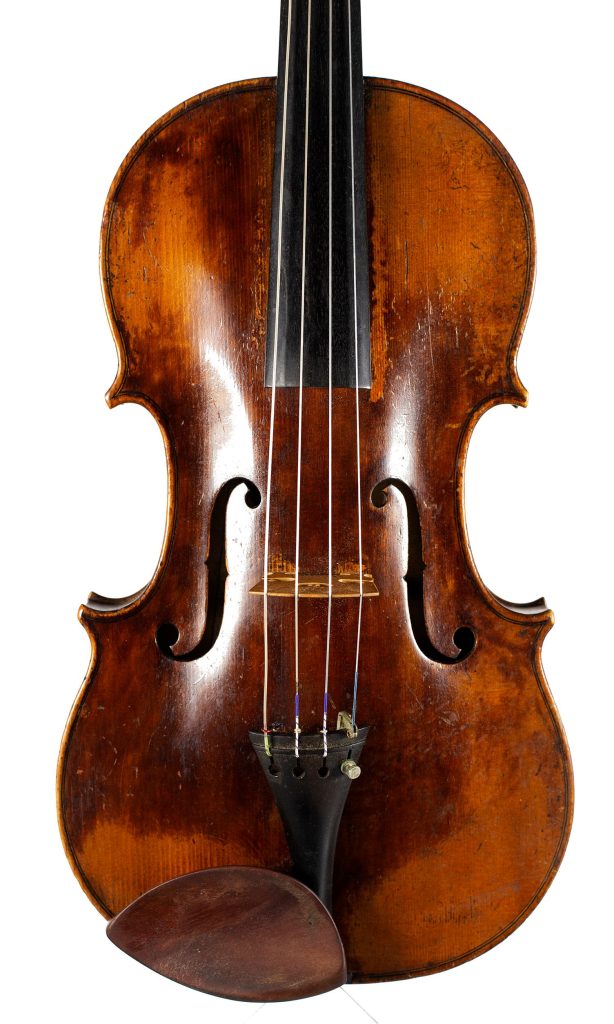
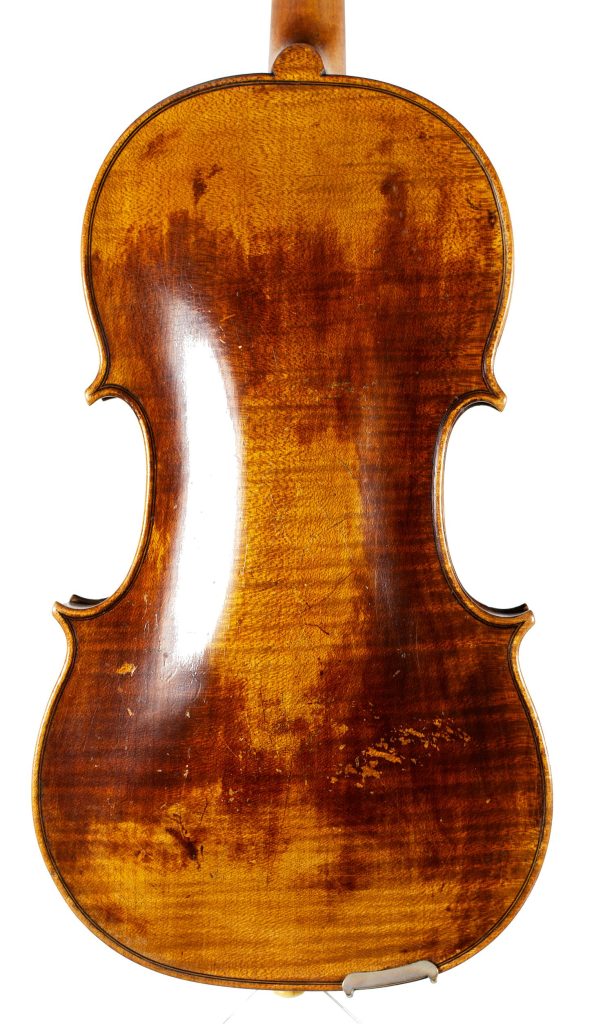
- His work is seldom identified, but is in the Amatisé style of Joseph Hill (I).
- Workmanship
- George Hart describes his work as "Very good work." Cecie Stainer's A Dictionary of Violin Makers states he made some good instruments, rather similar to those of Edmund Aireton, a point.
- Varnish
- He used a golden-yellow varnish. Stainer and Lütgendorff further describe the varnish as a beautiful yellow colour, rather transparent.
- Tone
- The tone of his instruments, though good, was not powerful. Lütgendorff adds that the tone of his violins was rather weak but could sometimes be easily improved by a skilled repairer.
- William Hill
maker in Poland Street
near Broad Street, 1766John Dilworth - William Hill maker
in Poland Street near Broad
Street Carnaby Market
1785John Dilworth
Influence and legacy
- Family Training: John Dilworth identifies him as the third son and assistant of Joseph Hill (I). Cecie Stainer and George Hart also confirm he was the son of Joseph Hill. Willibald Leo Lütgendorff, however, states he was the eldest son and pupil of Joseph II. H.
- Memberships: He was admitted to the Musicians Company in 1769. In 1780, he was admitted to the Royal Society of Musicians. Willibald Leo Lütgendorff also mentions his membership in the London Musicians' Association.
- Appointments: He was appointed organist at Trinity Chapel.
Further Information
- Working Locations: He worked in St James Street, Haymarket around 1769. From 1773, he was located at Poland Street, Carnaby Market.
- Labels: Labels include "William Hill / maker in Poland Street / near Broad Street, 1766" and "William Hill maker / in Poland Street near Broad / Street Carnaby Market / 1785" [BVMA]. Cecie Stainer also notes a label reading "William Hill, maker in Poland Street, near Broad Street, Carnaby Market, 177—."
Biographies
The overview above is drawn from the following published accounts. Read them in the original:
John Dilworth+
HILL, William Born 1748, Worked London UK, died 1790 Third son and assistant of Joseph Hill (I), above. Worked in St James Street, Haymarket c.1769, the year of his admission to the Musicians Company. Later found at Poland Street, Carnaby Market, from 1773. Admitted to the Royal Society of Musicians 1780 and appointed organist at Trinity Chapel. His work is seldom identified, but is in the Amatisé style of Joseph Hill (I), with golden-yellow varnish. William Hill / maker in Poland Street / near Broad Street, 1766 William Hill maker / in Poland Street near Broad / Street Carnaby Market / 1785 [BVMA]
George Hart+
Son of [Joseph Hill]. Very good work.
William Meredith Morris+
London : 1740-80.
I have not, to my knowledge, seen any of his work.
Cecie Stainer+
Son of Joseph Hill. Worked in London about 1740-80. He made some good instruments, rather similar to those of Edmund Aireton ; the varnish was a beautiful yellow colour, rather transparent; the tone though good was not powerful.
and ” William Hill, maker in Poland Street, near Broad Street, Carnaby Market, 177—.”
Willibald Leo Lütgendorff+
Ältester Sohn und Schüler von Joseph II. H. Zu der gleichen Zeit, in der
sein Vater die Firma Jos. Hill & Sons annahm, also etwa um 1771, scheint er
seine Werkstatt in der Poland Street eröffnet zu haben. Seine Arbeit ist recht
gut, etwas an Aireton erinnernd, der Lack sehr durchsichtig und von schöner
gelber Farbe, nur der Ton seiner Geigen ist ziemlich schwach, kann aber von
einem tüchtigen Reparateur manchmal leicht verbessert werden. Er war auch ein
geschickter Musiker und gehörte als solcher dem Londoner Musiker-Verband an.
Auch als Orgelbauer war er gut und hat manche Verbesserung eingeführt.
Sell your instrument with Amati
Get started by uploading photos of your instrument for our experts to review.
Sell your instrument with Amati
Get started by uploading photos of your instrument for our experts to review.