Carlo Ferdinando Landolfi
Milan, worked 1750–1775
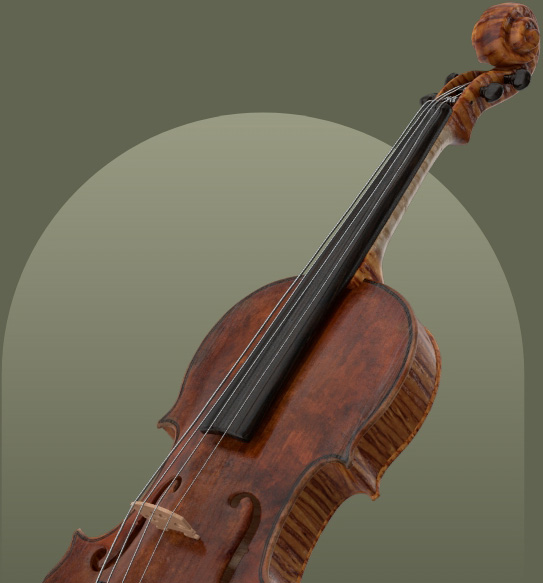
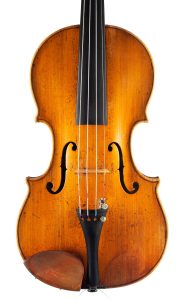
Carlo Ferdinando Landolphi was a German-born violin maker active in Milan, Italy, from approximately 1740/1750 to 1775. His work is notable for its significant variation in character and finish, with some instruments meticulously crafted and others appearing raw or unfinished. He is recognized for his use of fine wood and for producing highly regarded violoncellos. Landolphi's style shows influences from Paolo Antonio Testore and potentially J. B. Guadagnini, though there is conflicting information regarding whether he copied Giuseppe Guarneri.
Auction Price History
Highest auction price
55 results
| Type | Details | Auction house | Sold | Price |
|---|---|---|---|---|
| Small Violoncello | Labelled Carlo Ferdinando Landolfi nella Contrada di Santa Margarita al Segno della Sirena, Milano ... Lot 14 | Tarisio | March 2026 | £176,708est. Estimate $ 200,000-300,000 |
| Violin | Labelled Carolus Ferdinandus Landulphus fecit Mediolani in Via S. Margaritae anno 1754 Lot 134 | Tarisio | March 2026 | £220,885est. Estimate $ 250,000-400,000 |
| Violin | Labelled Carlo Ferdinando Landolfi, nella Contrada di Santa Margarita, al Segno della Sirena ... Lot 93 | Tarisio | March 2025 | £132,000est. £ 70,000-100,000 |
| Small Violin | Rosenberg collection, labelled Carlo Ferdinando Landolfi nella Contrada Larga di Santa Margarita ... Lot 124 | Ingles & Hayday | June 2023 | £45,600est. £ 25,000-35,000 |
| Violin | Rosenberg collection, labelled Carolus Ferdinandus Landulphus fecit Mediolani in Via S. Margaritae ... Lot 196 | Ingles & Hayday | June 2023 | £132,000est. £ 60,000-80,000 |
| Viola | Labelled Petrus Joannes Mantegatia fecit, Mediolani in Via S. Margaritae 1785 Lot 10 | Tarisio | March 2023 | £200,600est. £ 180,000-250,000 |
| Violin | Labelled Carlo Ferdinando Landolfi nella Contrada di Santa Margarita al Segno della Sirena. Milano ... Lot 86 | Ingles & Hayday | March 2023 | £90,000est. £ 60,000-80,000 |
| Violin | Labelled Carolus Ferdinandus Landolphus fecit Mediolani in Via S. Margaritae anno 1755 Lot 196 | Ingles & Hayday | October 2020 | £48,000est. £ 60,000-80,000 |
| Violin | Labelled Carlo Ferdinando Landolfi, nella Contrada di Santa Margarita al Segno della Sirena ... Lot 90 | Brompton’s | October 2019 | £108,000est. £ 80,000-120,000 |
| Violin | Unlabelled Lot 201 | Tarisio | June 2019 | £94,400est. £ 80,000-120,000 |
| Small Cello | Labelled Carlo Ferdinando Landolfi nella contrada ... Lot 125 | Vichy | June 2017 | £214,020est. € 80.000-100.000 |
| Violin | Labelled Amati, later table Lot 215 | Vichy | December 2016 | £20,309est. € 20.000-25.000 |
| Viola | Labelled Carolus Ferdinandus Landulphus, fecit Mediolani in Via S. Margarita anno 1758 Lot 61 | Tarisio | May 2016 | £58,151est. $ 35,000-55,000 |
| Violin | Labelled Carolus Ferdinandus Landulphus fecit mediolani in via S. Margaritae anno 1755 Lot 101 | Brompton’s | March 2016 | £180,000 |
| Violin | Labelled ... Guarnerius fecit Cremonae sub titular ... 1675 Lot 98 | Brompton’s | November 2015 | £72,000est. £ 70,000-90,000 |
| Violin | Labelled Jo. Bapt. ..., back and ribs probably by Santino Lavazza, scroll probably by G.B. Guadagnini Lot 127 | Brompton’s | November 2015 | £36,000est. £ 30,000-50,000 |
| Violin | Labelled Carolus Ferdinandus Landulphus, fecit Mediolani in Via S. Margaritae anno 1760 Lot 204 | Tarisio | October 2014 | £154,500est. £ 100,000-150,000 |
| Small Cello | Dimensions slightly altered Lot 36 | Tarisio | June 2014 | £189,000est. £ 150,000-220,000 |
| Violin | Bearing a label A. Eisenstein & Fils, Luthiers - Experts, Constantinople, 1915 Lot 275 | Tarisio | February 2014 | £46,793est. $ 50,000-80,000 |
| Violin | Labelled Carolus Ferdinandus Landulphus, fecit Mediolani in via S. Margarita, anno 1753 Lot 214 | Tarisio | June 2013 | £78,000est. £ 70,000-100,000 |
| Violin | Two-piece back of narrow horizontal curl, table of fine to broad grain, varnish of a orange brown colour Lot 117 | Sunrise | April 2013 | £69,363est. ¥ 7-12,000,000 |
| Violin | Violin, 1755 Lot 153 | Brompton’s | December 2012 | £96,000est. £ 80,000-120,000 |
| Cello | Labelled Carolus Ferdinandus Landulphus / fecit Mediolani in Via S. Mar- / garitae anno 1771 Lot 61 | Christie's | April 2012 | £112,785est. $ 150,000-250,000 |
| Violin | Lot 117 | Bonhams | October 2011 | £10,000 |
| Violin | 35.7 cm 1800 c. Ascribed to | — | October 2011 | £10,000 |
| Viola | 38.1 cm Milan, 1765 | — | October 2011 | £49,250 |
| Violin | 35.5 cm Milano, 1768 (restorations) Ascribed to | — | March 2011 | £42,000 |
| Cello | 72 cm Milan, 1746 | — | March 2011 | £79,250 |
| Violin | 35.3 cm Ascribed to | — | October 2009 | £14,830 |
| Violin | 35.0 cm Milan, 1760 c. | — | May 2009 | £59,007 |
| Violin | 35.6 cm Milan, 1760 c. | — | March 2009 | £17,500 |
| Violin | 35.4 cm Milan, 1755 | — | November 2006 | £126,046 |
| Violin | 35.7 cm 18th C. Ascribed to | — | November 2006 | £8,400 |
| Cello | 69.2 cm Milan, 1760 c. Child's size | — | July 2006 | £45,600 |
| Violin | 35.7 cm Milan (the head later) | — | May 2006 | £35,257 |
| Violin | 35.5 cm Milan, 1757 | — | May 2006 | £30,658 |
| Violin | Milan, 1752 | — | July 2004 | £62,400 |
| Violin | 1750 | — | October 2002 | £39,909 |
| Violin | 1755 | — | October 2002 | £38,240 |
| Violin | 1760 | — | November 2000 | £22,350 |
| Viola | 40.9 cm 1768 | — | March 1999 | £80,700 |
| Violin | 1770 c. | — | March 1996 | £46,000 |
| Violin | 1762 | — | December 1995 | £26,399 |
| Violin | 1740 | — | June 1995 | £40,250 |
| Violin | 1750 c. | — | March 1995 | £49,900 |
| Viola | 40.0 cm 1770 c. | — | November 1992 | £35,200 |
| Violin | 1758 | — | June 1988 | £16,500 |
| Violin | 1750-75 | — | June 1988 | £6,270 |
| Violin | 1766 | — | November 1987 | £35,200 |
| Violin | 1760 c. | — | November 1987 | £17,600 |
| Violin | 1750 | — | November 1986 | £26,400 |
| Violin | 1775 c. | — | May 1986 | £20,900 |
| Violin | 1775 c. | — | July 1985 | £19,800 |
| Cello | 1758 | — | November 1983 | £28,965 |
| Violin | 1753 | — | November 1980 | £3,520 |
No results match those filters.
Maker Overview
Life
Carlo Ferdinando Landolphi (circa 1740-1775) was a German-born violin maker who established his workshop in Milan, Italy, around the middle of the 18th century., he worked approximately from 1750 to 1775 in Milan. Cecie Stainer notes his activity from about 1740 to 1775. His instruments are known for their significant variation in character and finish. George Hart states that while he belonged to the latest of the Italian makers, his merits were of no ordinary kind, and the variation in his instruments likely led to confusion about there being two makers of this name, which Hart clarifies is not the case. Some of his instruments are carefully finished, while others are quite raw or unfinished, sometimes lacking purfling or having only a single coat of varnish. Lütgendorff also observes that some instruments were executed with the greatest care, while others were rather roughly finished. An inscription found on one of his instruments reads, 'Revisto da Carlo Ferdinando Landolfi, l'anno 1771.'
Characteristics
- Subheading
- Varnish: His instruments exhibit a range of varnish types. Cecie Stainer describes some as having a brilliant red, very transparent varnish, while others feature a yellow varnish that is thin and hard and not of good quality. John Dilworth notes that early work often had a plain golden-brown varnish, while later work featured a thicker, sometimes brittle, golden-yellow or red varnish. George Hart specifically praises the bright red varnish, describing it as very transparent and pleasing when combined with handsome wood., as cited by Lütgendorff, Landolphi is considered the last maker to have possessed the genuine Cremonese varnish.
- Subheading
- Wood: He used fine wood, which George Hart describes as strikingly handsome.
- Subheading
- Outer Edge: Both Cecie Stainer and George Hart note that the outer edge of his instruments is generally grooved.
- Subheading
- Sound-holes: Sources offer varied descriptions of his sound-holes. Cecie Stainer states they are 'badly cut,' and George Hart considers them 'not an effective one' and 'not in keeping with the work.' John Dilworth, however, describes later work as having 'flamboyant soundholes.' Lütgendorff mentions that the F-holes are rarely cleanly worked out, though the incisions are strong.
- Subheading
- Scroll: Both Cecie Stainer and George Hart characterize the scroll as weak.
- Subheading
- Archings: John Dilworth notes that early work featured bulbous arching, while later work showed a flat arch. Lütgendorff adds that the top is usually more arched than the back.
- Subheading
- Pattern and Copies: Sources contain conflicting information regarding his patterns. Cecie Stainer states he 'occasionally copied Giuseppe Guarneri very closely.' Lütgendorff also mentions that many of his violins, especially early ones, were made after Josef Guarneri, leading some to consider him a pupil of that master. Conversely, George Hart asserts that his pattern is 'not a copy of Guarneri, as often stated, but thoroughly original.'
- Subheading
- Violoncellos: His violoncellos are highly regarded. Cecie Stainer notes they are generally of small size, extremely good, and rank higher than his violins. She describes them as rather similar to those of Pietro Guarneri but less arched and with more accurate proportions. John Dilworth also praises his 'fine violas and cellos of useful size.'
- Revisto da me Carlo Ferdinando
Landolphi, Anno 1744John Dilworth - Carolus Ferdinandus Landolphus
Fecit Mediolani in Via S.Mar
garit� anno 1755John Dilworth - Carlo Ferdinando Landolphi
nella Contrada di Santa Margarita
al segno della Sirena. Milano, 1758.John Dilworth
Influence and legacy
- Subheading: Influences: plainly came under the influence of Paolo Antonio Testore upon his arrival in Milan. Dilworth also suggests that Landolphi's later work shows his Germanic style merging with more advanced Italian ideas, possibly gleaned from J. B. Guadagnini, who was active in Milan from 1750 to 1758. Lütgendorff notes that because many of his violins, particularly early ones, were made after Josef Guarneri, he was sometimes considered a pupil of that master. However, Lütgendorff also suggests that judging by his violoncellos, one might consider him a pupil of Pietro Guarneri.
- Subheading: Mentorship: John Dilworth states that Carlo Ferdinando Landolphi taught Pietro Mantegazza.
- Subheading: Succession: John Dilworth notes that Carlo Ferdinando Landolphi was succeeded by his son, Pietro Antonio Landolphi, who continued to work until 1785.
- Subheading: Valuation: Cecie Stainer indicates that his violoncellos were valued from '£30 to £50,' and a remarkably fine violin was priced at '£50.'
Further Information
- Subheading: Workshop Locations and Labels: John Dilworth provides several examples of his labels and workshop addresses, including 'Carolus Ferdinandus Landolphus / Fecit Mediolani in Via S.Mar / garitæ anno 1755' and 'Carlo Ferdinando Landolphi / nella Contrada di Santa Margarita / al segno della Sirena. Milano, 1758.'
- Subheading: Dated Instruments: Instruments by Landolphi have been found with various dates. Cecie Stainer mentions two violins dated 1752 and 1753, and a 'Revisto' label from 1771. John Dilworth also cites a 'Revisto' label from 1744, in addition to the 1755 and 1758 labels.
Biographies
The overview above is drawn from the following published accounts. Read them in the original:
John Dilworth+
LANDOLPHI (LANDOLFI), Carlo Ferdinando Worked circa. 1750-1775 Milan Italy. A German-born violin maker who came to Milan in the middle of the 18th century where he plainly came under the influence of Paolo Antonio Testore. Probably already had a technique and style learned in his native country and later work sees his Germanic style, most noticeable in the cutting of the head and soundholes, merged with more advanced Italian ideas, possibly gleaned from J. B. Guadagnini who was active in Milan 1750-58. Early work is in the style of Paulo Testore with bulbous arching and plain golden-brown varnish. Later work with flat arch, flamboyant soundholes, and a tendency to extend the last turn of the eye in the German manner, with a thicker, sometimes quite brittle, golden-yellow or red varnish. Fine violas and cellos of useful size. Succeeded by his son Pietro Antonio who worked until 1785. Also taught Pietro Mantegazza. Revisto da me Carlo Ferdinando / Landolphi, Anno 1744 Carolus Ferdinandus Landolphus / Fecit Mediolani in Via S.Mar / garit� anno 1755. Carlo Ferdinando Landolphi / nella Contrada di Santa Margarita / al segno della Sirena. Milano, 1758.
George Hart+
Though he belonged to the latest of the Italian makers, his merits were of no ordinary kind. His instruments vary very much, and hence, probably, a confusion has arisen as to there being two makers of this name, which is not the case. Those instruments which have the bright red varnish are certainly the best. The varnish is very transparent, and the wood being strikingly handsome, the effect is most pleasing. The pattern is not a copy of Guarneri, as often stated, but thoroughly original. His sound-hole cannot be considered an effective one, and is not in keeping with the work. The outer edge is generally grooved. The scroll is weak. His Violoncellos are mostly of small size. Some of this maker’s instruments are very unfinished, many not being purfled, and having only a single coat of varnish.
Cecie Stainer+
A maker in Milan about 1740-75. He made a large number of violins, which vary in character ; some carefully finished with brilliant red varnish, very transparent, are much liked ; others have a yellow varnish, thin and hard and not of good quality.
He used fine wood, the outer edge is generally grooved, the sound-holes are badly cut, and the scroll is weak ; the work is often unfinished, only one coat of varnish being used and no purfling.
He occasionally copied Giuseppe Guarneri very closely. His violoncellos, generally of small size, are extremely good, and rank higher than his violins; they are rather similar to those of Pietro Guarneri, but not so arched; the proportions are more accurate ; they are worth from £30 to £50; a remarkably fine violin was priced at £50.
“Revisto da Carlo Ferdinando Landolfi, l’anno 1771.” Two violins were dated 1752 and 1753.
Willibald Leo Lütgendorff+
Weil viele seiner Geigen, namentlich die seiner ersten Zeit, nach Josef
Guarneri gemacht sind, hat man ihn zu einem Schüler dieses Meisters gemacht.
Wollte man nach seinen Violoncelli urtheilen, müsste man ihn eher für einen
Schüler von Pietro Guarneri halten. Landolfi ging aber schliesslich seine
eigenen Wege, und da er augenscheinlich ein bestimmtes Ziel vor Augen hatte,
machte er viele Versuche. Desshalb weichen seine Geigen oft auffällig von einander
ab; manche sind mit grösster Liebe und Sorgfalt durchgeführt, manche
ziemlich roh fertiggemacht, nicht einmal gut im Lack, obwohl nach Charles
Reade gerade Landolfi als der Letzte gelten muss, der noch im Besitze des
echten Cremoneser Lacks gewesen ist. Die Decke ist meistens stärker gewölbt
als der Boden, die )(-Einschnitte kräftig, die F-Löcher selten sauber ausgearbeitet,
Sell your instrument with Amati
Get started by uploading photos of your instrument for our experts to review.
Sell your instrument with Amati
Get started by uploading photos of your instrument for our experts to review.