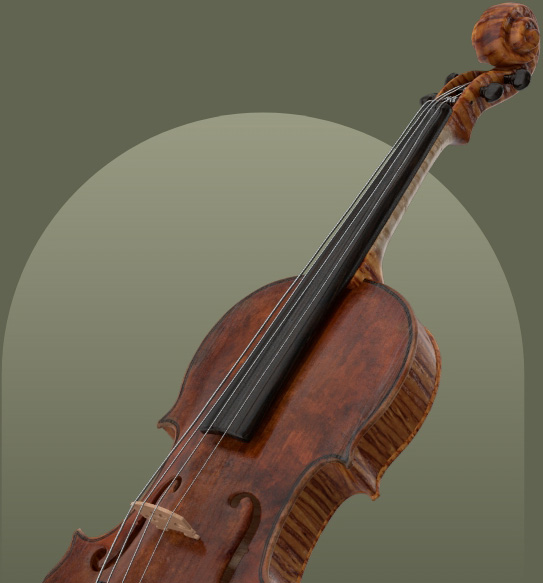
Didier Nicolas L’Aîné
Mirecourt, 1757–1833
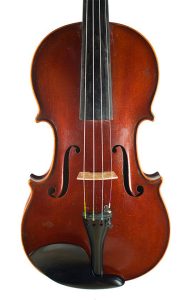
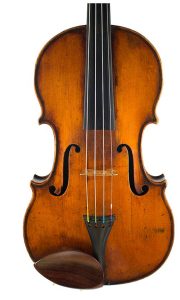
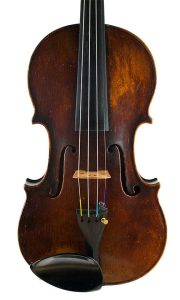
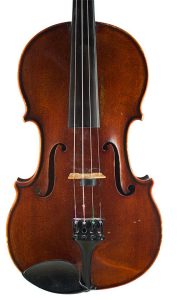
Didier L'Aine Nicolas (1757-1833), known as 'le Sourd', was a highly prolific and commercial violin maker from Mirecourt, France, and the son of Antoine Nicolas. He operated his business under the sign 'A la ville de Cremone' and was notable for being the first Mirecourt maker to exhibit his work in 1802, later receiving a silver medal in 1806. His workshops were extensive, employing up to 600 craftsmen at the time of his death. Nicolas's instruments, often on a slightly oversized Stradivari pattern with large, open soundholes, were considered effective and possessed a powerful tone suitable for orchestras, though not always regarded as artistic masterpieces. He utilized both red-brown and thin yellow varnishes. His instruments were typically branded internally with 'A la Ville de Cremonne' in a triangular form and signed 'D. Nicolas aîné à Mirecourt'. His business and distinctive branding style were continued by his son Joseph, and later by Derazey, Laberte, and Magnie into the 20th century.


Instruments


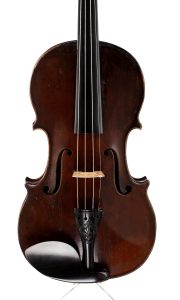
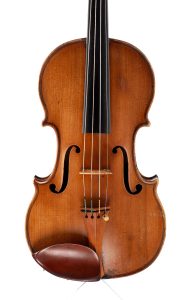
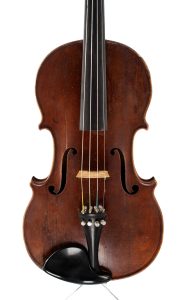


Auction Price History
Highest auction price
133 results
| Type | Details | Auction house | Sold | Price |
|---|---|---|---|---|
| Violin | Unlabelled, branded to the inside back A la ville de Cremone D. Nicolas Ainé Lot 78 | Tarisio | March 2026 | £4,268est. Estimate $ 2,000-3,000 |
| Viola | Bearing the maker's brand, Back and table restorations including the bass bar crack Lot 2267 | — | December 2025 | £1,485est. € 600-800 |
| Violin | Bearing the maker's brand, head worm, table restorations, not original head Lot 2308 | — | December 2025 | £678est. € 700-800 |
| Violin | Bearing the maker's brand, restorations including table sound post crack Lot 619 | — | December 2025 | £825est. € 800-1.000 |
| Violin | Branded A LA VILLE ..., one-piece back, table of narrow grain, varnish of a golden brown colour, wear Lot 13 | — | June 2025 | £1,315est. € 1.200-1.500 |
| Violin | Bearing the maker's brand, some restorations, table cracks including sound post crack Lot 2002 | — | June 2025 | £633est. € 600-800 |
| Violin | Branded A la ville de Crémone D. Nicolas Ainé, table restorations, neck worm, not original head Lot 2058 | — | June 2025 | £759est. € 700-800 |
| Violin | Bearing the maker's brand and signature, table crack, head worm Lot 2255 | — | June 2025 | £816est. € 800-1.000 |
| Violin | Brearing the maker's brand to the back, table restorations including sound post crack Lot 8 | — | June 2025 | £527est. € 500-1.000 |
| Cello | Branded A La Ville De Cremonne, D: Nicolas Ainé, stamped to the inside back 4 D. N., inscribed 1829 Lot 17 | Tarisio | March 2025 | £16,800est. £ 12,000-18,000 |
| Violin | Bearing the maker's brand, some table cracks Lot 564 | Laurent | December 2024 | £986est. € 800-1.000 |
| Violin | Decored back, original pegs and tailpiece, minor table crack Lot 219 | Laurent | December 2024 | £852est. € 800-1.000 |
| Violin | Bearing the maker's brand, good condition Lot 351 | Laurent | December 2024 | £1,036est. € 800-1.000 |
| Violin | Branded to the inside back A la Ville de Cremonne D. Nicolas Ainé 1777, labelled Belfort Reparé à ... Lot 136 | Tarisio | November 2024 | £2,781est. $ 3,000-5,000 |
| Violin | One-piece back of faint medium fine curl, varnish of a plum red colour on a golden ground Lot 2444 | Gardiner | September 2024 | £1,037est. £ 800-1,200 |
| Violin | Bearing the maker's brand, many table restaurations, button blemish Lot 2222 | Laurent | June 2024 | £639est. £600 |
| Violin | Bearing the maker's brands, minor lower rib blemish Lot 606 | Laurent | June 2024 | £1,954est. € 1.000-1.500 |
| Violin | Bearing the maker's brand, some table and back restorations Lot 754 | Laurent | June 2024 | £1,012est. € 1.000-1.200 |
| Violin | Bearing the maker's brand, fair condition Lot 804 | Laurent | June 2024 | £1,749est. € 1.000-1.500 |
| Violin | Bearing a restoration inscription dated 1883, old table restorations, pegs and saddle missing, ribs worm Lot 88 | De Baecque | May 2024 | £260est. € 250-300 |
| Violin | Stamped D. Nicholas Aine Mtre Luthier, A La Ville de Cremonne to the inner back, in need of restoration Lot 2058 | — | December 2023 | £159est. £ 150-250 |
| Viola | Bearing the maker's brand, table bass bar crack Lot 2319 | — | November 2023 | £737est. € 600 |
| Violin | Bearing the maker's brands to the table and back, minor table crack, ribs and table worm, neck crack Lot 521 | — | November 2023 | £1,047est. € 800-1.000 |
| Violin | Bearing the maker's brand, fair condition Lot 775 | — | November 2023 | £3,033est. € 1.500-2.000 |
| Violin | A violin by D. Nicolas Aine, Mirecourt, circa 1830 Lot 70 | Amati | November 2023 | £4,424est. £ 500-1,000 |
| Violin | Bearing the maker's label and signature, some table restorations Lot 2205 | — | May 2023 | £1,661est. € 800 |
| Violin | Branded A la ville de Crémone N, fair condition Lot 560 | — | May 2023 | £2,789est. € 1.500-2.000 |
| Violin | Bearing the maker's brand, some table restorations including bass bar crack Lot 667 | — | May 2023 | £1,609est. € 1.000-1.200 |
| Violin | Branded DN to the table, table cracks Lot 769 | — | May 2023 | £1,324est. € 1.000-1.500 |
| Violin | Bearing the maker's brand, repair label of Joseph Voirin, many table cracks, neck crack Lot 851 | — | May 2023 | £1,876est. € 800-1.000 |
| Violin | Table cracks Lot 803 | — | November 2022 | £1,071est. € 1.000-1.500 |
| Violin | Unlabelled, branded internally D. Nicolas Ainé, à la ville de Cremonne Lot 18 | — | October 2022 | £3,600est. £ 2,000-3,000 |
| Violin | Bearing the maker's brand, table cracks Lot 711 | — | June 2022 | £1,372est. € 1.000-1.200 |
| Violin | Bearing the maker's brand, some table restorations, ribs and varnish blemishes Lot 2113 | — | May 2022 | £1,161est. € 500 |
| Violin | Bearing the maker's brands and signature, many table restorations Lot 712 | — | December 2021 | £1,633est. € 800-1.000 |
| Violin | Bearing the maker's brand and signature, good condition Lot 2265 | — | November 2021 | £965est. € 500 |
| Violin | One-piece back, varnish of a rich plum red colour, professionally repaired table sound post crack Lot 2469 | — | June 2021 | £4,880 |
| Violin | Bearing the maker's brand and signature, table restorations including bass bar crack Lot 509 | — | June 2021 | £534est. € 700-800 |
| Viola | One-piece back, varnish of a golden brown colour, table crack, minor neck restoration Lot 54 | — | June 2021 | £1,235est. € 1.200-1.500 |
| Violin | Bearing the maker's brand, some table cracks Lot 954 | — | June 2021 | £1,044est. € 700-800 |
| Cello | Head blemish, not original left lower and right upper ribs, old restorations, some wear, good condition Lot 68 | — | April 2021 | £7,769est. € 5.000-6.000 |
| Violin | A violin by Didier Nicolas Aine, Mirecourt, circa 1820 Lot 89 | Amati | January 2021 | £992est. £ 1,000-2,000 |
| Violin | Bearing the maker's brand, good condition Lot 504 | — | December 2020 | £2,335est. € 700-800 |
| Violin | Stamped A la Ville de Cremonne ..., repairs to table and back button, sound post crack in table with patch Lot 95 | — | December 2020 | £480est. £ 500-800 |
| Violin | Bearing the maker's brand, many table restorations, back crack Lot 2058 | — | September 2020 | £606 |
| Violin | Bearing the maker's stamp, good condition Lot 501 | — | September 2020 | £496 |
| Violin | Bearing the maker's brand and signature, good condition Lot 815 | — | September 2020 | £1,101 |
| Violin | Bearing the maker's brand, some table restorations Lot 914 | — | September 2020 | £551 |
| Violin | Many cracks, back worm Lot 1017 | — | July 2020 | £378 |
| Violin | Branded Didier Nicolas Ainé - A la ..., one-piece back, varnish of a red brown colour on a golden ground Lot 91 | — | July 2020 | £1,628est. € 1.500-2.000 |
| Violin | One-piece back of faint medium curl, ribs similar, table of fine grain, varnish of a golden brown colour Lot 2473 | — | March 2020 | £1,260est. £ 1,000-1,500 |
| Violin | Branded internally A la Ville de Cremonne, D: Nicolas Aine, repairs to table and ribs Lot 270 | — | March 2020 | £2,640est. £ 1,500-2,500 |
| Violin | Branded Nicolas Aine, minor table restorations Lot 41 | — | March 2020 | £471est. € 400-500 |
| Violin | Bearing the maker's brand, some table restorations Lot 964 | — | November 2019 | £975est. € 500 |
| Violin | A violin by Didier Nicolas l'Aîné, France, circa 1830 Lot 122 | Amati | October 2019 | £885est. £ 1,000-2,000 |
| Violin | Branded internally D. NICOLAS, A LA VILLE DE CREMONNE, repairs to table Lot 64 | — | September 2019 | £1,320est. £ 800-1,200 |
| Violin | Bearing the maker's brand, good condition Lot 422 | — | June 2019 | £3,188est. € 3.000-4.000 |
| Violin | A violin by Nicholas Aine, France, 19th Century Lot 75 | Amati | March 2019 | £1,327est. £ 800-1,200 |
| Violin | A violin by Nicholas Aine, France, 19th Century Lot 97 | Amati | March 2019 | £1,896est. £ 1,500-2,000 |
| Violin | Bearing the maker's brand, some table restorations, back worm Lot 317 | — | March 2019 | £308est. € 150 |
| Violin | Bearing the maker's brand, minor restorations, back sound post crack Lot 370 | — | March 2019 | £431est. € 500 |
| Violin | Bearing the maker's label, many restorations and worm Lot 763 | — | March 2019 | £534est. € 300 |
| Violin | Bearing the maker's brand, table crack Lot 217 | — | December 2018 | £1,069est. € 1.200-1.500 |
| Violin | Branded A La Ville De Cremonne ..., crack in neck stock, minor repairs to table, sound post crack in table Lot 56 | — | December 2018 | £4,248est. £ 4,000-6,000 |
| Violin | Branded Nicolas, some restorations, table sound post crack Lot 566 | — | December 2018 | £641est. € 600 |
| Violin | Bearing the maker's brand and signature to the back, fingerboard missing, minor table blemish Lot 724 | — | December 2018 | £855est. € 600 |
| Violin | Bearing the maker's label, minor restorations Lot 820 | — | December 2018 | £1,015est. € 1.000 |
| Violin | Unlabelled, branded to the inside back A la ville, de Cremone, D. Nicolas Ainé, inscribed Nicolas l'aîné ... Lot 138 | — | October 2018 | £1,560est. £ 1,500-2,200 |
| Violin | Stamped internally D. Nicolas Aine A La Ville de Cremonne, minor repairs to table Lot 226 | — | October 2018 | £1,800est. £ 1,500-2,000 |
| Violin | Made probably in collaboration with Laroche, bearing the maker's brands, signed Laroche, good condition Lot 554 | — | June 2018 | £736est. € 700 |
| Violin | Unlabelled, branded to the inside back A La ville, de Cremonne, D. Nicolas Ainé, inscribed D. Nicolas ... Lot 90 | — | June 2018 | £944est. £ 1,000-1,500 |
| Violin | One-piece back, varnish of a golden brown colour, many table cracks, back seam and purfling blemishes Lot 66 | — | March 2018 | £427est. € 300-400 |
| Violin | Good condition Lot 267 | — | December 2017 | £786est. € 300-500 |
| Violin | Bearing the maker's brand, table crack Lot 43 | — | December 2017 | £634est. € 600-800 |
| Violin | Branded À la ville de ..., one-piece back, varnish of a brown colour on a golden ground, perfect condition Lot 71 | — | November 2017 | £3,204est. € 2.800-3.000 |
| Violin | Bearing the maker's brand, table restorations, lower rib crack, table sound post and bar cracks Lot 711 | — | November 2017 | £391est. € 500 |
| Violin | Bearing the maker's brand, minor table restorations Lot 805 | — | November 2017 | £1,091est. € 800 |
| Violin | Unlabelled, branded to the inside back A La Ville, de Cremonne, D. Nicolas aine Lot 117 | — | October 2017 | £1,020est. £ 1,000-1,500 |
| Violin | Unlabelled, branded to the inside back A La Ville, De Cremonne, D. Nicolas aine Lot 118 | — | October 2017 | £4,200est. £ 1,000-1,500 |
| Violin | Bearing the maker's brand, original neck, table cracks Lot 370 | — | September 2017 | £739est. € 700 |
| Violin | Lyon head, table cracks, varnish and points blemishes, in need of restoration Lot 42 | — | June 2017 | £694est. € 80-150 |
| Violin | Bearing the maker's brand internally to the back, minor restorations Lot 151 | — | December 2016 | £1,015est. € 1.200-1.500 |
| Violin | Stamped internally A la Ville de Cremonne d. Nicolas Aine, minor repairs to table and ribs Lot 18 | — | December 2016 | £1,200est. £ 1,000-2,000 |
| Violin | Bearing the maker's brand, some table restorations, table sound post restoration Lot 664 | — | November 2016 | £563est. € 600 |
| Violin | Bearing the maker's brand, some table restorations Lot 958 | — | November 2016 | £1,432est. € 800 |
| Violin | Branded to the inside back A La Ville De Cremonne, D. Nicolas ainé à Mirecourt, branded 1813 Lot 101 | — | October 2016 | £2,520est. £ 2,000-3,000 |
| Violin | Branded Á la Ville de Cremonne, D. Nicolas Aine to the inner back Lot 54 | — | October 2016 | £840est. £ 700-900 |
| Violin | Table crack and many restorations, back and neck blemishes Lot 320 | — | September 2016 | £2,169est. € 300 |
| Violin | Branded to the inside back A la ville de Cremonne, D Nicholas aine, inscribed D. Nicolas aine a ... Lot 147 | — | June 2016 | £5,700est. £ 4,000-6,000 |
| Violin | Bearing the maker's brand and signature, good condition Lot 357 | — | June 2016 | £1,131est. € 1.500-2.000 |
| Violin | Unlabelled, minor repairs to table and neck stock, sound post crack in table with sound post patch Lot 40 | — | June 2016 | £4,200est. £ 4,000-6,000 |
| Violin | Branded A la ville de Cremone, one-piece back, ribs and head similar, table of irregular grain Lot 44 | — | June 2016 | £199est. € 200-300 |
| Violin | Table restorations, fingerboard missing Lot 2116 | — | December 2015 | £253est. € 300 |
| Violin | Unlabelled, branded internally A la Ville de Cremona, D. Nicolas aine Lot 436 | — | December 2015 | £1,500est. £ 1,500-2,500 |
| Violin | Bearing the maker's brand and signature to the back, good condition Lot 74 | — | December 2015 | £1,278est. € 1.500-2.000 |
| Violin | Bearing the maker's brand and signature internally, good condition Lot 940 | — | December 2015 | £1,776est. € 2.000 |
| Violin | Bearing the maker's brand, repair label by Caussin Ainé, many table restorations, table sound post crack Lot 744 | — | June 2015 | £573est. € 600 |
| Violin | Unlabelled, stamped internally D. Nicolas Aine, A la Ville de Cremone, signed internally D. Nicolas, aine Lot 82 | — | June 2015 | £2,640est. £ 800-1,200 |
| Violin | Branded to the inside back A la Ville de Cremonne, D. Nicolas ainé Lot 84 | — | June 2015 | £3,540est. £ 3,000-5,000 |
| Violin | Varnish of a brown colour on a golden ground, worm Lot 40 | — | May 2015 | £162est. € 180-200 |
| Violin | Branded to the inside back A La Ville De Cremonne, D. Nicolas ainé à Mirecourt, branded 1813 Lot 145 | — | March 2015 | £2,400est. £ 2,000-3,000 |
| Violin | Branded to the inside back D: Nicolas aine, A la Ville de Cremonne Lot 211 | — | February 2015 | £1,710est. $ 1,500-2,200 |
| Violin | Labelled D: Nicolas aine, A La Ville De Cremonne, branded to the inside back Lot 212 | — | February 2015 | £1,632est. $ 1,500-2,200 |
| Violin | Branded A la ville de Cremone, Didier Nicolas Ainé, one-piece back, varnish of a red brown colour Lot 49 | — | February 2015 | £2,300est. € 1.000-1.200 |
| Violin | One-piece back of medium curl, varnish of a nut brown colour on a golden ground Lot 688 | — | December 2014 | £1,500est. £ 1,000-1,500 |
| Violin | Bearing the maker's brand, some table restorations Lot 964 | — | December 2014 | £428est. € 500 |
| Violin | Bearing the maker's internal brand and signature stamp Lot 24 | — | November 2014 | £2,407est. $ 2,200-2,800 |
| Violin | Branded D. Nicolas a Mirecourt to the inner back Lot 674 | — | June 2014 | £432est. £ 400-600 |
| Violin | Bearing the maker's interior brand and the interior stamp of a repairman Lot 133 | — | April 2014 | £806est. $ 1,200-1,600 |
| Viola | Branded D: Nicolas Aine A La Ville de Cremonne to the inner back Lot 609 | — | March 2014 | £528est. £ 250-450 |
| Violin | Some restorations Lot 2240 | — | December 2013 | £497est. € 300 |
| Violin | Branded A La Ville ..., minor repairs to table and back button, sound post crack in table with patch Lot 37 | — | December 2013 | £344est. £ 300-500 |
| Violin | Bearing the maker's brand internally to the back, worm to the lower rib Lot 516 | — | December 2013 | £597est. € 400 |
| Violin | Stamped internally La ville de Cremonne D. Nicolas Aine Lot 105 | — | October 2013 | £1,080est. £ 1,000-1,500 |
| Violin | Branded internally A la ville de Cremonne, D Nicholas Aine Lot 270 | — | October 2013 | £1,200est. £ 1,200-1,800 |
| Violin | One-piece back of faint medium curl, varnish of a reddish brown colour on a golden ground Lot 839 | — | September 2013 | £312est. £ 180-240 |
| Violin | Signed internally to the back, good condition Lot 456 | — | June 2013 | £2,754est. € 2.000-3.000 |
| Violin | Bearing the maker's brand and signed, table crack Lot 744 | — | June 2013 | £820est. € 700 |
| Violin | Bearing the maker's brand, table crack Lot 758 | — | June 2013 | £923est. € 400 |
| Violin | Branded to the inside back D. Nicolas, A La Ville De Cremonne Lot 156 | — | May 2013 | £2,312est. $ 2,500-4,000 |
| Violin | Branded internally a la ville de Cremonne D: Nicholas Aine, in an almost perfect state of preservation Lot 291 | — | March 2013 | £3,360est. £ 3,000-5,000 |
| Violin | Table cracks Lot 662 | — | December 2012 | £536est. € 300 |
| Violin | Branded internally A La Ville De Cremonne ..., minor repairs to table and back, otherwise good condition Lot 96 | — | December 2012 | £1,800est. £ 1,500-2,500 |
| Violin | Labelled A la ville de Cremonne, D. Nicolas aine Lot 176 | — | October 2012 | £4,200est. £ 5,000-8,000 |
| Violin | Branded internally in a triangle A La Ville de ..., of an orange brown colour, use and wear, restorations Lot 45 | — | July 2012 | £525 |
| Violin | Bearing the maker's brand, minor table restorations Lot 317 | — | June 2012 | £1,456est. € 1.300-1.500 |
| Violin | Inscribed internally Par Nicolas aine luthier a Mirecourt 1879, branded A La Ville de Cremonne D. ... Lot 83 | — | June 2012 | £1,080est. £ 800-1,200 |
| Violin | Bearing the maker's brand, head not original, some table restorations Lot 970 | — | June 2012 | £1,072est. € 1.000 |
| Violin | Lot 102 | Giafferi | March 2012 | £121est. € 50-80 |
| Violin | Good condition Lot 80 | Giafferi | March 2012 | £322est. € 400-500 |
| Violin | One-piece back, one-piece table, good condition Lot 81 | Giafferi | March 2012 | £604est. € 500-600 |
| Violin | Good condition Lot 90 | Giafferi | March 2012 | £604est. € 400-500 |
| Violin | 36.5 cm Mirecourt, Late 19th C. Workshop of | — | July 2011 | £1,249 |
No results match those filters.
Maker Overview
Life
Didier L'Aine Nicolas (1757-1833), also known as 'le Sourd' ('the deaf one'), was born in Mirecourt and died there, as documented by Cecie Stainer. He was the son of Antoine Nicolas in The Brompton's Book of Violin & Bow Makers. Didier L'Aine Nicolas was a highly prolific and commercial maker, operating his business under the sign of 'A la ville de Cremone'. He first exhibited his work in 1802, becoming the first maker from Mirecourt to do so, and although he received no award then, he was later awarded a silver medal at the Paris Exhibition in 1806. By 1810, his workshops employed approximately 500 craftsmen, a number that grew to about 600 workmen at the time of his death. The business was continued after Didier's death by his son, Joseph. Even after Joseph's death in 1864, the distinctive triangular brand associated with Didier L'Aine Nicolas was continued by Derazey and subsequently passed to Laberte and Magnie of Mirecourt, who continued to produce violins in the Didier Nicolas style well into the 20th century.
Characteristics
- Workmanship
- Didier L'Aine Nicolas produced instruments that were effective rather than artistic in their workmanship, generally on a slightly oversized pattern. Cecie Stainer notes that he was a clever workman who made large quantities of instruments that were fairly good, though sometimes deficient in certain respects. Willibald Leo Lütgendorff, in Die Geigen- und Lautenmacher vom Mittelalter bis bis zur Gegenwart, states that he made quite good, inexpensive violins which, while not considered true works of art, possessed praiseworthy qualities.
- Pattern and Design
- His best work features his signature on the label and represents good examples of the Stradivari pattern, characterized by rather large, open, and broadly spaced soundholes. George Hart, in The Violin, also notes that his instruments are chiefly of large size, with an outline after that of Stradivari. Cecie Stainer adds that they are generally on a large pattern and slightly arched, with sound-holes that are rather peculiar in cut and very widely opened in the middle.
- Varnish
- The best instruments typically have a red-brown varnish, while a second category of production, often the work of his employees, features a thin yellow varnish, as detailed by John Dilworth. Cecie Stainer mentions varnish that is either red-brown tinged with yellow or a bright red color, noting that instruments with red varnish are generally superior in work. George Hart describes the color as yellow.
- Tone
- The instruments are known for their very powerful tone, admirably adapted for orchestral use. Cecie Stainer also describes the tone as large and suitable for orchestras.
- Production
- Didier L'Aine Nicolas was highly prolific, producing many small violas in addition to violins.
Influence and legacy
- Family Lineage: Didier L'Aine Nicolas was the son of Antoine Nicolas.
- Business Continuity: After Didier L'Aine Nicolas's death, his business was continued by his son, Joseph. The distinctive triangular brand was subsequently carried on by Derazey and later by Laberte and Magnie of Mirecourt, who continued making violins in the Didier Nicolas style well into the 20th century.
- Awards and Recognition: He was the first maker from Mirecourt to exhibit his work in 1802 and was awarded a silver medal at the Paris Exhibition in 1806, as documented by Cecie Stainer.
Biographies
The overview above is drawn from the following published accounts. Read them in the original:
John Dilworth+
Didier (l’aîné) Born 1757, died 1833. Known as ‘le Sourd’ (‘the deaf one’). Son of Antoine Nicolas, above. Highly prolific and commercial maker. The best work has his signature on the label and are good representations of the Stradivari pattern with rather large open and broadly spaced soundholes and red-brown varnish. A second category of production has a thin yellow varnish and is in general the work of his employees. By 1810 his workshops employed around 500 craftsmen. All the instruments made are of effective rather than artistic workmanship, and on a slightly oversized pattern. Many small violas also produced. Branded within the back in pace of the label ‘A la Ville de Cremonne’ (sic), arranged in triangular form. The business was continued after Didier’s death by his son Joseph, below, and even after Joseph’s death in 1864 the distinctive triangular brand was continued by Derazey and later passed to Laberte and Magnie of Mirecourt who carried on making violins in the Didier Nicolas style well into the 20th century. Signed internally on the treble side: ‘D. Nicolas aîné à Mirecourt’
George Hart+
The instruments of this maker are chiefly of large size, the outline being after that of Stradivari. They are mostly stamped on the back, inside, ” A la ville de Cremonne, D. Nicolas Aine.” Colour, yellow; tone very powerful, and admirably adapted for the orchestra.
Cecie Stainer+
b. 1757, Mirecourt; d. there, 1833. His business was carried on at the sign of ” A la ville de Cremone.” He was a clever workman, and made large quantities of instruments, fairly good, although deficient in some respects. They are generally on a large pattern, slightly arched, the varnish either red-brown tinged with yellow or bright red colour; the sound-holes rather peculiar in cut, very widely opened in the middle; the tone is large, and the instruments are suitable for use in orchestras, those with red varnish being generally superior in work.
They are branded, just where the label is usually placed, with the inscription: “A la ville de Cremone, D. Nicolas, aine.” He first exhibited in 1802, being the first maker of Mirecourt to do so; he received no award then, but in 1806 was awarded a silver medal at the Paris Exhibition. At the time of his death about 600 workmen were employed in his workshops.
Willibald Leo Lütgendorff+
Er nannte sein Geschäft »A la ville de Crémonne« (sic) und machte recht
gute, billige Geigen, die man zwar nicht als eigentliche Kunstwerke betrachten
kann, die aber doch lobenswerthe Eigenschaften haben. Bei einzelnen Instrumenten,
Sell your instrument with Amati
Get started by uploading photos of your instrument for our experts to review.
Sell your instrument with Amati
Get started by uploading photos of your instrument for our experts to review.