
Jacob August Otto
Gotha, 1760–1829
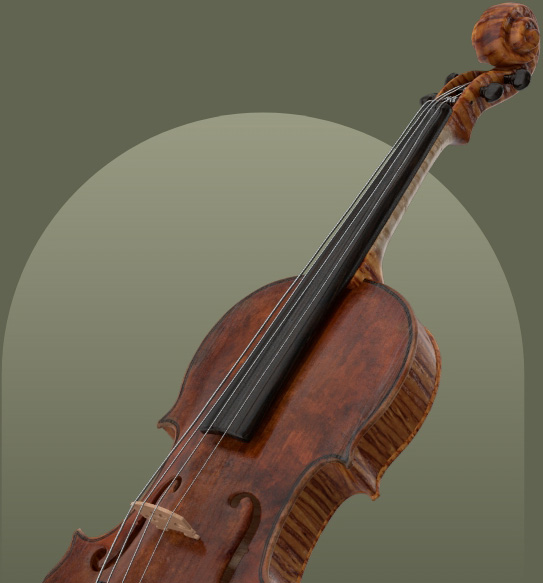
Jacob August Otto (1760-1829) was a prominent German luthier and author, trained by F. A. Ernst. He served as luthier to the Court in Weimar and worked in various German cities, demonstrating versatility in crafting violins, violas, cellos, and notably, early German guitars. Otto's legacy is marked by his influential theoretical writings on instrument making, which were widely translated, and the fact that all five of his sons became violin makers. Despite some contemporary critiques of his instruments' tonal qualities, his work is valued by collectors, and his historical contributions to the craft are significant.
Maker Overview
Life
Jacob August Otto (1760-1829) was born in Gotha, Germany. Sources contain conflicting information regarding his birth and death dates; some state he was born in 1760 and died in 1829 in Lobeda, Thuringia, while others report 1764 and 1830 in Jena respectively. He was a pupil of F. A. Ernst in Gotha, who recognized his innate talent for violin making and trained him in the craft. Otto established himself in Weimar as luthier to the Court around 1790 and held the title of weimarischer Hofinstrumentenmacher. He was active in various cities throughout his career, including Halle, Leipzig, Magdeburg, Berlin, and Jena. Following the introduction of the guitar to the court of Duchess Amelia of Weimar in 1788, Otto also dedicated significant time to crafting this instrument. His five sons—Georg August, Carl Christian, Heinrich Wilhelm, Johann Carl, and Carl Wilhelm—all became his pupils and successful violin makers. Otto was also a prolific author, publishing influential works on violin making, which contributed significantly to the standing of 19th-century German violin making. An anecdote from the Körner-Schüler correspondence details the order and eventual delivery of a guitar for Minna Körner in 1797, which was praised for its beautiful tone.
Characteristics
- Versatility
- Jacob August Otto was a very fine and versatile maker, known for his skill in crafting various instruments.
- Specific Commissions
- He produced a notable group of instruments for the Royal Chapel at Copenhagen, which included six violins, one viola, and one cello.
- Repair Expertise
- Otto was especially skillful in repairing old instruments, with Willibald Leo Lütgendorff noting his exceptional ability to set a bridge.
- Guitar Innovation
- He was the first German violin maker to produce guitars after the Italian model as early as 1788, introducing valuable improvements to the instrument.
- Tone Quality
- Despite his meticulous workmanship, Lütgendorff observed that the tonal quality of Otto's violins was not always highly regarded, suggesting that his pursuit of "secrets" might have sometimes detracted from their sound. However, his instruments are often amenable to tonal improvement if the wood is not too thin.
- Playing-in Method
- Otto developed a method for playing in new violins, which he kept as a secret for his sons.
- Reparirt
von Jakob August Otto
Halle 1816John Dilworth
Influence and legacy
- Mentorship: Jacob August Otto was a pupil of Franz Anton Ernst in Gotha.
- Theoretical Studies: Ernst's influence extended beyond practical training, inspiring Otto's inclination towards theoretical studies, which led to his significant publications.
- Family Continuity: All five of his sons—Georg August, Carl Christian, Heinrich Wilhelm, Johann Carl, and Carl Wilhelm—followed in his footsteps and became successful violin makers.
- Literary Impact: Otto's theoretical writings on violin making, such as Ueber den Bau und die Erhaltung der Geige und aller Bogeninstrumente, were highly influential, translated into other languages, and are still considered relevant today.
- Collector's Value: His instruments continue to hold a certain collector's value.
- Museum Presence: A guitar made by Otto for Theodor Körner's family is preserved in the Körner Museum in Dresden.
Further Information
- Publications:
- Ueber den Bau und die Erhaltung der Geige und aller Bogeninstrumente (Halle-Leipzig, 1817).
- This work was translated as Treatise on the Construction and Preservation of the Violin and all Bowed instruments (London, 1833).
- Ueber den Bau der Bogeninstrumente und über die Arbeiten der vorzüglichsten Instrumentenmacher (Jena, 1828).
- The latter was translated into English by John Bishop in 1848.
- Label Example: An example of his label reads "Reparirt / von Jakob August Otto / Halle 1816".
Biographies
The overview above is drawn from the following published accounts. Read them in the original:
John Dilworth+
Jacob August Born 1760 Gotha, died 1829 Lobeda, Thuringia Germany. Pupil of F. A. Ernst in Gotha. Established in Weimar as luthier to the Court c.1790. Active in Halle, Leipzig, Magdeburg, Berlin, and Jena. Very fine and versatile maker. A group of six violins, one viola, and one cello made for the Royal Chapel at Copenhagen. Following the introduction of the guitar to the court of the Duchess Amelia of Weimar in 1788 also devoted much time to that instrument. His sons Georg August, Carl Christian, Heinrich Wilhelm, Johann Carl, and Carl Wilhelm were all pupils and successful violin makers. Author of Ueber den Bau und die Erhaltung der Geige und aller Bogeninstrumente (Halle-Leipzig 1817) translated as Treatise on the Construction and Preservation of the Violin and all Bowed instruments (London, 1833). Reparirt / von Jakob August Otto / Halle 1816
George Hart+
Violin-maker to the court of Weimar. Received instructions from Franz Anton Ernst. He published a work in 1817 entitled, ” Ueber den Bau und die Erhaltung der Geige und aller Bogeninstrumente,” and another work with more information in 1828, the first English edition of which was published in 1848.
Cecie Stainer+
b. 1764, Gotha; d. 1830, Jena. Pupil of Franz Anton Ernst at Gotha, later settled in Weimar, and was appointed maker to the Court. Worked also in Halle, Leipzig, Magdeburg, Berlin, and finally in Jena. Was especially skilful in repairing old instruments, and made very good violins and violoncellos; six violins, one alto, and one violoncello were made by him for the Royal Orchestra of Copenhagen.
He published two books on violin making: ” Ueber den Bau und die Erhaltung der Geige und aller Bogeninstrumente ” (Halle, 1817); and ” Ueber den Bau der Bogeninstrumente und über die Arbeiten der vorzüglichsten Instrumentenmacher ” (Jena, 1828) ; the latter was translated into English by John Bishop in 1848. His five sons all became violin makers.
Willibald Leo Lütgendorff+
Um Unterricht im Geigenspiel zu erhalten, kam er zu Ernst in Gotha, der
aber bald die angeborene Begabung seines Schülers für das Geigenmachen erkannte
und ihn zum Geigenmacher ausbildete. Von Ernst erbte Otto auch die
Lust zu theoretischen Studien und diesen verdankt er jetzt hauptsächlich seinen
Ruhm, da sie ihn veranlassten, einige kleine gehaltvolle Schriften über das
Geigenmachen herauszugeben, die heute noch nicht veraltet sind, fort und fort
ausgeschrieben und in fremde Sprachen übersetzt wurden. Er besass eine grosse
Handgeschicklichkeit, hat sich viel darauf zu Gute, allerlerlei »Geheimnisse« ergründet
zu haben und zu besitzen. Leider scheinen gerade diese Geheimnisse
seinen Arbeiten geschadet zu haben, denn bei aller Sauberkeit ist ihr Tonwerth
nicht sehr hochstehend. Otto’s Geigen sind wieder ein Beweis, dass sich Fragen
der Kunst nicht »wissenschaftlich« lösen lassen. Er gehört aber zweifellos zu
den deutschen Meistern, die die Kunst hochgehalten und durch Lehre und
Schrift viel dazu beigetragen haben, dass das Geigenmachen des 19. Jahrhunderts
in Deutschland seine Geltung behielt. Als Reparateur war er sehr tüchtig,
einen Steg konnte Niemand feiner aufsetzen als er und ein Verfahren, neue
Geigen einzuspielen, hat er gleichfalls erfunden, aber als Geheimniss für seine
fünf Söhne, die sämmtlich Geigenmacher wurden, bewahrt. Er war ungemein
fleissig und hatte den Titel eines weimarischen Hofinstrumentenmachers. Ausser
in Weimar und Jena findet man ihn vorübergehend auch in Halle, Magdeburg
(1816), in Leipzig und Berlin, wo er wohl nur den Boden für seine Söhne vorbereiten
wollte. Seine Arbeiten werden immer einen gewissen Sammlerwerth
haben, und, wenn sie nicht zu schwach im Holz sind, lassen sie sich auch leicht
im Ton verbessern. Er ist auch der erste deutsche Geigenmacher, der schon
im Jahre 1788 Guitarren nach italienischem Vorbild machte, wobei er werthvolle
Verbesserungen einführte. Über eine seiner Guitarren finden sich im
Körner —Schüler’schen Brief wechsel die folgenden Stellen. Der Vater des
Dichters Theodor Körner schreibt am 27. Januar 1797: »Noch eine Bitte an
dich von Minna. In Jena ist jetzt ein gewisser Instrumentenmacher Otto, der
spanische Zithern oder Guitarren verfertigt und sich sonst in Gotha aufgehalten
hat. Von diesem wünscht meine Frau bald eine Guitarre zu haben. Sei so gut,
sie zu kaufen oder zu bestellen und lass sie vom Künstler einpacken . . . etc.«
Schüler antwortet darauf am 7. Februar: ». . . Den Instrumentenmacher Otto,
von dem du schreibst, haben wir lange nicht ausfindig machen können, weil
man ihm nicht erlaubt hat, sich hier niederzulassen. Endlich ist er wieder hier
angekommen und hat sich beim dermaligen Prorector Griesbach abermals um
den Schutz der Universität gemeldet. Bei dieser Gelegenheit habe ich ihn aufgefunden
und die Guitarre bestellt. Unter zehn Thaler lässt er sie aber nicht;
er sagt, dass er für diesen Preis zwei nach Dresden geliefert habe — ich glaube
an Naumann und an Brühl. In vierzehn Tagen verspricht er sie zu liefern.«
Er lieferte aber nicht so schnell, der Brief wechsel enthält noch verschiedene Stellen,
die die Ungeduld zum Ausdruck bringen, erst am 28. April schreibt Dr. Körner:
». .. Die Guitarre ist da und hat einen schönen Ton . . .« Diese Guitarre hatte Theod. Körner als Student der Bergakademie mit nach Freiberg genommen; sie befindet
sich jetzt im Körner Museum in Dresden.
Sell your instrument with Amati
Get started by uploading photos of your instrument for our experts to review.
Sell your instrument with Amati
Get started by uploading photos of your instrument for our experts to review.
Pupils
Carl Christian Otto Pupil
Carl Wilhelm Friedrich Otto Pupil
Heinrich Wilhelm Otto Pupil
Johann Karl August Otto Pupil