Edward Pamphilon
London, Widdington, b. c.1646
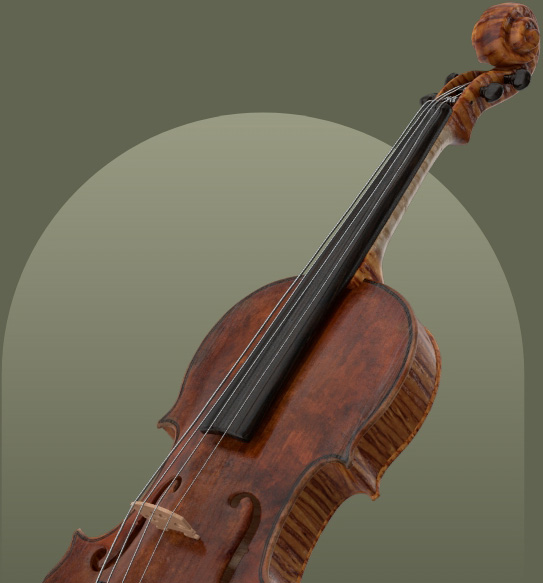
Edward Pamphilon (circa 1646-after 1685) was an influential early English instrument maker, though his exact workshop location is debated, with sources pointing to both Clavering, Essex, and London Bridge. His instruments, primarily violins and tenors, are noted for their distinctive 'Brescian modelling' combined with Tyrolese arching, often featuring a slender scroll with a large volute, double purfling, and a fine yellow or golden brown varnish. Despite their 'crude rustic' or 'grotesque' appearance to some, his work was carefully finished and produced a clear, penetrating tone. Pamphilon's instruments were frequently misattributed to Italian makers like Gasparo da Salo due to their stylistic similarities and the scarcity of his original labels.
Request an expert valuation or learn how our global auctions achieve the highest prices for your instruments.


Instruments
Auction Price History
Highest auction price
13 results
| Type | Details | Auction house | Sold | Price |
|---|---|---|---|---|
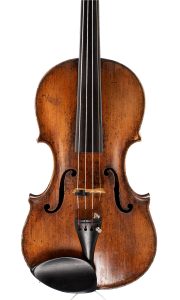
| Violin | A violin by Edward Pamphilon, London, circa 1700 Lot 236 | Amati | October 2025 | £8,216est. £ 4,000-6,000 |
| Violin | Violin, 17th Century Lot 215 | Brompton’s | October 2018 | £5,520est. £ 3,000-5,000 |
| Violin | Labelled Edward Pamphilon anno 1668, head later Lot 14 | Ingles & Hayday | October 2013 | £9,000est. £ 8,000-12,000 |
| Violin | 35.3 cm 1675 c. Attributed to | — | June 2010 | £2,400 |
| Violin | 35.0 cm 1665 c. Attributed to | — | November 2007 | £3,600 |
| Violin | 36.6 cm 1670 c. Attributed to | — | April 2006 | £840 |
| Cello | England, late-17th C. | — | February 2005 | £6,000 |
| Violin | London, 1668 | — | November 2004 | £10,200 |
| Violin | 1670 | — | November 2000 | £5,040 |
| Violin | 1690 | — | June 2000 | £9,775 |
| Violin | 1680 c. | — | March 2000 | £2,760 |
| Violin | 1680 c. | — | April 1991 | £3,300 |
| Viola | 40.0 cm 1669 | — | November 1982 | £8,800 |
No results match those filters.
Maker Overview
Life
Edward Pamphilon (circa 1646-after 1685) was a significant early English instrument maker. Sources contain conflicting information regarding his primary workshop location. in The Brompton's Book of Violin & Bow Makers, Pamphilon was born circa 1646, died after 1685, and worked in Clavering, Essex, UK. He was recorded in parish archives as a 'fiddle maker' from 1680 to 1685. Dilworth notes that Pamphilon was part of an extensive and active family of instrument makers in the area of Clavering, Widdington, and Little Hadham, although only Edward's work has been identified. Conversely, Cecie Stainer in A Dictionary of Violin Makers and Willibald Leo Lütgendorff in Die Geigen- und Lautenmacher vom Mittelalter bis zur Gegenwart state that he was a maker in London, on London Bridge, about 1680-1690. George Hart, in The Violin, mentions that his violins were formerly much prized.
Characteristics
- Modelling & Construction
- Instruments produced by Edward Pamphilon are characterized by several distinctive features., his work exhibits Brescian modelling and a crude rustic approach, with the ribs set into grooves cut into the inner edge of the front and back.
- Scroll & Head
- The scroll is described as slender, featuring a large volute extended up behind a widely-projecting eye. Characteristic markings include a small triangular incision in the tip of the chin and deep regular prickmarks around the base of the volute. Cecie Stainer notes that the heads were often too small, a common failing of early English makers, but were artistically shaped and often deeply scooped in the volute. Willibald Leo Lütgendorff also mentions a deeply scooped scroll.
- Outline & Arching
- Stainer states his instruments were of a small pattern, very much arched, and generally possessed a stiff, inelegant outline, though the work was carefully and delicately finished. George Hart notes that the model is very high and the appearance somewhat grotesque. William Meredith Morris, in British Violin Makers, describes the outline as Brescian, while the arching is distinctly Tyrolese.
- Sound-holes
- The sound-holes were small, sometimes finished with a drawn-out curl, with the bottom curve running out almost at right-angles to the axis of the violin. Lütgendorff adds that the F-holes are too curved at the ends.
- Purfling
- The purfling is often double. Morris also identifies double purfling as a Brescian characteristic in Pamphilon's work.
- Varnish
- Pamphilon used a fine varnish, usually pale golden brown in colour (Dilworth), or a very fine yellow varnish (Stainer) which looks extremely well. Morris describes it as amber yellow varnish of good quality. George Hart mentions the splendid varnish often found on these instruments.
- Tone
- The tone is described as clear, pure, and penetrating by Stainer. Morris notes that his tenors, like his violins, are of a small pattern but have a sweet and penetrating tone.
- Instrument Types
- He made violins and tenors of small pattern. No violoncellos of his are known, as the bass-viol with the flat back was still in use during his time.
Influence and legacy
- Mentorship: Willibald Leo Lütgendorff suggests that Edward Pamphilon is assumed to have emerged from Urquhart's school.
- Stylistic Influences: William Meredith Morris states that Pamphilon had evidently seen and handled instruments of both the Brescia and Absam schools, leading to a 'cross-breed' style. Lütgendorff also notes that Pamphilon's small, highly arched violins justify the assumption that he knew and intended to imitate Brescian work.
- Authenticity Challenges: Instruments identified as Pamphilon's are not uncommon, but they were seldom labelled; those known are in manuscript. Cecie Stainer notes that few Pamphilon labels exist. William Meredith Morris doubts whether any Pamphilon instruments in existence bear original labels.
- Misattribution: Due to their distinctive characteristics and similarity to Brescian work, many of Pamphilon's instruments have had their readily identifiable heads replaced and were subsequently labelled as Brescian or other Italian work, or specifically as 'Gasparo da Salo', a deception made easier by the scarcity of original Pamphilon labels.
Biographies
The overview above is drawn from the following published accounts. Read them in the original:
John Dilworth+
PAMPHILON, Edward Born circa. 1646, d. after 1685, Worked Clavering, Essex UK. Significant early English maker. Recorded in parish archives as ‘fiddle maker’ from 1680-1685. Part of an extensive and active family of instrument makers in the area of Clavering, Widdington and Little Hadham, although only Edward’s work has been identified. Seldom labelled; those known are in manuscript. Also known from a metal token inscribed ‘Edward Pamphilon / living in Clavering’, presumably some sort of trade identification or licence. Work identified as Pamphilon is not uncommon and is very distinctive. Brescian modelling, crude rustic work, with the ribs set into grooves cut into the inner edge of front and back. The scroll is slender, but with a large volute extended up behind the widely-projecting eye. Characteristic markings on these are a small triangular incision in the tip of the chin and deep regular prickmarks around the base of the volute. Many instruments have had these readily identifiable heads replaced and labelled as Brescian or other Italian work. Fine varnish, usually pale golden brown in colour. Edward Pamphilon April the 3rd, 1685 [BVMA]
Willibald Leo Lütgendorff+
Man nimmt an, dass er aus Urquhart’s Schule hervorgegangen sei. Er
wohnte London Bridge und ist nur wenig bekannt; es giebt einige kleine, sehr
hochgewölbte Violinen von ihm, die die Vermuthung rechtfertigen, dass er
Arbeiten der Brescianer gekannt habe und nachahmen wollte. In den Umrisslinien
ist er ziemlich steif, die F-Löcher sind dagegen in den Endungen allzu geschweift. Die Schnecke ist tief ausgestochen und die Einlage gewöhnlich doppelt angebracht.
George Hart+
The Violins of this maker were formerly much prized. The model is very high and the appearance somewhat grotesque. It is to be regretted that the splendid varnish often found on these instruments was not put upon better work.
William Meredith Morris+
The instruments of this old maker are a sort of cross-breed between those of Brescia and Absam. He had evidently seen and handled instruments of both schools, and became consequently unsettled in his mind as to what course to pursue. The outline, scroll, and double purfling are Brescian, but the arching is distinctly Tyrolese. The workmanship considered per se is excellent, but it is devoid of taste, and in a few matters of detail, to wit, the terminals of the sound-holes, it seeds into eccentricity. His tenors, like his violins, are of a small pattern, but their tone is sweet and penetrating. He used amber yellow varnish of good quality, which in many cases looks well and almost fresh to-day. I doubt whether there are any Pamphilon instruments in existence bearing original labels.
Cecie Stainer+
A maker in London, on London Bridge, about 1680-90. His instruments were of small pattern, very much arched, and generally of stiff, inelegant outline; the work carefully and delicately finished; the sound-holes small, sometimes finished with a drawn-out curl like the volute of a scroll, the bottom curve running out almost at right-angles to the axis of the violin; the heads too small, an ordinary failing of the early English makers, but artistically shaped and often deeply scooped in the volute.
The purfling is often double, and he used a very fine yellow varnish which looks extremely well; the tone is clear, pure, and penetrating. He also made tenors of small pattern but of good tone; no violoncellos of his are known, for at that time the bass-viol with the flat back was still in use. His instruments are much liked ; their similarity to those made in Brescia led to labels of “Gasparo da Salo” being placed in them, a deception all the more easily carried out as few Pamphilon labels exist.
Sell your instrument with Amati
Get started by uploading photos of your instrument for our experts to review.
Sell your instrument with Amati
Get started by uploading photos of your instrument for our experts to review.