
Paul (I) Pilat
Benesov, Budapest, New York, 1860–1931
Paul (I) Pilat (1860-1931) was a prominent Hungarian violin maker, born in Benešov, Czech Republic, and trained by T. Zach in Vienna.
He worked for several notable makers before succeeding E. Bartek in Budapest in 1883, eventually becoming maker to the Hungarian royal court.
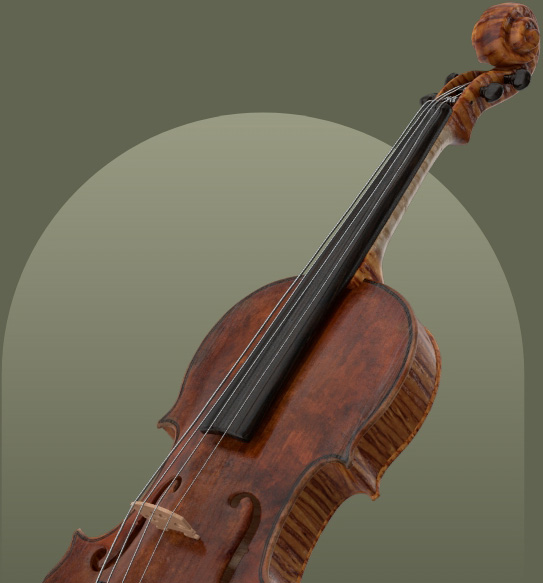
Known for his fine work on the Stradivari model, good orange-red varnish, and excellent materials, he also developed a patent bass-bar and sold his own varnish commercially.
Pilat was highly influential, training many significant Hungarian makers of the next generation.
Auction Price History
Highest auction price
20 results
| Type | Details | Auction house | Sold | Price |
|---|---|---|---|---|
| Violin | Labelled Pilat Pál CS es Kir. Szab. Hangszer Keszito Budapest VI. Andrassy Ut 42sz Op. 210 1917 Lot 157 | Tarisio | November 2024 | £7,879est. $ 5,000-8,000 |
| Violin | Labelled Joseph Guarnerius fecit Cremonae anno 17... IHS, and Paulus Pilat New York 1940 op 256 Lot 111 | Tarisio | July 2021 | £9,563est. $ 6,000-9,000 |
| Violin | Labelled Paulus Pilát, Fecit Pestini anno 1888 and Mogyoróssy Gyula, branded to the inside back P. P. Lot 118 | Tarisio | February 2020 | £7,414est. $ 6,000-9,000 |
| Violin | Labelled Paulus Pilát, Fecit Budapestini anno 1925, op. 407, branded to the inside back Pilat-Budapest Lot 119 | Tarisio | February 2020 | £5,561est. $ 6,000-9,000 |
| Violin | Labelled Paulus Pilat, Fecit Budapestini anno 1902, N 134, branded to the inside back Pilat P. Budapest Lot 164 | Tarisio | May 2019 | £6,055est. $ 5,000-8,000 |
| Violin | Labelled Joseph Guarnerius fecit, Cremone anno 1734 IHS and Paulus Pilat, fecit Los Angeles 1954 ... Lot 136 | Tarisio | February 2019 | £6,216est. $ 8,000-12,000 |
| Violin | Labelled Paulus Pilat, fecit Budapestini anno 1902, N 134, branded to the inside back Pilat P. Budapest Lot 130 | Tarisio | November 2015 | £4,800est. £ 4,000-6,000 |
| Violin | Bearing the original label numbered 408, branded on the upper back PP beneath a cross Lot 47 | Brompton’s | October 2013 | £4,200est. £ 3,000-5,000 |
| Violin | 35.9 cm Budapest, 1899 | — | February 2011 | £5,196 |
| Violin | 35.6 cm Budapest, 1925, "op 407" | — | April 2010 | £3,535 |
| Violin | 35.8 cm Budapest, 1900 c. Workshop of | — | March 2009 | £1,170 |
| Violin | 35.9 cm Attributed to | — | May 2007 | £1,440 |
| Violin | New York, 1927 | — | May 2005 | £6,238 |
| Violin | 1910 c. | — | October 2002 | £2,903 |
| Violin | 1882 | — | June 2002 | £6,307 |
| Violin | 1912 | — | May 2001 | £5,461 |
| Viola | 39.5 cm 1925 | — | November 2000 | £2,530 |
| Violin | 1895 | — | November 1999 | £4,140 |
| Violin | 1910 c. | — | March 1997 | £4,370 |
| Violin | 1888 | — | June 1983 | £1,045 |
No results match those filters.
Maker Overview
Life
Paul (I) Pilat (1860-1931) was born in 1860 in Benešov, Czech Republic, and died in 1931 in Budapest, Hungary.
, he was a pupil of T. Zach in Vienna from 1872 to 1877.
He worked for B. Enzensberger and later for G. Lemböck until 1880, briefly returning to Zach, then moving to Budapest.
In Budapest, he worked for J. W. Schunda and then E. Bartek, whom he succeeded in 1883.
He was appointed maker to the Hungarian royal court and was awarded medals in Budapest and Paris in 1885, 1889, and 1900.
His workshop was continued by his widow for some time before being taken over by P. Sáránszky.
Characteristics
- Workmanship
- , he produced fine and very accurate work on the Stradivari model.
- Varnish
- He used a good orange-red varnish and, applied a self-produced amber varnish.
- Materials
- John Dilworth notes his use of excellent materials.
- Bows
- Willibald Leo Lütgendorff states that his bows are sought after.
- Innovation
- He sold his own varnish commercially and developed a patent bass-bar, which Willibald Leo Lütgendorff describes as a 'reconstructed' bass-bar for which he held a patent.
- Branding
- Internally, instruments were branded 'Pilát P. Budapest'.
- External Brands
- Various brands used externally on the upper back included 'Pilát Pál', 'Paulus Pilatus', and 'Pilát P. Budapest'.
- Labels
- Printed labels included 'Paulus Pilát / P.P. fecit Budapestini anno 18..', 'P.P. / No.. Medic. Univ. / Dri Stephan Bolemán de Dezser / fecit Paulus Pilát 1913 / Op.207 Magyarország Arany Koszorús Mestere', and 'Paulus Pilát / fecit Budapestini anno 1926 / Op. 419.'
- Paulus Pilát
P.P. fecit Budapestini anno 18..John Dilworth - P.P.
No.. Medic. Univ.
Dri Stephan Bolemán de Dezser
fecit Paulus Pilát 1913
Op.207 Magyarország Arany Koszorús Mestere
Paulus Pilát
fecit Budapestini anno 1926
Op. 419.John Dilworth
Influence and legacy
- Teachers: He was a pupil of T. Zach in Vienna from 1872 to 1877, and also a student of Thomas Zach in Vienna.
- Employers: He worked as an assistant for B. Enzensberger, G. Lemböck, J. W. Schunda, and E. Bartek, and also for Gab. Lemböck and David Bittner in Vienna, and Jos. W. Schunda and Ed. Bartek.
- Mentorship: He trained many of the best of the next generation of Hungarian makers, including J. Braun, M. Reményi, L. Köhler, J. Cigl, M. Firsz, E. Paduch, D. Bárány, J. Spiegel, and S. Muntyán.
- Awards: He was awarded medals in Budapest and Paris in 1885, 1889, and 1900.
- Workshop Continuity: His workshop was continued by his widow for some time before being taken over by P. Sáránszky.
- Influence on Successors: He trained many significant Hungarian makers, including J. Braun, M. Reményi, L. Köhler, J. Cigl, M. Firsz, E. Paduch, D. Bárány, J. Spiegel, and S. Muntyán.
Further Information
- Patent: He held a patent for a 'reconstructed' bass-bar.
- Commercial Products: He sold his own varnish commercially.
- Branding: Instruments were branded internally 'Pilát P. Budapest' and externally with 'Pilát Pál', 'Paulus Pilatus', and 'Pilát P. Budapest'.
- Labels: Printed labels included 'Paulus Pilát / P.P. fecit Budapestini anno 18..', 'P.P. / No.. Medic. Univ. / Dri Stephan Bolemán de Dezser / fecit Paulus Pilát 1913 / Op.207 Magyarország Arany Koszorús Mestere', and 'Paulus Pilát / fecit Budapestini anno 1926 / Op. 419.'
Biographies
The overview above is drawn from the following published accounts. Read them in the original:
John Dilworth+
PILAT, Paul (I) Born 1860 Benešov Czech Republic, died 1931 Budapest Hungary. Pupil of T. Zach in Vienna 1872-1877. Worked for B. Enzensberger and later for G. Lemböck until 1880. Briefly returned to Zach, then moved to Budapest, working for J. W. Schunda and then E. Bartek, whom he succeeded in 1883. Appointed maker to the Hungarian royal court. Awarded medals in Budapest and in Paris, 1885, 1889, and 1900. His workshop was continued by his widow for some time before being taken over by P. Sáránszky. Trained many of the best of the next generation of Hungarian makers: J. Braun, M. Reményi, L. Köhler, J. Cigl, M. Firsz, E. Paduch, D. Bárány, J. Spiegel, and S. Muntyán. Fine and vary accurate work on Stradivari model. Good orange-red varnish and excellent materials. Sold his own varnish commercially, and developed a patent bass-bar. Branded internally: ‘Pilát P. Budapest’. Various brands used externally on upper back: ‘Pilát Pál’, ‘Paulus Pilatus’, ‘Pilát P. Budapest’. Printed labels: Paulus Pilát / P.P. fecit Budapestini anno 18.. P.P. / No.. Medic. Univ. / Dri Stephan Bolemán de Dezser / fecit Paulus Pilát 1913 / Op.207 Magyarország Arany Koszorús Mestere / Paulus Pilát / fecit Budapestini anno 1926 / Op. 419. [Benedek]
Willibald Leo Lütgendorff+
Schüler von Thomas Zach in Wien, arbeitete als Gehilfe bei Gab. Lemböck
und David Bittner in Wien und bei Jos. W. Schunda und Ed. Bartek dessen
Geschäft er 1883 übernahm. Er macht sehr gute neue Geigen; seine Bögen sind
gesucht, und für einen »reconstruirten« Bassbalken besitzt er ein Patent. Er bringt
einen selbsterzeugten Bernsteinlack in Anwendung und besitzt seit 1885 eine grosse Zahl von Medaillen und Auszeichnungen. Er verwendet auch Brandmarken.
Sell your instrument with Amati
Get started by uploading photos of your instrument for our experts to review.
Sell your instrument with Amati
Get started by uploading photos of your instrument for our experts to review.
Pupils
Paul Ernst (II) Pilat Pupil