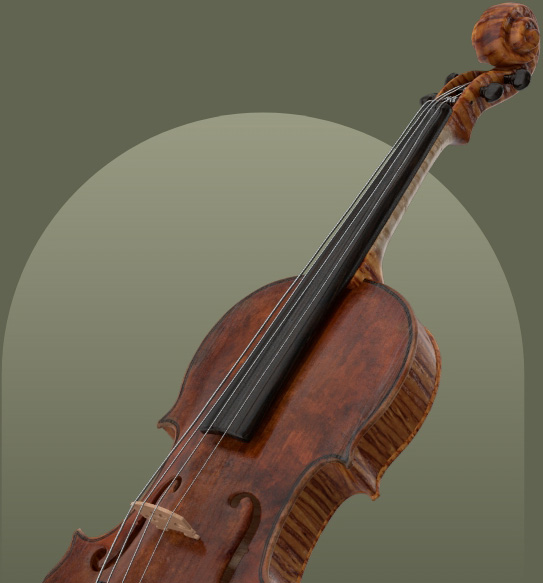
John Rae
London
John Rae (1847-after 1924) was a Scottish violin maker known for his meticulous craftsmanship and original designs. Born into a family with a tradition of instrument making, he initially trained as a joiner before dedicating his spare time to violin making from 1890. Rae produced a limited number of high-quality instruments annually, emphasizing quality over quantity. His violins are characterized by their artistic outline, unique scroll, and the use of distinctive materials such as Californian Sequoia Gigantea for soundboards, resulting in a large, rich, and free tone. His work is recognized as being in the front rank of modern violin making.
Auction Price History
Highest auction price
16 results
| Type | Details | Auction house | Sold | Price |
|---|---|---|---|---|
| Violin | One-piece back of faint medium curl, varnish of a reddish brown colour on a golden ground Lot 2454 | Gardiner Houlgate | March 2023 | £1,708est. £ 800-1,200 |
| Viola | A viola by John Rae, London, 1915 Lot 34 | Amati | November 2021 | £3,666est. £ 3,000-5,000 |
| Violin | Unlabelled, inscribed internally John Rae. No. 4, London 1893 Lot 83 | Brompton’s | June 2015 | £720est. £ 500-800 |
| Violin | Labelled John Rae, Maker, London, no. 80, 1914 Lot 622 | Gardiner Houlgate | September 2014 | £504est. £ 400-600 |
| Violin | Labelled John Rae, maker, London, no. 127, 1922 Lot 504 | Gardiner Houlgate | December 2012 | £432est. £ 400-600 |
| Viola | Bearing the original label Lot 187 | Brompton’s | December 2012 | £960est. £ 800-1,200 |
| Violin | Labelled John Rae, Maker, London, no. 93, 1917 Lot 137 | Tarisio | October 2012 | £1,440est. £ 1,500-2,200 |
| Violin | 35.9 cm London, 1919 | — | December 2009 | £1,251 |
| Violin | 35.7 cm London, 1922 | — | September 2007 | £247 |
| Viola | 1901 | — | March 2002 | £700 |
| Violin | 1919 | — | November 1998 | £460 |
| Violin | 1897 | — | March 1992 | £308 |
| Violin | 1906 | — | November 1989 | £242 |
| Violin | 1919 | — | June 1987 | £462 |
| Violin | 1900 7/8 Size | — | June 1987 | £209 |
| Violin | 39.5 cm 1919 | — | April 1984 | £286 |
No results match those filters.
Maker Overview
Life
John RAE (1847-after 1924) was born on October 31, 1847, in Duff Street, Macduff, N.B., though John Dilworth states his birth year as circa 1843. He was the eldest son of James Rae and the eldest grandson of John Rae of Forglen, Turriff, who was a renowned bagpipe maker in northern Scotland. Soon after John Rae's birth, his family moved to Turriff and later to Netherdale in 1856 when his father became the tenant of the Carpenter's Croft. Young Rae attended a private school in Turriff under a Mr. Ingram, and subsequently schools in Inverkeithny, Aberchirder, and Marnoch for brief periods.
Around the age of eleven, a family misfortune occurred when their home and workshop were destroyed by fire, leading to significant financial hardship for his father. This event compelled John Rae to leave school and begin an apprenticeship as a joiner. At the age of twenty, he moved to Edinburgh, where he continued his trade and attended evening classes for mathematics and drawing. In 1869, he returned to Netherdale due to failing health. It was shortly after this return that he made his first violin, driven by an experimental interest in the relationship between proportionate form and musical sounds.
By 1873, his health had recovered, and he moved to London with the intention of finding employment as a violin maker. He discovered that violin making was not a recognized trade in the metropolis at that time. To further his understanding, he attended lectures on acoustics at the South Kensington Museum and conducted extensive experiments on the tonal qualities of various woods. In 1883, he secured an appointment at the British Museum (Natural History), which relieved him of the manual labor of the bench. He married in 1884, and his wife's support for his passion for fiddle-making reignited his dedication to the craft. From 1884 to 1890, he meticulously studied fiddle construction, creating his own moulds, models, and templets. Since 1890, he devoted all his spare time to his hobby, producing instruments at a slow, patient, and extremely careful pace, typically completing only two or three instruments annually. He famously stated, "I would rather go down to posterity as a diamond than as a ton of coals."
Characteristics
- Production
- , up to the time of his writing, John Rae had made fifty-one violins and four violas. John Dilworth, however, states that he completed over 130 instruments, including violas and cellos.
- Workmanship
- He was known as a slow, patient, and extremely careful worker, often spending days on details that other makers might complete in hours or minutes.
- Design
- His instruments feature an original and highly artistic outline and model, characterized by pronounced yet delicately nervous curves. A notable feature is the balance between the upper and lower portions, with the upper bouts being considerably fuller than usual. The C-bouts are less angular and more sweetly extended and rounded, comparable to the finest Italian work.
- Scroll
- The scroll is original in design and beautifully executed, described as prim and poised, with a swell and bent resembling the neck of a proud swan, deemed worthy of a Stradivari.
- Button & Corners
- The button is of medium size, rather too long to be described as "rounded." The corners are full and fine, complementing the overall outline.
- Purfling
- The purfling is inlaid without a tremor. In some instruments, it is of the usual description, while in others, the middle strip is so narrow as to be barely perceptible from a few feet away, an arrangement designed to emphasize the instrument's beautiful outline. When using this narrow purfling, he varnished the instrument in one of the lighter shades.
- Wood Selection
- He utilized magnificent wood, including fine-grained pine without a joint for several front tables, sourced from a gigantic Sequoia Gigantea tree from California. This tree, 276 feet in height and 1335 years old when cut down in 1872, provided unconventional but effective material.
- Tone
- The instruments possess a large, rich, and free tone. Those with bellies made from the Californian giant redwood exhibit a distinct, rich, and ringing timbre, which, while perhaps lacking the oiliness of Italian wood, offers an equally essential quality to the harmony of sounds.
- Pricing
- His instruments were sold for £10, a sum noted as not indicative of their artistic merits, as they were considered to be in the front rank of modern work.
- Inscriptions
- Instruments are inscribed internally, with examples including "John Rae. Maker / London / No. 112.", "No 50 / John Rae. Maker / London 1901", "Copy of the / Dolphin Strad 1714 / Made by John Rae 1920", and "Copy of Violin known as the / Messiah / Made by John Rae, London / No. 19..".
- John Rae. Maker
London
No. 112. 1919John Dilworth - No 50
John Rae. Maker
London 1901John Dilworth - Copy of the
Dolphin Strad 1714
Made by John Rae 1920John Dilworth - Copy of Violin known as the
Messiah
Made by John Rae, London
No. 19..John Dilworth
Influence and legacy
- Family Tradition: His paternal grandfather, John Rae of Forglen, Turriff, was a well-known maker of bagpipes, indicating a family background in instrument craftsmanship.
- Academic Study: He attended lectures on acoustics at the South Kensington Museum and conducted considerable experimentation on the tonal qualities of different woods.
- Design Inspiration: He derived his personal models from the works of Stradivari and Guarneri.
- Self-Study: From 1884 to 1890, he dedicated himself to studying the construction of the fiddle, creating his own moulds, models, and templets.
- Artistic Recognition: His instruments are considered to be in the front rank of modern work, with his outline and model described as original and highly artistic.
- Philosophy: He expressed a preference for quality over quantity, stating, "I would rather go down to posterity as a diamond than as a ton of coals."
Further Information
- Birthplace: Born in Duff Street, Macduff, N.B.
- Residences: Resided in Turriff and Netherdale during his youth.
- Professional Locations: Worked as a joiner in Edinburgh and later moved to London in 1873.
- Employment: Appointed to the British Museum (Natural History) in 1883.
- Materials: Notably used fine-grained pine from a Californian Sequoia Gigantea for some of his front tables.
Biographies
The overview above is drawn from the following published accounts. Read them in the original:
John Dilworth+
RAE, John b. c.1843 Macduff, Scotland, d. after 1924 London UK. Stradivari and Guarneri derived personal models. Over 130 instruments completed, including some violas and cellos. Inscribed internally. John Rae. Maker / London / No. 112. 1919 No 50 / John Rae. Maker / London 1901 Copy of the / Dolphin Strad 1714 / Made by John Rae 1920 Copy of Violin known as the / Messiah / Made by John Rae, London / No. 19..
William Meredith Morris+
He was born in Duff Street, Macduff, N.B., Oct. 31, 1847. He is the eldest son of James Rae, and the eldest grandson of John Rae, of Forglen, Turriff, well-known throughout the northern parts of Scotland as a famous maker of bagpipes. This last-named John Rae died in 1857, aged ninety. Soon after the birth of young Rae the family removed to Turriff, and resided there until his father became tenant of the Carpenter’s Croft, Netherdale. This was in 1856. The boy Rae was for some time a pupil of a Mr. Ingram, at a private school in Turriff, and got on well there till the fates decreed his removal. From Netherdale he attended the school of Inverkeithny, and subsequently Aberchirder and Marnoch schools, but only for a short time. When he was about eleven years of age a misfortune happened to the family, which, no doubt, changed the whole course of his life. They were burned out of hearth and home. The father was from home at the time on business, and in the twilight of an autumn day a gleam of light was seen in an outhouse where some sheaves of corn, the last of the crop, had been taken in the previous night. Disaster was sudden. The father returned just in time to see the last of the premises, which were in a sheet of flame — corn stacks, workshop, wood-rack, tools, and furniture, all but precious life was lost. Mr. Rae, who was not by any means a rich man before, was left now a very poor man indeed, with a family of six to maintain. The inevitable followed. Young Rae was taken from school and put to serve an apprenticeship as a joiner. At the age of twenty he went to Edinburgh, and worked there at his trade, and attended evening classes for mathematics and drawing. In 1869 he returned to Netherdale owing to failing health. It was soon after this that he essayed to make his first violin — a project carried out for the purpose of experiment, under the impetus of a theory then recently broached of a certain relation between proportionate form and musical sounds. In 1873 he regained health and came to London, hoping to find employment as a violin-maker. He found to his dismay that violin-making as a trade was non est in the metropolis, but to soothe his feelings he attended lectures on acoustics at the South Kensington Museum, and did considerable experimenting on the tonal qualities of different woods. In 1883 he got an appointment in the British Museum (Natural History), which relieved him of the drudgery of the bench. In 1884 he was married, and his wife sympathising with him in his weakness for fiddle-making, the passion for caliper and gouge broke out afresh. From 1884 to 1890 he studied the construction of the fiddle, and made moulds, models, templets, &c. Since 1890 all his spare moments have been given to his hobby, and up to the present he has made fifty-one violins and four violas. He is a slow, patient, and extremely careful worker, turning out only two or three instruments in the year. He is an artist in the highest sense of the word, and spends days over that which most makers spend only hours or minutes. His outline and model are original and highly artistic. The curves are pronounced, yet nervously delicate. His wood is magnificent. For several of his front tables he has used fine grained pine, without joint, cut from a gigantic tree grown in California. This was a tree of the species known as Sequoia Gigantea. It was 276 feet in height, and the annual rings proved it to be 1335 years old when cut down in 1872. It is very unconventional to use this wood, but the results show that conventionalism is sometimes on the erring path. The outline is grand and elegant. A very noticeable feature is the balance between the upper and lower portions of the instrument. The outline is considerably fuller at the upper bouts than is ordinarily the case. The C’s are less angular and more sweetly extended and rounded than in any but the best Italian work. The scroll is original in design and beautiful in execution. It is prim and poised. Its swell and bent are like the neck of a proud swan, and it is worthy of the hand of a Stradivari. The button is of medium size, rather too long to be described as “rounded.” The corners are full and fine, as befits the outline. The purfling is inlaid without a tremor. In some specimens it is of the usual description ; in others the middle strip is narrow — so narrow that it is hardly perceptible at the distance of a few feet from the instrument. The arrangement is well calculated to emphasise the beautiful outline of the fiddle. The maker is careful, however, to varnish the instrument in one of the lighter shades when he purfles in this way. The conception of the whole build is grand and simple. Majesty intoxicated with the wine of the Graces ! The tone is large, rich, and free. The instruments with bellies of the Californian giant have a distinct timbre, and their tone may be described as rich and ringing. Perhaps it has not the oiliness of the tone of Italian wood, but it has something else which is equally necessary to the harmony of sounds. Mr. Rae sells his instruments at £10. This sum is no indication of the artistic merits of the instruments, for they are in the front rank of modern work. It is a pity he does not make faster. On that matter, however, he has a word to say : — ” I hope to live to swell the number considerably, but I may say, as the banker-poet Rogers is reported to have said, ‘ I would rather go down to posterity as a diamond than as a ton of coals.’ “
Sell your instrument with Amati
Get started by uploading photos of your instrument for our experts to review.
Sell your instrument with Amati
Get started by uploading photos of your instrument for our experts to review.