August Riechers
Berlin, 1836–1893
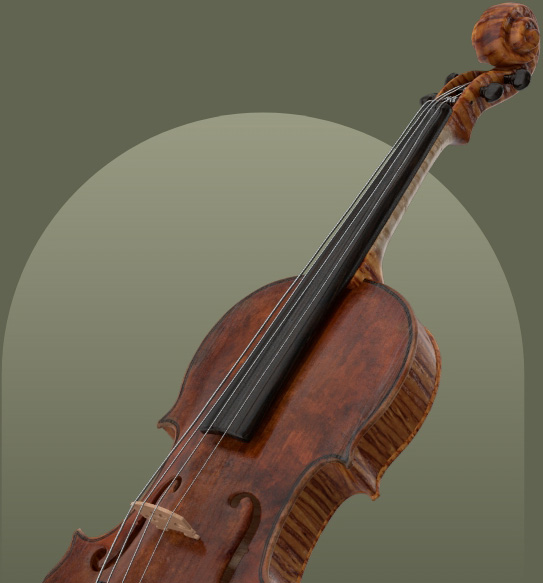
August Riechers (1836-1893) was a highly regarded 19th-century German violin and bow maker, born in Hanover and active in Berlin. He apprenticed with C. F. Ficker and worked with L. Bausch before establishing his own workshop in Hanover in 1862, later moving to Berlin in 1872 at the behest of violinist Joseph Joachim. Appointed luthier to the Hochschule, Berlin, Riechers was known for his fine craftsmanship, primarily using Stradivari and Guarneri models, and was a skilled restorer of classical instruments. He authored Die Geige und ihr Bau and his workshop was considered a significant training ground for young luthiers.
Request an expert valuation or learn how our global auctions achieve the highest prices for your instruments.
Auction Price History
Highest auction price
9 results
| Type | Details | Auction house | Sold | Price |
|---|---|---|---|---|
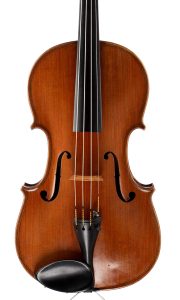
| Violin | Labelled August Riechers fecit, Berlin no. 471 Lot 145 | Tarisio | March 2016 | £2,640est. £ 2,500-4,000 |
| Violin | Berlin, 1925 c. #550 | — | November 2005 | £2,526 |
| Violin Bow | S/E 61 g. | — | November 2005 | £2,526 |
| Violin | 1875 c. | — | September 2001 | £548 |
| Violin | 1879 | — | March 1993 | £1,495 |
| Violin | 1879 | — | November 1991 | £1,430 |
| Violin | 1879 | — | May 1989 | £1,100 |
| Violin | 1872 c. | — | May 1988 | £990 |
| Violin Bow | S/E 62 g. | — | March 1982 | £214 |
No results match those filters.
Maker Overview
Life
August RIECHERS (1836-1893) was born in Hanover in 1836 and passed away in Berlin in 1893. The son of a musician in Hanover who also engaged in repairing old violins, Riechers attempted to make a violin himself at the age of 12. Despite this early inclination, he was initially apprenticed to a piano maker against his will, a position he did not maintain for long. He subsequently secured an apprenticeship with Carl Friedrich Ficker, known as “Fickerhansl,” in Markneukirchen. Following this, he worked as an assistant for L. Bausch in Leipzig. In 1862, Riechers established his independent workshop in his hometown of Hanover, located at Bübelingenstr. No. 11. His talent caught the attention of the renowned violinist Joseph Joachim, who promoted his work and, in 1872, encouraged him to relocate his workshop to Berlin. Upon moving to Berlin, he was appointed luthier to the Hochschule (Royal Superior School of Music). August Riechers is recognized as one of the best 19th-century German makers. He authored the book Die Geige und ihr Bau, published in Göttingen in 1892. The artist Gussow painted him in his workshop.
Characteristics
- Production
- Sources contain conflicting information regarding the total number of instruments produced; John Dilworth credits him with around 2,000 violins and 200 cellos, while Willibald Leo Lütgendorff states over 1,600 new violins, and Cecie Stainer notes about 1,000 violins and over 200 violoncellos.
- Models
- He worked almost exclusively after the models of Stradivari and also utilized Guarneri patterns. He followed Bagatella's notes in his work.
- Varnish
- Sources contain conflicting information regarding his varnish; John Dilworth states he used spirit varnish exclusively, while Willibald Leo Lütgendorff mentions he usually employed spirit varnish with a small addition of turpentine oil.
- Workmanship
- Riechers was known for his fine work and materials, demonstrating exceptional conscientiousness and carefulness. He understood wood well, though his view that wood stored for five years after cutting was ready for violin making was not universally shared. His early violins sometimes had wood that was too thick, while later ones were occasionally too thin, but all were generally considered good. However, some instruments from his very last period, which he did not make entirely himself or which were made by less skilled assistants, are considered of lesser quality.
- Restoration
- He was a highly regarded restorer with extensive experience in classical work. He repaired many Italian master instruments, including at least 300 “genuine Stradivari” instruments.
- Bow Making
- He was also an excellent bow maker.
- August Riechers fecit
Berlin No. 346 AR August Riechers fecit
Hannover anno 1874John Dilworth
Influence and legacy
- Training: August Riechers was apprenticed to Carl Friedrich Ficker (“Fickerhansl”) in Markneukirchen and subsequently worked as an assistant for L. Bausch in Leipzig.
- Mentorship: He achieved his perfection through restless self-study, though he owed much to both of his teachers. The violinist Joseph Joachim played a significant role in promoting Riechers's career and advised his move to Berlin.
- Educational Impact: His workshop was considered a “Hochschule” (university) for young violin makers, offering an unparalleled opportunity to perfect their skills by working on numerous Italian master instruments.
- Recognition: August Riechers is recognized as one of the best 19th-century German makers. He was appointed luthier to the Hochschule in Berlin.
- Literary Contribution: He authored the influential book Die Geige und ihr Bau, published in 1892.
- Artistic Portrayal: The artist Gussow painted him in his workshop, underscoring his prominence.
- Educational Legacy: His workshop served as an important training ground, considered a “Hochschule” for aspiring violin makers.
Further Information
- Branding: His bows were branded “A. RIECHERS.” Early instruments bore the brand “A. Riechers Hannover.”
- Labels: Printed labels included “August Riechers fecit / Berlin No. 346 AR” and “August Riechers fecit / Hannover anno 1874.”
- Workshop Locations: He established his independent workshop in Hanover in 1862 at Bübelingenstr. No. 11, before moving to Berlin in 1872.
Biographies
The overview above is drawn from the following published accounts. Read them in the original:
John Dilworth+
RIECHERS, August Born 1836 Hanover, died 1893 Berlin Germany. Violin and bow maker. Son of Reichers of Hanover, above. One of the best 19th century German makers. Apprenticed to C. F. Ficker in Markneukirchen, worked with Bausch in Leipzig, and established independently in Hanover 1862. Moved to Berlin 1872 on the advice of the violinist Joachim. Appointed luthier to the Hochschule, Berlin. Credited with around 2,000 violins and 200 cellos. Stradivari and Guarneri models. Followed Bagatella’s notes, using spirit varnish exclusively. Fine work and materials. Highly regarded restorer with wide experience of classical work. Author of Die Geige und ihr Bau’(Gottingen, 1892). Bows branded: A. RIECHERS. Early instruments branded: ‘A. Riechers Hannover’. Printed labels: August Riechers fecit / Berlin No. 346 AR August Riechers fecit / Hannover anno 1874
Cecie Stainer+
b. March 8, 1836, Hanover ; d. 1893, Berlin. Was first a pupil of L. Bausch at Leipzig, then travelled from city to city gaining experience, returning to Hanover in 1862. He moved to Berlin in 1872, at the special request of the great violinist, Joseph Joachim, who recognised his talent and ability. He made excellent instruments on the Stradivari and Guarneri patterns and was especially successful in repairing old instruments About 1,000 violins and over 200 violoncellos were made in his workshop. He published a book on the construction of violins.
Willibald Leo Lütgendorff+
Als Sohn eines Musikers, der sich auch mit dem Ausbessern alter Geigen beschäftigte, hat er schon mit 12 Jahren eine Geige selbstständig zu machen versucht, kam aber trotzdem, sehr gegen seinen Willen, zu einem Claviermacher in die Lehre. Hier hielt er es nicht lange aus; nun erst setzte er es durch, nach Markneukirchen geschickt zu werden, wo Carl Friedrich Ficker, genannt »Fickerhansl«, sein Lehrer wurde. Als Gehilfe arbeitete er hauptsächlich bei L. Bausch. Wenn er beiden Meistern auch viel verdankte, so hat er es doch erst durch rastloses Selbststudium zu jener Vollkommenheit gebracht, die ihn vor anderen Geigenmachern auszeichnete. 1862 liess er sich in seiner Vaterstadt Hannover, Bübelingenstr. No. 11, nieder und hatte das Glück, dass Joachim auf ihn aufmerksam wurde, ihn förderte und ihn schliesslich im Jahre 1872 veranlasste, seine Werkstatt nach Berlin zu verlegen. Er arbeitete fast ausschliesslich nach den Modellen von Stradivari, wobei er immer wieder neue Versuche anstellte, und daher kommt es auch, dass seine ältesten Geigen zu dick im Holz sind, während seine späteren oft zu dünn. Gut aber sind sie alle; nur unter den Geigen aus seiner allerletzten Zeit, an denen er wenig selbst gearbeitet hat, und die nicht immer von geschickten Gehilfen herrührten, findet man solche, die minderwerthig genannt werden dürfen. Er arbeitete ungemein gewissenhaft und sorgfältig und verstand sich gut auf das Holz, wenn auch seine Ansicht, dass das Holz, wenn es fünf Jahre lang zugeschnitten gelagert habe, fertig zum Geigenmachen sei, nicht allgemein getheilt wird. Gewöhnlich verwendete er Spirituslack mit einem kleinen Zusatz von Terpentinöl. Im Ganzen hat er über 1600 neue Geigen gemacht, und es wird kaum einen Geigenmacher in Deutschland geben, der mehr italienische Meisterinstrumente reparirt hat, als er; darunter sollen mindestens 300 »echte Stradivari« gewesen sein. Daher konnte man seine Werkstatt auch als eine Hochschule für junge Geigenmacher ansehen; denn eine bessere Gelegenheit, sich zu vervollkommnen, als bei Riechers zu arbeiten, gab es damals nirgends. Er war ein wirklicher Kenner und hat auch eine kleine Schrift »Die Geige und ihr Bau« hinterlassen. Auch als Bogenmacher war er ausgezeichnet, kurz, ein echter Künstler, der auch schon in der äusseren Erscheinung für sich einahm. Gussow hat ihn in seiner Werkstatt gemalt.
Henri Poidras+
Berlin 1836-1893. Maker for the Royal Superior School of Music. He followed the Stradivarius models. Fine woods, spirit varnish. Large production.
Sell your instrument with Amati
Get started by uploading photos of your instrument for our experts to review.
Sell your instrument with Amati
Get started by uploading photos of your instrument for our experts to review.