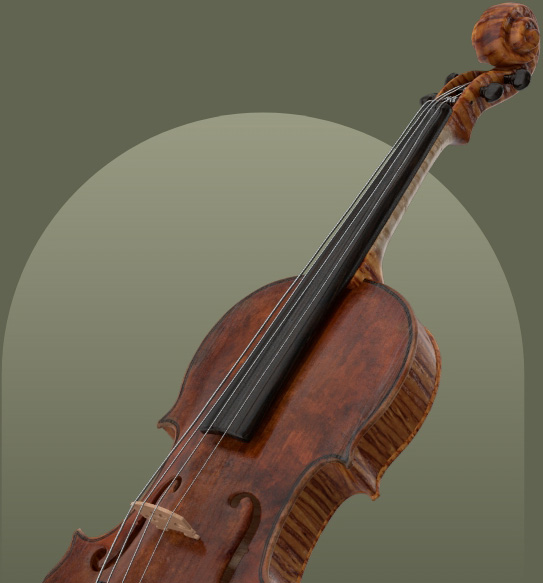
Anton Sitt
1819–1878
Anton Sitt was a highly regarded violin and cello maker born in Hungary in 1819, who established his independent workshop in Prague around 1847 after training with J. B. Schweitzer and working for several prominent makers. He was known for his sophisticated craftsmanship, working on Stradivari and Guarneri models, and his cellos were particularly praised for their large and full tone. His son, Hans Sitt, became a celebrated musician.
Request an expert valuation or learn how our global auctions achieve the highest prices for your instruments.
Maker Overview
Life
Anton SITT (1819-1878) was born in 1819 in Vál, Hungary, and died in 1878 in Prague, Czech Republic.
He was a pupil of J. B. Schweitzer in Budapest from 1834 to 1843, and later worked for A. Hofmann in Vienna, L. Bausch in Leipzig, and M. Weber before joining J. Kulík in Prague. Anton Sitt established his independent workshop in Prague around 1847. He married Kulík's daughter, Sophie, in 1848 and gained citizenship in 1851. Their son, Hans Sitt, born in 1850, became a celebrated violinist, composer, and Kapellmeister.
Characteristics
- Models
- Anton Sitt worked after Stradivari and Guarneri models, and also made copies of a 1727 Pietro Guarneri violin, which he had restored.
- Workmanship
- He was considered a highly regarded maker, producing more sophisticated work than Kulík himself. His violins exhibited fine work, excellent execution, and unsurpassed manual dexterity, marking him as an accomplished artist.
- Materials
- His violins were noted for being thick in the wood.
- Tone
- While an exhibition violin in Münich in 1854 showed fine work, its tone was initially described as slightly rough and dull, though these defects were expected to diminish with time. Willibald Leo Lütgendorff noted that due to the strong tension of the bass bar, the tone of his violins was not always very noble or equally appealing in all registers. However, his cellos were praised for having a large and full tone.
- Repairs
- He was also recognized as one of the most ingenious repairers, though even in this capacity, he did not always achieve the highest tonal results.
- Labels
- His labels included inscriptions such as "Antonius Sitt ad forman G. / Guarneri fecit Pragae 18.." with variations like "ad forman Petrus Guarneri" or "ad forman Antonio Stradivari" as appropriate to the instrument's model.
- Antonius Sitt ad forman G.
Guarneri fecit Pragae 18.. (‘ad forman Petrus Guarneri’, ‘ad forman Antonio Stradivari’, etc. substituted as appropriate to model of instrument).John Dilworth
Influence and legacy
- Training: Anton Sitt was a pupil of Joh. Schweitzer in Budapest from 1834 to 1840, and subsequently his assistant until 1843.
- Employment: He was later employed by A. Hoffmann in Vienna, L. Bausch in Leipzig, and Mich. Weber, before joining Kulík in Prague in 1848.
- Family Connections: He married Kulík's daughter, Sophie, in 1848.
- Family: His son, Hans Sitt, born in 1850, became a celebrated composer and Kapellmeister.
- Recognition: Anton Sitt received much recognition during his lifetime, with Schebek and Hajdecky expressing high praise for his work.
- Exhibitions: A violin made on the Stradivari pattern was exhibited at Münich in 1854.
Further Information
- Workshop Locations: In 1848, his workshop was located at Vel. Karl. ul. No. 184 and 185. From 1857 to 1859, it was on the Altstädter Kleinen Ring No. 144, and from 1860 onwards, at Anenská ul. No. 8.
Biographies
The overview above is drawn from the following published accounts. Read them in the original:
John Dilworth+
SITT, Anton Born 1819 Vál Hungary, died 1878 Prague Czech Republic. Pupil of J. B. Schweitzer in Budapest 1834-1843. Employed by A. Hofmann in Vienna, L. Bausch in Leipzig, and M. Weber and subsequently J. Kulík in Prague. Established independently in Prague from c.1847. Married Kulík’s daughter and gained citizenship 1851. Their son Hans became a celebrated violinist. Highly regarded maker. More sophisticated work than that of Kulík himself. Stradivari and Guarneri models. Also copies of a 1727 Pietro Guarneri violin which he restored. Particuarly fine cellos. Antonius Sitt ad forman G. / Guarneri fecit Pragae 18.. (‘ad forman Petrus Guarneri’, ‘ad forman Antonio Stradivari’, etc. substituted as appropriate to model of instrument).
Cecie Stainer+
A maker in Prague, d. 1878. A violin exhibited at Münich, in 1854, made on the Stradivari pattern, showed fine work; only the wood was rather thick and the tone slightly rough and dull, but both these defects would naturally wear off with time.
Willibald Leo Lütgendorff+
Sohn des Gärtners Sitt und seiner Frau Franziska aus Tabajd. Von 1834 bis 1840 war er Schüler von Joh. Schweitzer in Budapest, bis 1843 dessen Gehilfe, später bei A. Hoffmann in Wien, Bausch in Leipzig, dann bei Mich. Weber. 1848 kam er zu Kulik nach Prag, dessen Tochter Sophie er noch im selben Jahre heirathete, mit der er drei Söhne, darunter den 1850 geborenen Componisten und Capellmeister Hans Sitt, und drei Töchter hatte. Seine Werkstatt befand sich 1848 in der Vel. Karl. ul. No. 184 und 185, von 1857—1859 auf dem Altstädter Kleinen Ring No. 144 und von 1860 an in der Anenská ul. No. 8. Er arbeitete nach Stradivari und Guarneri; seine Geigen sind dick im Holz und von vorzüglichster Durchführung. In Folge der zu starken Spannung des Bassbalkens ist der Ton seiner Geigen jedoch nicht sehr edel und nicht in allen Lagen gleich ansprechend. Seine Violoncelli haben einen grossen und vollen Ton. In seiner Handfertigkeit war er unübertrefflich und ein vollendeter Künstler und fand schon bei Lebzeiten vielfache Anerkennung; auch Schebek und Hajdecky waren seines Lobes voll. Dass er einer der genialsten Reparateure war, sei schliesslich auch noch erwähnt, wenn er auch hier im Ton nicht das Höchste erreichte.
Sell your instrument with Amati
Get started by uploading photos of your instrument for our experts to review.
Sell your instrument with Amati
Get started by uploading photos of your instrument for our experts to review.