
Alexander Smillie
1847–1918
Alexander Smillie (1847-1918) was a Scottish violin maker, primarily self-taught, who established his workshop in Glasgow by 1887. He was known for producing high-quality instruments, including violins, violas, and cellos, often based on Stradivari and Guarneri models. His craftsmanship was characterized by careful workmanship, the use of fine and often old materials, distinctive "bee-sting" purfling, and magnificently sculptured scrolls. Smillie's cellos, in particular, were highly regarded for their grand, mellow tone. Despite never exhibiting his work, the quality of his instruments was such that some were fraudulently relabeled as contemporary Italian pieces, a testament to his skill.
Request an expert valuation or learn how our global auctions achieve the highest prices for your instruments.

Auction Price History
Highest auction price
37 results
| Type | Details | Auction house | Sold | Price |
|---|---|---|---|---|
| Violin | A violin by Alexander Smillie and Son, Glasgow, 1904 Lot 179 | Amati | June 2024 | £632est. £ 500-1,000 |
| Violin | Labelled Alexander Smillie fecit Crosshill Glasgow ..., excellent state of preservation Lot 151 | Brompton’s | October 2020 | £3,840est. £ 3,000-5,000 |
| Violin | Labelled Alex Smillie fecit, Crosshill Glasgow 1896, no. 93 Lot 18 | Tarisio | July 2020 | £2,400est. £ 2,000-3,000 |
| Violin | Labelled A. Smillie & Son, 171 St. Georges ... Lot 293 | Brompton’s | May 2019 | £1,440est. £ 1,500-2,000 |
| Violin | Labelled A. Smillie & Son, 171 St. Georges Road, Glasgow, No. 223 ... Lot 237 | Brompton’s | March 2019 | £6,000est. £ 2,000-3,000 |
| Violin | Labelled Alex Smillie fecit, Crosshill, Glasgow. 1891 Lot 166 | Tarisio | May 2017 | £3,183est. $ 5,000-8,000 |
| Cello | Bearing the original label Alex Smillie, fecit Croshill Glasgow 1896 ... Lot 191 | Brompton’s | December 2015 | £4,200est. £ 4,000-6,000 |
| Violin | Jointed back of medium curl, table of fine grain, varnish of a reddish brown colour on a golden ground Lot 11 | Gardiner Houlgate | October 2014 | £2,400est. £ 1,200-1,800 |
| Violin | Bearing an original label numbered 27 Lot 102 | Brompton’s | October 2013 | £960est. £ 800-1,200 |
| Violin | 35.8 cm Glasgow, 1907 | — | October 2011 | £3,125 |
| Violin | 35.6 cm Glasgow, 1911 | — | February 2006 | £1,800 |
| Violin | 1896 | — | November 2003 | £1,645 |
| Cello | 1912 | — | February 2001 | £11,730 |
| Violin | 1911 | — | November 2000 | £3,290 |
| Violin | 1923 | — | September 2000 | £748 |
| Violin | 1896 | — | May 2000 | £2,933 |
| Violin | 1933 | — | November 1998 | £747 |
| Cello | 1892 | — | October 1997 | £1,600 |
| Violin | 1899 | — | June 1996 | £2,645 |
| Violin | 1896 | — | February 1995 | £1,552 |
| Violin | 1905 | — | November 1990 | £2,090 |
| Violin | 1915 | — | March 1990 | £880 |
| Violin | 1898 | — | September 1989 | £1,705 |
| Violin | 1894 | — | June 1988 | £594 |
| Violin | 1894 | — | November 1987 | £506 |
| Violin | 1911 | — | November 1987 | £825 |
| Violin | 1911 | — | September 1987 | £1,430 |
| Violin | 1909 | — | November 1986 | £572 |
| Violin | 1915 | — | November 1985 | £864 |
| Violin | 1895 | — | July 1985 | £484 |
| Violin | 1893 | — | November 1984 | £440 |
| Viola | 40.3 cm 1912 | — | January 1984 | £607 |
| Violin | 1894 | — | June 1983 | £605 |
| Violin | 1911 | — | November 1982 | £550 |
| Violin | 1901 | — | June 1982 | £280 |
| Viola | 1912 | — | March 1981 | £769 |
| Violin | 1896 | — | March 1980 | £108 |
No results match those filters.
Maker Overview
Life
Alexander SMILLIE (1847-1918) was born on January 25, 1847, in Cambuslang, Scotland, and died in 1918 in Crosshill, Glasgow, Scotland. He was the son of John and Margaret Smillie. He received elementary education at the Cambuslang Parish School. On April 27, 1876, he married Janet Andrews at Cordonald, near Paisley, and they had six children: John, Andrew, Alexander, Margaret, Nellie, and Bessie. Smillie was active as a violin maker from 1887, though his first instrument was not made until 1889. He was primarily self-taught, establishing his workshop at 3, Renton Terrace in Crosshill, Glasgow, by 1887. From 1893 to 1901, he operated from 514 Victoria Road. In 1902, his second son, Andrew, joined him in the business, and they settled together at 171 St George's Road. He also maintained workshops at 130 Shamrock Street, Glasgow, where he conducted an extensive business as a repairer and dealer. Sources contain conflicting information about his total production; John Dilworth states he produced more than 300 instruments, Willibald Leo Lütgendorff notes over 120 violins, various violas, and a dozen cellos, Henri Poidras estimates about 150 instruments, and William Meredith Morris records 160 violins, 15 violas, and 13 violoncellos.
Characteristics
- Models
- Alexander Smillie worked primarily on Stradivari and Guarneri models, though William Meredith Morris notes he was not a mere copyist.
- Varnish
- , his instruments were oil varnished with Whitelaw's amber preparation, applied in an even red-brown over a good reflective ground. Willibald Leo Lütgendorff describes the varnish as Whitelaw's Bernsteinlacke of reddish-yellow or dark orange colors, while Henri Poidras mentions a yellow-red varnish.
- Workmanship
- His work is described as careful and well-made by Lütgendorff, and William Meredith Morris states his instruments show excellent work, placing him in the front rank of modern makers.
- Materials
- He generally used fine materials, though some local woods are in evidence. He frequently used old wood, especially for the front tables, which he acoustically tested to ensure excellent quality. The grain of some pine used could be very wide, up to 1/4 of an inch towards the margins.
- Purfling
- The purfling corners often feature a distinctively turned bee-sting. William Meredith Morris further specifies that the corners are in the style of Riechers, with the "wasp's sting" of the purfling reaching very nearly to the inner angles. The purfling itself is inlaid with accuracy.
- Linings
- John Dilworth observes that the linings run across the face of the corner blocks.
- Backs
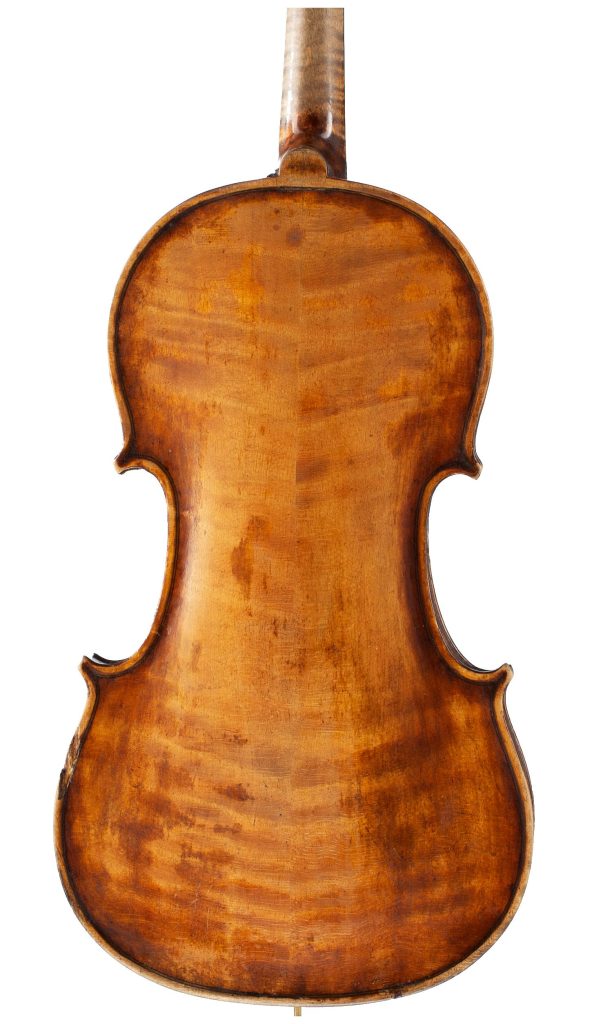
- Smillie cut his backs using various methods depending on the wood, including on the slab, which produced a beautiful effect with "cloud-like coruscations of golden sheen."
- Stain
- Some of his instruments exhibit a narrow line of light-brown stain on the front tables, possibly from an unusual coloring of the cambium cells during the wood's growth.
- Outline and Arching
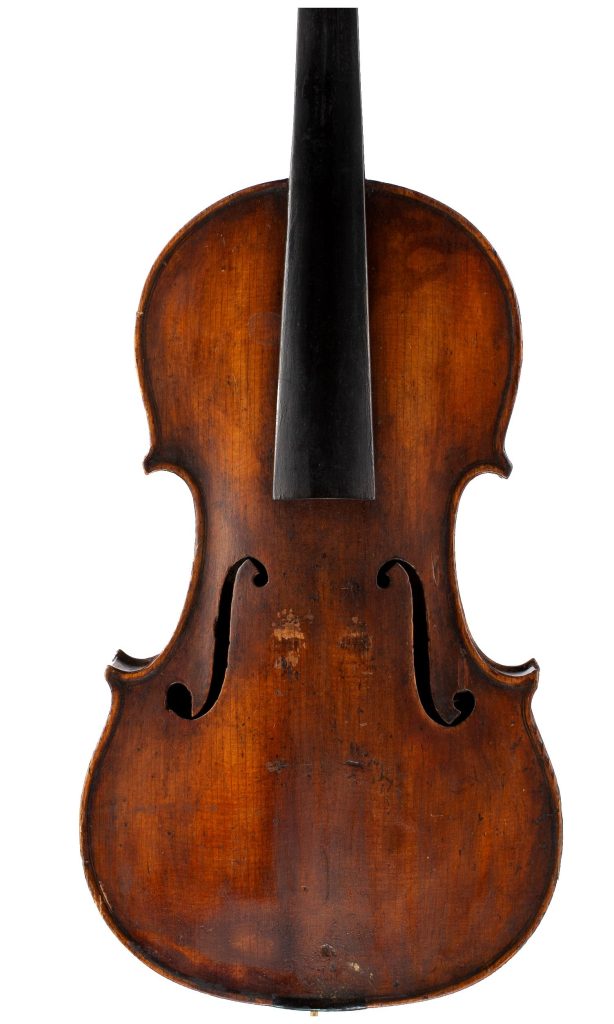
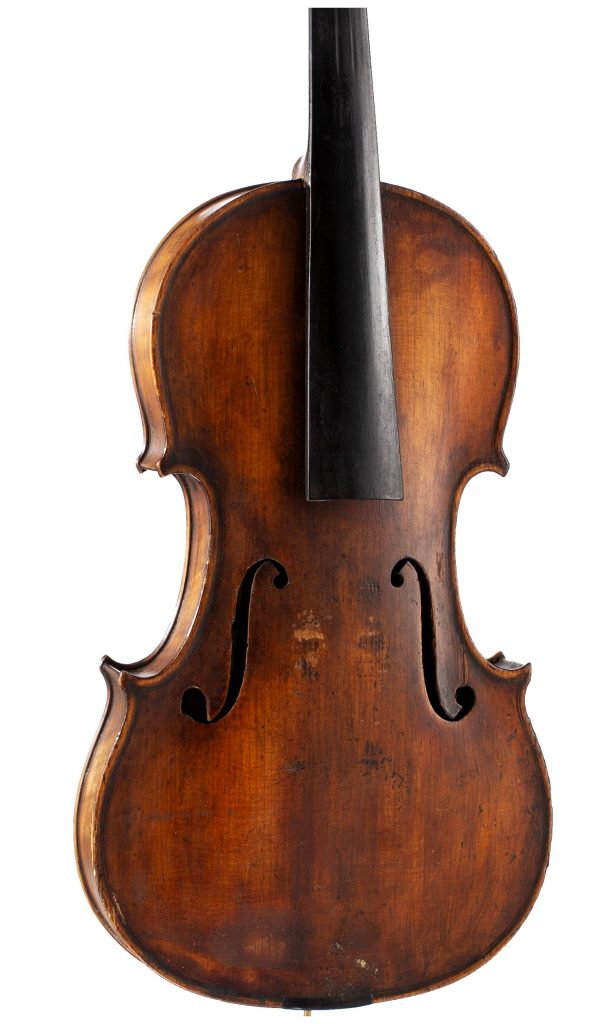
- The outline combines grace and boldness, with a full waist that rapidly extends in width towards the lower bouts, contributing to solidity and firmness of tone. The arching is moderately full and extended.
- Scroll
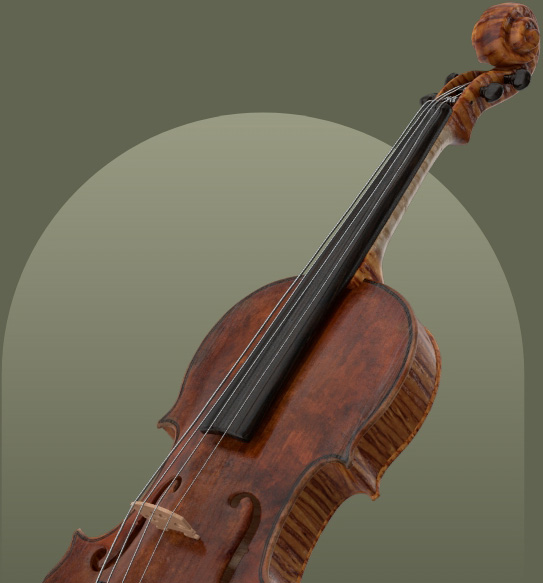
- The scroll is magnificently sculptured, featuring deep coulisses or grooves around the back and head, with very sharp lines. The lines of the volute are also sharp and cut with mathematical precision. The throat is as carefully finished as the head.
- Peg-box and Scollop
- The peg-box is strong, with sides about 1/5 of an inch thick. The scollop projects slightly more than in typical Italian instruments but complements the scroll.
- Button
- The button is of medium size and in the best classical style.
- Sound-holes
- His sound-holes are described as beautiful, moderately wide, and slightly shorter than the grand period holes of Stradivari. The upper turns are smaller but very pretty. They are set farther from the edge and about 1/16 of an inch lower than Stradivari's, with an angle of inclination around eighty degrees.
- Margins and Edges
- The margins are of medium width, and the edges are strong and rounded, with a depth of 3/16 of an inch, raised about 1/16 of an inch to a gentle ridge.
- Cellos
- His cellos are considered exceptionally fine by John Dilworth and, are equal to, if not better than, his violins, possessing a grand, mellow, remarkably free, and full tone across all positions.
- Alex Smillie Fecit
Crosshill, Glasgow, 1896
No 100 Alex: Smillie fecit
Crosshill, Glasgow, 1900
No. 132John Dilworth
Influence and legacy
- Mentorship: Alexander Smillie was primarily self-taught but received assistance from George Duncan and owned two of Duncan's violins.
- Fraudulent Relabeling: Many of Smillie's instruments have been fraudulently relabeled by dealers as contemporary Italian work, a testament to their quality.
- Exhibitions: He never exhibited any of his instruments.
- Character: William Meredith Morris describes him as a patient, unassuming worker, to whom the spirit of rivalry was foreign, and whose rare humor and genial manner earned him numerous friends in the "great fiddle world."
Further Information
- Workshops: His workshops included 3, Renton Terrace in Crosshill, Glasgow; 514 Victoria Road; 171 St George's Road; and 130 Shamrock Street, Glasgow.
- Labels: Examples of his printed labels include "Alex Smillie Fecit / Crosshill, Glasgow, 1896 / No 100" and "Alex: Smillie fecit / Crosshill, Glasgow, 1900 / No. 132" (Rattray).
Biographies
The overview above is drawn from the following published accounts. Read them in the original:
John Dilworth+
SMILLIE, Alexander Born 1847 Cambuslang, died 1918 Crosshill, Glasgow, Scotland UK. Active from 1887. Primarily self-taught, but seems to have had assistance from George Duncan and owned two of his violins. Established at 3, Renton Terrace in Crosshill, Glasgow by 1887, and from 1893-1901 at 514 Victoria Road. Joined by his son Andrew 1902 and settled together in business at 171 St George’s Road. Produced more than 300 instruments in a fluent and quite Italianate style. Stradivari and Guarneri models. Well-made and oil varnished with Whitelaw’s amber preparation in an even red-brown over a good reflective ground. Purfling corners often have a distinctively turned bee-sting, and linings run across the face of the corner blocks. Generally fine materials, but some local woods in evidence. Cellos are exceptionally fine. Many have been fraudulently relabelled by dealers as contemporary Italian work. Printed labels: Alex Smillie Fecit / Crosshill, Glasgow, 1896 / No 100 Alex: Smillie fecit / Crosshill, Glasgow, 1900 / No. 132 [Rattray]
William Meredith Morris+
He was born at Hallside, Cambuslang, Jan. 25, 1847. His workshops are at 130 Shamrock Street, and 514 Victoria Street, Glasgow, where also he carries on extensive business as a repairer and dealer. He is the son of John and Margaret Smillie. He was married April 27, 1876, to Janet Andrews, at Cordonald, near Paisley. He has six children — three sons and three daughters — viz., John, Andrew, Alexander, Margaret, Nellie, and Bessie. The second son, Andrew, has started work with him since the recent opening of the new premises in the West end, Mr. Smillie received elementary education at the Cambuslang Parish School, but he received no early training in the art of violin-making. His first instrument was not made till 1889, but since then he has been pretty busy, seeing that he has turned out 160 violins, 15 violas, and 13 violoncellos. These instruments show excellent work, and they place Smillie in the front rank of modern makers. He works on the Stradivarius and Guarnerius lines, but he is not a mere copyist. The measurements of the outline and model after which he most frequently works are as follows : — Mr. Smillie cuts his backs on the various methods, according to the nature of the wood he happens to be using. In two of the instruments examined by me it was cut on the slab, and it is difficult to imagine anything more beautiful than the effect produced. When the fiddle is held horizontally, the eye is dazzled by cloud-like coruscations of golden sheen ; and when it is tilted to an angle of forty-five degrees, the clouds are metamorphosed into a hundred ” milky ways.” Given a piece of suitable wood, of ample width, a back cut on the slab is second to none in artistic merits. This maker uses old wood, especially for the front tables, and, as he is able to test it acoustically, it is invariably of excellent quality. The grain of some of the pine is very wide. In an example now before me, it is exactly -f of an inch wide towards the margins — straight, and well-defined. On either side of the finger-board, and running into the long axis of the sound-holes, is a narrow line of light-brown stain, extending right along the instrument. The stain was probably produced by an unusual colouring of the cambium cells during growth. As several of Mr. Smillie’s instruments show traces, more or less pronounced, of this stain, their tables must have been cut from the same piece of timber. The outline combines the graceful and the bold. The waist is full, and rapidly extending in width as it approaches the lower bouts. This gives a sense of solidity to the build as it also adds to the firmness and roundness of tone. The arching is moderately full and extended. The upper bouts are more rounded than is usual with Strad, but a nice balance is thus obtained between the upper and middle parts of the instrument. The scroll is magnificently sculptured. The coulisses or grooves round the back and head are deep, and the lines very sharp. The lines of the volute are also sharp and cut with mathematical precision. The throat is as carefully finished as the head. The peg-box is strong, with sides about 1/5 of an inch thick. The scollop projects a trifle more than it usually does in Italian instruments, but it befits the scroll. The button is of medium size and in the best classical style. The sound-holes are simply beautiful. They are moderately wide, and just a shade shorter than the grand period holes of Strad. The upper turns are also rather smaller, but very pretty. They are set farther away from the edge than is usual with Strad, and about 1/16 (or more) of an inch lower down, and they do not incline so much — the angle of inclination being about eighty degrees. The sound-holes are set in with a true artistic feeling, and the effect produced on the mind in viewing the general appearance of the front table is that of repose and freedom. The purfling is inlaid with accuracy. The margins are of medium width, and the edges strong and rounded. The depth of the edge is 3/16 of an inch, and it is raised about 1/16 culminating midway between the outer line and the purfling in a very pretty and gentle ridge. The corners are in the style of Riechers, with the “wasp’s sting” of the purfling reaching very nearly to the inner angles. Mr. Smillie’s ‘cellos are considered to be equal to, if not better than, his violins. Their tone is grand and mellow, and remarkably free and full on all the positions. Mr. Smillie has never exhibited any of his instruments. He is a patient, unassuming worker, and the spirit of rivalry is foreign to his nature. His rare humour and genial manner have made him numerous friends in the great fiddle world.
Willibald Leo Lütgendorff+
Er ahmt hauptsächlich das Stradivari-Modell, gelegentlich auch Guarneri nach und verwendet Whitelaw’s Bernsteinlacke von röthlichgelber oder dunkelorange Farben. Seine Arbeit ist sorgfältig, das Holz gut und die Einlage sauber. Er hat bisher über 120 Violinen, verschiedene Violen und ein Dutzend Violoncelli gemacht.
Henri Poidras+
Glasgow towards 1890. Amateur maker who became a good professional. Judging from his label numbers, his production must have been prolific, about one hundred and fifty instruments being due to him. Stradivari or Guarneri models. Yellow-red varnish.
Sell your instrument with Amati
Get started by uploading photos of your instrument for our experts to review.
Sell your instrument with Amati
Get started by uploading photos of your instrument for our experts to review.
Pupils
Andrew Young Smillie Pupil