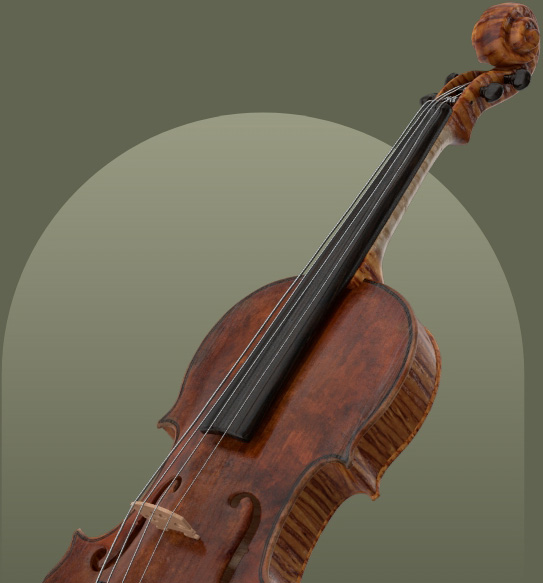
John Smith
1859–1941
John Smith (1859-1941) was a Scottish violin maker who began his career in 1891 after an apprenticeship as a joiner and cabinet-maker. He was a pupil of John Carr and was influenced by P. Davidson's technical analysis of the violin. Smith worked in Falkirk and Glasgow before emigrating to Winnipeg, Canada. He crafted instruments on Stradivari- and Guarneri-derived models, as well as his own design, utilizing excellent imported tonewoods and a distinctive amber varnish. His work is noted for its beautiful finish, comfortable neck design, and magnificent scroll carving, producing a large and incisive tone.
Request an expert valuation or learn how our global auctions achieve the highest prices for your instruments.
Auction Price History
Highest auction price
9 results
| Type | Details | Auction house | Sold | Price |
|---|---|---|---|---|
| Violin | 1902 | — | September 2001 | £4,600 |
| Violin | 1890 c. | — | May 2000 | £828 |
| Violin | 1896 | — | December 1998 | £978 |
| Violin | 1897 | — | October 1998 | £667 |
| Violin | 1919 | — | November 1997 | £920 |
| Violin | 1919 | — | March 1996 | £2,300 |
| Violin | 1918 | — | November 1995 | £690 |
| Violin | 1880 c. | — | July 1991 | £616 |
| Violin | 1897 | — | April 1987 | £825 |
No results match those filters.
Maker Overview
Life
John SMITH (1859-1941) was born on April 26, 1859, in Fauldhouse, Linlithgowshire, Scotland, and passed away in 1941 in Winnipeg, Canada. He was the son of an engineer and was formally apprenticed as a joiner and cabinet-maker. Smith began his venture into violin making in 1891. He established himself professionally in Glasgow around 1904. Prior to this, he worked for ten years at 28 Cockburn Street, Falkirk, where he crafted approximately fifty violins, along with a few violas and violoncellos. At the time of William Meredith Morris's writing, he was working at 40 Garthland Drive, Dennistoun, Glasgow. He later emigrated to Canada, becoming active in Winnipeg at 617 Furby Street.
Characteristics
- Models
- Smith worked on various models, including those derived from Stradivari and Guarneri. William Meredith Morris notes that he chiefly adopted a model of his own design.
- Archings
- Sources contain conflicting information regarding his arching., his instruments featured a very flat arch that was full to the edges. Conversely, William Meredith Morris describes the arching as a trifle more pronounced than in the works of Stradivari and Joseph Guarneri, almost in the manner of Gasparo da Salò.
- Varnish
- He utilized commercially available Whitelaw amber varnish, described as shaded golden-red by Dilworth and red-yellow amber by George Hart. Morris adds that the varnish was carefully laid on and highly polished.
- Materials
- Smith employed excellent imported tonewoods and beautiful old wood, using cedar for the blocks.
- Sound-holes
- His sound-holes exhibit a strong Brescian feeling, yet are distinctly more advanced than those of the old school, featuring a quasi-Gothic upper arch.
- Workmanship
- His work is beautifully finished. A notable feature is the shoulder or base of the neck, which is designed for player comfort and ease of shifting. His scroll carving is described as magnificent, showcasing strength of mind and mastery of the gouge.
- Tone
- The instruments produce a large and incisive tone, expected to become rich and sonorous with time and use.
- Labels
- The color of his label paper is dark yellow.
- Made by John Smith Falkirk
No. 1893John Dilworth - Made by John Smith
late of Falkirk
Glasgow
no 54 14
1
1905John Dilworth - Made by John Smith
617 Furby St. Winnipeg
Late of Glasgow & Falkirk, ScotlandJohn Dilworth
Influence and legacy
- Mentorship: John Smith was a pupil of John Carr, a music teacher and violin-maker from Falkirk.
- Guidance: He was guided by P. Davidson's book, The Violin; a technical analysis, which was published in Glasgow in 1871.
- Recognition: William Meredith Morris considered John Smith to be among the three or four makers forming the vanguard of modern Scottish makers.
Further Information
- Addresses: Smith worked at 28 Cockburn Street, Falkirk; 40 Garthland Drive, Dennistoun, Glasgow; and 617 Furby Street, Winnipeg.
- Labels: Examples of his labels include "Made by John Smith Falkirk / No. 1893", "Made by John Smith / late of Falkirk / Glasgow / no 54 14/1/1905", and "Made by John Smith / 617 Furby St. Winnipeg / Late of Glasgow & Falkirk, Scotland".
Biographies
The overview above is drawn from the following published accounts. Read them in the original:
John Dilworth+
SMITH, John Born 1859 Fauldhouse, Scotland UK, died 1941 Winnipeg Canada Apprenticed as a joiner and cabinet-maker. Pupil of J. Carr in violin making, guided by P. Davidson’s The Violin; a technical analysis published in Glasgow 1871. Established professionally in Glasgow c.1904, using commercially available Whitelaw amber varnish. Emigrated to Canada shortly thereafter. Active in Winnipeg at 617 Furby Street. Stradivari- and Guarneri-derived models. Very flat arch but full to the edges. Shaded golden-red varnish. Excellent imported tonewoods used. Made by John Smith Falkirk / No. 1893 Made by John Smith / late of Falkirk / Glasgow / no 54 14/1/1905 Made by John Smith / 617 Furby St. Winnipeg / Late of Glasgow & Falkirk, Scotland
William Meredith Morris+
He was born at Fauldhouse, Linlithgowshire, April 26, 1859, and he works now at 40 Garthland Drive, Dennistoun, Glasgow. He worked for ten years at 28 Cockburn Street, Falkirk, where he made about fifty violins and a few violas and violoncellos. He is a pupil of John Carr, music teacher and violin-maker, of Falkirk. Mr. Smith is amongst the three or four who form the vanguard of the army of modern Scottish makers. He works on various models, but chiefly on one of his own adoption, the measurements of which are as follows : — The arching is a trifle more pronounced than in the works of Strad and Joseph, and is almost in the manner of Gasparo da Salo. There is also a strong Brescian feeling about the sound-holes, only they are of a type distinctly more advanced than those of the old school. The angle of inclination of the sound-holes, and their quasi-Gothic upper arch, lend this part of the work freshness and vigour which catch the eye of the expert. The work is beautifully finished, and the varnish carefully laid on and highly polished. A feature worthy of special notice is the shoulder, or base of neck, which is finished in a manner that enables the player to shift with comfort and ease. Too much attention cannot be paid to violin construction from the player’s point of view, with due regard, of course, to the harmony of form and proportion. Mr. Smith’s scroll is a magnificent piece of carving, and reveals strength of mind and mastery of the gouge. The tone is large and incisive, and when time and use have mellowed it down, it will, no doubt, be rich and sonorous. The colour of the label paper is dark yellow.
George Hart+
Er war der Sohn eines Maschinenbauers und erlernte regelrecht die Tischlerei. Im Jahre 1891 begann er sich auf das Geigenmachen zu verlegen und wurde ein Schüler John Carr’s. Er verarbeitet schönes, altes Holz und nimmt zu den Klötzen Cedernholz. Er ahmt im Allgemeinen Stradivari nach und verwendet rothgelben Bernsteinlack.
Sell your instrument with Amati
Get started by uploading photos of your instrument for our experts to review.
Sell your instrument with Amati
Get started by uploading photos of your instrument for our experts to review.