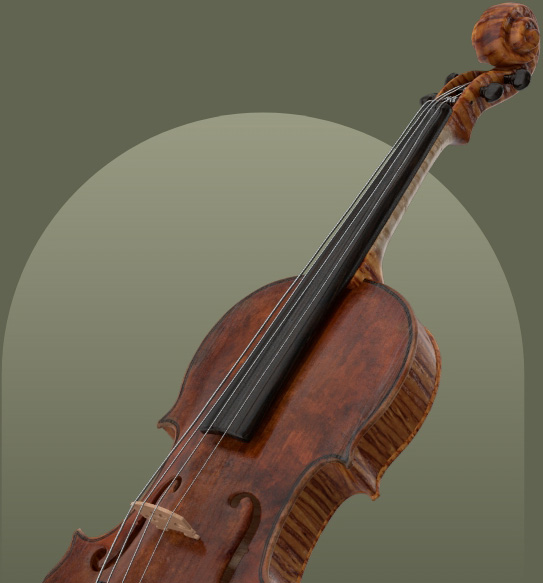
Joseph Sneider
worked 1690–1725
Joseph Sneider was a luthier active in Pavia, Italy, from approximately 1690 to 1725. He was a German-born pupil of Nicolò Amati in Cremona, known for instruments that were often mistaken for those of Girolamo Amati. His craftsmanship is described as carefully finished, featuring gracefully cut sound-holes and scrolls. While sources conflict on the precise arching height and varnish color, descriptions range from slightly to highly arched, and varnish from rich yellow to pale golden-brown. Despite his historical presence, John Dilworth notes that no examples of his work are presently known.
Request an expert valuation or learn how our global auctions achieve the highest prices for your instruments.
Auction Price History
Highest auction price
| Type | Details | Auction house | Sold | Price |
|---|---|---|---|---|
| Violin | 1718 | — | November 1980 | £2,750 |
No results match those filters.
Maker Overview
Life
Joseph SNEIDER worked in Pavia, Italy, with various sources indicating his activity between approximately 1690 and 1725., he was a German-born student of Nicolò Amati in Cremona around 1680. Willibald Leo Lütgendorff also suggests a probable German origin, noting he was likely a fellow student with Leopold 'Tedesco.' Cecie Stainer, Karel Jalovec, Henri Poidras, and George Hart all confirm his pupilage under Nicola Amati.
Instruments made by Girolamo Amati, son of Nicola, have frequently been attributed to Sneider, a point noted by Cecie Stainer and George Hart. Examples of his labels include: 'Joseph Sneider Paviae, alumnus Nicola Amati Cremonae fecit, anno 1703' and 'Giuseppe Sneider in Pavia 1718, alumnus Nicola Amati Cremonae' as cited by Cecie Stainer. George Hart provides 'Joseph Sneider Papias Alumnus Nicolai Amati Cremonae fecit Anno 17—,' and John Dilworth mentions 'Joseph Sneider Papiae, / alumnus Nicolai Amati, / Cremonae, fecit Anno 1709.'
Characteristics
- Workmanship
- Joseph Sneider's instruments are consistently described as having careful or very nice finishing. Cecie Stainer notes 'the workmanship carefully finished,' while Karel Jalovec states 'Very nicely finished instruments.' Willibald Leo Lütgendorff mentions he 'worked very schön' (beautifully), and Henri Poidras simply states 'Good make.'
- Archings
- Sources contain conflicting information regarding the arching. Cecie Stainer describes his violins as 'slightly arched,' while Willibald Leo Lütgendorff and Henri Poidras state the arching was of 'medium height.' Karel Jalovec, however, notes 'high archings.'
- Sound-holes
- The sound-holes are generally described as gracefully cut or beautifully curved. Cecie Stainer notes them as 'gracefully cut,' Willibald Leo Lütgendorff as 'schön geschwungene F-Löcher' (beautifully curved F-holes), and Karel Jalovec as 'gracefully cut scrolls and sound-holes.'
- Scrolls
- Karel Jalovec mentions 'gracefully cut scrolls,' and Willibald Leo Lütgendorff describes a 'hübsche Schnecke' (pretty scroll).
- Varnish
- The varnish is described with some variation. Cecie Stainer notes a 'rich yellow colour,' while Willibald Leo Lütgendorff and Karel Jalovec mention a 'good, transparent Lack von gelber oder hellbrauner Farbe' (good, transparent varnish of yellow or light-brown hue). Henri Poidras simply states 'Yellow varnish,' and John Dilworth describes it as 'pale golden-brown.'
- Joseph Sneider Papiae,
alumnus Nicolai Amati,
Cremonae, fecit Anno 1709John Dilworth
Influence and legacy
- Mentorship: Joseph Sneider was a pupil of Nicola Amati, as confirmed by Cecie Stainer, Willibald Leo Lütgendorff, George Hart, Karel Jalovec, and Henri Poidras. John Dilworth specifies he was a student of Nicolò Amati in Cremona in 1680.
- Peerage: Willibald Leo Lütgendorff suggests he was likely a fellow student with Leopold 'Tedesco.'
- Stylistic Influence: John Dilworth notes that Sneider's style and workmanship were 'close in style and workmanship to that of Nicolò and Hieronymus (II) Amati.' Willibald Leo Lütgendorff also states that he 'ahmte seinen Meister nach' (imitated his master).
- Market Value: Karel Jalovec indicates a significant market value for his instruments, stating 'Price 24.000 and more.'
- Rarity: John Dilworth notes that 'No examples presently known' of his work.
Further Information
- Working Location: Joseph Sneider worked in Pavia, Italy.
- Label Inscriptions: Labels include 'Joseph Sneider Paviae, alumnus Nicola Amati Cremonae fecit, anno 1703,' 'Giuseppe Sneider in Pavia 1718, alumnus Nicola Amati Cremonae,' 'Joseph Sneider Papias Alumnus Nicolai Amati Cremonae fecit Anno 17—,' and 'Joseph Sneider Papiae, / alumnus Nicolai Amati, / Cremonae, fecit Anno 1709.'
- Technical Detail: John Dilworth specifically mentions that his 'soundholes [are] set close to the edge.'
Biographies
The overview above is drawn from the following published accounts. Read them in the original:
John Dilworth+
SNEIDER, Joseph Worked circa. 1690-1725 Pavia Italy. A German-born student of Nicolò Amati in Cremona 1680. Said to be close in style and workmanship to that of Nicolò and Hieronymus (II) Amati, but soundholes set close to the edge and varnish of pale golden-brown. No examples presently known. Joseph Sneider Papiae, / alumnus Nicolai Amati, / Cremonae, fecit Anno 1709
Cecie Stainer+
A maker in Pavia about 1700-25. A pupil of Nicola Amati. His violins are slightly arched, the sound-holes gracefully cut, the workmanship carefully finished ; the varnish is a rich yellow colour. Instruments made by Girolamo, son of Nicola Amati, have often been attributed to Sneider. Labels: “Joseph Sneider Paviae, alumnus Nicola Amati Cremonae fecit, anno 1703,” and ” Giuseppe Sneider in Pavia 1718, alumnus Nicola Amati Cremonae.”
George Hart+
Lancetti remarks that many of the Violins by Girolamo Amati, son of Niccolo, were attributed to this maker. Joseph Sneider Papias Alumnus Nicolai Amati Cremonae fecit Anno 17—
Willibald Leo Lütgendorff+
Ein Schüler Nicola Amati’s und wahrscheinlich, wie sein älterer Mitschüler Leopold »Tedesco«, von deutscher Abstammung. Er ahmte seinen Meister nach, arbeitete sehr schön, hatte einen guten, durchsichtigen Lack von gelber oder hellbrauner Farbe. Die Wölbung nahm er mässig hoch, hatte schön geschwungene F-Löcher und eine hübsche Schnecke.
Henri Poidras+
Pupil and copyist of Niccolo Amati. Good make. Arching of medium height. Yellow varnish.
Karel Jalovec+
Pavia. 1701, 1718. Pupil of Nic. Amati. Very nicely finished instruments with high archings, gracefully cut scrolls and sound-holes. Applied a good transparent varnish of yellow or light-brown hue. Price 24.000 and more.
Sell your instrument with Amati
Get started by uploading photos of your instrument for our experts to review.
Sell your instrument with Amati
Get started by uploading photos of your instrument for our experts to review.