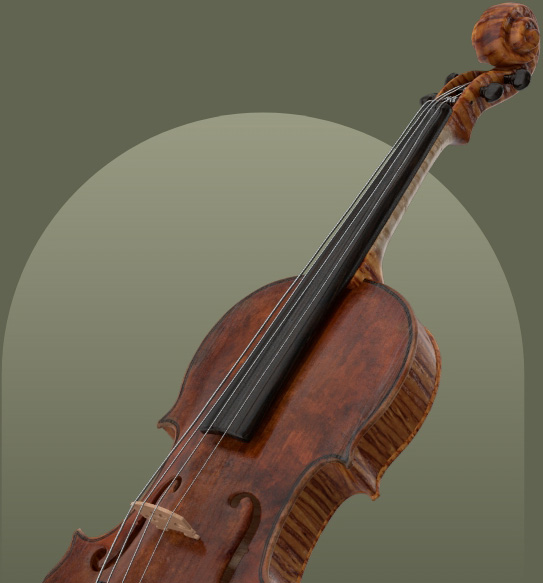
Marcus Snoeck
1694–1762
Marcus Snoeck (1694-1762) was a distinguished luthier from Brussels, Belgium, and the son and pupil of Egidius Snoeck. He succeeded his father as court luthier and was known for his “impressive work” characterized by a high arch and deep red varnish. Active from at least 1726, he also adopted the pseudonym “Broché” and was recognized as a ballet-master and composer. His instruments, including violins, cellos, and double basses, are preserved in institutions such as the Musical Instruments Museum in Brussels and the Snoeck collection in Berlin.
Request an expert valuation or learn how our global auctions achieve the highest prices for your instruments.
Maker Overview
Life
Marcus SNOECK (1694-1762) was born in 1694 and died in 1762 in Brussels, Belgium. He was the son and pupil of Egidius Snoeck, and succeeded him as court luthier. Marcus Snoeck was established at the sign “Au Roi David, près de l’Eglise de St Gery” in Brussels. He is described in contemporary accounts as “faiseur repetitieur et directeur de instruments” as early as 1726, and was also known under the pseudonym “Brochet” or “Broché”, which is the French equivalent of his name and means ‘pike’. He was also a ballet-master and composer. Henri Poidras notes his activity in Brussels circa 1750, while Cecie Stainer indicates he worked in Brussels after 1744. Stainer also mentions an inscription found in a violoncello that had undergone significant repairs, stating: “Cette basse par Marc Snoeck, reparee pour faire voir a ces envieux mon adresse, icy pres de l’Eglise de Saint-Gery a Bruxelles ancien luthier.” This instrument’s original label was dated 1744 by Jean Christophe Vetter of Strasbourg.
Characteristics
- Workmanship
- Marcus Snoeck’s instruments are described as “very good make” by Henri Poidras, and “impressive work” by John Dilworth. Willibald Leo Lütgendorff states that his works “deserve all praise”.
- Characteristics
- His instruments are noted for their high arch and deep red varnish.
- Surviving Instruments
- The Musical Instruments Museum in Brussels holds a violin, four cellos dated from 1718-1753, and a double bass by Marcus Snoeck. A beautiful violoncello from the Snoeck collection is located in Berlin, as is a bass discovered in Northern France, which bears his pseudonym and shop sign.
- Marcus Broché à Bruxelles
Au roy David, l’an 17..John Dilworth
Influence and legacy
- Training: Marcus Snoeck was the son and pupil of Egidius Snoeck.
- Court Appointment: Marcus Snoeck served as luthier to the court.
- Museum Collections: His instruments are preserved in significant collections, including the Musical Instruments Museum in Brussels and the Snoeck collection in Berlin.
Further Information
- Pseudonym: Marcus Snoeck adopted the pseudonym “Broché” or “Brochet”, which is the French equivalent of his name and means ‘pike’.
- Shop Sign: His establishment was known by the sign “Au Roi David, près de l’Eglise de St Gery”.
- Labels: Some labels read “Marcus Broché à Bruxelles / Au roy David, l’an 17..”.
- Repair Inscription: An original inscription from a repaired instrument, shared by Willibald Leo Lütgendorff, reads: “Cette Bas: PAR MARC. SNOECK REPARE POVR FAIER VOIER A CES ENVIEUX. MON ADRESSE EST PRÈS L’EGLISE DE S. GERY A BRVXELLES ANCIEN LUTHIEU. 74.” A slightly varied version is provided by Cecie Stainer.
Biographies
The overview above is drawn from the following published accounts. Read them in the original:
John Dilworth+
SNOECK, Marcus Born 1694, died 1762 Brussels Belgium. Son and pupil of Egidius Snoeck, above. Luthier to the court. Adopted ‘Broché’ (the French equivalent of his name and both meaning ‘pike’ in English) on some labels. Described in contemporary accounts as ‘faiseur repetitieur et directeur de instruments’, as well as ballet-master and composer. Established at the sign ‘Au Roi David, près de l’Eglise de St Gery’. Impressive work; high arch and deep red varnish. A violin, four cellos dated from 1718-1753, and a double bass in the Musical Instruments Museum, Brussels. Marcus Broché à Bruxelles / Au roy David, l’an 17..
Cecie Stainer+
Worked in Brussels after 1744. The following inscription was found written in a violoncello, which had undergone important repairs: ” Cette basse par Marc Snoeck, reparee pour faire voir a ces envieux mon adresse, icy pres de l’Eglise de Saint-Gery a Bruxelles ancien luthier.” There is no date, but what is presumably the original label is dated 1744, viz.: “Jean Christophe Vetter, Strasbourg, 1744.”
Willibald Leo Lütgendorff+
Wahrscheinlich ein Sohn von Egidius Snoeck und dessen Nachfolger als Hof-Lautenmacher. Schon 1726 erscheint er in den Listen als »faiseur répétiteur et directeur des instruments« und gleichzeitig unter seinem Pseudonym Brochet oder Broché als Balletmeister und Componist. Seine Arbeiten verdienen alles Lob; ein schönes Violoncello von ihm findet sich aus der Snoeck’schen Sammlung in Berlin und ebenda ein in Nordfrankreich entdeckter Bass, der sein Pseudonym und das Ladenschild »au roy David « auf dem Zettel nennt. Eine originelle Inschrift aus einem von ihm ausgebesserten Instrument theilt van der Straeten mit: »Cette Bas: PAR MARC. SNOECK REPARE POVR FAIER VOIER A CES ENVIEUX. MON ADRESSE EST PRÈS L’EGLISE DE S. GERY A BRVXELLES ANCIEN LUTHIEU. 74.«
Henri Poidras+
Brussels circa 1750. Son of Egidius. Also known as « Brochet ». Very good make.
Sell your instrument with Amati
Get started by uploading photos of your instrument for our experts to review.
Sell your instrument with Amati
Get started by uploading photos of your instrument for our experts to review.