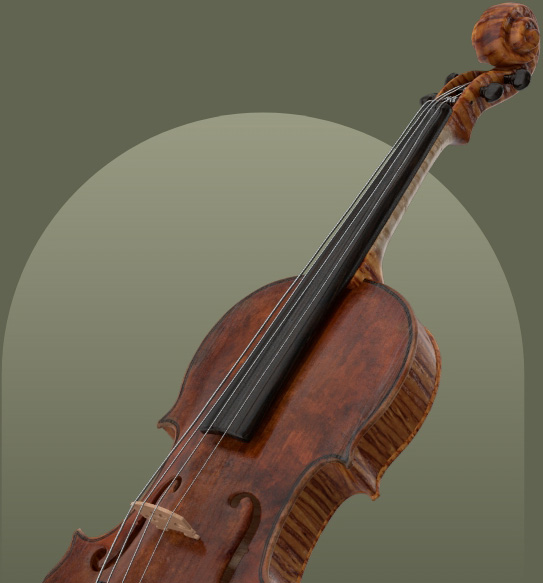
Kaspar Strnad
Prague, 1752–1823
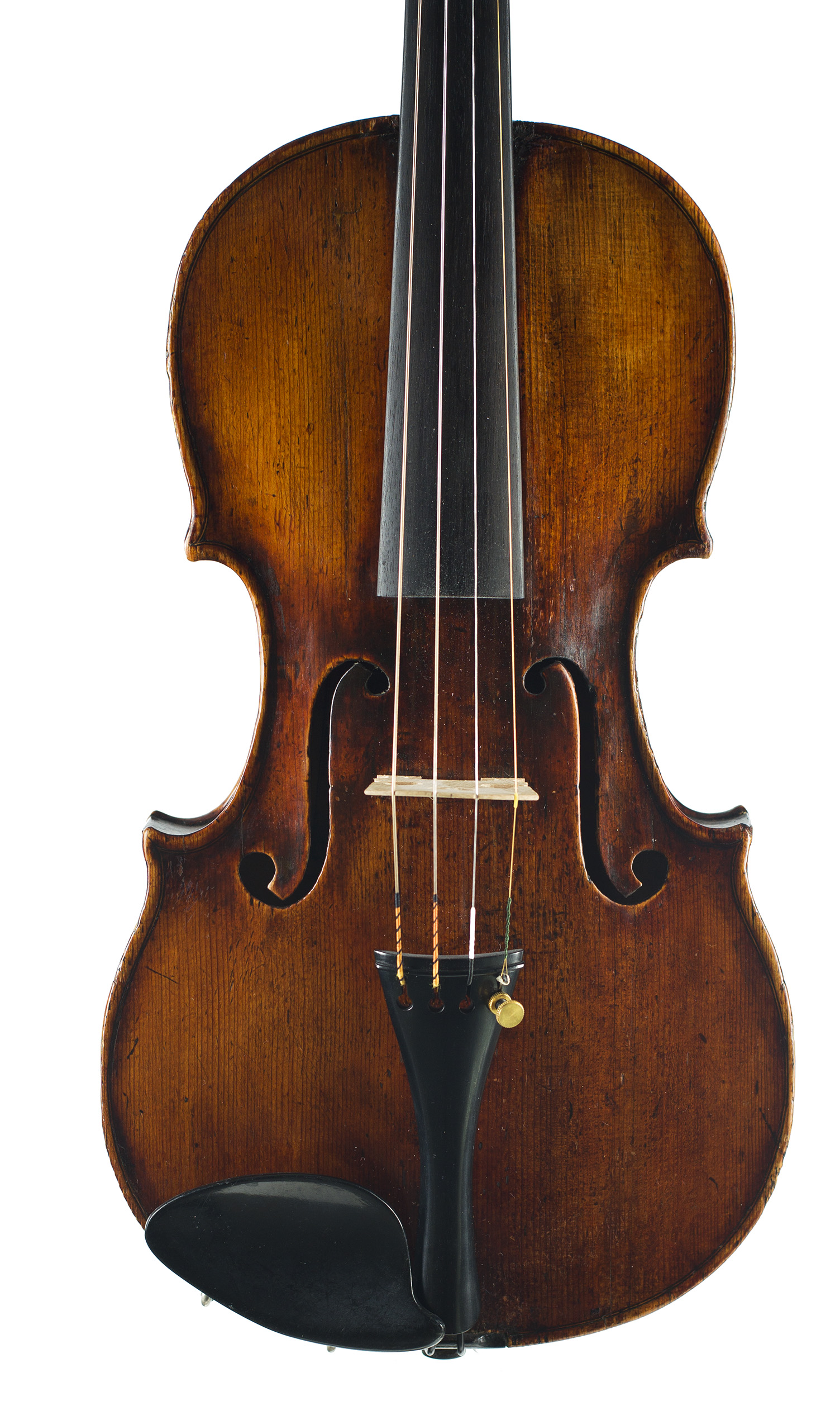
Kaspar Strnad (1752-1823) was a significant violin maker from Prague, Czech Republic, and a pupil of Thomas Hulinzky. He is recognized for being one of the first in the Prague school to adopt the Cremonese form, moving away from the Stainer model towards a large Stradivari pattern with low arching. His instruments, which include violins, violas, cellos, double basses, and highly regarded guitars, are noted for their good workmanship, choice materials, and often a large, noble tone. Strnad's labels were sometimes imitated, and his instruments remain prevalent in Bohemia.
Request an expert valuation or learn how our global auctions achieve the highest prices for your instruments.
Auction Price History
Highest auction price
13 results
| Type | Details | Auction house | Sold | Price |
|---|---|---|---|---|
| Violin | A violin by Casper Strnad, Prague, 1824 Lot 75 | Amati | January 2021 | £4,424est. £ 4,500-5,500 |
| Viola | A viola by Caspar Strnad, Prague, 1815 Lot 220 | Amati | March 2019 | £12,008est. £ 4,000-6,000 |
| Viola | Labelled Caspar Strnad, fecit Praga anno 1784 Lot 35 | — | October 2018 | £5,700est. £ 3,000-5,000 |
| Violin | Labelled Caspar Strnad Prague anno 18... Lot 152 | — | February 2017 | £7,217est. $ 5,000-8,000 |
| Violin | 35.7 cm Prague, 1800 | — | December 2010 | £4,181 |
| Violin | 35.4 cm Prague, 1807 | — | April 2010 | £7,288 |
| Violin | 35.5 cm Probably by | — | June 2009 | £3,905 |
| Viola | 39.0 cm Prague, 1790 | — | March 2008 | £3,218 |
| Violin | Prague, early 19th C. | — | May 2005 | £3,663 |
| Violin | 1820 c. | — | November 1998 | £6,900 |
| Violin | 1812 | — | November 1987 | £2,750 |
| Violin | 1812 | — | June 1984 | £2,852 |
| Violin | 1803 | — | September 1982 | £1,760 |
No results match those filters.
Maker Overview
Life
Kaspar Strnad (1752-1823) was born in 1752 and died in 1823 in Prague, Czech Republic's The Brompton's Book of Violin & Bow Makers. His baptism was witnessed by the violin maker Joh. Hellmer in Die Geigen- und Lautenmacher vom Mittelalter bis zur Gegenwart. Strnad was a pupil of Thomas Hulinzky, a fact corroborated by Dilworth, Lütgendorff, and Cecie Stainer's A Dictionary of Violin Makers. On September 13, 1787, he married Margarethe Chalipar from Strakonic, who was born on July 13, 1758. He acquired citizenship in 1791 and resided at Neustadt No. 761, which is now Jungmannovo nám. From 1811 to 1823, he served as the head of the violin makers' guild and was a sworn expert.
Characteristics
- Workmanship
- Kaspar Strnad's instruments are characterized by good make's Critical & Documentary Dictionary Of Violin Makers Old & Modern. John Dilworth describes his workmanship as notable, while Cecie Stainer notes his violins and violoncellos show good work.
- Model and Arching
- He generally worked on a large Stradivari pattern with low arching, full to the edges, as detailed by John Dilworth. Willibald Leo Lütgendorff states that Strnad worked very precisely after Stradivari, utilizing a flat-arched top and strong wood. Lütgendorff also highlights that Strnad was the first Prague violin maker to abandon the highly arched Stainer model in favor of classical Italian forms.
- Soundholes
- His instruments feature small sound holes. John Dilworth adds that the soundholes are frequently set low on the body, recalling Bergonzi in style and disposition. Lütgendorff describes them as pretty, small F-holes.
- Scroll
- John Dilworth notes that Strnad retained a Stainer model for the scroll.
- Varnish
- Sources contain conflicting information regarding the varnish. Henri Poidras describes it as an "unpleasant looking red varnish." John Dilworth, however, states the varnish is "well-coloured in appropriate shades, transparent and refractive." Willibald Leo Lütgendorff mentions an "often wonderful rother Öllack" (red oil varnish) that was "nur manchmal nicht durchsichtig genug ist" (only sometimes not transparent enough). Cecie Stainer describes the varnish as a "yellow-chestnut colour."
- Materials
- The materials used were usually of choice quality.
- Tone
- Lütgendorff notes that his instruments possess a large, noble tone, and even his inferior instruments still had a good tone.
- Instruments Produced
- Kaspar Strnad produced violas, cellos, double basses, and guitars. Lütgendorff and Stainer specifically mention his excellent guitars.
- Labels
- He used various labels, sometimes with emblems, and occasionally included numbers that applied only to the specific year, not consecutively. Examples of his labels include "Caspar Strnad / Fecit Pragae Anno 1807," "Casper Strnad / Fecit Prague Anno 1781" (Dilworth), and "Caspar Strnad fecit Pragae, anno 1789" (Stainer). His label was often imitated in commercial factory-made instruments.
- Caspar Strnad
Fecit Pragae Anno 1807John Dilworth - Casper Strnad
Fecit Prague Anno 1781John Dilworth
Influence and legacy
- Mentorship: Kaspar Strnad was a pupil of Thomas Hulinzky, as confirmed by John Dilworth, Willibald Leo Lütgendorff, and Cecie Stainer.
- School/Tradition: He was one of the first members of the Prague school to adopt the Cremonese form. Willibald Leo Lütgendorff further emphasizes that Strnad was the first Prague violin maker to abandon the highly arched Stainer model and embrace the classical Italian style.
- Prevalence: Kaspar Strnad's instruments are admired in Bohemia, where they are not scarce. Willibald Leo Lütgendorff notes that his violins are still common in Bohemia, with the Braunau Abbey Church possessing one from 1791.
Further Information
- Workshop Location: Kaspar Strnad resided at Neustadt No. 761, which is now known as Jungmannovo nám., as documented by Willibald Leo Lütgendorff.
Biographies
The overview above is drawn from the following published accounts. Read them in the original:
John Dilworth+
STRNAD, Kaspar Born 1752, died 1823 Prague Czech Republic. Pupil of T. Hulinzky. Notable workmanship; one of the first of the Prague school to adopt the Cremonese form and worked generally on a large Stradivari pattern with low arching, full to the edges. Retained a Stainer model for the scroll. Soundholes frequently set low on the body, recalling Bergonzi in style and disposition. Materials usually of choice quality. Varnish well-coloured in appropriate shades, transparent and refractive. Violas, cellos, double basses, and guitars all recorded and extant. Label often imitated in commercial factory-made instruments. Caspar Strnad / Fecit Pragae Anno 1807 Casper Strnad / Fecit Prague Anno 1781
Cecie Stainer+
b. 1752 at Prague; d, 1823. Was a pupil of Hulinski, a maker in Prague. His violins and violoncellos show good work, the sound-holes are generally small and well-cut, the varnish a yellow-chestnut colour; his guitars also were much liked. Label : ” Caspar Strnad fecit Pragae, anno 1789.”
Willibald Leo Lütgendorff+
Schon bei seiner Taufe finden wir den Geigenmacher Joh. Hellmer als Zeugen. Er wurde Schüler von Thomas Hulinzky und heirathete am 13. September 1787 Margarethe Chalipar aus Strakonic (geb. 13. Juli 1758); 1791 erwarb er das Bürgerrecht, wohnte auf der Neustadt No. 761 (jetzt Jungmannovo nám.) und war von 1811—1823 Obervorsteher der Geigenmacherzunft und beeideter Sachverständiger. Er arbeitete sehr genau nach Stradivari (grosses Format, aber nicht nach der Form, flachgewölbte Decke, starkes Holz, oft wunderbarer rother Öllack, der nur manchmal nicht durchsichtig genug ist, grosser, edler Ton, hübsche, kleine F-Löcher). C. Strnad war der erste Prager Geigenmacher, der das hochgewölbte Stainer-Modell aufgab und sich den classischen Italienern zuwandte; er machte auch treffliche Guitarren. Neben seinen guten Geigen kommen auch minderwerthige vor, deren Ton immerhin noch recht gut ist. Er verwendete verschiedene Zettel mit allerlei Emblemen; manchmal tragen die Zettel auch Nummern, die aber nicht durchlaufend zu verstehen sind, sondern nur für das jeweilige Jahr gelten. Geigen von ihm kommen in Böhmen noch häufig vor; die Braunauer Stiftskirche besitzt eine solche aus dem Jahre 1791.
Henri Poidras+
Prague 1752-1823. Good make. Large flat model. Unpleasant looking red varnish. Small sound holes. His instruments are admired in Bohemia where they are not scarce.
Sell your instrument with Amati
Get started by uploading photos of your instrument for our experts to review.
Sell your instrument with Amati
Get started by uploading photos of your instrument for our experts to review.