Bela Szepessy
London, 1856–1925
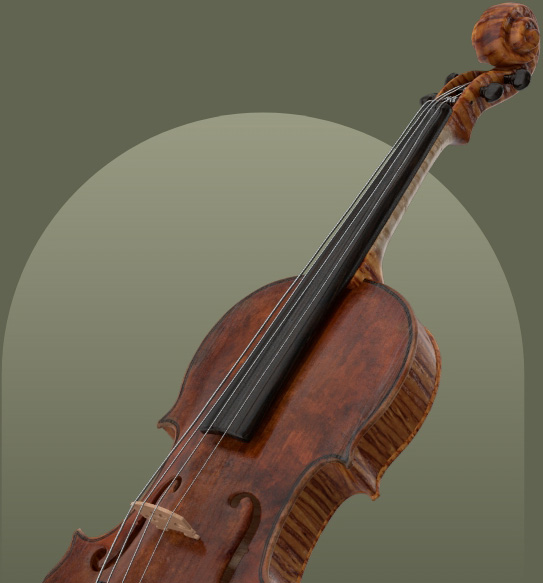
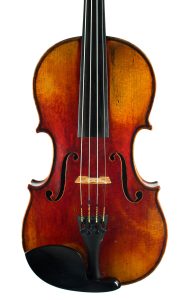
Bela Szepessy (1856-1925) was a Hungarian luthier known for his fine craftsmanship and instruments made after classical Cremonese models. He apprenticed with A. Engleder and S. Nemessányi before working in Vienna and Munich, eventually establishing his own workshop in London in 1881, where he was most productive. His work featured distinctive interior details, rich oil varnish, and instruments that garnered praise for their sound qualities, though sources conflict on whether he accepted exhibition prizes.
Request an expert valuation or learn how our global auctions achieve the highest prices for your instruments.
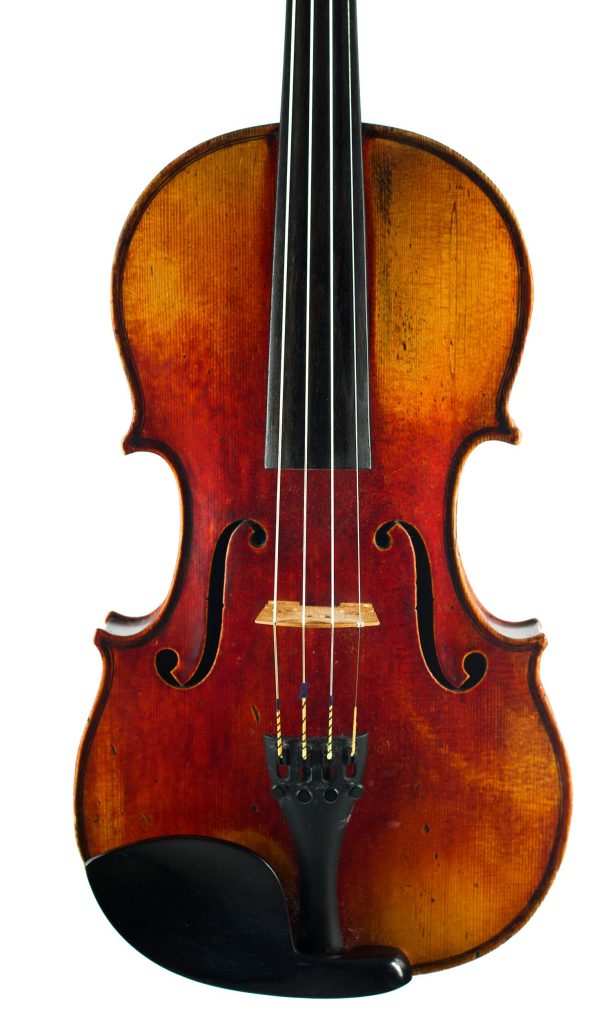
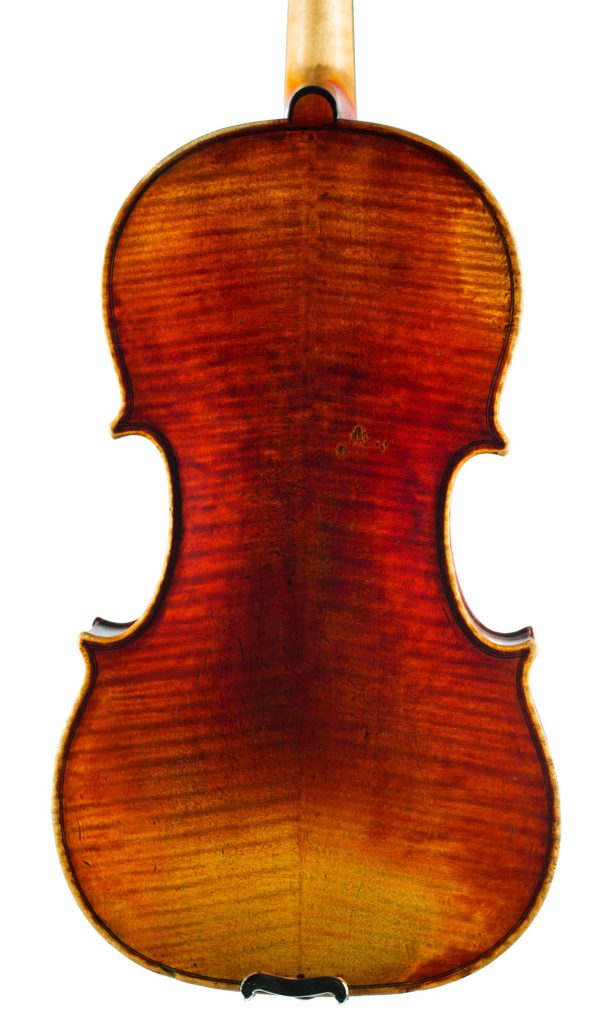
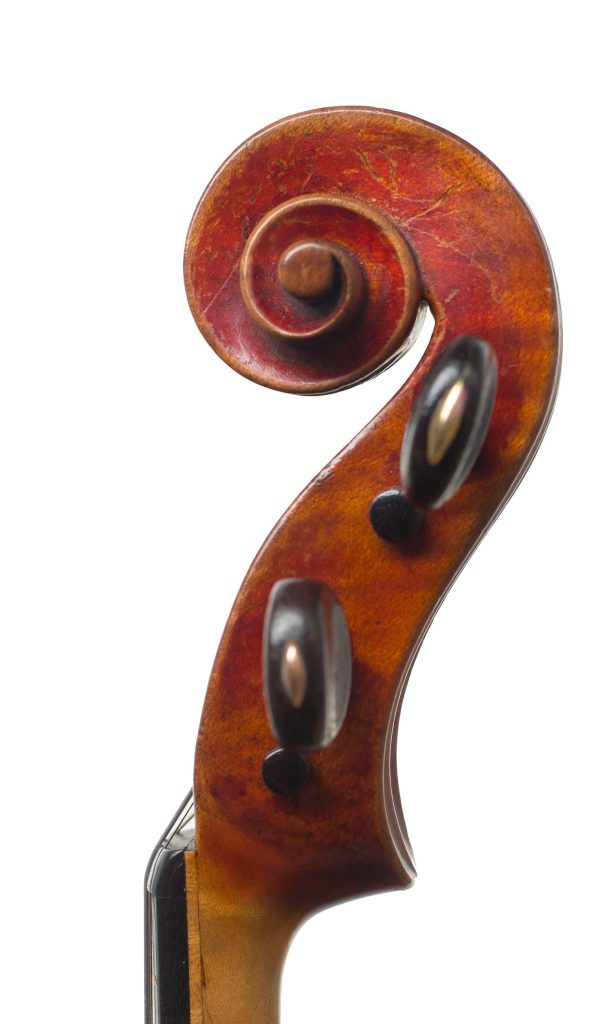
Instruments
Auction Price History
Highest auction price
49 results
| Type | Details | Auction house | Sold | Price |
|---|---|---|---|---|
| Violin | Labelled Szepessy Béla, London 1917, N. 225. SZB, inscribed Szepessy Béla London 1917, N 225 Lot 105 | Tarisio | March 2023 | £27,353est. $ 10,000-15,000 |
| Violin | A violin by Szepessy Bela, London, 1914 Lot 167 | Amati | June 2021 | £8,848est. £ 8,500-12,000 |
| Violin | Labelled Szepessÿ Béla London 1910 No 192, inscribed to the inside back S. B. 1910 Lot 76 | Tarisio | March 2021 | £12,253est. $ 10,000-15,000 |
| Violin | Labelled Szepessy Béla London 1888 N° 36, inscribed internally Szepessy Béla London 1888 No 36 Lot 186 | Ingles & Hayday | October 2020 | £9,600est. £ 8,000-12,000 |
| Violin | Labelled Szepessÿ Béla, London 1910, No 192, inscribed to the inside back S. B. 1910 Lot 22 | Tarisio | July 2020 | £9,600est. £ 8,000-12,000 |
| Violin | Labelled Szepessy Béla, London 1917, n 225, inscribed to the inside Szepessy Béla, London 1917, n 225 Lot 209 | Tarisio | March 2020 | £10,030est. £ 8,000-12,000 |
| Violin | Labelled Szepessy Bela, London 1919, Sz. B. No. 229 Lot 291 | Brompton’s | March 2020 | £7,800est. £ 6,000-10,000 |
| Violin | Labelled Szepessÿ Béla, London 1898, no 123, inscribed to the inside back Szepessÿ Béla, London 1898 ... Lot 187 | Tarisio | October 2019 | £9,600est. £ 8,000-12,000 |
| Violin | Labelled This instrument is the property of The Benslow Instrument Loan Scheme and was donated by ... Lot 2456 | Gardiner Houlgate | September 2019 | £9,600est. £ 8,000-12,000 |
| Viola | Maurice Vieux collection, bearing the maker's label n. 3 and signature Lot 60 | Vichy | December 2018 | £18,172est. € 12.000-15.000 |
| Violin | Two-piece back of faint broad curl, varnish of a reddish brown colour on a golden ground Lot 113 | Gardiner Houlgate | October 2018 | £11,400est. £ 4,000-6,000 |
| Violin | Labelled Szepessy Béla, London 1914, No 212, inscribed Szepessy Béla, London 1914, No 212 Lot 158 | Tarisio | June 2018 | £11,400est. £ 8,000-12,000 |
| Violin | Labelled Szepessy Béla, London 1894., No. 93 Lot 211 | Tarisio | October 2015 | £13,226est. $ 12,000-18,000 |
| Violin | Lot 220 | Bonhams | May 2014 | £10,000 |
| Violin | After del Gesù, labelled Szepessy Bela, London, 1889, No. 52, of a red golden brown colour Lot 220 | Bonhams | May 2014 | £10,000est. £ 8,000-10,000 |
| Violin | Bearing the original label Lot 94 | Brompton’s | December 2013 | £13,200est. £ 7,000-10,000 |
| Violin | 35.7 cm Possibly by | — | December 2010 | £3,360 |
| Violin | 36.0 cm London, 1889 n°61 Probably by | — | June 2010 | £3,840 |
| Violin | 35.6 cm London, 1923 n°251 | — | March 2009 | £2,500 |
| Violin | 35.3 cm London, 1922, after "Guarneri" | — | October 2008 | £2,750 |
| Violin | 35.6 cm London, 1883 Attributed to | — | June 2008 | £960 |
| Viola | 41.2 cm London, 1889 | — | March 2008 | £14,900 |
| Violin | London, 1912 #316 | — | November 2005 | £2,369 |
| Violin | London, 1914 | — | November 2005 | £5,760 |
| Violin | London, 1911 Ascribed to | — | March 2005 | £1,080 |
| Violin | London, 1916 | — | July 2004 | £1,195 |
| Violin | London, 1888 #35 | — | July 2004 | £5,975 |
| Violin | 1888 | — | March 2002 | £4,800 |
| Violin | 1916 | — | March 2002 | £2,250 |
| Violin | 1903 | — | March 2001 | £4,112 |
| Violin | 1888 | — | March 2000 | £4,370 |
| Violin | 1902 | — | May 1999 | £4,925 |
| Violin | 1885 | — | October 1998 | £5,290 |
| Violin | 1890 | — | September 1998 | £3,220 |
| Violin | 1883 | — | November 1997 | £1,840 |
| Violin | 1889 | — | November 1996 | £2,875 |
| Violin | 1889 | — | June 1996 | £3,680 |
| Violin | 1922 | — | November 1995 | £3,220 |
| Violin | 1897 | — | February 1995 | £4,715 |
| Violin | 1919 | — | December 1994 | £3,450 |
| Violin | 1885 | — | November 1994 | £5,520 |
| Violin Bow | S/T 58 g. | — | November 1994 | £460 |
| Violin | 1895 | — | June 1994 | £6,325 |
| Violin Bow | S/T 58 g. | — | June 1994 | £690 |
| Violin | 1903 | — | October 1993 | £5,520 |
| Violin | 1886 | — | April 1993 | £3,450 |
| Violin | 19-- | — | November 1992 | £4,400 |
| Violin Bow | S/T 58 g. | — | November 1991 | £990 |
| Violin Bow | S/T | — | November 1987 | £880 |
No results match those filters.
Maker Overview
Life
Bela Szepessy (1856-1925) was born in Budapest, Hungary, in 1856 and died in Tyrol in 1925. He was apprenticed to A. Engleder and S. Nemessányi from 1868 to 1874. Following his apprenticeship, he worked for T. Zach in Vienna from 1874 to 1879. He was possibly in Munich from 1879 to 1881 before coming to London via Brussels in 1881, where he opened his own workshop. His earliest known work dates from 1874, and his most productive period was spent in London from 1882 to 1916 and retired to Tyrol in 1921 due to failing health.
Characteristics
- Craftsmanship
- He exhibited extremely fine craftsmanship on accurately observed classical models, producing instruments that Henri Poidras noted were "a little massive but well effected" and possessed "real sound qualities."
- Varnish
- Szepessy used aged and shaded varnish in appropriate colors, characterized by great depth and richness. Willibald Leo Lütgendorff further details that he employed a self-made, soft oil varnish, created by mixing resin, a golden-yellow color, and a transparent red.
- Models
- He primarily worked after the models of the Cremonese masters, mainly Stradivari, sometimes Guarneri, and only in isolated cases after Niccolò Amati.
- Construction Details
- His distinctive interior work included dark hardwood linings inserted into both sides of the corner blocks with a shallow point. He also strengthened the top at the upper and lower blocks.
- Instrument Types
- He made violas on large models with high ribs. By 1900, he had produced 160 violins, 6 violas, and 3 violoncellos, though John Dilworth notes that "No cellos presently known."
- Labeling
- His instruments were signed internally, and labels were numbered up to 218 by 1916. An example label reads "Szeppessy Béla Sz. B. / London 1885 no.14."
- Szeppessy Béla Sz. B.
London 1885 no.14John Dilworth
Influence and legacy
- Apprenticeship: Bela Szepessy was apprenticed to A. Engleder and Samuel Nemessányi from 1868 to 1874.
- Recognition: Henri Poidras states that his many instruments brought him several prizes at Exhibitions. However, Willibald Leo Lütgendorff reports that Szepessy declined numerous offers of awards and medals.
- Reputation: Artists generally agreed that his instruments possessed real sound qualities. He achieved good average prices for his violins.
- Philosophy: Despite his high esteem for the old masters, whom he studied in detail, Szepessy was convinced that a new violin made of good and healthy wood could equal an old one in tone and should be preferred.
Further Information
- Work Locations: After his apprenticeship, he worked for T. Zach in Vienna from 1874 to 1879. He was possibly in Munich from 1879 to 1881 before establishing his own workshop in London in 1881.
- Production Numbers: By 1900, he had produced 160 violins, 6 violas, and 3 violoncellos. His labels were numbered up to 218 by 1916.
Biographies
The overview above is drawn from the following published accounts. Read them in the original:
John Dilworth+
SZEPESSY, Béla Born 1856 Budapest Hungary, died 1925 Tyrol Apprenticed to A. Engleder and S. Nemessányi 1868-1874. Worked for T. Zach in Vienna 1874-1879. Possibly in Munich 1879-1881 and came to London via Brussels in 1881. Earliest work from 1874 and most productive period spent in London 1882-1916. Retired to the Tyrol 1921 with failing health. Extremely fine craftsmanship on accurately observed classical models. Aged and shaded varnish in appropriate colours and of great depth and richness. Distinctive interior work with dark hardwood linings inserted into both sides of the corner blocks with a shallow point. Violas on large models with high ribs. No cellos presently known. Signed internally. Labels numbered up to 218 in 1916. Szeppessy Béla Sz. B. / London 1885 no.14
Willibald Leo Lütgendorff+
Schüler von Samuel Nemessányi, bei dem er von 1868—1874 lernte. Er arbeitete hierauf fünf Jahre lang bei Zach in Wien, von 1879—1881 in München und ging dann nach London, wo er seine eigene Werkstatt eröffnete. Er arbeitet hauptsächlich nach Stradivari, zuweilen auch nach Guarneri und nur in vereinzelten Fällen nach Nic. Amati. Er nimmt die Decke jedoch am oberen und unteren Klotz stärker im Holz und verwendet einen selbst verfertigten, weichen Öllack, zu dem er Harz, goldgelbe Farbe und ein durchsichtiges Roth mischt. Bis 1900 hatte er 160 Geigen, 6 Violen und 3 Violoncelli hergestellt. Für seine Geigen erzielt er durchschnittlich gute Preise. Auszeichnungen und Medaillen, die man ihm mehrfach angeboten hat, lehnte er ab. Bei aller Hochschätzung für die alten Meister, die er eingehend studirte, ist er doch der Überzeugung, dass eine aus gutem und gesundem Holz gemachte neue Geige einer alten im Tone gleichkommen und ihr vorgezogen werden muss.
Henri Poidras+
London. A native of Budapest, where he was born in 1856. Make a little massive but well effected. Artists agree that his instruments possess real sound qualities. Made after the models of the Cremonese masters, his many instruments have brought him several prizes at Exhibitions.
Sell your instrument with Amati
Get started by uploading photos of your instrument for our experts to review.
Sell your instrument with Amati
Get started by uploading photos of your instrument for our experts to review.