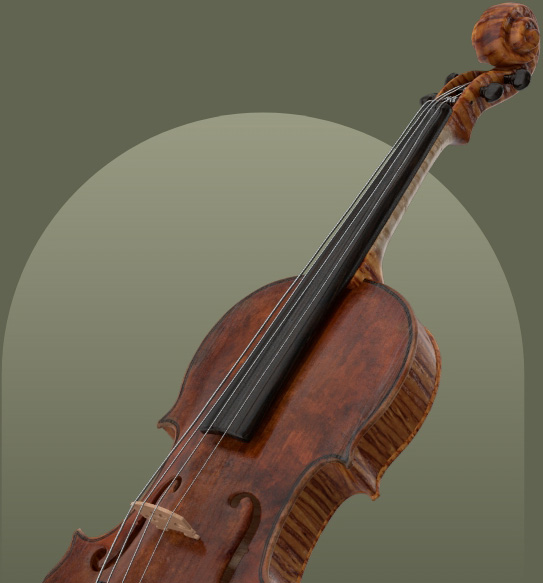
Louis Emile Jerome Thibouville
1833–1902
Louis Emile Jerome Thibouville (1833-1902) was a significant French entrepreneur and businessman from a family of instrument makers. He was instrumental in consolidating Mirecourt's instrument-making industry, notably forming 'Jérôme Thibouville-Lamy' (J.T.L.) in 1861 after his marriage to Marguerite Hyacinthe Lamy. This highly successful company became renowned for producing a wide range of stringed instruments, including 30,000 to 40,000 violins annually, and was recognized with numerous awards and medals from international exhibitions. Thibouville himself was honored as a Chevalier of the Legion of Honour in 1877. The J.T.L. company continued to operate for over a century, extending its legacy into the 21st century.
Request an expert valuation or learn how our global auctions achieve the highest prices for your instruments.
Maker Overview
Life
Louis Emile Jerome Thibouville (1833-1902) was born in Mouttes and died in Mirecourt, France. He descended from a long family line of woodwind and brass instrument makers in La Couture Boussey. Thibouville worked in Mirecourt and Paris as an entrepreneur and businessman, bringing together the Mirecourt companies of Husson and Buthod under the name Husson-Buthod-Thibouville in 1857. After his marriage to Marguerite Hyacinthe Lamy, a cousin of both Charles-Claude Husson and Charles Buthod, in 1861, the company became 'Jérôme Thibouville-Lamy' (or 'J.T.L.'), as detailed by John Dilworth in The Brompton's Book of Violin & Bow Makers. This highly successful business united the workshops of Mirecourt to produce instruments of various grades but consistent quality, attracting workmen from many ateliers across Europe to perfect their skills. From 1870, bow making was directed by J. Martin. Thibouville himself was made a Chevalier of the Legion of Honour in 1877. In 1889, Alexandre Alfred Acoulon joined the firm, becoming the sole head from 1896 to 1908. He was later joined by H. E. Blondelet and Alfred Etienne Acoulon (son of Alexandre Alfred); these three took charge until the early death of Blondelet in 1928. The company continued into the 21st century, operating in France up to the death of its last director André Chevrier in 1968, and thereafter in England as instrument wholesalers and suppliers to luthiers, now based in Essex, UK.
Characteristics
- Instrument Production
- The Jérôme Thibouville-Lamy company produced a great variety of violins, violas, cellos, and basses, often bearing the names of great classical masters.
- Grades
- Instruments were categorized into grades such as 'Médio-Fino' or 'Compagnon'.
- Bow Making
- From 1870, bow making within the company was directed by J. Martin.
- Manufacturing Scale
- in Die Geigen- und Lautenmacher vom Mittelalter bis zur Gegenwart, the factory produced all sorts of instruments, including barrel organs, automatons, and strings, with an annual output of 30,000 to 40,000 violins based on all common models.
- Branding
- Instruments were internally branded with 'Thibouville-Lamy, T & L' or 'J.Thibouville-Lamy D'après Stradivarius'.
- The company continues into the 21st century: in France up to the death of its last director André Chevrier in 1968 and thereafter in England as instrument wholesalers and suppliers to luthiers, now based in Essex, UK. Branded internally: ‘Thibouville-Lamy, T & L’ Thibouville-Lamy 70 rue Réaumur Paris 1886John Dilworth
- D’après Stradivarius
J.Thibouville-LamyJohn Dilworth
Influence and legacy
- Family Connections: His marriage to Marguerite Hyacinthe Lamy, a cousin of both Charles-Claude Husson and Charles Buthod, was instrumental in the formation of the 'Jérôme Thibouville-Lamy' company.
- Workshop Integration: The company's model involved bringing together the workshops of Mirecourt, fostering an environment where workmen from various European ateliers could perfect their skills.
- Exhibitions and Awards: The company exhibited in Vienna in 1873 and won many medals and awards elsewhere. Lütgendorff notes that the factory possessed medals from all major exhibitions since 1862.
- Personal Recognition: Louis Emile Jerome Thibouville was made a Chevalier of the Legion of Honour in 1877.
- Company Longevity: The Jérôme Thibouville-Lamy company continued its operations into the 21st century, first in France until 1968, and subsequently in England as instrument wholesalers and suppliers.
Further Information
- Workshop Location: The company's Paris address in 1886 was 70 rue Réaumur.
- Workforce: According to Willibald Leo Lütgendorff, the factory employed 600 workers.
Biographies
The overview above is drawn from the following published accounts. Read them in the original:
John Dilworth+
THIBOUVILLE, Louis Emile Jérôme Born 1833 Mouttes, died 1902 Mirecourt France. Descended from a long family line of woodwind and brass instrument makers in La Couture Boussey. Worked in Mirecourt and Paris as an entrepreneur and business man, bringing together the Mirecourt companies of Husson and Buthod under the name Husson-Buthod-Thibouville in 1857. After his marriage to Marguerite Hyacinthe Lamy, a cousin of both Charles-Claude Husson and Charles Buthod in 1861, the company became ‘Jérôme Thibouville-Lamy’ (or ‘J.T.L.’). This highly successful business brought the workshops of Mirecourt together to produce instruments of various grades but consistent quality where workmen came from many ateliers across Europe to perfect their skills. From 1870 bow making was directed by J. Martin. Names of all the great classical masters were given to the great variety of violins, violas, cellos, and basses in grades referred to as ‘Médio-Fino’ or ‘Compagnon’. Exhibited in Vienna in 1873 and won many medals and awards elsewhere. Thibouville himself made a Chevalier of the Legion of Honour in 1877. In 1889 Alexandre Alfred Acoulon joined the firm, becoming the sole head from 1896-1908. Joined by H. E. Blondelet and Alfred Etienne Acoulon (son of Alexandre Alfred); these three took charge until the early death of Blondelet in 1928. The company continues into the 21st century: in France up to the death of its last director André Chevrier in 1968 and thereafter in England as instrument wholesalers and suppliers to luthiers, now based in Essex, UK. Branded internally: ‘Thibouville-Lamy, T & L’ Thibouville-Lamy 70 rue Réaumur Paris 1886 D’après Stradivarius / J.Thibouville-Lamy
Willibald Leo Lütgendorff+
Besitzer einer der ältesten (gegr. 1790) und jetzt wohl der bedeutendsten Musikinstrumentenfabrik Mirecourts, die alle Sorten Instrumente, selbst Drehorgeln, Automaten und Saiten, herstellt, darunter jährlich an 30—40 000 Geigen nach allen gangbaren Modellen. Die Fabrik beschäftigt 600 Arbeiter und besitzt von allen grossen Ausstellungen seit 1862 Medaillen. J. Thibouville-Lamy’s Theilhaber ist Alfred Acoulon; beide sind Ritter der Ehrenlegion etc. Die Geigen zeigen eine Brandmarke: T. & L.
Sell your instrument with Amati
Get started by uploading photos of your instrument for our experts to review.
Sell your instrument with Amati
Get started by uploading photos of your instrument for our experts to review.