James Whitelaw
1852–1904
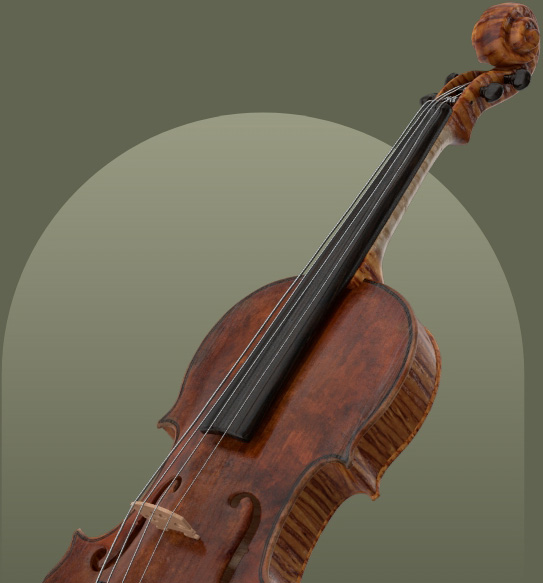
James Whitelaw (1852-1904) was a Scottish chemist, born in Johnstone and active in Glasgow, who became celebrated not as a violin maker, but as the discoverer and manufacturer of a highly popular and influential violin varnish. His 'Cremona Amber Oil Varnish', patented and initially sold by Kohler & Son, was developed after a revelatory dream in 1886 that guided his research into dissolving amber using lead and lime. This varnish, known for its lustrous and transparent qualities and available in nine colors, significantly aided violin makers in finishing their instruments and earned Whitelaw an honorable place in the history of violin making.
Request an expert valuation or learn how our global auctions achieve the highest prices for your instruments.
Maker Overview
Life
James WHITELAW (1852-1904) was born in Johnstone and died in Glasgow, Scotland, UK. Although not a violin maker himself, he was a chemist renowned as the discoverer and manufacturer of a highly regarded violin varnish. in British Violin Makers, Whitelaw's diligent research and hard labor made it possible for many amateur and professional makers to finish their instruments beautifully. His address was 496 St. George's Road, Glasgow. The discovery of his varnish was notably inspired by a vivid dream on the last Sunday morning of February 1886, where he envisioned an old-fashioned kitchen with violins and a majestic man who revealed secrets about Cremona varnish, including the use of "lead and lime" as solvents for amber. This dream, as quoted by William C. Honeyman in his Scottish Violin-Makers, p. 98, spurred Whitelaw to his shop at 7 a.m. to experiment. By 8:30 a.m., he had successfully dissolved amber without chemical disintegration. However, transforming this discovery into a working varnish took considerable effort, requiring a full year before he had varnish to try on a violin and nearly three years before a bottle was ready for sale. John Dilworth, in The Brompton's Book of Violin & Bow Makers, notes that his varnish was patented as 'Cremona Amber Oil Varnish' and proved very popular. Initially sold by Kohler & Son, all remaining stock was purchased by J. W. Briggs upon Whitelaw's death in 1904.
Characteristics
- Varnish Discovery
- James Whitelaw's primary craft was the development and manufacture of a celebrated violin varnish, which he patented as 'Cremona Amber Oil Varnish'.
- Composition
- The varnish was based on the dissolution of amber, with "lead and lime" identified as key solvents, a detail revealed to him in a dream.
- Characteristics
- William Meredith Morris describes the varnish as "equally lustrous and transparent in all the colours," making it difficult to conceive of a more beautiful varnish.
- Color Range
- Whitelaw produced his varnish in nine distinct colors: pale amber yellow, dark amber yellow, dark ruddy brown, orange, orange red, dark orange red, "Amati," pale ruby, and dark ruby.
- Texture
- John Dilworth notes that the varnish generally results in "a rather dry crackled texture."
Influence and legacy
- Inspirational Dream: The pivotal influence on James Whitelaw's discovery of his varnish was a vivid dream in February 1886, which provided specific insights into the nature of Cremona varnish and its solvents.
- Literary Citation: His own account of this discovery was quoted by Mr. William C. Honeyman in his work, Scottish Violin-Makers, on page 98.
- Impact on Makers: Whitelaw's varnish significantly impacted the violin-making community, enabling many to achieve a high-quality finish on their instruments and even inducing some amateurs to take up the craft.
- Popularity: His 'Cremona Amber Oil Varnish' gained considerable popularity among violin makers in the UK and beyond.
- Posthumous Sales: Following his death in 1904, the remaining stock of his varnish was acquired by J. W. Briggs, indicating its continued demand.
- Artistic Recognition: William Meredith Morris describes Whitelaw as a gentleman of high artistic tastes and an art critic of recognized authority, claiming an honorable place for him in any dictionary of violin makers.
Biographies
The overview above is drawn from the following published accounts. Read them in the original:
John Dilworth+
WHITELAW, James Born 1852 Johnstone, died 1904 Glasgow, Scotland UK. Chemist who developed a violin varnish patented as ‘Cremona Amber Oil Varnish’ which proved very popular with violin makers in the UK and beyond. Initially sold by Kohler & Son, all remaining stock was purchased by J. W. Briggs on Whitelaw’s death in 1904. Various shades available; all generally result in a rather dry crackled texture. [Rattray]
William Meredith Morris+
496 St. George’s Road, Glasgow. He is not a violin-maker, but he is the discoverer and manufacturer of the finest violin varnish on the market to-day, and as such he claims an honourable place in any dictionary of violin-makers. As in the case of Mr. Edward Heron- Allen, so in the present one, although Mr. Whitelaw does not make violins himself, still he has made it possible for others to make them. There are many amateur, and not a few professional, makers to-day who would never be able to finish their instruments as they do were it not for the diligent research and hard labour of this chemist. It is within my knowledge that many have been induced to take up the gouge mainly because there was within their reach a beautiful varnish at a moderate cost. I am not going to discuss the merits of the varnish here, as I have already done so, but it is necessary to give a short account of its discovery. I cannot do better than give the words of the discoverer himself, as quoted by Mr. William C. Honeyman in his ” Scottish Violin-Makers,” p. 98. He says : — “I was lying in bed on the last Sunday morning of February 1886, about five o’clock, I think. Whether I was asleep or awake I could never be certain. Suddenly my bedroom seemed transformed into an old-fashioned-looking kitchen, in which was a large dresser with a lighted candle at one end. Above the dresser, instead of crockery and household odds and ends, there were rows of fiddles hanging on the wall. While I was looking at this display of fiddles, a very tall and majestic man came into the kitchen. He had on a little round white cap and a white leather apron, his hair was nearly white, and in little crisp curls. He had beautiful grey eyes, and a very pleasant expression. He spoke to me, and I asked him about the violins on the wall. He said they had all been made in Cremona, and among other things told me about the varnish being a secret. ” He now took down a violin from the wall, and, having removed the candle to the middle of the dresser, he held the violin up behind the flame at an angle of about forty-five degrees, and, moving it from side to side, he asked me if I could see the beautiful satin-like glint which followed the candle flame. I said — ‘ Yes.’ ‘ Well ! ‘ he said, ‘ that is a peculiarity of the varnish.’ After some further conversation I asked him if amber was used in making the varnish. He said — ‘It is amber varnish, and the solvents are lead and lime.’ Just at that moment the vision disappeared, and I awakened and found that during the awakening ‘ lead and lime,’ by some mysterious process, had in my mind become converted into two quite different substances. Impelled by curiosity I got up at once, and hurried to my shop. It was now 7 a.m. I hastily fitted together some odd pieces of apparatus sufficient for the experiment, and before 8.30 I had the satisfaction of knowing that I could dissolve amber without chemical disintegration. ” From the foregoing it can be seen that I had really very little to do with the discovery, and I cannot claim much credit on that point ; but, as I found out afterwards, it is one thing to dissolve amber but quite another matter to make it into a working varnish. It was fully a year before I had varnish to try on a violin, and nearly three years before I had a bottle ready for sale, so that the discovery was not completed without a considerable amount of trouble and anxiety.” Mr. Whitelaw makes his varnish in nine different colours, viz. pale amber yellow, dark amber yellow, dark ruddy brown, orange, orange red, dark orange red, ” Amati,” pale ruby, and dark ruby. It is equally lustrous and transparent in all the colours, and it is difficult to conceive how a more beautiful varnish can ever be made. Mr. Whitelaw is a gentleman of high artistic tastes, and an art critic of recognised authority.
George Hart+
Zwar kein Geigenmacher, aber der Hersteller eines sehr guten, in England viel angewendeten Geigenlacks.
Sell your instrument with Amati
Get started by uploading photos of your instrument for our experts to review.
Sell your instrument with Amati
Get started by uploading photos of your instrument for our experts to review.