Henry Whiteside
1749–1824
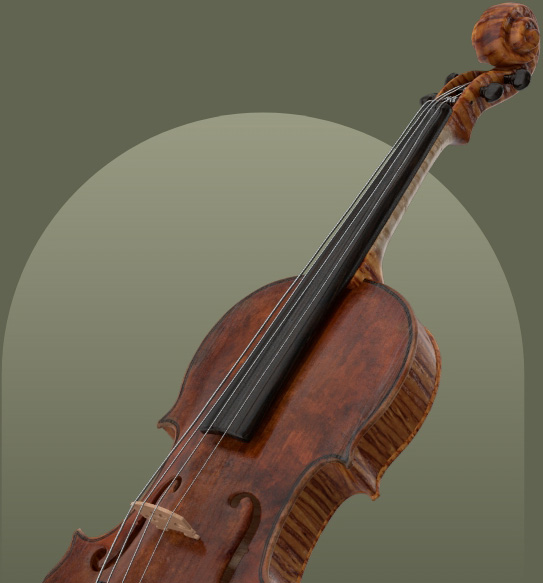
Stradivari-derived model with Staineresque soundholes. One-piece back of beech wood. — John Dilworth
Maker Overview
Life
Henry WHITESIDE (1746-1824) was born in Fontenoy Street, Liverpool, though sources contain conflicting information about his exact birth year, with William Meredith Morris stating 1746 and John Dilworth indicating 1749. His parents owned houses in Fontenoy Street, which later became his property. From an early age, Whiteside displayed a mechanical aptitude, pursuing his inclination at the carpenter's bench. His love and knowledge of music soon led him to construct musical instruments. He had a brother named Gilbert, who was blind from birth and possessed extraordinary musical abilities; Gilbert Whiteside dedicated himself to teaching music to others deprived of sight. Henry Whiteside made many violins in Fontenoy Street, Liverpool, before moving to Solva, Pembrokeshire. In the summer of 1772, at the age of scarcely twenty-six, he arrived in Pembrokeshire to construct the Smalls lighthouse, a project for which his plans were chosen over many others. This undertaking marked a significant transition from his work on delicate musical instruments to the demanding task of fixing giant oaken pillars into rock. He lodged at the (Old) Ship Inn in Lower Solva, and on September 16, 1780, he married Martha Bevan, the youngest daughter of the inn's keeper, William Bevan, at Whitchurch. After the lighthouse's completion, he continued to act as an agent for the establishment. Henry Whiteside died on July 5, 1824, at the advanced age of 78, after a long illness, at his residence, the Harbour House, in Lower Solva. He was buried at Whitchurch, where his wife's remains were also interred in 1832.
Characteristics
- Instrument Making
- Henry Whiteside constructed violins, spinets, and upright harpsichords, in which he excelled, as evidenced by extant examples.
- Violin Model
- , his violins were beautifully made copies of the grand Strad model, featuring somewhat Stainer-like sound-holes. John Dilworth further describes them as Stradivari-derived models with Staineresque soundholes.
- Materials
- John Dilworth notes that some of his violins feature a one-piece back of beech wood.
- Varnish
- William Meredith Morris observed that the varnish used was an oil one, of a dark nut-brown colour, and of excellent quality.
- Tone
- The tone of his violins w as mellow and moderately powerful.
Influence and legacy
- Reputation: Henry Whiteside established a wide reputation in West Pembrokeshire as an engineer, musical instrument maker, and was even referred to as 'Merlin redivivus'.
- Local Presence: It is said that at one time, well-nigh every farmhouse in the Solva neighbourhood possessed a Whiteside fiddle or harpsichord.
- Memorial: Two plain tombstones are erected at Whitchurch to the memories of Henry Whiteside and his wife, Martha.
Biographies
The overview above is drawn from the following published accounts. Read them in the original:
John Dilworth+
WHITESIDE, Henry Born 1749, died 1824 Liverpool UK. Stradivari-derived model with Staineresque soundholes. One-piece back of beech wood.
William Meredith Morris+
He made many violins in Fontenoy Street, Liverpool, and afterwards at Solva, Pembrokeshire. He was the famous builder of the Smalls lighthouse, and he established for himself a wide reputation in West Pembrokeshire a century ago as an engineer, musical instrument maker, and Merlin redivivus. The following particulars are culled from the Pembroke County Guardian for Nov. 18, 1899, from an article written some forty years previously : — “… When the wishes of Mr. Phillips (the projector of the Smalls lighthouse) were made public, a great many persons sent in designs for a suitable erection to the committee appointed by him to carry out his intentions, but preference was given to the plans of a young man, a musical instrument maker, who was also engaged as its builder. “Mr. Henry Whiteside was a native of Liverpool ; he was born, it is believed, in Fontenoy Street, in the year 1746, where his parents possessed some houses, and which afterwards became his property. He possessed at an early age a mechanical taste, and was allowed to follow the bent of his inclination at the carpenter’s bench. He soon gave his attention — from a love and knowledge of music — to the construction of violins, some of which are now in Pembrokeshire, and considered of great value ; afterwards he turned his skill to the building of spinets and upright harpsichords, in which he excelled, as the ones now extant prove. Mr. Whiteside had a brother named Gilbert, who was blind from his birth, and who possessed extraordinary powers as a musician. The desire of Mr. Gilbert Whiteside to alleviate the sufferings of those deprived of sight like himself was so great that he would even seek for, and wait upon them, week after week, and month after month, until he had made them masters of some musical instrument, either as a source of amusement or of income for themselves. ” At the time Henry Whiteside came to Pembrokeshire to construct the lighthouse, in the summer of 1772, he was a very young man, scarcely twenty-six, and probably — though a resident of such a considerable shipping port as Liverpool was even then — a novice in nautical matters, with which he would eventually have much to do. His undertaking was a sudden transition from the sweet and harmonious sounds of his own musical instruments, to the rough surging of the Atlantic wave, and the discordant howling of a maddened hurricane ; and from the fastening of a delicately formed fiddle, to the fixing of giant oaken-pillars in a rock as hard as adamant ! “Tradition has it that Whiteside possessed a most interesting personality. Many tales are related of him. Here is a characteristic one : ” ‘ He once led a party of volunteers from Solva to oppose the French at Strumble Head. He rode a horse belonging to Mr. Barsey, of Lecha. While he feared nothing for himself, he feared much that the French aggressors would kill Mr. Barsey ‘s mare.’ ” His cleverness and persistent personality greatly impressed the simple-minded peasantry. He was, as a matter of course, said to be in league with his Satanic majesty, as all cleverness was believed by the people of Dyved to emanate from the nether regions. The lighthouse, although a device made to baffle the powers of darkness, was regarded as an extraordinarily successful piece of jugglery. ” A story is told of a young woman, a Miss Rees, the only daughter of a farmer living near Llandruidion, who on paying the lighthouse a visit with several others, during its temporary erection, and viewing herself in the angular reflectors of the light-room, exclaimed, ‘ People say that Georgy Rees has only one daughter, let them come here and they’ll see that he has many. I am quite beside myself with the beauty of my sisters.’ ” It is said that he often went out to the cliffs during a storm and tuned his fiddle to the wail of the wind. It is also said that he spent all his spare moments, when not occupied in constructing the lighthouse (or, after it was completed, in acting as agent to the establishment), in making harpsichords, spinets, and fiddles. ” On his arrival in Solva, he lodged in the (Old) Ship Inn, at that time one of the two public-houses in Lower Solva, and indeed one of the four or five straw-thatched dwellings that then constituted the now important and improving place. The Old Ship stood where the establishment of the Messrs. Davies — the Mariners’ Inn — now stands. It was kept by one William Bevan, whose youngest daughter, Martha, Mr. Whiteside married at Whitchurch, September 16, 1780. “On the 5th day of July, 1824, At the advanced age of 78, and after a long illness, Mr. Whiteside died at his residence — the Harbour House — in Lower Solva. He was buried at Whitchurch, where the remains of his wife were also deposited in 1832. Two plain tombstones are erected to their memories.” I have seen only one of his violins, which was a beautifully made copy of the grand Strad model, with somewhat Stainer-like sound-holes. The varnish was an oil one, of dark nut-brown colour, and of excellent quality. The tone was mellow and moderately powerful. It is said that well-nigh every farm-house in the Solva neighbourhood at one time possessed a Whiteside fiddle or harpsichord, but they are gone the way of all things perishable.
Sell your instrument with Amati
Get started by uploading photos of your instrument for our experts to review.
Sell your instrument with Amati
Get started by uploading photos of your instrument for our experts to review.