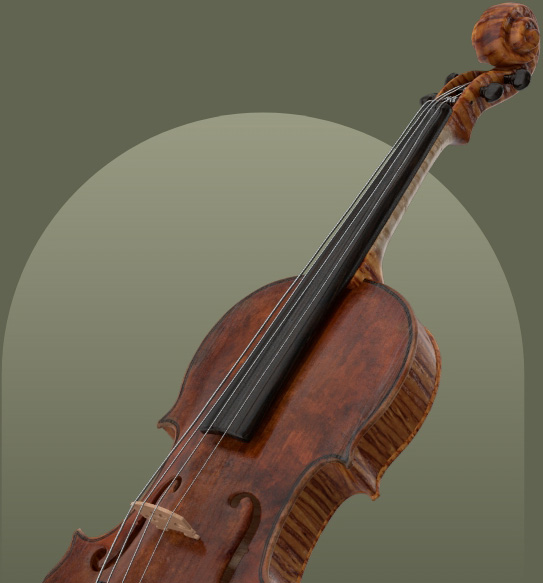
Anton Widhalm
b. 1756
Anton Widhalm (1756-after 1792) was a German violin maker, the third son and pupil of Leopold Widhalm, who took over G. D. Buchstetter's business in Regensburg in 1771.
His instruments, known for their elegant form, good wood, and fine craftsmanship, followed both Stainer and Stradivari models, featuring a thick, dark red, transparent varnish applied over a stained ground.
Maker Overview
Life
Anton WIDHALM (1756-after 1792) was born in 1756 in Nuremberg and died after 1792 in Regensburg, Germany.
He was the third son and pupil of Leopold Widhalm.
Anton Widhalm worked with G. D. Buchstetter in Regensburg, whose business he took over in 1771.
, he appears to have worked for Buchstetter and settled in Stadtamhof after Buchstetter's death.
Characteristics
- Model
- His early work was closely modeled on Stainer, but later instruments showed Italian influence, specifically imitating Stradivari, with instruments of the latter type considered his masterpieces.
- Workmanship
- His model is elegant in form and made with good wood, demonstrating fine craftsmanship.
- Varnish
- He applied a thick, usually dark red, transparent varnish with very commendable properties, often over a dark ground.
- Technique
- Like Buchstetter, he stained his violins before varnishing them.
- Brand circled by foliage: ‘A.W’ Antonius Widhalm
fecit, Pedeponti prope Ratisbonam, 1788John Dilworth
Influence and legacy
- Mentorship: He was the pupil of his father, Leopold Widhalm.
- Collaboration: He worked with G. D. Buchstetter, and his work is considered close to this master, placing him among the better German violin makers of his time.
- Attribution: Many of his works are likely to be found in trade today as genuine "Stainer" instruments.
Further Information
- Brand: His brand, circled by foliage, reads 'A.W'.
- Label: An example of his label reads 'Antonius Widhalm / fecit, Pedeponti prope Ratisbonam, 1788'.
- Working Locations: He worked in Regensburg and settled in Stadtamhof.
Biographies
The overview above is drawn from the following published accounts. Read them in the original:
John Dilworth+
WIDHALM, Anton Born 1756 Nuremberg, d. after 1792 Regensburg Germany. Third son and pupil of Leopold Widhalm, below. Worked with G. D. Buchstetter at Regensburg, whose business he took over in 1771. Early work closely modelled on Stainer, but Italian influence evident in later instruments. Fine craftsmanship with dark transparent red-brown varnish over a dark ground. Brand circled by foliage: ‘A.W’ Antonius Widhalm / fecit, Pedeponti prope Ratisbonam, 1788
Willibald Leo Lütgendorff+
Es liegt nahe, ihn mit den Nürnberger Meistern seines Namens in Beziehung zu bringen, doch liess sich nichts Sicheres darüber ermitteln. Er scheint bei Buchstetter gearbeitet zu haben und liess sich nach dem Tode Buchstetter’s in Stadtamhof nieder. In der Arbeit steht er diesem Meister nahe und gehört wie dieser zu den besseren deutschen Geigenmachern seiner Zeit. Sein Modell ist elegant in der Form und gut im Holz; er ahmte das mittlere Stainer-Modell aber auch Stradivari nach, und namentlich die Geigen der letzteren Art gehören zu seinen Meisterwerken. Wie schon Buchstetter beizte er seine Geigen vor dem Lackiren; sein Lack ist dick aufgetragen, meist dunkelroth, durchsichtig und hat sehr lobenswerthe Eigenschaften. Viele seiner Arbeiten dürften jetzt als echte »Stainer« im Handel vorkommen.
Henri Poidras+
Ratisbon circa 1770. Followed Stainer and Stradivarius. Thick dark red varnish.
Sell your instrument with Amati
Get started by uploading photos of your instrument for our experts to review.
Sell your instrument with Amati
Get started by uploading photos of your instrument for our experts to review.