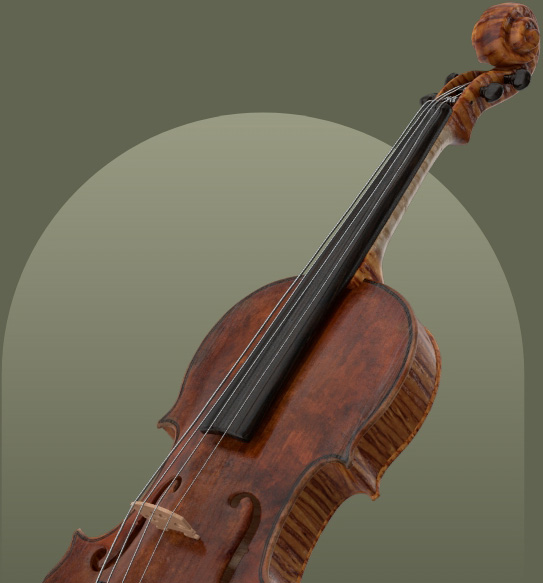
Heyndrick (II) Willems
worked 1715–1745
Heyndrick (II) Willems was a notable instrument maker active in Ghent, Belgium, from approximately 1715 to 1745. Presumed to be the son of Hedrick Willems (I), he crafted violins, violas, cellos, pochettes, and viols. His work is characterized by a close adherence to the sophisticated Amati model, particularly that of Antonio and Girolamo, combined with distinctive personal touches. He was meticulous in his material selection, using carefully chosen pine for bellies and walnut for backs and ribs, and his instruments featured finely carved heads, correctly calculated archings, and often a high-quality, reddish Italianate varnish. Examples of his work are preserved in the Musical Instruments Museum in Brussels, and his family's instruments are recognized for their significant value and skilled craftsmanship.
Request an expert valuation or learn how our global auctions achieve the highest prices for your instruments.
Maker Overview
Life
Heyndrick (II) Willems (circa 1715-1745) was a maker in Ghent, Belgium, working approximately between 1715 and 1745. He is presumed to be the son of Hedrick Willems (I) in The Brompton's Book of Violin & Bow Makers. Cecie Stainer, in A Dictionary of Violin Makers, notes that he made a violoncello or bass with five strings, labelled 'Heyndrick Willems tot Ghendt, 1717.' Stainer also describes a violin dated 1743, which featured a belly made of carefully selected pine, a back of walnut, and sides of maple, which she considered 'very exceptional.' Dilworth further specifies that the Musical Instruments Museum, Brussels, holds a cello from 1717 with a walnut back and ribs, and two violins dated 1743 attributed to him. Additionally, a pochette and a viol (currently strung as a lira viol with a new neck, walnut back, and maple ribs) are plausibly attributed to Heyndrick (II) Willems. Instruments made by the Willems family, including those by Heyndrick (II), are recognized for their genuine value and demonstrate great ability, often following the Amati pattern while incorporating characteristic touches that make their work easily recognizable.
Characteristics
- Materials
- A violin dated 1743 featured a belly of carefully selected pine, a back of walnut, and sides of maple. A cello from 1717 had a back and ribs made of walnut. The wood used for the belly was always carefully selected.
- Design & Model
- Instruments, particularly violins and violas, were worked very closely on a sophisticated Amati model, specifically that of Antonio and Girolamo Amati. Characteristic touches were given to the instruments, rendering their work easily recognizable.
- Archings
- The arching on his instruments was always correctly calculated.
- Carving
- Heads were finely carved and well proportioned.
- Varnish
- The varnish sometimes exhibited a strong red tint and was of very good Italianate quality.
- Heyndrick Willems
tot Ghendt, 1717John Dilworth - Heyndrick Willems
tot Ghent, 1743John Dilworth
Influence and legacy
- Family Tradition: Heyndrick (II) Willems is presumed to be the son of Hedrick Willems (I), suggesting a familial influence on his craft.
- Stylistic Influence: He generally followed the Amati pattern, particularly that of Antonio and Girolamo Amati, for his instrument designs.
- Museum Collections: The Musical Instruments Museum in Brussels holds several instruments attributed to Heyndrick (II) Willems, including a 1717 cello and two 1743 violins.
- Reputation: Instruments made by the Willems family, including those by Heyndrick (II), possess genuine value and demonstrate work of great ability.
Further Information
- Working Period & Location: Heyndrick (II) Willems worked in Ghent, Belgium, approximately between 1715 and 1745.
- Labels: Known labels include 'Heyndrick Willems tot Ghendt, 1717' and 'Heyndrick Willems / tot Ghent, 1743'.
Biographies
The overview above is drawn from the following published accounts. Read them in the original:
John Dilworth+
WILLEMS, Heyndrick (II) Worked circa. 1715-1745 Ghent Belgium. Presumed son of Hedrick Willems (I), above. The Musical Instruments Museum, Brussels has a cello of 1717 with back and ribs of walnut, and two violins dated 1743. A pochette and a viol (presently strung as a lira viol with new neck, back of walnut, and ribs of maple) are also plausibly attributed to him. Violins and violas worked very closely on a sophisticated Amati model. Heads finely carved and well proportioned. Varnish sometimes having a strong red tint, of very good Italianate quality. Heyndrick Willems / tot Ghendt, 1717 Heyndrick Willems / tot Ghent, 1743
Cecie Stainer+
A maker in Ghent some time after the Hendrick already mentioned. He made a violoncello or bass with five strings, labelled. ” Heyndrick Willems tot Ghendt, 1717.” A violin, dated 1743, had the belly made of carefully selected pine, the back of walnut, and the sides (very exceptional) of maple. Many instruments made by this family have genuine value and show work of great ability. The Amati pattern (especially that of Antonio and Girolamo) was generally followed, but characteristic touches were given which render their work easily recognisable. The arching is always correctly calculated, and the wood used for the belly carefully selected.
Willibald Leo Lütgendorff+
Wahrscheinlich Sohn oder Neffe von Hendrick I. W., von dem verschiedene sorgfältig gemachte Geigen und Violoncelli bekannt sind. Er folgt mehr dem Amati-Modell. Ein J. B. Willems — wohl der Sohn Hendrick’s —, der noch 1760 vorkommt und wahrscheinlich Musiker, vielleicht auch Blasinstrumentenmacher war, heirathete eine Rottenbourg. Es soll allerdings auch Geigen von ihm geben.
Sell your instrument with Amati
Get started by uploading photos of your instrument for our experts to review.
Sell your instrument with Amati
Get started by uploading photos of your instrument for our experts to review.