The Monograph Collection · II
Antonio Stradivari
‘Archinto’ Cello, 1689
By John Dilworth · Edited by John Milnes
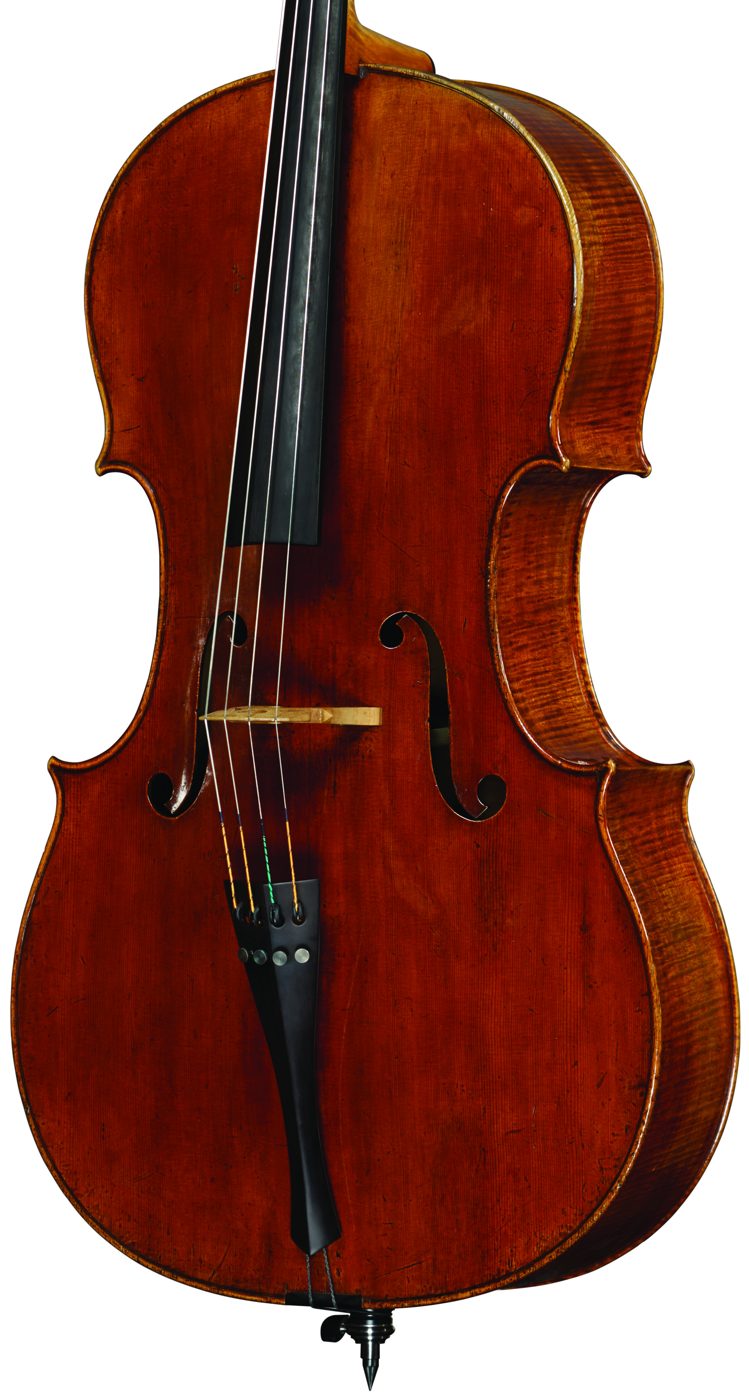
Only the sixth in the remarkable catalogue of Stradivari cellos, and often cited as one of the four or five finest he made. The second Monograph traces the ‘Archinto’ from the Milanese count who gave it its name to the present day, and examines its construction in detail — following our monograph on the ‘La Pucelle’ violin.
First published 2014 by Usk Publishing Limited, London · ISBN 978-0-9573499-2-6 · 48 pages · Text © John Dilworth
| Maker | Antonio Stradivari |
| Instrument | Cello |
| Date | 1689, Cremona |
| Period | Early ‘Amatisé’, before the Golden Period |
| Back length | 768.2 mm (reduced) |
| Photography | Jan Röhrmann & John Milnes |
Stradivari and the cello
The ‘Archinto’ and its provenance
The ‘Archinto’ predates the Golden Period. Made in 1689, it is only sixth in succession in the truly remarkable catalogue of Stradivari cellos. Although his son Francesco seems to have taken some responsibility for the later cellos, in 1689 he was only eighteen years of age, and we can be sure that the ‘Archinto’ is in every way the work of Antonio. In this early phase he followed convention and made them to the large 80cm bass form, as found in the few unaltered instruments from this period such as the ‘Medici’ of 1690 and ‘Aylesford’ of 1696. The ‘Castelbarco’ and the ‘Spanish Court’ cello of 1700 are rare examples of an interim model used by Stradivari, with a reduced back length of 77cm, still a full centimetre longer than his later ‘B’ form. The ‘Archinto’, like the vast majority of pre-1709 Stradivari cellos, has been cut down to the modern standard of 76cm (ironically the length later determined by Stradivari himself). Nevertheless, in this case the cutting process has been carried out with some sensitivity and enormous skill, and the instrument retains most of the grandeur and brilliance of its original conception. According to tradition this cello was bought from Stradivari himself by Count Giuseppe Archinto (1651 – 1712), whose family name it still bears. Although there is no documentary record of this purchase, it is entirely plausible, and the cello remained in the family’s possession until 1864. The count was Milanese, from an aristocratic and priestly dynasty traceable back to the thirteenth century. The title was inherited through a fraternal line, since the several archbishops known as Count Archinto had no direct heirs. Giuseppe Archinto was educated in the Jesuit school in Milan and the Seminary in Rome, ordained a priest in 1675, and summoned to the Vatican by Pope Innocent XI in 1679. He was appointed Archbishop of Thessalonica in 1686, but from 1686 until 1689, the year in which this cello was made, he was the Papal Nuncio in Florence. This would have brought him into close contact with the Medici family, rulers of the Grand Duchy of Tuscany. Significantly, early in the following year, 1690, Stradivari received a commission for a quintet of instruments from Prince Ferdinand of Florence, the son of Cosimo III de’ Medici. The quintet was completed and delivered to the court in the autumn of that year, and is still recognised as one of the great achievements of the master. Two of the set remain in Florence in the Cherubini Museum: the rare tenor viola is still in original condition and bears the Medici arms inlaid by Stradivari into its tailpiece and fingerboard; the cello is one of the few from this period to remain in unaltered form with a back length of 79.2cm. This makes a valuable comparison with the ‘Archinto’, and the beautiful flamed maple of both instruments is strikingly similar. As a Lombard himself, Count Archinto would certainly have known of the work of the extraordinary violin makers in Cremona, and it is tempting to speculate that his purchase of the cello from Stradivari in 1689 was the impetus for Prince Ferdinand’s remarkable and significant commission in the following year. Count Archinto was thereafter given papal appointments in Venice, Spain, and Milan, and in 1699 was made a cardinal by Pope Innocent XII. At his death in 1712 he lay in state in Milan cathedral and was buried in the family chapel there. There is today a complete quartet of Stradivaris bearing the Archinto name: this cello, a celebrated viola of 1696 (now the property of the Royal Academy of Music in London), a violin of the same year, and a second violin of 1721. The date of this last violin does, of course, show that the quartet could not have been assembled by Count Giuseppe himself, since he died nine years before it was made. It is, however, certain that his descendants continued an interest in music and instruments, and the collection may have been built around this 1689 cello. In 1816 the collector and connoisseur Count Cozio di Salabue made a note in his diaries: ‘from the son of Count Archinto: quite a large violin made by Amati which once belonged to the Count Bianchi. Two beautiful violins by Antonio Stradivari. The viola once belonged to Mr Alessandro Rolla of Grancini. The cello, already shortened, and believed to be made by Stradivari. I am still waiting for the viola made by Stradivari and owned by the Count Gambara.’ A second entry from the same year makes clear that the ‘Gambara’ viola and that which once belonged to Alessandro Rolla are one and the same, and provides the extra detail that the instrument had been bought by Count Archinto for 106 luigi from a Brescian musician, Serafino Trivelli, who had himself acquired it from Count Carlo Gambara in that same city.
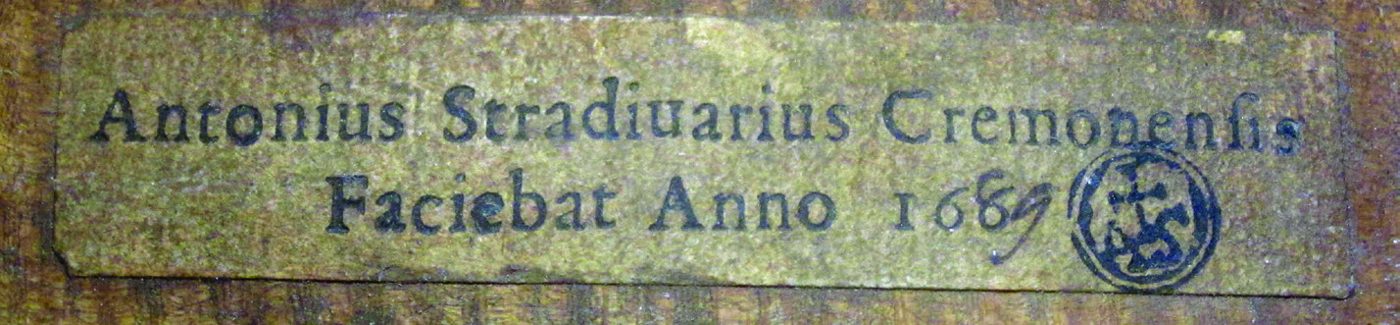
Photo © John Milnes
This, as with all Cozio’s writing, takes a little untangling. It plainly relates to what is now known as the ‘Archinto quartet’, but mentions at least one other violin (the ‘large Amati’). Two of the instruments have prior histories, further emphasising the fact that the quartet itself was not bought from Stradivari by one individual, but assembled later by his descendants. The Count Archinto who purchased the viola from Brescia was thus the father of Cozio’s informant, of the second generation from the Giuseppe who first owned the cello. However, the cello does not have any previous owner listed by Cozio, supporting the tradition that this instrument was indeed bought directly from the workshop in Cremona by Count Giuseppe himself. The ‘son of Count Archinto’ whom Cozio met was also named Giuseppe, of the third generation from the earlier Count, and who subsequently inherited the title himself. He is recorded as a great collector of art and the founder of the Palazzo Archinto in Milan in 1833. More significantly to us he was also an amateur viola player and a pupil of Alessandro Rolla, mentioned by Count Cozio as the previous owner of the 1696 Stradivari viola. Rolla (1757 – 1841) is an important figure in the history of the viola and its elevation to a solo role, but is chiefly known today as the teacher of Nicolò Paganini. Nevertheless Rolla seems to have taken a serious interest in the Count Archinto, and dedicated his ‘7 Arrangements for Solo Viola’ (op. 316-322) to him. Little else is known of Archinto’s musical achievements, but he was eventually bankrupted by his ambitious plans for the building of the grand palazzo to house his private art collection and he died in 1861. The building was never completed and some of the artworks were auctioned at the Hotel Drouot in Paris. The cello and many other items remained in the palazzo which was taken over by the Italian state in 1864 and is now known as the Archinto Museum. It was only then that the ‘Archinto’ cello emerged onto the market, and for a short time passed to a certain Signor Noseda before coming into the possession of the Paris luthier, dealer, and expert J.-B. Vuillaume in 1865. He sold it to the distinguished collector Charles Wilmotte of Antwerp, who amassed a large holding of Stradivari instruments up until his death in 1893. By 1873 the ‘Archinto’ cello was in the hands of Abel Bonjour, the amateur French cellist after whom another great Stradivari cello of 1696 is named. (The 1696 ‘Bonjour’ is known to have been reduced in size by the Paris luthier Charles Rambaux in 1860 – one of the few instances in which we know the circumstances of the alteration.) While in Bonjour’s possession the ‘Archinto’ was loaned to the South Kensington International Inventions Exhibition in London in 1885. Bonjour died shortly after and the two cellos, the ‘Bonjour’ and ‘Archinto’, were put up for sale at the Hotel Drouot in Paris in the following year, 1886. Although Alfred Hill entered the bidding for the ‘Archinto’, the purchaser was the cellist Jules Delsart at a final price of 19,000 francs. According to Hill’s letter describing the instrument, he withdrew out of consideration to M. Delsart, who was ‘most anxious to become its owner’. Described as one of the foremost French cellists of the period, he performed widely as a soloist and as a member of the celebrated Marsick quartet. The ‘Archinto’ became his concert instrument in the last years before his death in 1900. He premiered many works with it, including David Popper’s Requiem for three cellos and Saint-Saens Chant Saphique. Seven years after Delsart’s death, in 1907, his widow sold the cello to Hill, in association with the Paris dealer Albert Caressa, for 30,000 francs. Within the year Caressa arranged a sale through another Paris company, Silvestre & Maucotel, to an amateur player in Marseilles named Gailhard.
Once again through the agency of Silvestre & Maucotel, the cello was sold to Lucien Sharpe of Boston, USA in 1915. The price paid then was 70,000 francs. Sharpe was the son of the founder of the Brown & Sharpe engineering company and heir to his fortune. An eccentric collector and aviator, he divided his time between America and Paris. Just before his death in 1919 he left the cello with W. E. Hill & Sons in London for restoration, and it remained with them for some time while work was completed and legal matters arranged through Sharpe’s lawyer in Paris. During this period the Hills wrote a monograph on the cello, now a rare document. It was finally returned for safe-keeping to Boston, where in 1932 it was purchased for a sum in the region of $20,000 by an amateur player named Russell Barclay Kingman of Orange, New Jersey. Kingman was a wealthy industrialist, amateur musician, and friend of the great cellist Emmanuel Feuermann, who himself played the beautiful ‘B piccola’ Stradivari known as the ‘De Munck’. Kingman wrote his own monographs on both the ‘Archinto’ and ‘De Munck’, published in 1944. In 1937 the ‘Archinto’ was sold through the Rudolph Wurlitzer Company of New York to John Nicholas Brown II of Providence, Rhode Island for $35,000. Brown was from a very eminent American family, the inheritor of a considerable fortune, who from 1946 to 1949 was United States Assistant Secretary of the Navy. Also an amateur cellist and philanthropist, he was a great patron of music, a trustee of the Boston Symphony Orchestra, and friend of Serge Koussevitzky and Mstislav Rostropovich. He also commissioned Samuel Barber to write his cello concerto which was premiered on the ‘Archinto’ by the Russian cellist Raya Garbousova with the Boston Symphony Orchestra in 1946. While it was on loan to her, Garbousova made great use of the cello in a piano trio with Vladimir Horowitz and Nathan Milstein.
In 1960 the cello was again sold, through Rembert Wurlitzer, the violin connoisseur and son and successor of Rudolf, to Walter Lagemann of Rowaytown, Connecticut. In 1974 he presented it to the Music Academy of the West, the conservatoire in Santa Barbara, California which continues to flourish. Two years later it passed to the Richard D. Colborn Foundation in Beverly Hills, a charitable trust supporting classical music education and performance, for the sum of $200,000. They in turn relinquished it in 2007 to the present owner, a private collector based in Texas. During this time it has been maintained by David Brewer Fine Violins of Albuquerque, New Mexico, who have also produced a comprehensive monograph on this historic cello.
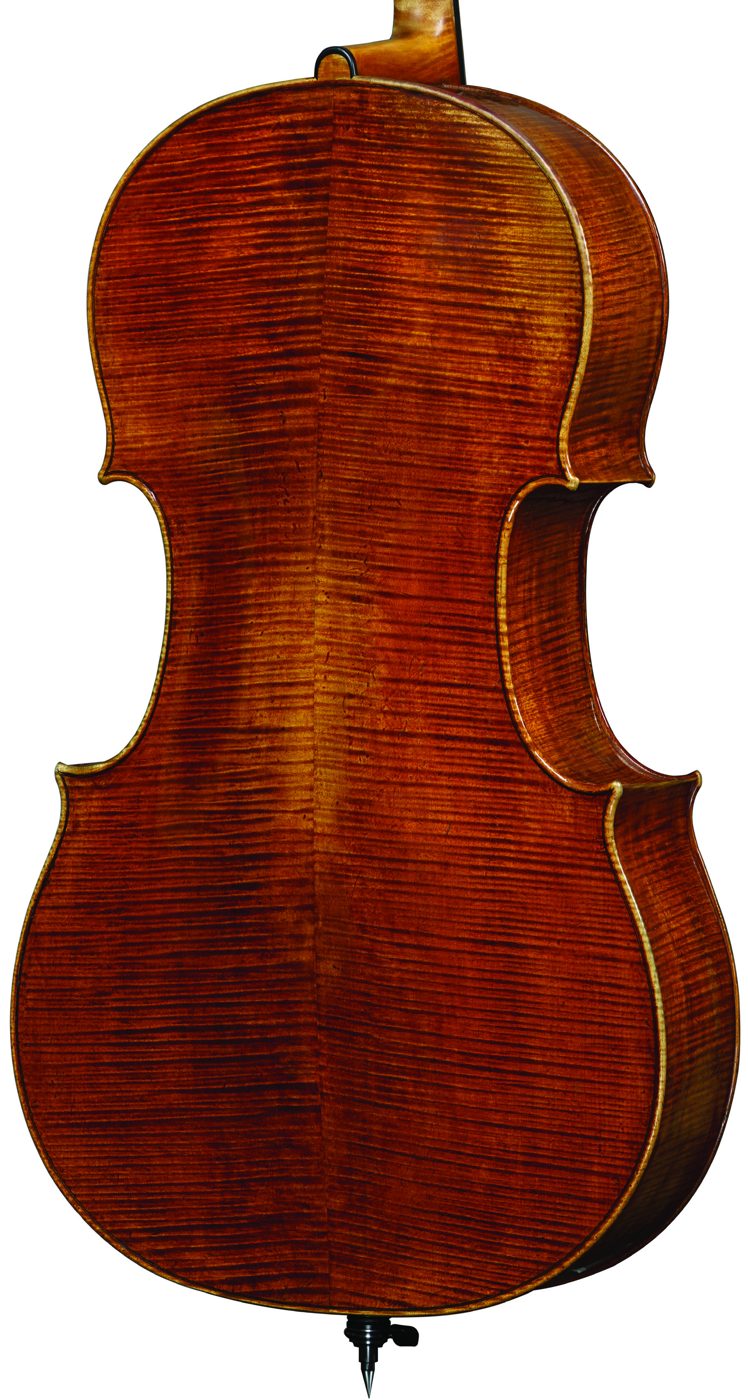
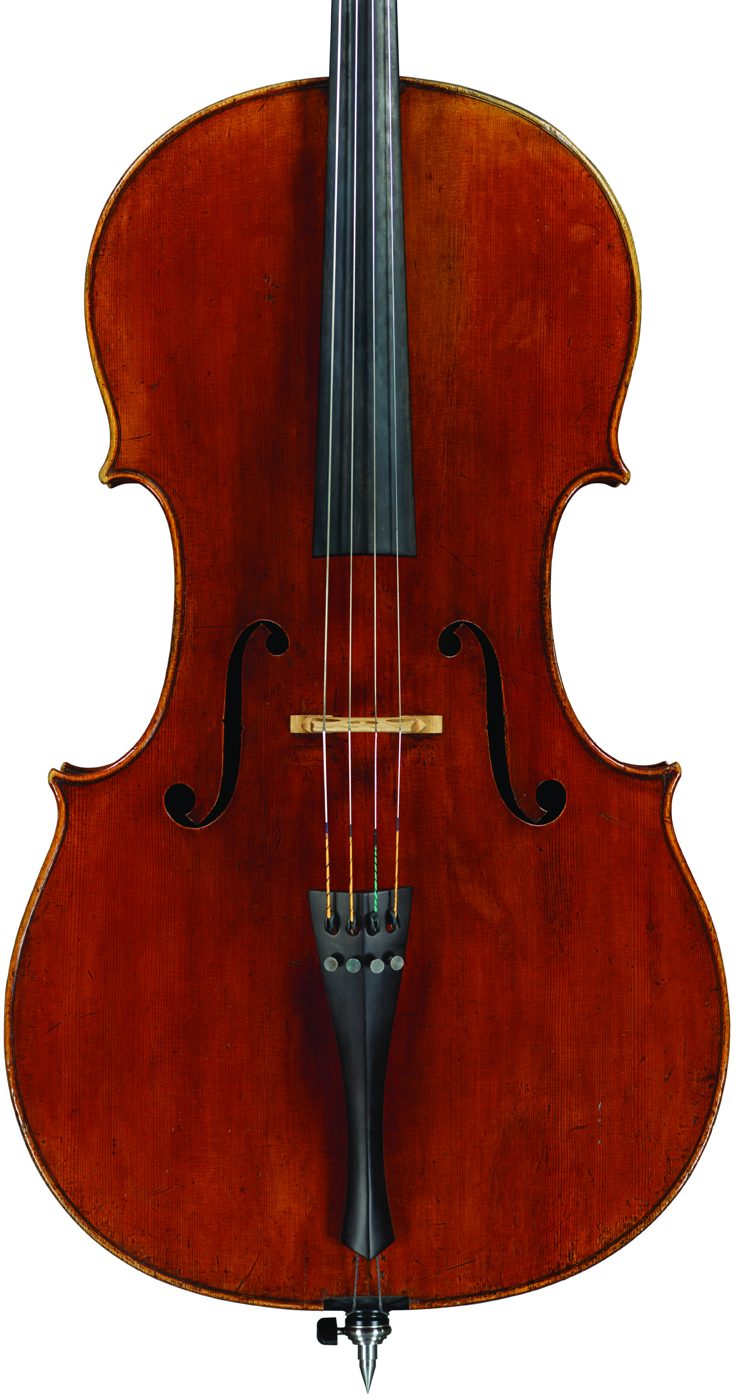
Photo © Jan Röhrmann / JRPublications.com
Form and construction
In form and construction, the ‘Archinto’ represents the early ‘Amatisé’ period of Stradivari’s career, even though it is a fully independent and mature design. Although cut down from its original form, it can be compared directly to the ‘Medici’ cello of 1690, made only one year later and still preserved in its original configuration. By comparing the two outlines it is clear that the ‘Archinto’ has been reduced in length by 25mm in the upper bouts, and in width by a slightly tapered cut along the centre line, reducing the overall width in the lower bouts by 7mm and in the upper bouts by 8.5mm. This is confirmed by comparing the distance measured between the sound holes, and by the stop length of the two instruments. The reduction provides very ‘modern’ proportions clearly derived from Stradivari’s own ‘B’ form. Although the ‘Archinto’ is still about 10mm longer than the ‘B’ form pattern, the stop length has been brought into perfect conformity at 408mm.
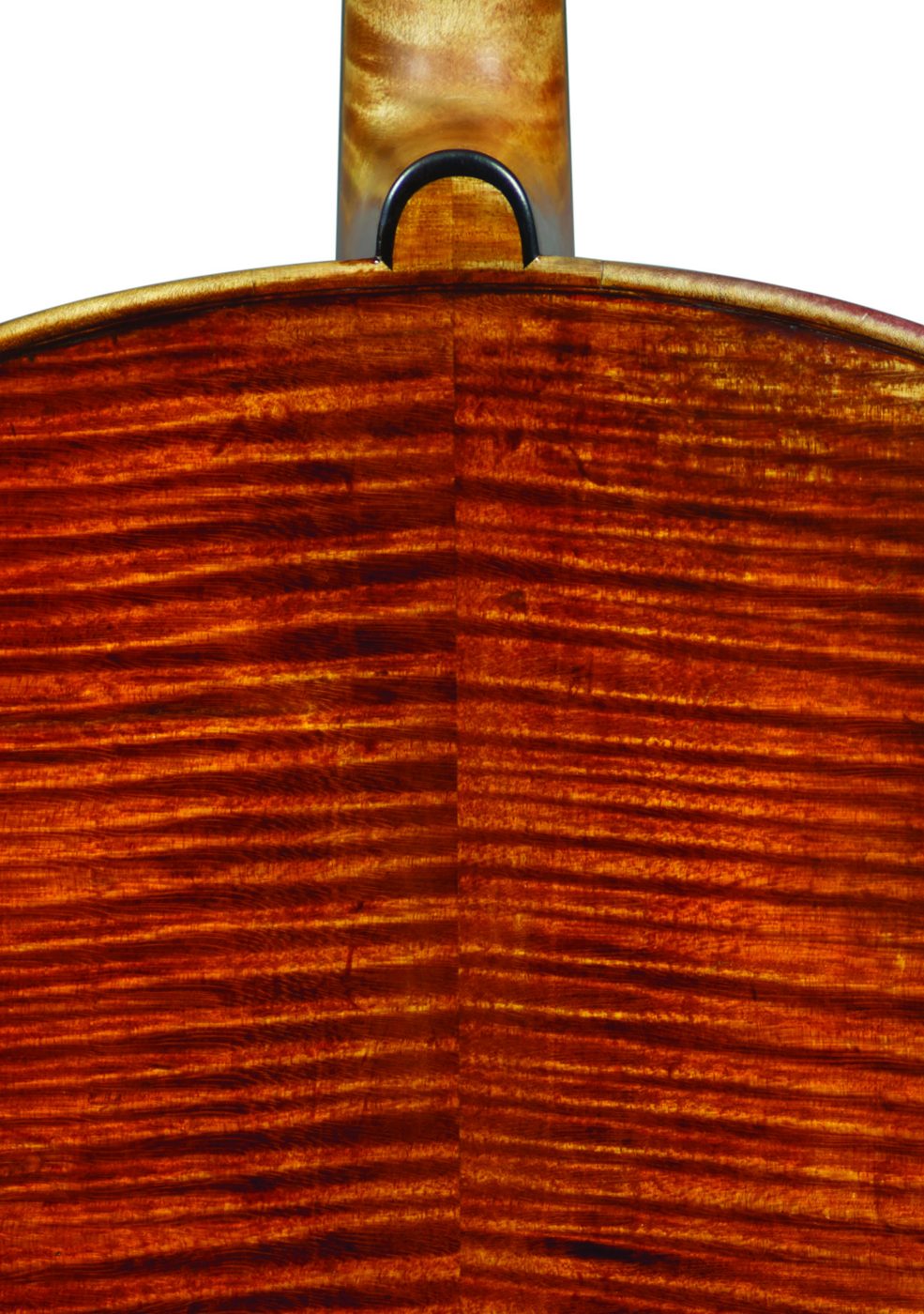
Photo © Jan Röhrmann / JRPublications.com
The wooden form on which the ‘Archinto’ was made no longer exists, at least not in its original state. There are very few gaps in the surviving order of forms and patterns Stradivari used for violins and violas, but we may assume that he had to exercise some practicality when it came to the large cello forms. It can be adduced from sundry other templates and patterns in the Museo del Violino collection in Cremona that there were perhaps some ten differentiated cello forms, marked similarly to the violin patterns. The cello patterns are variously marked ‘A’, ‘B’, ‘B piccola’, ‘Bo’, and ‘Mo.Bo.’ (which presumably stood for ‘modello buono’). The ‘B’ and ‘B piccola’ (small ‘B’) are well represented by surviving examples, and a further shortened model from the late period is also known. The ‘A’ form may have been that of the ‘Archinto’, but there is sufficient variation between the overall dimensions of the uncut ‘Medici’ and ‘Aylesford’ cellos to indicate that, as with the violins, two or more slightly different forms were used concurrently, as well as the interim ‘Castelbarco’ pattern made between c.1697 and 1709. What seems to have happened, however, is that when the ‘B’ form was finalised in about 1709, the earlier patterns were discontinued, and the large wooden forms used to make them were then converted to the new dimensions. The only two surviving cello forms are now in the Musée de la Musique in Paris, and show obvious signs of having been cut down. A form marked ‘V[ ]G’, which was in all probability originally for a viola da gamba, was later recut for a so far unidentified small cello. The larger one was radically altered to the dimensions of the ‘B piccola’ in about 1727. It may originally have borne the designation ‘A’ or ‘P’ found on paper patterns for earlier cellos, and plausibly be the form used for the ‘Archinto’. This unsentimental practicality in cutting and adapting is unusual in Stradivari’s known working life; the violin drawings and forms were stored carefully, even after they fell into disuse. Cello forms may have simply taken up too much space to be kept unaltered. Alternatively, Stradivari realised that the change from the archaic large pattern to the newer 76cm ‘B’ form was so decisive that the old form would never again be necessary. Whatever the case, both the original form and the cello itself have been reduced in size, but at different times.
Cozio di Salabue mentions in 1816 that the cello had already been cut down. The Mantegazza family of Milan are widely assumed to have been the leading practitioners of the process of modernising instruments in the late eighteenth and early nineteenth century, and were well known to Count Cozio, for whom they frequently carried out alterations of this kind. It may be significant that he does not mention their name directly in relation to this cello, but it seems very likely that the delicate work done in the reconstruction would have been carried out by them, at least initially; we know of no other candidates in this period. Today, the work appears very sensitively and effectively done, with no obvious seams or inequalities in the reduced form, and minimal damage to the varnish. The Hills speculated that the work had been done by either Rambaux or Vuillaume in Paris, but it is obvious from their other writings that they did not have access to Count Cozio’s notes. Their assumption that the work was done in Paris does, however, give a good indication of the quality of the work as they observed it. During their own restoration work in the 1920s, the centre seam of the back was reset. How much of the earlier reduction is still present is hard to distinguish, but the edges of the lower and middle bouts are still largely intact. In their important book Antonio Stradivari, his Life and Work (1902) the Hills describe the instrument as an ‘excellent example…especially handsome in wood and in relatively fine preservation’.
Wood
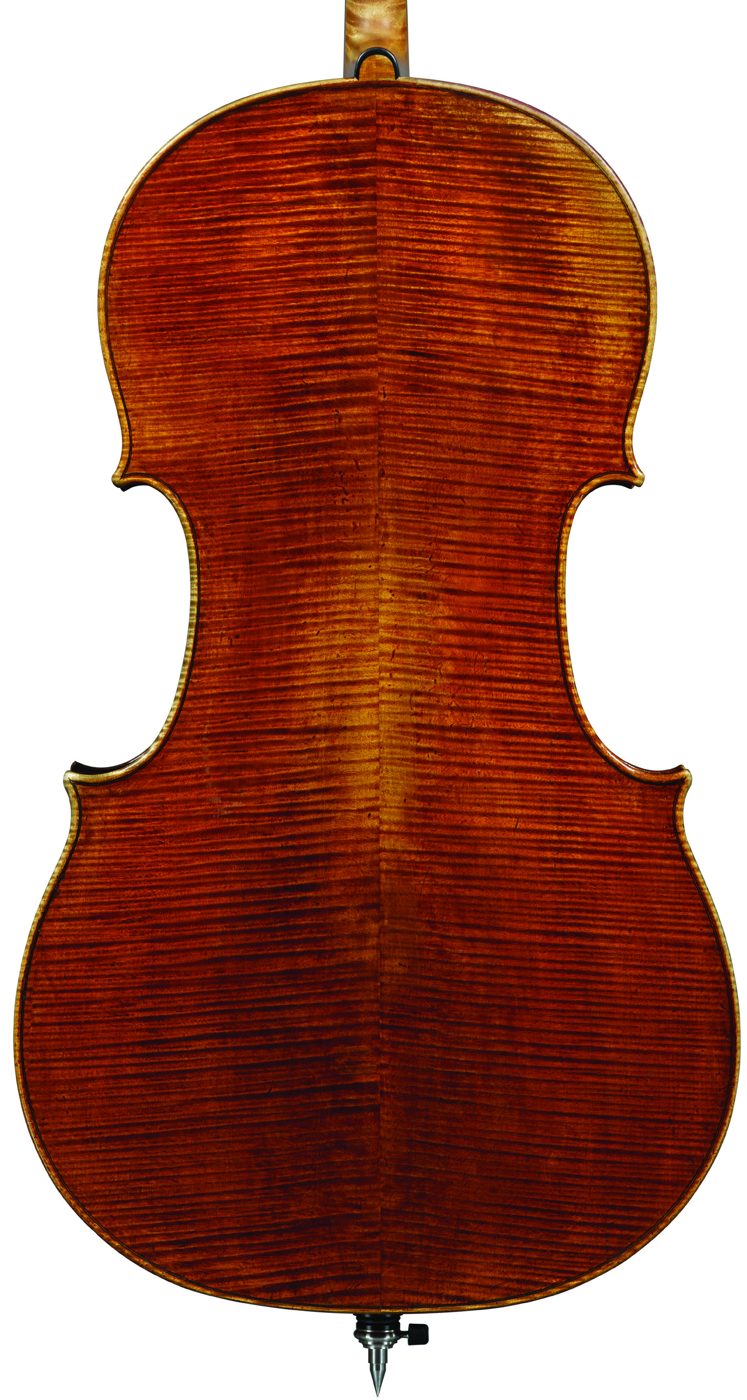
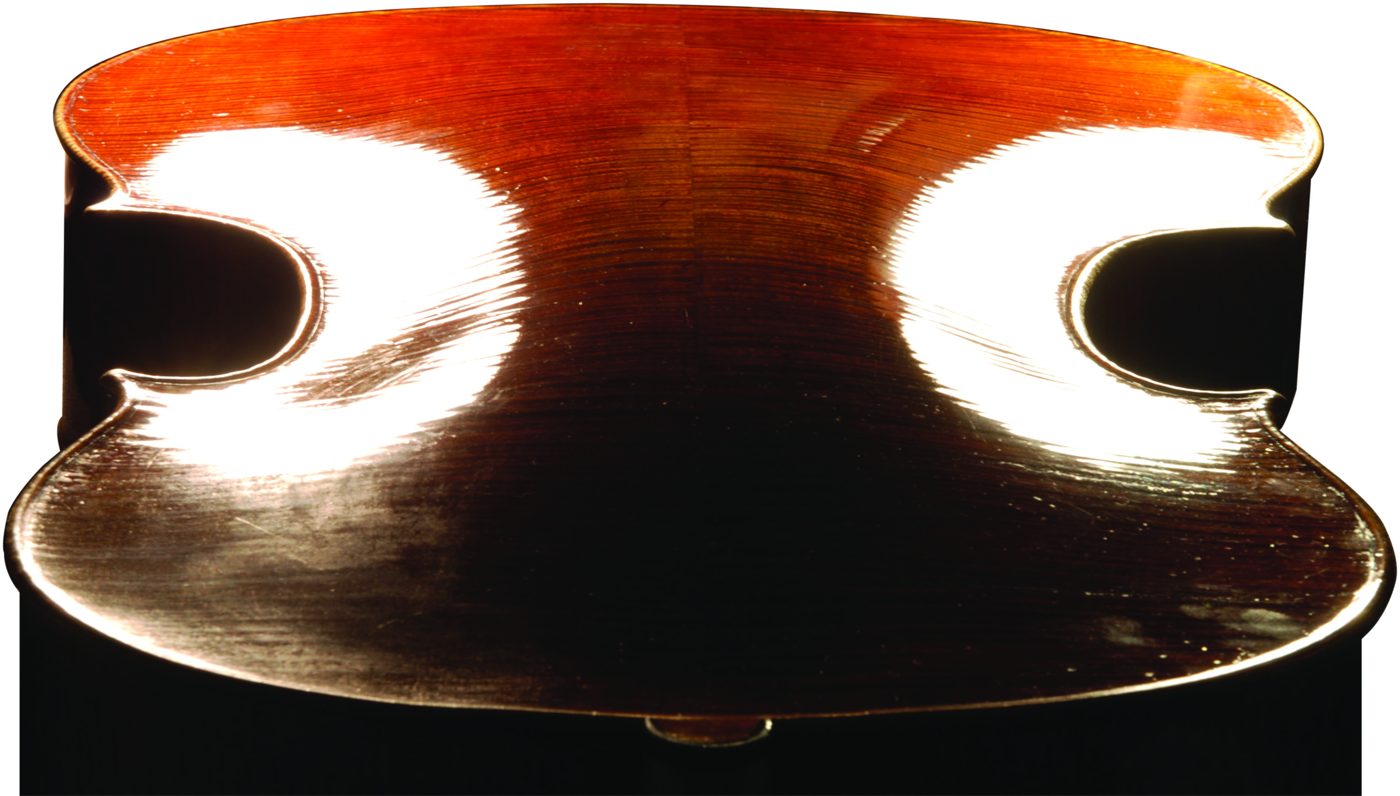
The cello is indeed especially handsome in wood. What is quite striking about all the Stradivari cellos in the early period is the relatively modest cuts of wood used in their construction. Several are of very plain unmarked maple or poplar, some are of irregularly figured maple. Only the ‘Archinto’ and ‘Medici’ stand out with their glorious matching backs of close- figured, flawless tiger-stripe maple. Not only are the backs cut from this magnificent wood, but the ribs and scrolls of both instruments all appear to be from a similar, if not the same log, showing the same intense and regular flame. Stradivari certainly had access to some wonderful wood, seen in several violins of the period, but larger pieces of similar quality may have been harder to find. Other examples from the period 1688 to 1690, the ‘Marylebone’ and ‘L’Eveque’, are quite unassuming by comparison. Maybe Stradivari had found a new source for this fine imported figured timber at this time. Cellos by the other makers in Cremona – Amati, Rugeri, Guarneri (filius Andreae) – are very seldom made from uniformly well-figured maple. It seems likely that Stradivari chose his finest wood for the ‘Archinto’ and ‘Medici’ as these were important commissions from the Papal Nuncio and the Prince of Tuscany. From 1698 and the beautiful ‘Marquis of Cholmondeley’ onward, Stradivari found regular supplies of the most breathtaking cuts of timber, and the astonishing series of cellos that he produced in his Golden Period reflect the vivid use of fine figured maple in these related cellos of 1689 and 1690. The back is, in fact, quite heavily wooded with a maximum thickness of 8.7mm a little above the centre, reducing to 3.5-4mm in the lower bouts and a little less (2.8-3.5mm) in the upper bouts. This is a full millimetre more than is usually met with in Stradivari cellos. The arching is full in height, although distorted by the reduction along the centre and upper bouts, but it remains characteristically rounded and strong to the edges where the delicate fluting is of a consistent one millimetre depth.
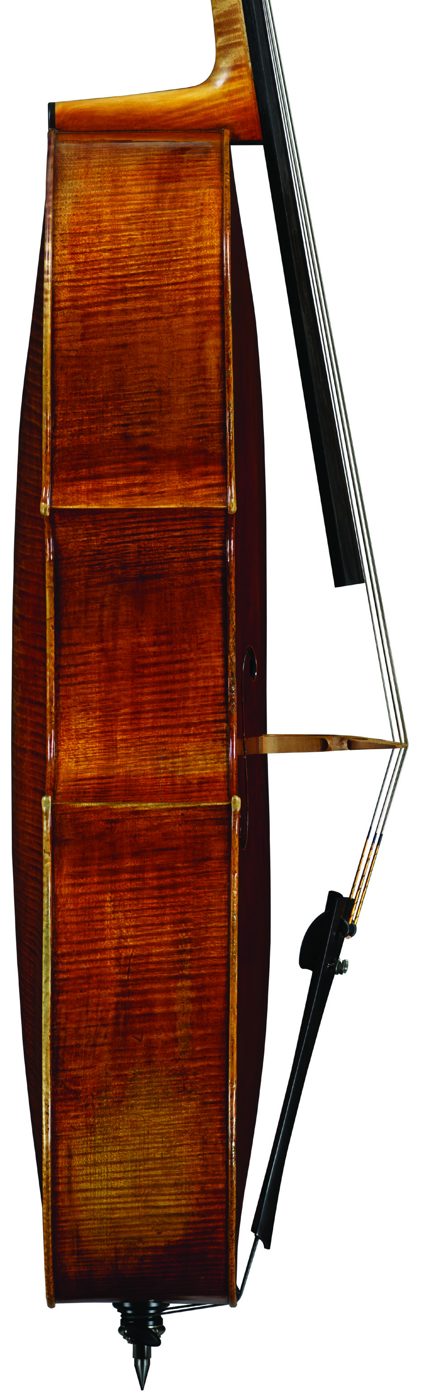
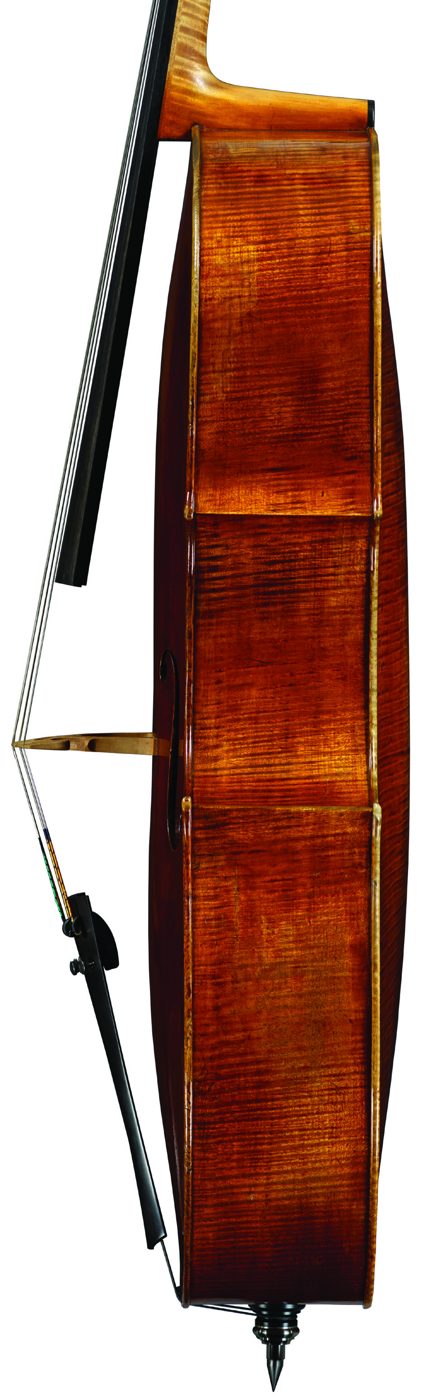
Photo © Jan Röhrmann / JRPublications.com
The ribs
The ribs appear to have been reduced also. Most recorded Stradivari cellos from all periods have ribs of at least 120mm in height, tapering downward from the upper corners to the neck root. The sides of the ‘Archinto’ measure 109mm at the neck and increase gradually to a maximum 112mm at the endpin. It is worth noting that the ribs of the ‘Archinto’ viola of 1696 have also been reduced in height; a fact also noted by Count Cozio. It cannot be said for sure that these alterations were made to both instruments at the same time or by the same hand (Cozio does not specify whether the cellos ribs had been cut) but it is an unusual intervention, possibly unique to the two instruments of the ‘Archinto Quartet’. It therefore seems quite probable that the Count Archinto who owned both the viola and the cello in 1816 specifically requested it.
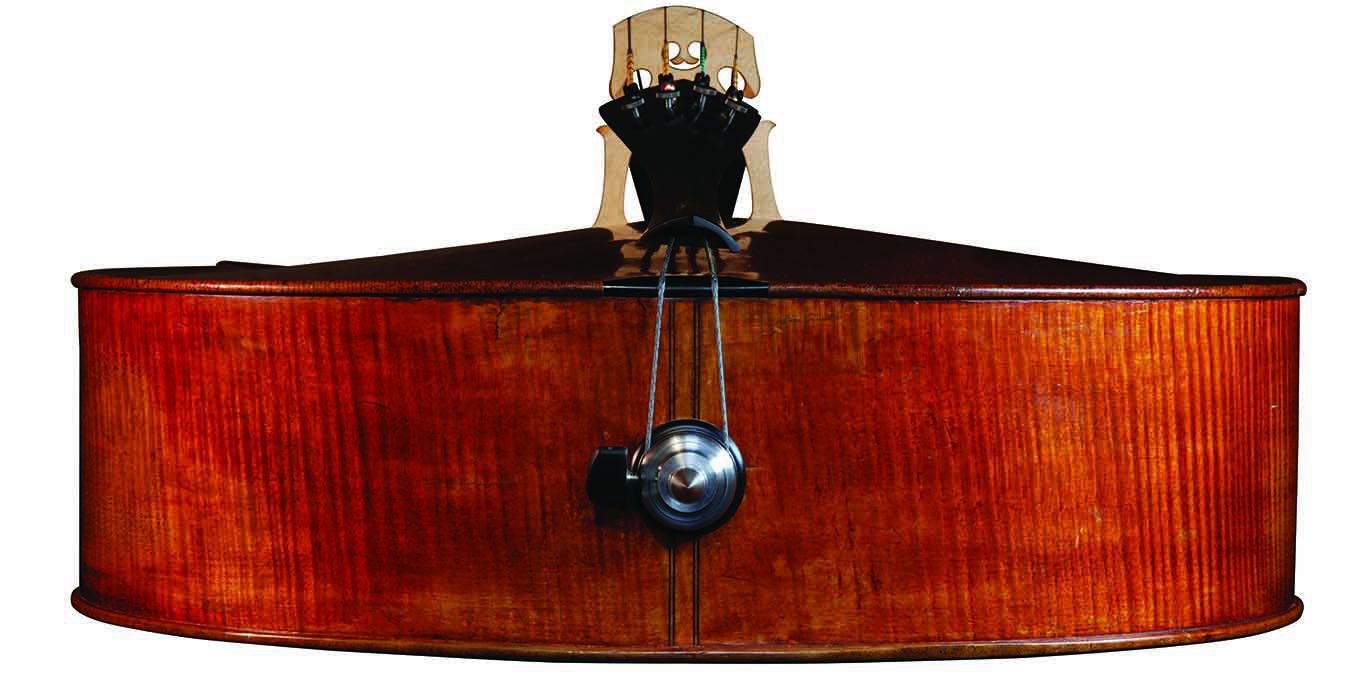
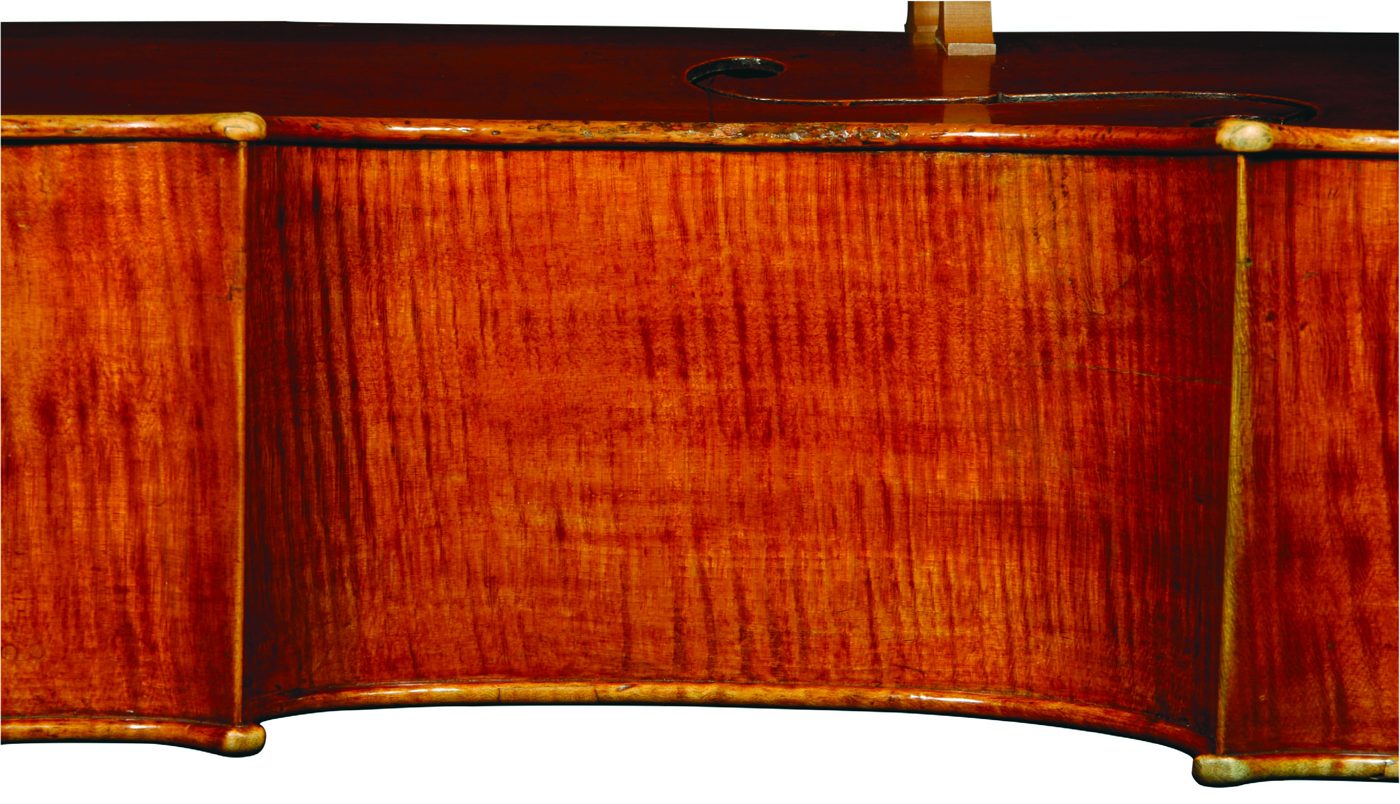
Photo © John Milnes
The front and soundholes
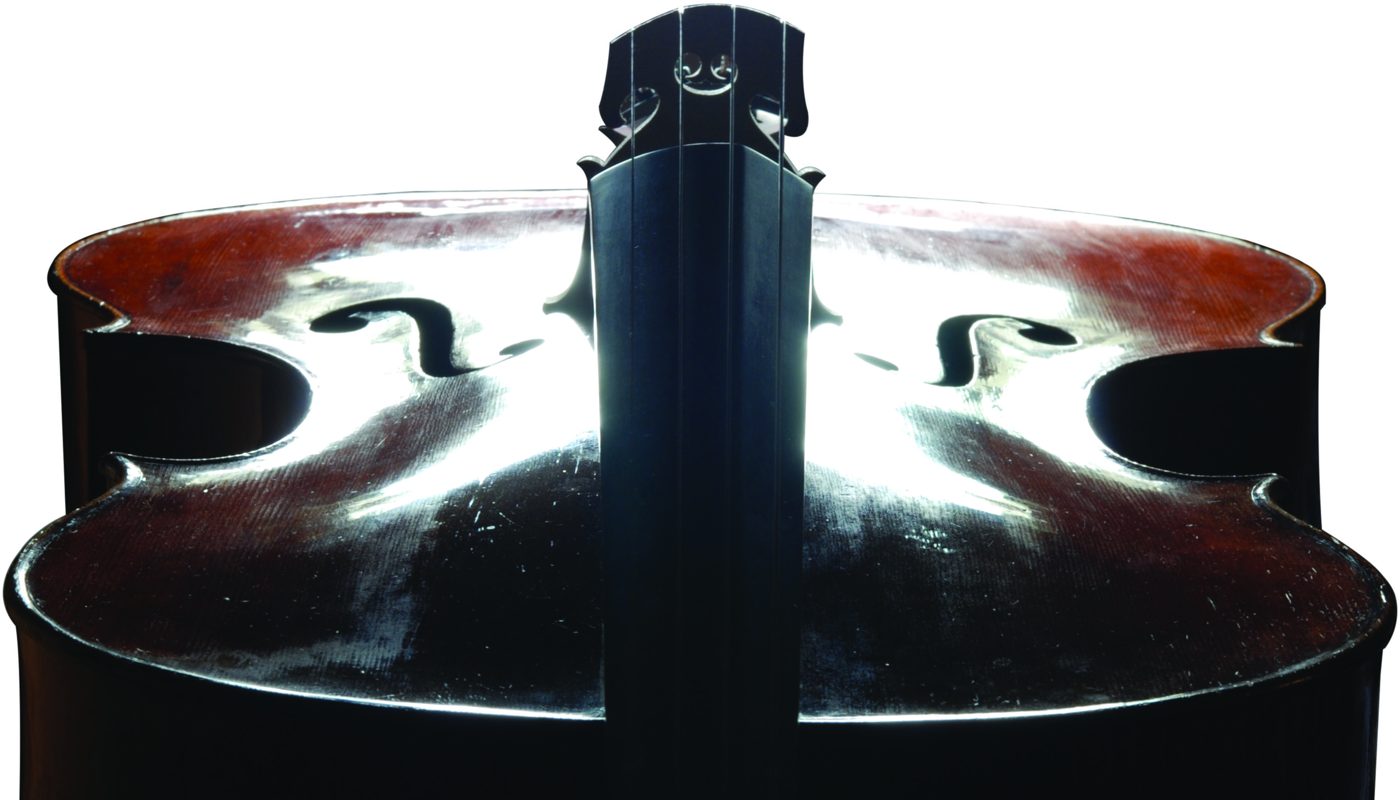
The front is of magnificent alpine spruce which has been worked to a fairly regular 3.5mm thickness, although the centre is now supported by a patch between the soundholes. The soundholes themselves are the height of elegance and perfect craftsmanship. The design of Stradivari’s soundholes, established right from his very earliest known works, is subtle and unique. Although obviously developed from the Amati form, Stradivari’s confident emphasis on the broad square wings and the diverging elliptical curves of the arm shows not just the certainty of his craftsmanship, but the brilliance of his artistic skill and sharp mind. Everything about his work is not just beautifully executed but diligently planned. In the soundholes, the way they are integrated into the form of the arch, the lower wing fluted to provide contrast to the rising curves around it and lead gently to the hollowed edge – all is considered and anticipated, never improvised or accidental. The angle at which the knife is held radially to the arch and the precision of the cut are both essential to the poise and sophistication of the soundhole; an unmistakable personal imprint of the master.
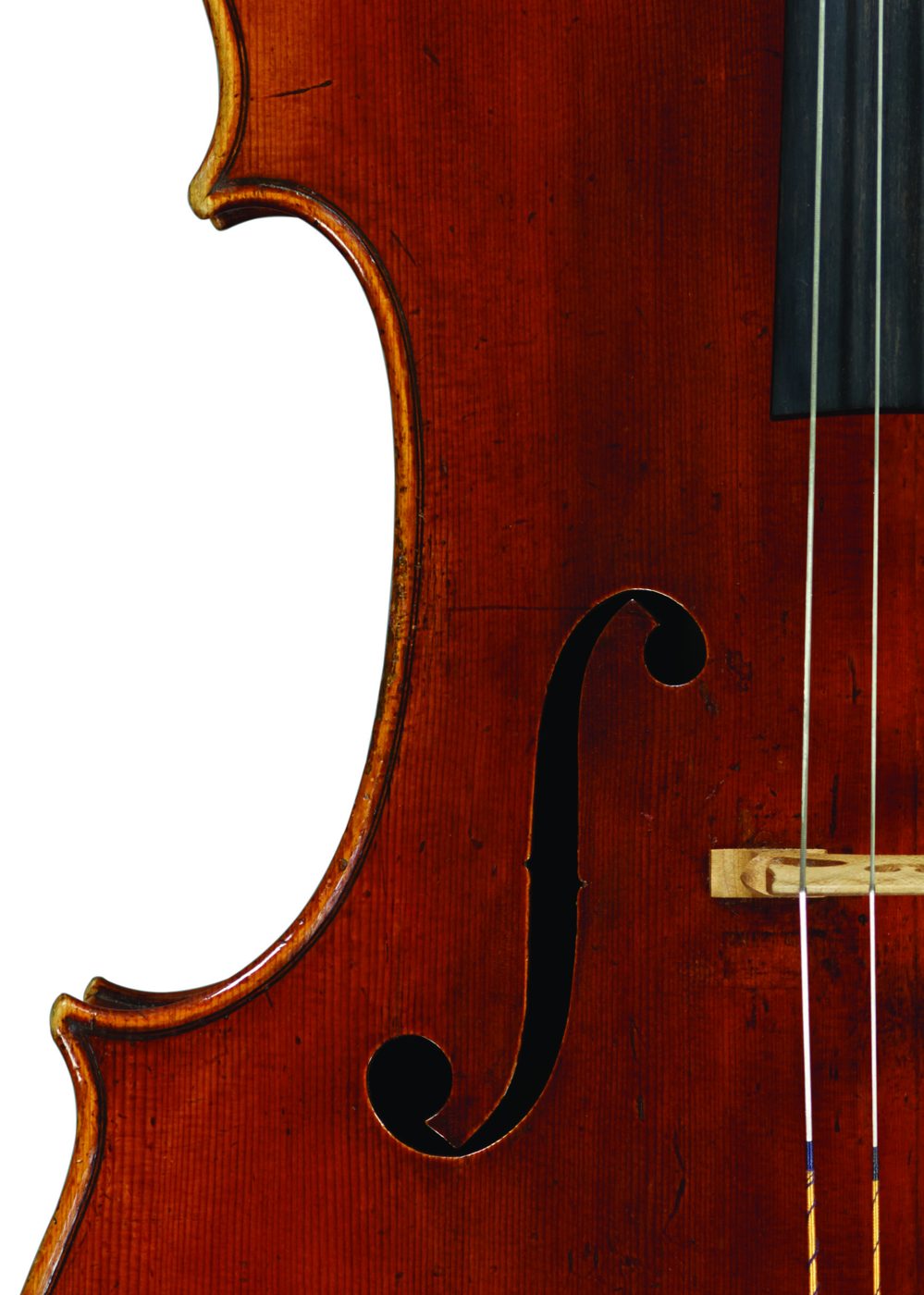
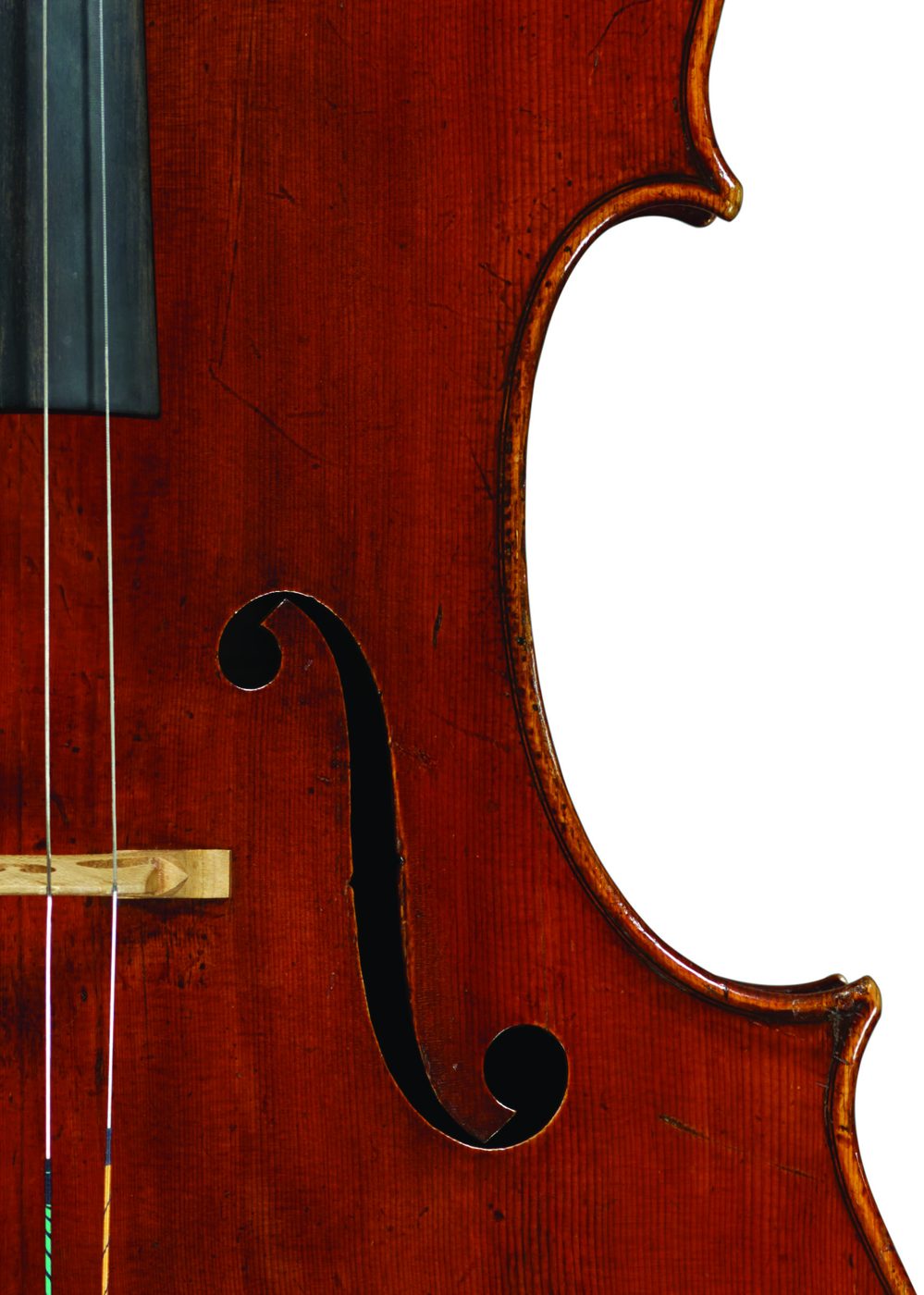
Photo © Jan Röhrmann / JRPublications.com
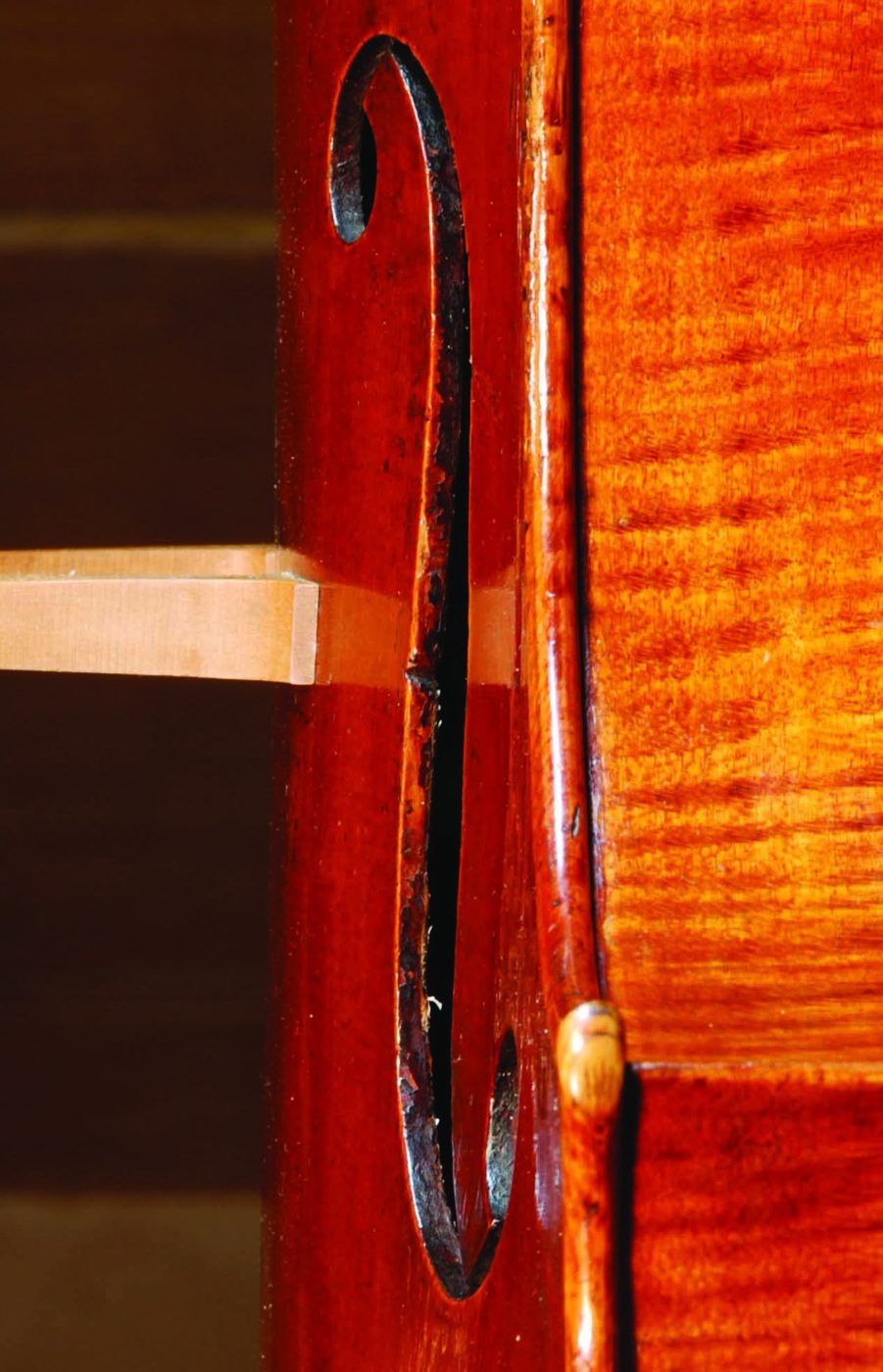
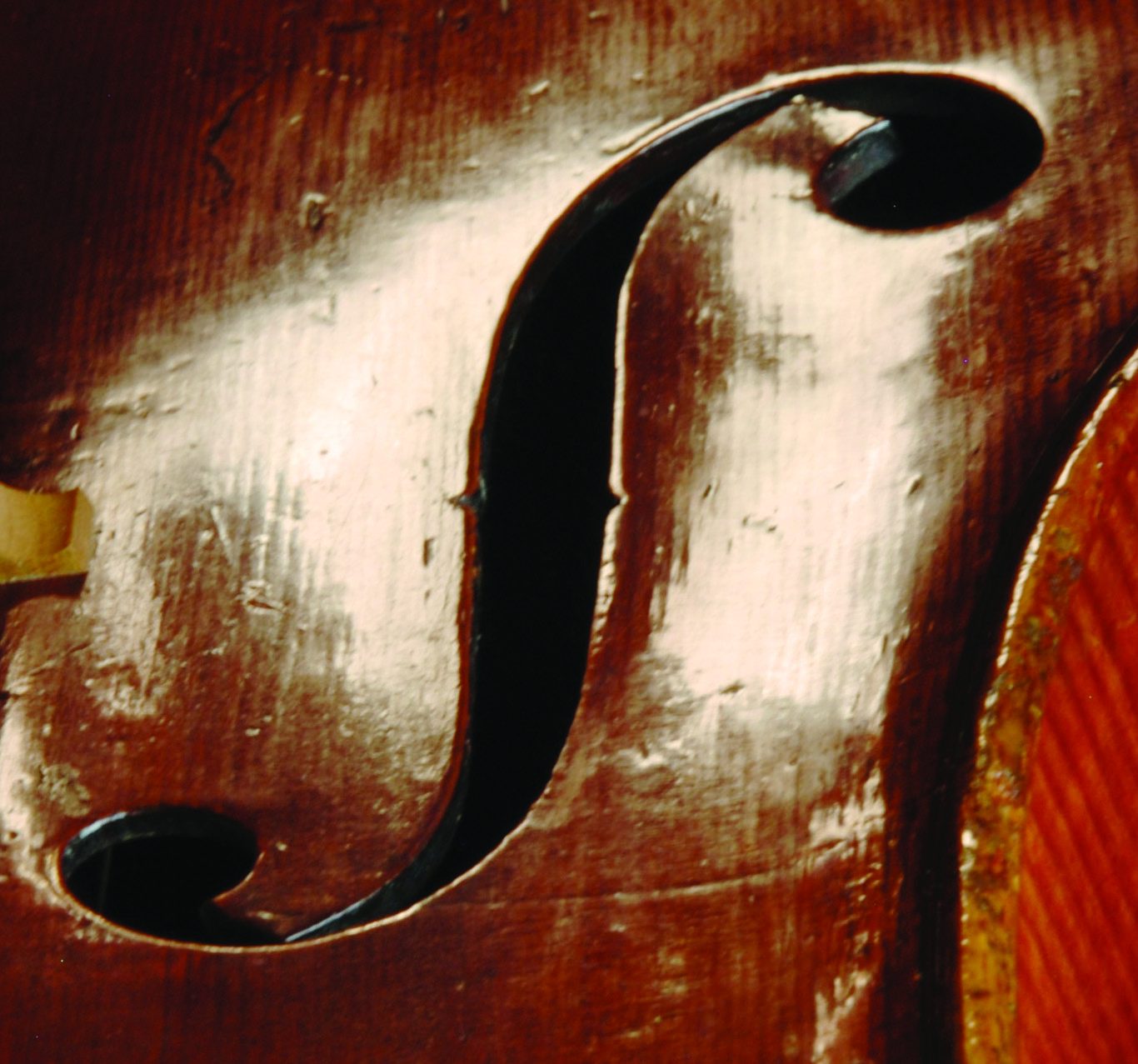
Photo © John Milnes
Edges and purfling
This single-minded preparation and anticipation of the end result is everywhere. The edge is broad, as is the flawlessly inlaid purfling, although the purfling is the same width as is found in violins made in this period. To resolve the purfling into these broad corners the line of the upper and lower bout swings sharply away from the edge so that the purfling meets more quickly into the characteristic long mitre, the point of which is formed from the black veneer of the middle bout purfling extended and swept across the corner. Nowhere else but in the most observant and adept of Stradivari’s copyists will you see such care and sensitivity in the detail.
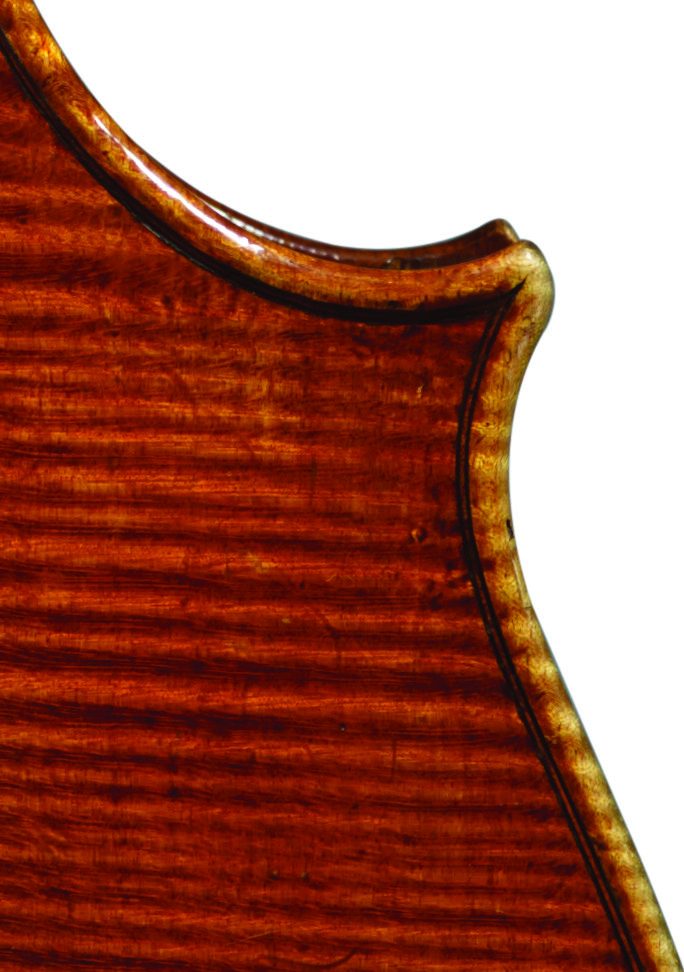
Photo © John Milnes
The scroll
The magnificent scroll is a perfect showcase for Stradivari’s skill. It must be acknowledged that he took the basis for his design from the Amati family. The Cremonese scroll design had been all but perfected by Andrea Amati in the mid-sixteenth century, with its congruence of lines, curves, and concentric spirals. It is a design which defeated the geometrical and tool-handling skills of many imitators, and remains an icon for the violin family; an unmistakable identifying feature. But Stradivari took the form further in drawing out the strength as well as the decorative whimsicality of the volute. A Stradivari scroll has a bolder eye and a heavier chamfer, both of which rely on a very steady and confident hand to execute without the form collapsing into clumsy heavy-handedness. The fluting is clearly defined, with a steep radius at the edges throwing the broad chamfer into relief, while the flute itself and the undercutting of the spiral is not excessively deep or weakened in effect. The shoulders of the pegbox are set firmly at right angles to the plane of the neck, and every line flowing from them is beautifully resolved, from any angle of view. The head is large – appropriate to the larger scale of the early cello models.
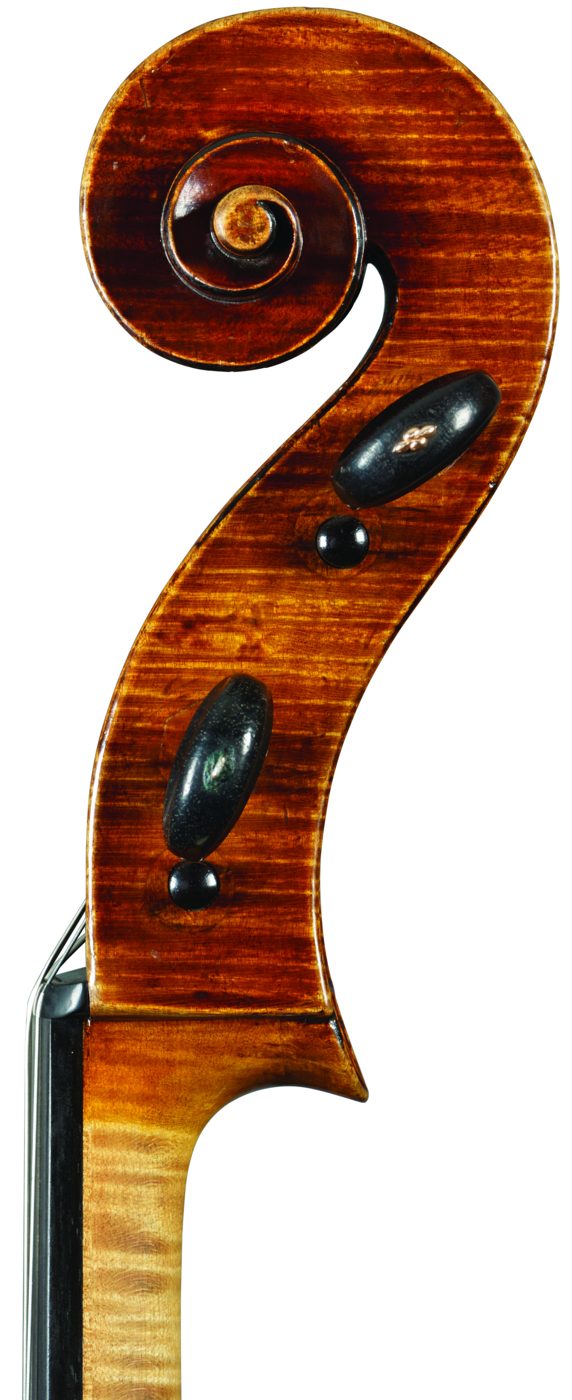
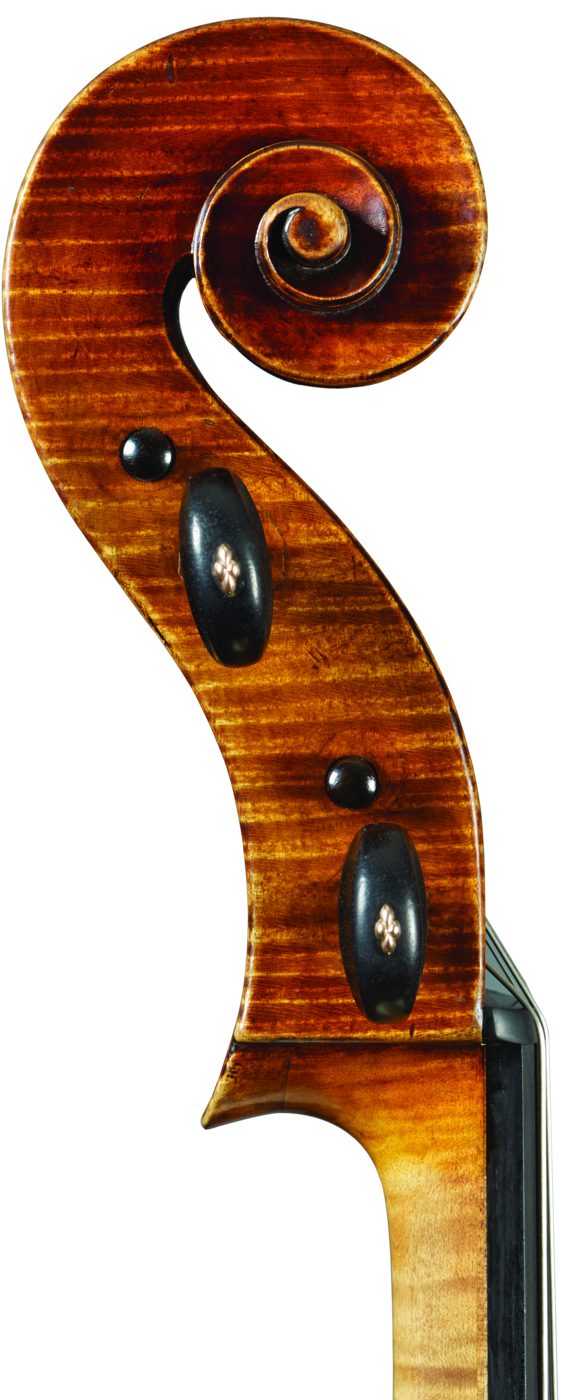
Photo © Jan Röhrmann / JRPublications.com
Although Stradivari kept the size of the volute itself consistent, he reduced the pegbox in later ‘B’ and ‘B piccola’ designs, much as he did with his tenor and contralto violas. The geometrical proportions of the spiral were reproduced for each model, but the pegbox was scaled down. The scroll and pegbox of the ‘Archinto’ conform closely to the neck and scroll pattern ‘A’ in the Stradivari collection (MS no. 308, Museo del Violino, Cremona) marked misura di violoncello ordinari. A further modification of the scroll design between this and the later ‘B’ form is observable in the semi-circular chin at the back of the pegbox. Here it is of the characteristic large diameter, measuring 34.7mm across. This was reduced by some 5mm in designs for the ‘B’ form after 1709.
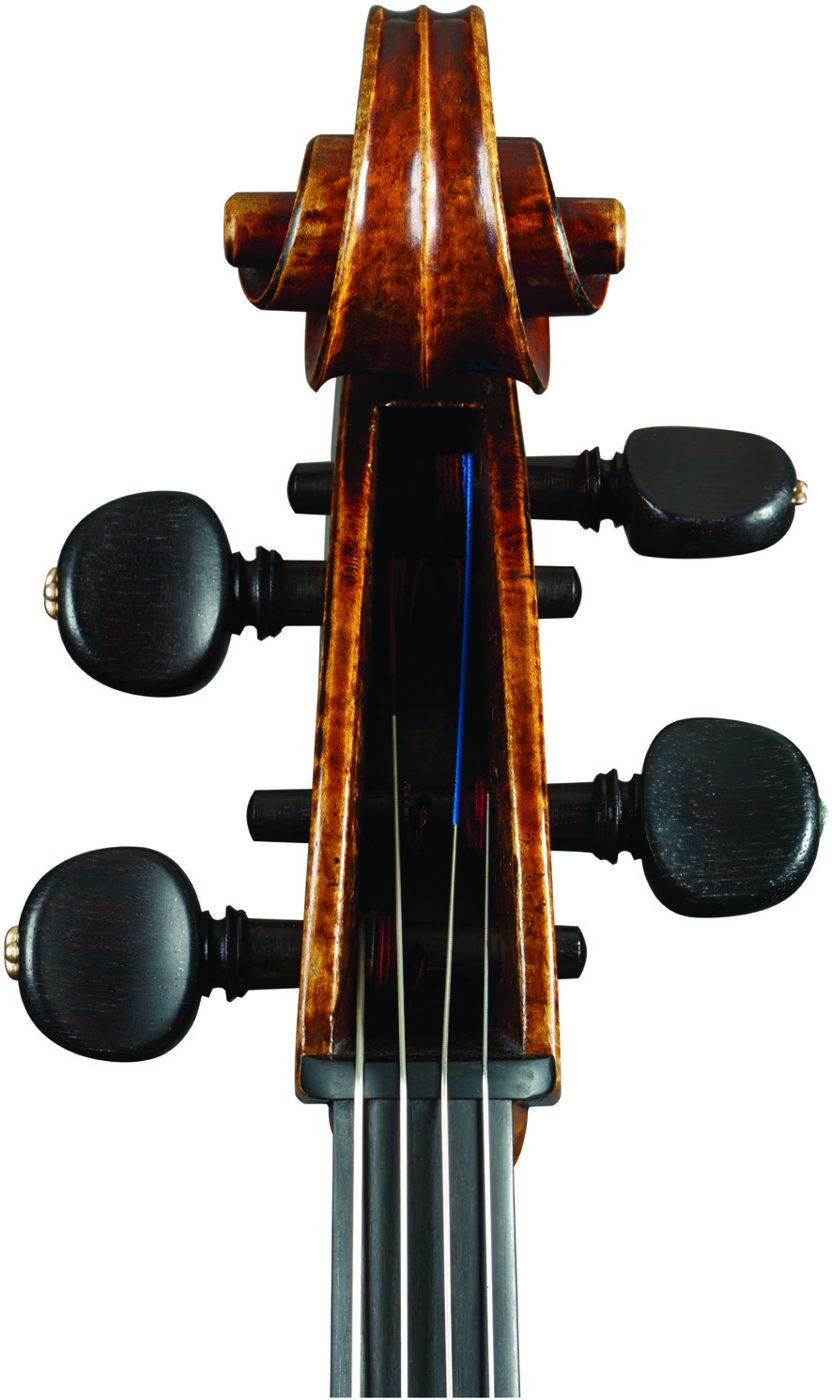
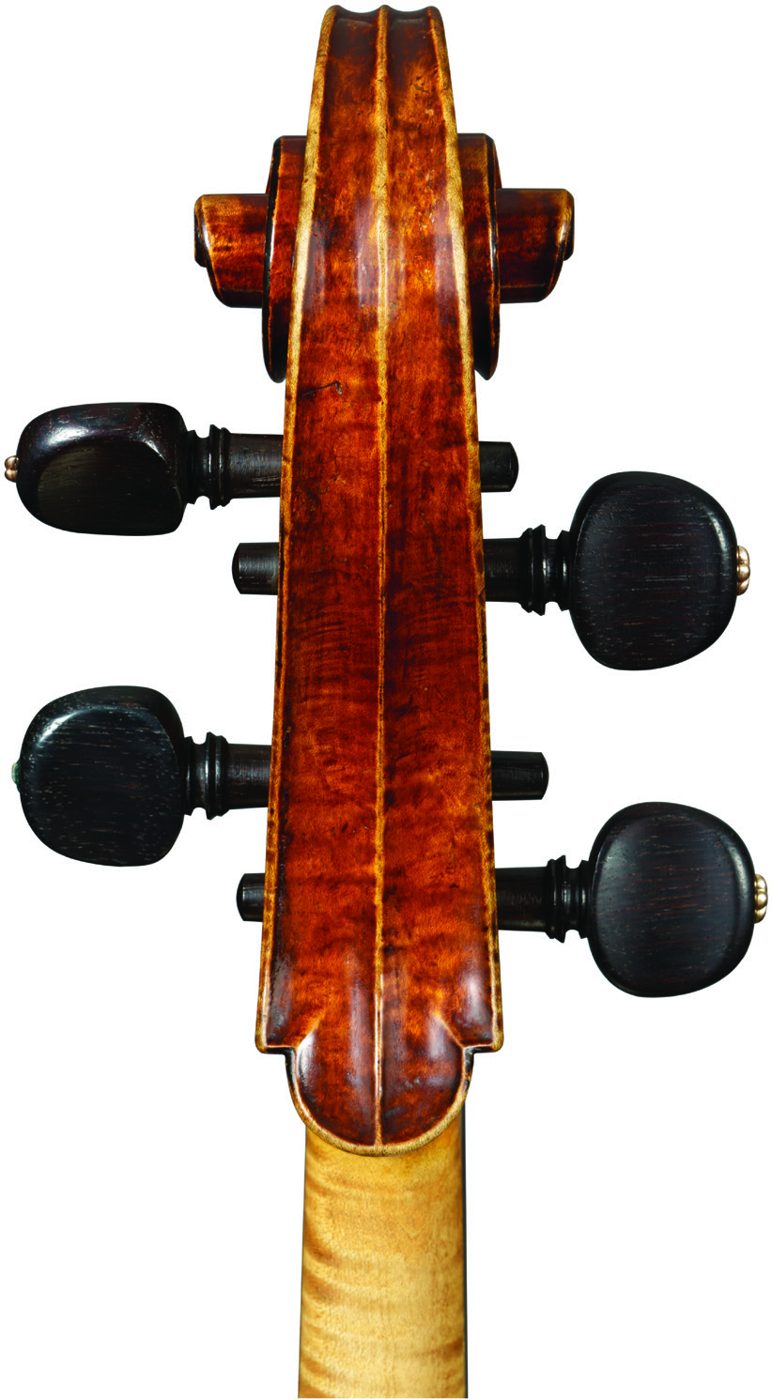
Photo © Jan Röhrmann / JRPublications.com
The blackened chamfers of the scroll are notable. Usually associated with instruments of the Golden Period, 1689 is possibly the earliest appearance of this feature which is distinctive to Stradivari and widely seen as his own innovation. It is certainly a feature of all the instruments of the ‘Medici’ quartet of 1690. There has in the past been speculation that the black band was a sign of Antonio’s mourning for his wife Francesca, but since she died in 1698, this is unlikely to be the case. What it does show is Stradivari’s bravura craftsmanship; application of the scroll chamfer is very demanding, and a great deal of the overall success of the scroll form depends on a clear and regular cut line. To emphasise this with a contrasting ribbon of black is a clear demonstration of Stradivari’s artistic and technical confidence.
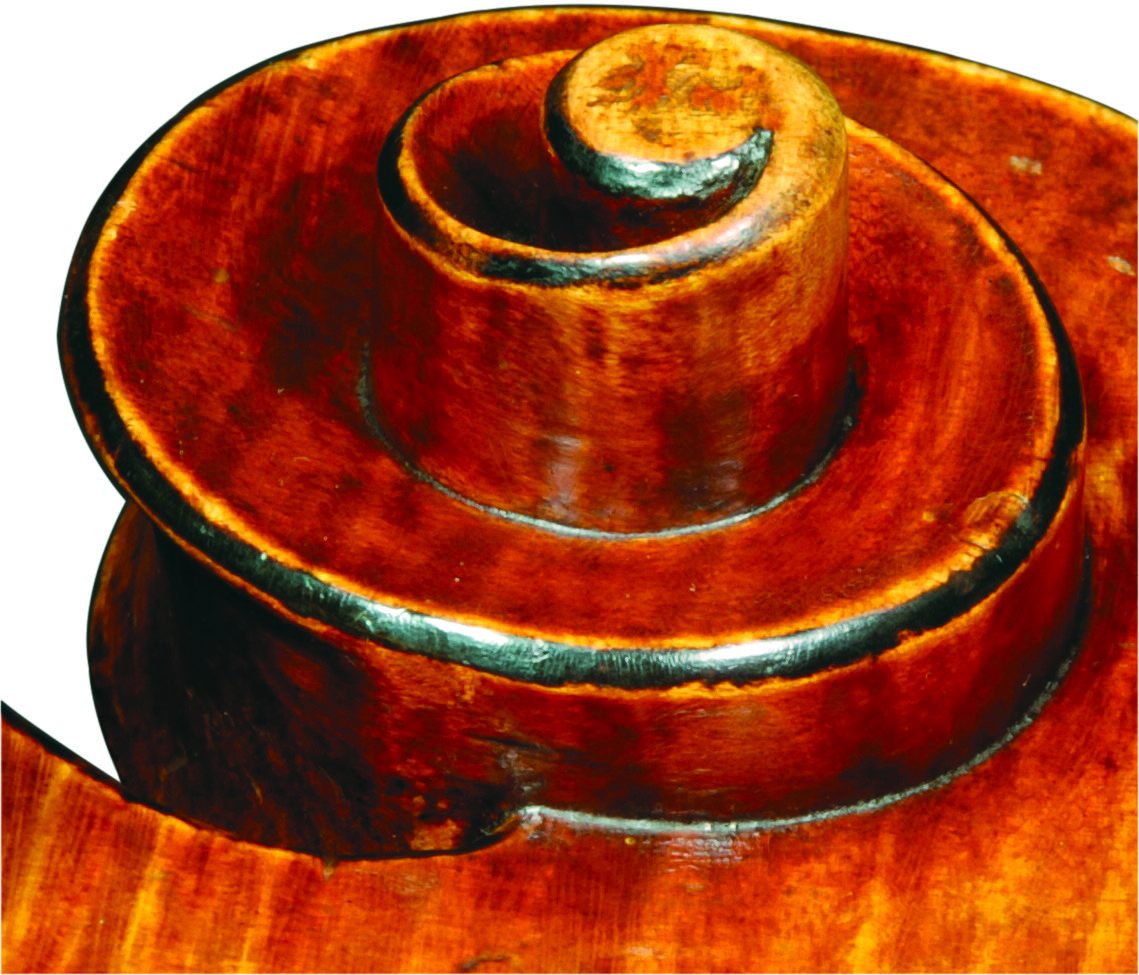
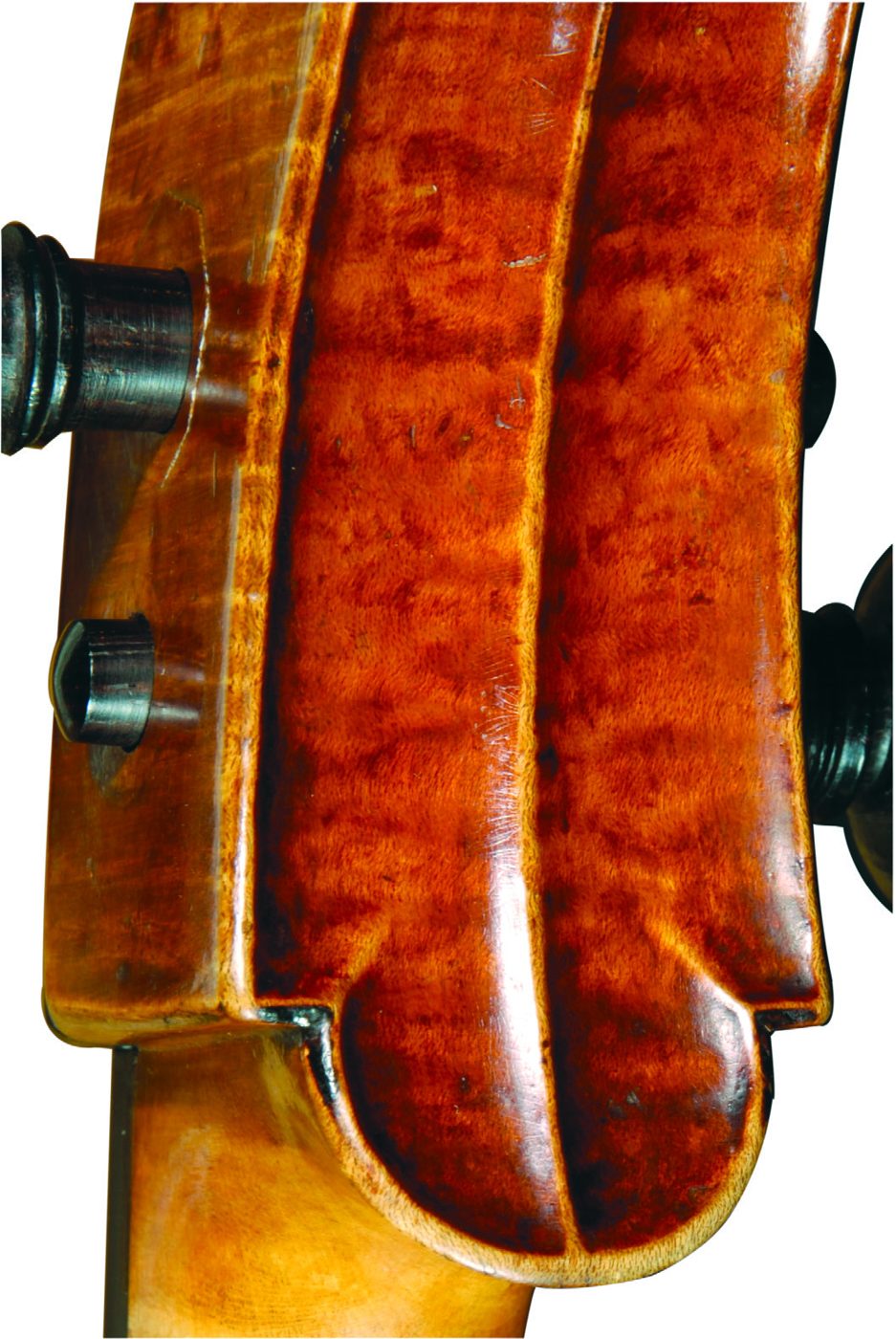
Photo © John Milnes
Despite the purity of line, the entire scroll is distinctly asymmetrical, with the volute set measurably lower on the bass side. This is almost certainly due to the two sides of the scroll being pricked out separately, and not perfectly aligned. This surprises observers as it seems uncharacteristic of the master, but is most noticeable on the best-preserved instruments where the lines are clear and unworn, as here and on the 1716 ‘Messie’ violin where similar side-to-side asymmetry is noticeable.
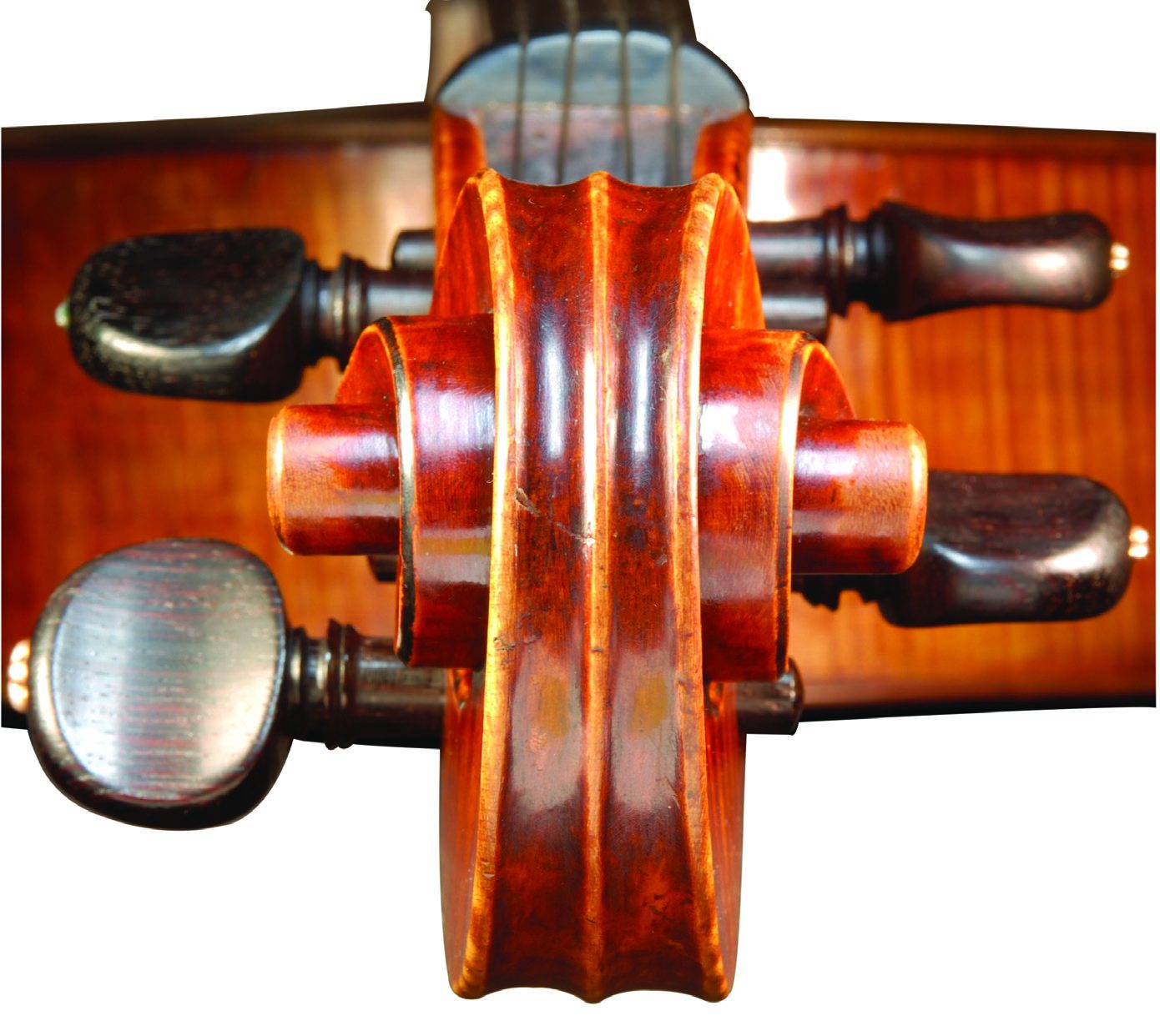
Photo © John Milnes
The varnish
The most striking thing about this cello is perhaps the varnish. Having survived the cutting of back, ribs, and upper edges, and subsequent restorations, there remains an astonishing amount of this glorious coating, an unusually deep iron-red colour for the period. It is laid thickly, with ample texture and the fine subtle gold ground reflecting through and providing sparkling contrast in the few worn areas. As with most Stradivari instruments in places the deep colour is caught in the exposed grain of the undulating flame of the maple, and shows with more intensity than is usual in instruments of this so-called ‘Amatisé’ period prior to 1700. There is evidence of much experimentation in Stradivari’s varnish between 1680 and 1710, and various hues appear, from the pale straw yellow of his earliest work, through dark hazelnut brown tints to the lighter golden orange seen in its purest form in the ‘Medici’ instruments of 1690. By 1710 he had arrived at his most characteristic deep claret-red, but this great cello anticipates that generous flood of colour and richness, and with all the gradual patination of its equally colourful history, it still stands as one of the masterpieces of Antonio Stradivari of Cremona.
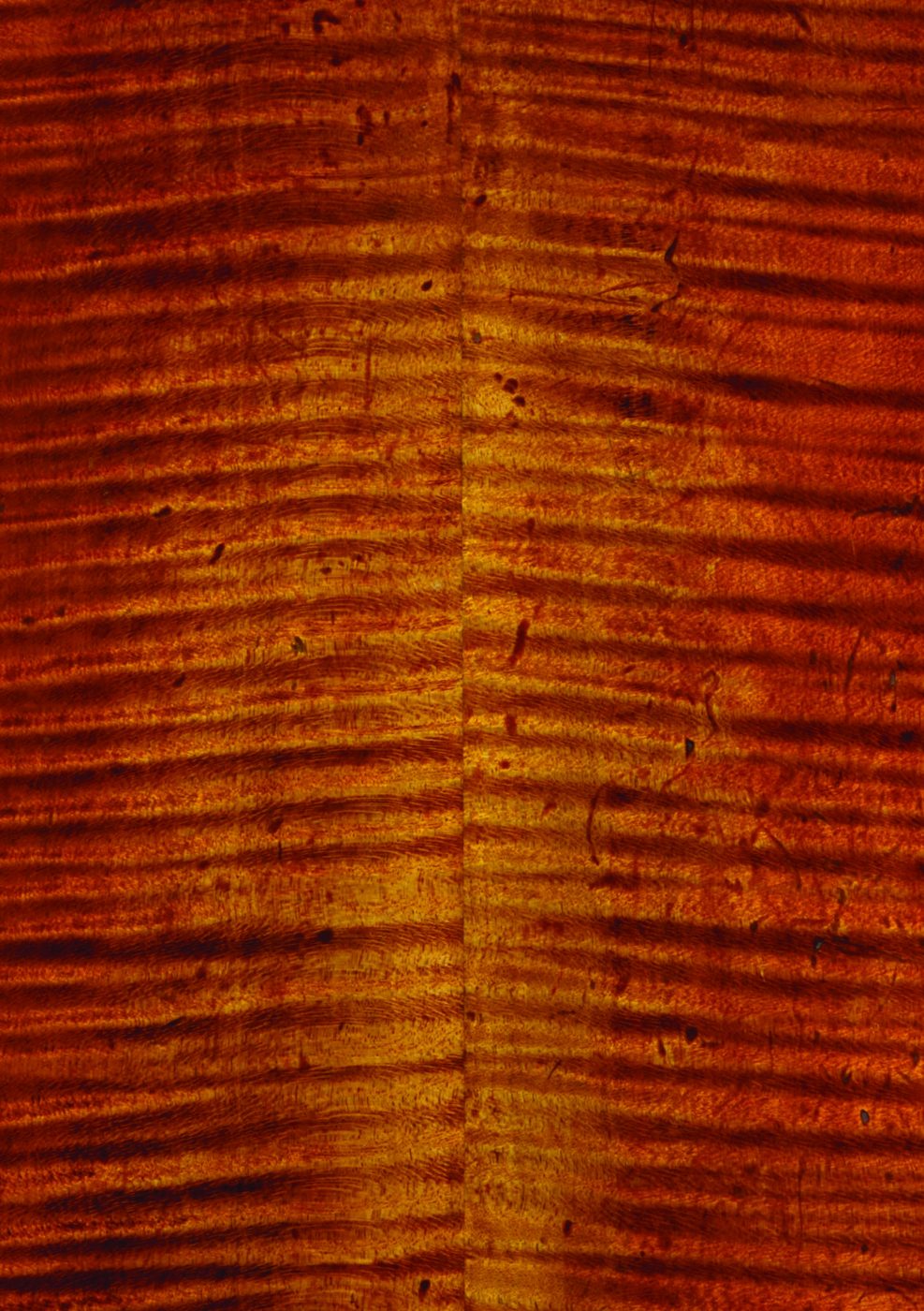
Photo © John Milnes
Table of measurements
Photographs
Studio photographs © Jan Röhrmann / JRPublications.com; detail photographs © John Milnes.