Hugh Wyatt Cooper
Airdrie, Glasgow, 1848–1912
Watchmaker and violin maker. Active in Glasgow from 1893. Stradivari and 1744 ‘Sainton’ Guarneri violin models. Very fine and disciplined workmanship. Used commercial ‘Whitelaw’ oil varnish, which with time has become rather dark, hard, and chippy. — John Dilworth
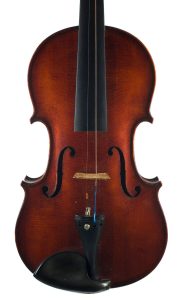
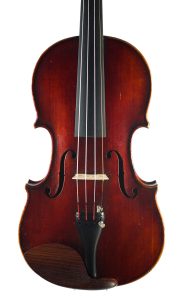
Auction Price History
Highest auction price
6 results
| Type | Details | Auction house | Sold | Price |
|---|---|---|---|---|
| Violin | 35.7 cm Glasgow, 1900 c. | — | November 2011 | £739 |
| Violin | 1904 | — | March 2000 | £402 |
| Violin | 1900 | — | December 1995 | £506 |
| Viola | 41.3 cm 1912 | — | June 1995 | £1,610 |
| Violin | 1898 | — | November 1994 | £1,150 |
| Violin | 1902 | — | October 1990 | £770 |
No results match those filters.
Maker Overview
Life
Hugh Wyatt Cooper (1848-1912) was born on August 30, 1848, in Airdrie, Scotland, and died in 1912 in Glasgow. He was the son of William and Margaret Cooper. Cooper initially worked as a watchmaker and showed an early interest in musical instrument manufacture, constructing a small harmonium at the age of sixteen and later building a two-manual pipe organ with pedals., his first violin was made seven years prior to Morris's writing, and for five years he had been professionally engaged as a violin maker. He was active in Glasgow from 1893.
Characteristics
- Models
- Hugh Wyatt Cooper built instruments based on Stradivari and Guarneri models, specifically the 1744 'Sainton' Guarneri and Joseph (Del Gesu) models. He utilized drawings published by Mr. William C. Honeyman for these models.
- Workmanship
- His workmanship is described by John Dilworth as 'very fine and disciplined' and by William Meredith Morris as 'excellent', demonstrating a 'thorough mastery of the tools of the craft'.
- Materials
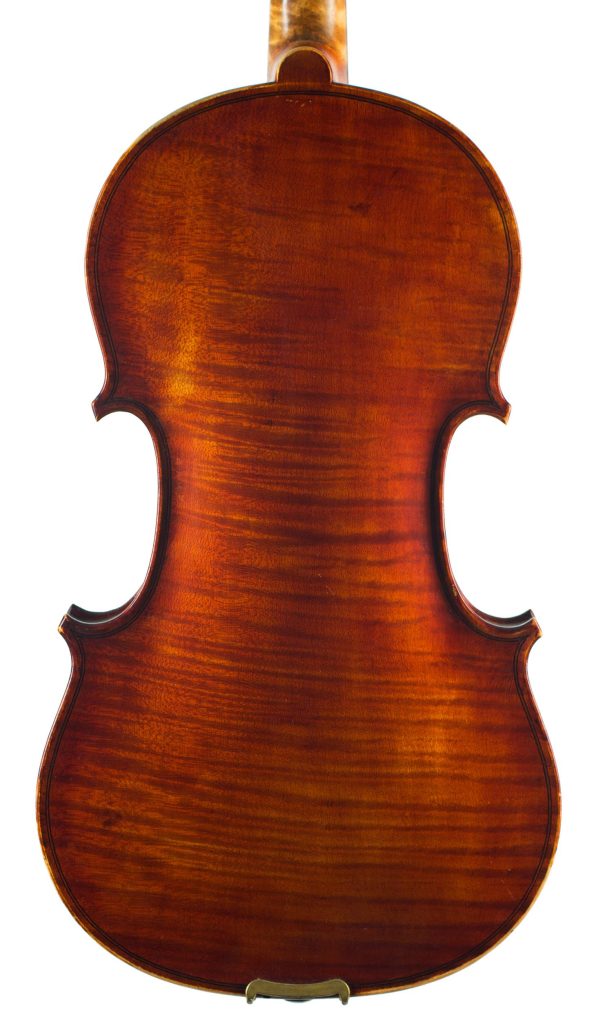
- Cooper used excellent, well-seasoned wood, with a decided preference for close-grained pine. He cut his backs using various methods depending on the wood's nature.
- Varnish
- He employed commercial 'Whitelaw' oil varnish, which William Meredith Morris notes as being light and dark brown, well laid on, and beautifully polished. John Dilworth observes that this varnish has, with time, become rather dark, hard, and chippy.
- Specific Characteristics
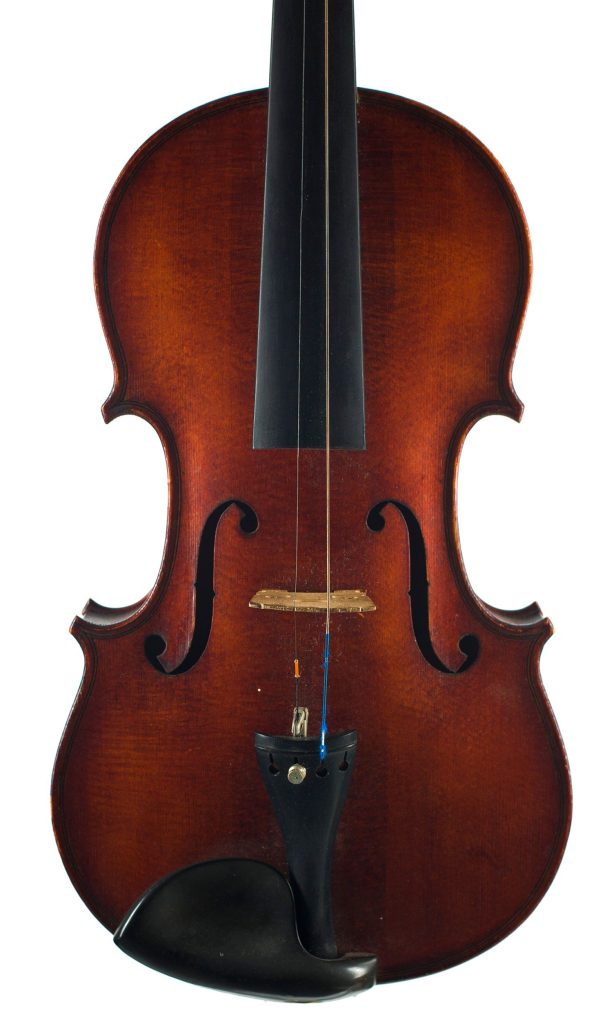
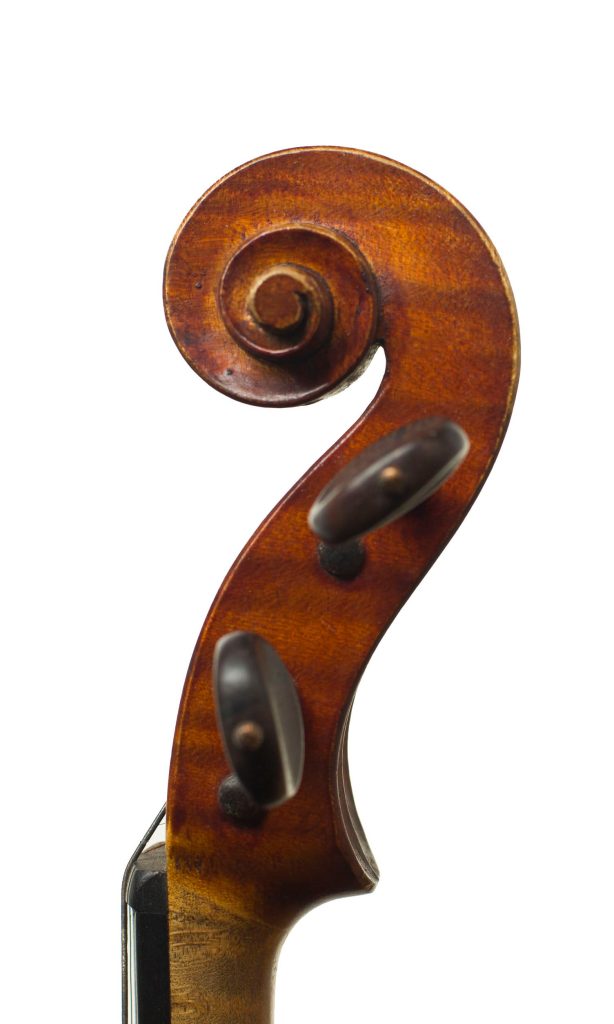
- The scroll is described as being thrown with a firm, florid hand, strictly conventional in detail except that the first turn starts from a point opposite the apex of the volute, leaving the boss very suddenly, resulting in a novel and picturesque effect. The button is feminine, forming exactly three-fourths of a circle and being rather under medium size. The sound-holes are original in outline and position, perceptibly drawn towards the inner bouts near the upper turns, giving the table a sense of solidity and boldness. They are set nearer the edge than was customary with Stradivari, representing a compromise between Stradivari and Bergonzi sound-holes. The margin is one-eighth wide, and the edges are nicely rounded, though not as substantial as typically found in modern British work.
- Output
- Willibald Leo Lütgendorff states he made about 50 new violins, while William Meredith Morris notes he had made fifty-four violins up to the time of his writing.
- Measurements
- For some 'Sainton' copies, the measurements were slightly modified: Length … 14 1/8ins, Width across upper bouts … 6 21/32ins, Width across middle bouts … 4 15/32ins, Width across lower bouts … 8 1/4ins, Length of C's … 3 1/8ins, Length of sound-holes … 3 3/32ins, Depth of ribs at bottom … 1 1/4ins, Depth of ribs at top … 1 3/16ins, Distance between sound-holes at top 1 3/16ins.
- Hugh W Cooper
Maker
75 Dundas Street, Glasgow No.. 19..John Dilworth
Influence and legacy
- Mentorship/Guidance: Hugh Wyatt Cooper constructed his violins on models from drawings published by Mr. William C. Honeyman.
Further Information
- Workshop Location: Hugh Wyatt Cooper's workshop was located at 75 Dundas Street, Glasgow.
- Label: His instruments bear a facsimile label that reads: 'HUGH W. COOPER, Maker, 75, DUNDAS STREET, GLASGOW.'
- Tone: The tone of his instruments is described as firm, bright, and penetrating.
Biographies
The overview above is drawn from the following published accounts. Read them in the original:
John Dilworth+
COOPER, Hugh Wyatt Born 1848 Airdrie, died 1912 Glasgow, Scotland UK. Watchmaker and violin maker. Active in Glasgow from 1893. Stradivari and 1744 ‘Sainton’ Guarneri violin models. Very fine and disciplined workmanship. Used commercial ‘Whitelaw’ oil varnish, which with time has become rather dark, hard, and chippy. Hugh W Cooper / Maker / 75 Dundas Street, Glasgow No.. 19.. [Rattray]
William Meredith Morris+
He was born Aug. 30, 1848, and is the son of William and Margaret Cooper. He manifested a great interest in the manufacture of musical instruments at an early age. At sixteen he made a small harmonium, and some years later he built a two manual pipe organ with pedals.
His first violin was made seven years ago, and for the last five years he has been engaged professionally as a violin-maker.
He has made, up to the present, fifty-four violins, on the models of the ” Sainton,”” Strad, and Joseph (Del Gesu), from drawings published by Mr. William C. Honeyman.
In some instruments the measurements of the ” Sainton ” copies are slightly modified, as will be seen from the following figures : —
Length … 14 1/8ins,Width across upper bouts . . . 6 21/32ins,Width across middle bouts . . . 4 15/32ins,Width across lower bouts … 8 1/4ins,Length of C’s … 3 1/8ins,Length of sound-holes … 3 3/32ins,Depth of ribs at bottom … 1 1/4ins,Depth of ribs at top … 1 3/16ins,Distance between sound-holes at top 1 3/16ins,
Mr. Cooper uses excellent wood, which is well-seasoned. He cuts his back on the various methods, according to the nature of the wood. He has a decided preference for close-grained pine. In some instances the ” reed ” is of uniform distribution, and about one thirty-second in width.
The workmanship is excellent. The scroll is thrown with a firm, florid hand. In matter of detail, it is strictly-conventional, except that the first turn starts from a point opposite the apex of the volute and leaves the boss very suddenly. In effect, the scroll is novel and picturesque.
The button is feminine — perhaps a trifle too much so, because everything else about the Cooper fiddle is of a masculine conception. It forms exactly three-fourths of a circle, and is rather under medium size. The sound-holes are original in outline and position. Near the upper turns they are perceptibly drawn towards the inner bouts. This gives the portion of the table between them a sense of solidity and boldness. They are set nearer the edge than was customary with Strad. Their position is a sort of a compromise between the Strad and the Bergonzi sound-holes.
The purfling is evidence of Mr. Cooper’s thorough mastery of the tools of the craft. And here, in the fine finish of matters of detail, one is reminded that the maker is a trained jeweller and watchmaker, as well as a violin-maker.
The margin is one-eighth wide, and the edges nicely rounded. The latter are not so substantial as is usually the case in modern British work. A strong, rounded edge is the sign-manual of the modern British school, and when one occasionally comes across another method, the result is all the more noticeable. The varnish is Whitelaw’s light, and dark brown, well laid on, and beautifully polished. The tone is firm, bright, and penetrating. Facsimile label : —
HUGH W. COOPER, Maker,75, DUMAS STREET, GLASGOW.
Willibald Leo Lütgendorff+
Er baut nach Stradivari und Guarneri und verwendet Whitelaw’s Geigenlack. Er hat etwa 50 neue Geigen gemacht.
Sell your instrument with Amati
Get started by uploading photos of your instrument for our experts to review.
Sell your instrument with Amati
Get started by uploading photos of your instrument for our experts to review.