Thomas (I) Dodd
London, 1764–1834
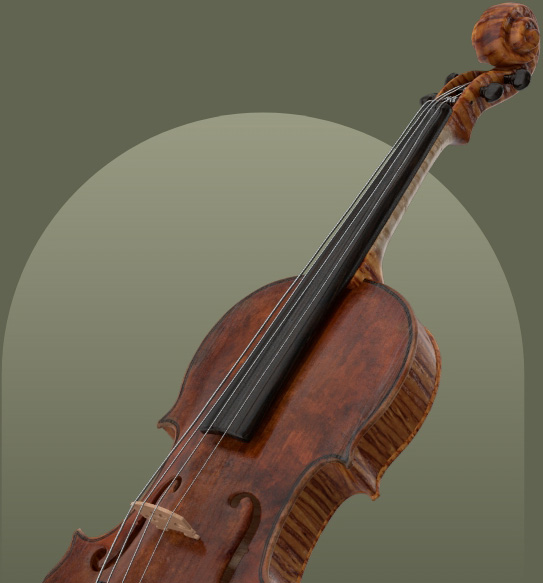
Thomas (I) Dodd (1764-1834) was a prominent English bow, violin, violoncello, harp, and piano maker and dealer, born in London.Initially a bow maker, he expanded his business to include violin making and dealing, employing skilled craftsmen such as B. S. Fendt and J. F. Lott, who produced many of the instruments bearing his label.Dodd was known for his entrepreneurial spirit, extensive trade in Italian instruments, and his highly regarded, secretly formulated 'Cremona Oil Varnish'.His workshop produced highly desirable instruments, particularly cellos and basses, often crafted as copies of famous Italian masters like Stradivari, Amati, and Stainer.
Auction Price History
Highest auction price
38 results
| Type | Details | Auction house | Sold | Price |
|---|---|---|---|---|
| Violin | Unlabelled Lot 47 | — | March 2026 | £7,200est. Estimate £ 6,000-8,000 |
| Violin Bow | Nickel mounted, stick signed Dodd, Lille Lot 2080 | Vichy | June 2025 | £1,898est. € 1.000-1.500 |
| Cello | Labelled T. Dodd, Violin, Violoncello & Bow Maker, New Street, Covent Garden. Lot 82 | Ingles & H. | March 2024 | £54,000est. £ 28,000-35,000 |
| Cello | Bearing the original label T. Dodd, Violin ..., shoulders of gamba form, original neck and boxwood pegs Lot 139 | Brompton’s | March 2021 | £12,000est. £ 10,000-12,000 |
| Cello | Labelled T. Dodd, violin violoncello, & bow maker, New Street, Covent Garden, original neck Lot 36 | Tarisio | March 2020 | £42,000est. £ 30,000-50,000 |
| Cello | Unlabelled Lot 97 | Ingles & Hayday | March 2015 | £31,200est. £ 18,000-25,000 |
| Cello | Bearing the original label T. Dodd, Violin, Violoncello and Bow Maker, New Street, Covent Garden Lot 158 | Brompton’s | March 2015 | £8,400est. £ 6,000-10,000 |
| Violin | After Nicolò Amati, faintly labelled T. Dodd ... Covent Garden Lot 61 | Brompton’s | June 2013 | £10,800est. £ 10,000-15,000 |
| Violin | Lot 14 | Bonhams | May 2013 | £2,500 |
| Cello | Labelled T. Dodd, New Street, Covent Garden Lot 71 | Tarisio | May 2013 | £30,824est. $ 50,000-80,000 |
| Small Cello | Labelled T. Dodd Violin, violoncello, and bow maker, new Steet Covent Garden 1820 Lot 76 | Ingles & Hayday | May 2013 | £33,600est. £ 10,000-15,000 |
| Violin | Violin, 1795 c. Lot 14 | Bonhams | May 2013 | £2,500est. £ 2,000-3,000 |
| Small Cello | branded beneath the button Dodd London 1799 Lot 161 | Brompton’s | October 2012 | £27,600est. £ 25,000-35,000 |
| Viola | After Stradivari, unlabelled, in an exceptional state of preservation Lot 103 | Brompton’s | March 2012 | £34,800est. £ 20,000-30,000 |
| Violin | 35.7 cm London, Early 19thC. Attributed to | — | May 2011 | £4,006 |
| Cello | 73.4 cm London, 1795 c. | — | October 2010 | £50,775 |
| Violin | 35.7 cm London, 1800 c. | — | October 2009 | £6,329 |
| Cello | London, 1800 c. | — | March 2004 | £9,000 |
| Cello | 1800 c. | — | September 2003 | £6,228 |
| Cello | 1810 | — | June 2002 | £37,950 |
| Cello | 1800 | — | November 2001 | £14,000 |
| Violin Bow | S/E 62 g. | — | October 2000 | £1,611 |
| Cello | 1800 c. | — | July 1997 | £18,000 |
| Violin | 1800 c. | — | June 1996 | £8,280 |
| Cello | 18-- | — | December 1994 | £16,955 |
| Cello | 1800 | — | November 1994 | £10,350 |
| Violin | 1820 c. | — | November 1991 | £4,400 |
| Violin | 1810 c. | — | April 1991 | £11,000 |
| Cello | 18-- | — | March 1990 | £9,500 |
| Violin | 1800 c. | — | November 1988 | £6,600 |
| Cello | 1790 c. | — | June 1988 | £4,400 |
| Viola | 40.8 cm 1800 c. | — | November 1987 | £1,870 |
| Cello | 1800 c. | — | April 1984 | £14,300 |
| Violin | 1800 | — | September 1983 | £484 |
| Cello | 1790 c. | — | December 1982 | £1,540 |
| Cello | 1800 c. | — | November 1982 | £5,060 |
| Violin | 1800 c. | — | July 1981 | £1,430 |
| Cello | 1800 c. | — | May 1980 | £5,060 |
No results match those filters.
Maker Overview
Life
Thomas (I) Dodd (1764-1834) was born in 1764 and died in 1834 in London, UK, the son of Edward Dodd (I).
, he is said to have apprenticed first in a brewery, but was active as a bow maker from 1784 with an address in Blue Bell Alley, Southwark.
By 1794, he was working from 11 New Street, Covent Garden, premises previously established as a music shop by William Campbell, where his business expanded to violin making and dealing.
In 1798, he employed B. S. Fendt and J. F. Lott, and in 1809, he moved to a larger building at 92 St Martin's Lane, at which point Fendt left to work for Betts.
In 1813, he acquired further property at 3 Berners Street, which became his sole business address in 1825.
By this time, he had expanded into harp and piano dealing, with Dodd providing his own innovations to the mechanism of the newly developed pedal harp, which was extremely fashionable.
William Meredith Morris notes that Dodd's genius 'brooded over them whilst fashioning these magnificent instruments, like a mighty spirit brooding over the formless void'.
In 1838, the name of the business was changed to 'Dodd & Son', but it quickly declined.
Undoubtedly a craftsman himself, he was more of an entrepreneur in his later career, selling the work of the fine craftsmen in his employ.
He traded extensively in Italian instruments, some of which were tampered with, altered, and combined to produce more profitable sales.
He advertised a 'Cremona Oil Varnish' on his instruments, which included copies of Stradivari, Amati, and Stainer, recognizable for the fine, if rather thin, textured orange varnish.
, his father, Thomas Dodd, a musical instrument dealer of St. Martin's Lane, possessed excellent judgment regarding work and makers, which enabled his son to profit considerably during his early years whilst working with Fendt and Lott.
Characteristics
- Craftsmanship
- Thomas (I) Dodd's output was wide and varied, notable particularly for the very fine cellos and basses which compare with and even exceed the best French work of the period.
- Instrument Production
- Small violas made under his name are also very desirable.
- Varnishing
- He was exceptionally skilled in varnishing, treating it as his secret, and would personally varnish instruments 'in the white' (unvarnished) himself.
- Varnish Characteristics
- His varnish is described as excellent, quite equal to that of Benjamin Banks, ranging in color from golden amber to deep golden red, and being rich and transparent.
- Varnish Composition
- William Meredith Morris states that the ingredients were only the well-known principal gums of the day, mixed in better proportions and more correctly than was customary then, contrasting favorably with the hard, inelastic spirit varnishes of the early 19th century.
- Models
- Instruments bearing Dodd's label are of various models, including Stradivari, Guarneri, Amati, and Stainer, and are of uniform excellence regarding workmanship and tone.
- Specific Example
- William Meredith Morris describes trying one of his violins on the grand Strad pattern, with a beautiful scroll and sound-holes that were a compromise between those of Strad and Joseph, featuring a slab-cut maple back with a broad 'flame'; its tone was firm, free, and mellow.
- Bow Sales
- He sold bows made by his own family and those of James Tubbs.
- T.Dodd
Violin, Violoncello
& Bow Maker
New Street
Covent Garden. Dodd, Maker
92 St. Martin’s Lane.
Perfect copies of Stradivarius,
Amati, Stainer, &cJohn Dilworth
Influence and legacy
- Family Background: Thomas (I) Dodd was the son of Edward Dodd (I).
- Early Apprenticeship: He apprenticed first in a brewery before becoming active as a bow maker.
- Mentorship:, his father, Thomas Dodd, a musical instrument dealer, possessed excellent judgment that allowed his son to profit considerably during his early years working with Fendt and Lott.
- Employees: He employed highly skilled workmen, notably B. S. Fendt and J. F. Lott, who made most of the instruments bearing his label.
- Business Continuity: The business name was changed to 'Dodd & Son' in 1838 but quickly declined.
- Reputation and Value: gained such a reputation in his lifetime that he was able to command from £40 to £50 for a violoncello.
- Auction Prices: William Meredith Morris notes that Dodd's cellos were sold at public auction for £32, £34 10s., and £35 as recently as 1897, indicating their sustained value.
- Market Value: His violins, when in fine condition, realize proportionately high prices.
Further Information
- Workshop Locations: He worked from Blue Bell Alley, Southwark (from 1784); 11 New Street, Covent Garden (by 1794); 92 St Martin's Lane (1809); and 3 Berners Street (1813, becoming his sole business address in 1825).
- Labels: His labels include: 'T.Dodd / Violin, Violoncello / & Bow Maker / New Street / Covent Garden' and 'Dodd, Maker / 92 St. Martin's Lane. / Perfect copies of Stradivarius, / Amati, Stainer, &c.'
- Varnish Claim: A label mentioned by Cecie Stainer specifically alludes to his varnish: 'Dodd, maker, 92, St Martin's Lane. Perfect copies of Stradiuarius, Amati, Stainer, &c. Note.—The only possessor of the recipe for preparing the original Cremona oil varnish Instruments improved and repaired.'
Biographies
The overview above is drawn from the following published accounts. Read them in the original:
John Dilworth+
DODD, Thomas (I) Born 1764, died 1834 London UK. Bow maker. Son of Edward Dodd (I), above. Said to have apprenticed first in a brewery, but active as a bow maker from 1784 with an address in Blue Bell Alley, Southwark. By 1794 he was working from 11 New Street, Covent Garden, premises previously established as a music shop by William Campbell. Here Dodd’s business expanded to violin making and dealing. In 1798 he employed B. S. Fendt and J. F. Lott, and in 1809 moved to a larger building at 92 St Martin’s Lane, at which point Fendt left to work for Betts. In 1813 he acquired further property at 3 Berners Street, which became his sole business address in 1825. By this time he had expanded into harp and piano dealing (the newly developed pedal harp being extremely fashionable) and Dodd provided his own innovations to the mechanism. In 1838 the name of the business was changed to ‘Dodd & Son’, but quickly declined. Dodd’s output is wide and varied. Undoubtedly a craftsman himself, he was more of an entrepreneur in his later career, selling the work of the fine craftsmen in his employ, notable particularly for the very fine cellos and basses which compare with and even exceed the best French work of the period. Small violas made under his name are also very desirable He sold bows made by his own family and those of James Tubbs. He traded extensively in Italian instruments, some of which were tampered with: altered and combined to produce more profitable sales. He advertised a ‘Cremona Oil Varnish’ on his instruments, which included copies of Stradivari, Amati, and Stainer, recognisable for the fine, if rather thin, textured orange varnish. T.Dodd / Violin, Violoncello / & Bow Maker / New Street / Covent Garden. Dodd, Maker / 92 St. Martin’s Lane. / Perfect copies of Stradivarius, / Amati, Stainer, &c.
George Hart+
Son of Thomas Dodd, musical instrument dealer, of St. Martin’s Lane. The father, although not a maker of Violins, possessed excellent judgment, both as regards work and makers, which enabled his son to profit considerably during his early years whilst working with Fendt and Lott.
William Meredith Morris+
He was the son of Edward Dodd of Sheffield, previously noticed. He did not make many instruments himself, but he employed very clever workmen to do so for him. He was first of all a bow-maker in Blue Bell Alley, Mint Street, Southwark, and in 1798 he became a violin-maker and dealer, opening a shop in New Street, Covent Garden, and moving in 1809 to St. Martin’s Lane, Charing Cross. Later on he added another sail to his craft, and became a harp and pianoforte maker. The instruments which bear his label are mostly the work of John Lott and Bernard Fendt, two excellent workmen. Dodd’s genius, however, brooded over them whilst fashioning these magnificent instruments, like a mighty spirit brooding over the formless void. He was an enthusiastic connoisseur, with a heart and mind steeped in Italian lore, and he brought his knowledge to bear upon the work at every turn. It is impossible to say how much of the work beyond the varnishing was his own — probably no more than the determining of the thicknesses. With two such clever men to carry out his instructions, there was no occasion for him to handle the gouge and chisel. When the instruments were ready ” in the white,” Dodd overhauled them carefully and then varnished them with his own hands. His varnish is excellent — quite equal to that of Benjamin Banks — and he applied it most skilfully. It ranges in colour from golden amber to deep golden red, and it is rich and transparent. He regarded it as a secret, and was very careful to let no one see him mix or apply it. The ingredients, however, were only the well-known principal gums of the day, mixed in better proportions and more correctly than was customary then. Indeed, most of the varnishes of the early part of last century were hard, inelastic spirit varnishes, and Dodd’s oil mixture showed to great advantage by contrast with them. Instruments bearing Dodd’s label are of various models : Stradivari, Guarneri, Amati, Stainer, &c., and are of uniform excellence as regards workmanship and tone. I tried one of them quite recently, which was on the grand Strad pattern, with a beautiful scroll, but with sound-holes which were a sort of compromise between those of Strad and Joseph, The back was cut on the slab, and the maple had a broad ” flame,” which seemed to curl and burn up the varnish with every movement, as if fanned by a breeze inside the instrument. The tone was not so large as one would naturally expect from the dimensions of the violin, but it was firm, free, and mellow.
Dodd has been severely criticised by some writers respecting his rather exuberant confidence in his varnish. But what maker is there that has not overweening confidence in his own varnish ? I have not yet come across one maker, be he a first- or fifth-rate, who does not think his varnish the best. Dodd had the courage of his convictions, and that is about all that he is guilty of. Hart says that Dodd gained such reputation in his lifetime that he was able to command from £40 to £50 for a violoncello. This is remarkable, and the more so when we consider that they do not fetch much more in our own times. Dodd ‘cellos have been knocked down at public auction for £32, £34 10s., and £35 as recently as 1897. His violins, when in fine condition, realise proportionately high prices. Labels : —
(I) T. DODD, VIOLIN, VIOLONCELLO. AND BOW MAKER, NEW STREET, COVENT GARDEN
(2) DODD, MAKER, 92, ST. MARTIN’S LANE
Perfect copies of Stradivari, Amati, Stainer, &c. Note, — The only possessor of the recipe for preparing the original Cremona oil varnish.
Cecie Stainer+
Third son of Edward Dodd. Was first a brewer, then a violin bow maker in the Blue Bell Alley, Mint Street, Southwark (1786-89); and, about 1798, became a dealer in and maker of violins in New Street, Covent Garden, moving to St. Martin’s Lane, Charing Cross (1809); and finally became a harp and piano maker in Berners Street.
Very good violins were made in his workshop; but although they were labelled ” T Dodd, violin, violoncello, and bow maker. New Street, Covent Garden,” they were almost without exception the work of Bernhard Fendt and John Lott, two extremely clever workmen, who were for a long time in his employ.
Dodd himself had a thorough knowledge of Italian instruments, and showed great skill in his varnish, the secret of which he always kept, for he would take the unvarnished instruments—” in the white” to use the technical term — and varnish them himself unaided. His label especially alludes to this varnish : ” Dodd, maker, 92, St Martin’s Lane. Perfect copies of Stradiuarius, Amati, Stainer, &c. Note.—The only possessor of the recipe for preparing the original Cremona oil varnish Instruments improved and repaired.” His violoncellos are worth £40 to £50.
Willibald Leo Lütgendorff+
Dritter Sohn von Edw. D. War zuerst Brauer, dann 1786—1789 Bogenmacher,
von 1798 Geigenmacher und -Händler und zuletzt noch Harfen- und
Klavierbauer. Seinen Ruhm als Geigenmacher verdankt er hauptsächlich seinen
Gehilfen Bernhard Fendt und John Lott; er verstand sich aber ausserordentlich
gut auf das Lackiren, das er als sein Geheimniss behandelte. Er war ausserdem
ein gewiegter Kenner italienischer Instrumente. Seine Geigen und Violoncelli
werden schon jetzt mit 1000 M. bezahlt.
Sell your instrument with Amati
Get started by uploading photos of your instrument for our experts to review.
Sell your instrument with Amati
Get started by uploading photos of your instrument for our experts to review.