James Omond
Stromness, 1833–1907
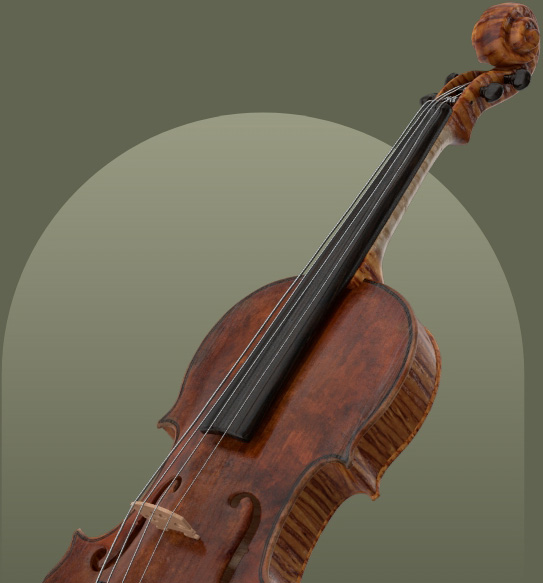
James Omond (1833-1907) was a Scottish violin maker from the Orkney Islands. Initially a schoolmaster, he transitioned to violin making around 1872 or 1873 after health issues forced his retirement. Drawing on his family's carpentry background, he quickly developed skill, advised by figures like Horace Petherick and George Hart. He crafted violins, violas, and cellos, primarily based on Stradivari and Guarneri models, known for his careful varnish application and distinctive sound-hole design. While William Meredith Morris praised his "perfect" workmanship, John Dilworth described it as "Fairly crude." He received numerous awards, including a bronze medal at the Glasgow National Trades and Industrial Exhibition, and was considered a leading Scottish maker of his time.
Request an expert valuation or learn how our global auctions achieve the highest prices for your instruments.
Instruments
Auction Price History
Highest auction price
11 results
| Type | Details | Auction house | Sold | Price |
|---|---|---|---|---|
| Violin | Varnish of a light reddish brown colour Lot 2419 | Gardiner Houlgate | June 2023 | £414est. £ 300-500 |
| Violin | Labelled Made by James Omond, Stromness Scotland, A.D. 1895, Strad. Model Lot 45 | Brompton’s | March 2020 | £900est. £ 700-1,000 |
| Violin | A violin by James Omond, Scotland, 1895 Lot 119 | Amati | January 2020 | £632est. £ 500-1,000 |
| Violin | Two-piece back of fine curl, ribs of broad curl, table of fine grain, varnish of a golden brown colour Lot 40 | Gardiner Houlgate | November 2015 | £720est. £ 600-800 |
| Violin | Labelled Made by James Omond, Stromness, Scotland, A.D. 1895, Strad Pattern Lot 281 | Tarisio | July 2012 | £2,104est. $ 1,000-1,500 |
| Violin | 36.2 cm Stromness, 1895 | — | May 2007 | £922 |
| Violin | 1906 | — | November 2000 | £563 |
| Violin | 1908 | — | October 1995 | £805 |
| Violin | 1902 | — | November 1993 | £506 |
| Cello | 1898 | — | March 1993 | £1,540 |
| Violin | 1902 | — | February 1993 | £374 |
No results match those filters.
Maker Overview
Life
James Omond (1833-1907) was born on June 23, 1833, in Halkness, South Walls, Orkney, Scotland. He received his elementary education at a public school in his native place and at the parish school. At the age of sixteen, he took charge of a small school on an adjacent island. Recognizing the need for further education, he attended the Stromness school intermittently and also studied navigation, eventually completing his training at the Edinburgh Training College. Following his college career, he was appointed master of the society school in the parish of Stromness, where his health deteriorated, leading to an eight-year loss of his voice. After the passing of the Education Act of 1872, he was invalided on a limited pension. Sources contain conflicting information regarding the exact start of his violin making career; he was active from 1872, while William Meredith Morris states he devoted his time and energies to violin making since 1873. Prior to violin making, he briefly engaged in watchmaking and repairing, which he found uncongenial. Omond's family had a background in carpentry and boat-building, with his father, uncle, and brother being general carpenters, which provided him with familiarity in handling wood and edged tools. He married Jane Groat of South Walls in 1860 and had four sons (James, John, William, and David) and one daughter (Jane). He died in 1907 in Kirbuster, Orkney, Scotland.
Characteristics
- Models
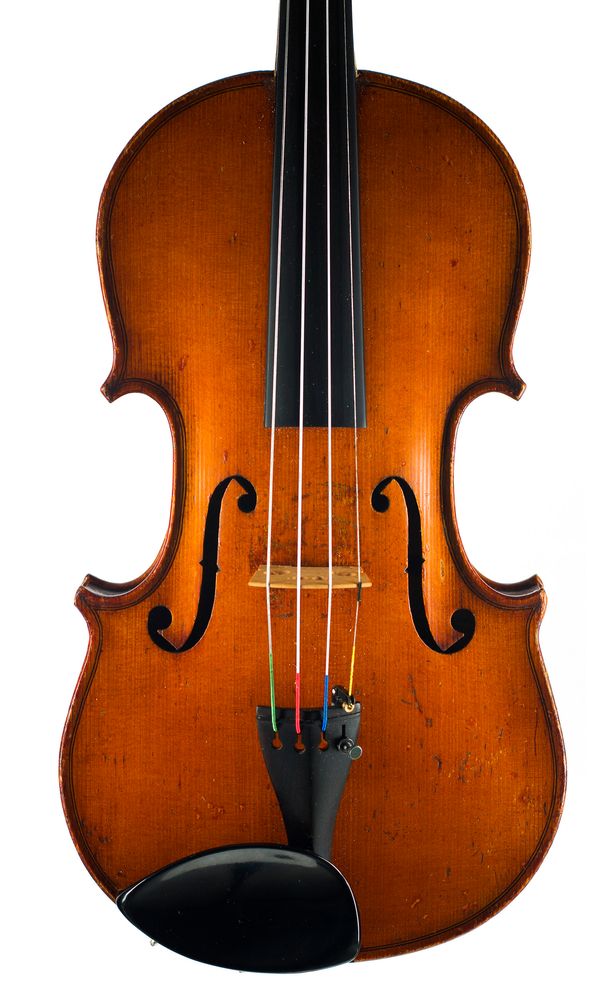
- James Omond primarily adhered to the models of Stradivari and Guarneri, and occasionally Gio. Paolo. He was not a slavish copyist, often modifying the lines and vaulting of the masters, and sometimes developing the scroll and sound-holes in an original manner.
- Measurements
- The outline measurements of his instruments were nearly always identical to those of the archetypes, but the thickness of the plates was uniformly greater.
- Sound-holes
- A noticeable feature of his sound-holes was the acuteness of the inner angle of the lower wing, which was often developed into a fine point, somewhat in the manner of Otto.
- Wood
- His wood was described as excellent in quality and often fine in appearance, with a moderately wide grain in the pine and a well-defined, straight "reed" indicating healthy growth. He was adept at acquiring good pieces of sycamore or pine despite his remote location.
- Varnish
- Omond never attempted to make his own varnish, instead using commercially available varnishes such as Caffyn's, or other good quality varnishes, mostly in amber or orange hues. He applied it very carefully, first preparing the wood surface to a fine polish, then applying a thin film of pale varnish with a clean rag to prevent soaking, followed by thin coats of colored varnish, allowing ample drying time between applications.
- Workmanship
- Sources contain conflicting information regarding his workmanship. William Meredith Morris described his workmanship and finish as "perfect," with the "greatest care being manifest even down to the minutest detail." In contrast, John Dilworth characterized his work as "Fairly crude."
- Output
- Sources contain conflicting information regarding the total number of instruments he produced. Willibald Leo Lütgendorff and William Meredith Morris state he made over 200 instruments, including violins, violas, and violoncellos. John Dilworth, however, reports that he made over 300 violins, violas, and cellos.
- Pricing
- He sold his instruments at a moderate figure, ranging from £3 to £10.
- James Omond
Stromness. Orkney.
Scotland 1893John Dilworth
Influence and legacy
- Mentorship: He was advised by notable authorities such as Horace Petherick and George Hart, with William Meredith Morris noting that he received "very valuable hints" from Mr. Petherick, to whom he was "largely indebted for his success."
- Background: His upbringing as the son of a carpenter provided him with a familiar understanding of wood processing and the handling of edged tools, which minimized technical difficulties in his new profession. He also possessed prior knowledge of wood carving.
- Awards: James Omond received several distinctions, including Diplomas of merit at the Central International Exhibition, Melbourne (1888); the International Exhibition, Edinburgh (1890); the East End Industrial Exhibition, Glasgow (1891); and the National Trades and Industrial Exhibition, Glasgow (1895-96), where he was awarded a bronze medal, the highest honor given. He also earned a silver medal and £5 at the Fisheries Exhibition, Edinburgh, for an essay on fishing-boats and a model of an improved boat.
- Reputation: He was highly esteemed by English violinists and was considered by William Meredith Morris to be "in the front rank of modern Scottish makers," whose work was "downright honest, unsophisticated, solid British work."
- Biography: His biography was published by William Meredith Morris in The Strad No. 122 in 1900.
Further Information
- Workshop Locations: He worked as a professional maker at Kirbuster, Stromness, in the Orkneys. John Dilworth notes he was active from 1872 in Stromness in Orkney and later moved to Kirbuster.
- Label: His instruments bear a manuscript label that reads: "James Omond / Stromness. Orkney. / Scotland 1893".
- Personal Practice: He played the fiddle well, though playing was secondary to making and was taken up relatively late in life primarily for the purpose of testing his own work.
Biographies
The overview above is drawn from the following published accounts. Read them in the original:
John Dilworth+
OMOND, James Born 1833 Stromness, died 1907 Kirbuster, Orkney Scotland UK. Clock maker and amateur luthier. Active from 1872 in Stromness in Orkney; later moved to Kirbuster. Over 300 violins, violas, and cellos on Stradivari and Guarneri models. Fairly crude work. Manuscript label: James Omond / Stromness. Orkney. / Scotland 1893
William Meredith Morris+
He was born in Halkness, South Walls, June 23, 1833, and works as a professional maker at Kirbuster, Stromness, in the Orkneys. He received elementary education at a public school in his native place, and also at the parish school. At the age of sixteen he took charge of a small school in an adjacent island containing only seven families. Soon after he took charge of this school he found that he needed to be better equipped for the profession of a schoolmaster, so he attended the Stromness school at intervals, and also learned navigation. He finally equipped himself for his work at the Edinburgh Training College. After his college career he was appointed master of the society school in the parish of Stromness, where, through pressure of work, his health gave way. He completely lost his voice for eight years, and, after the passing of the Education Act of 1872, he was invalided on a limited pension. He now had to turn his attention to some other means of livelihood, and he picked up watchmaking and repairing. This was not congenial to his tastes, so he decided upon violin-making. To this art he has devoted his time and energies since the year 1873. That he wisely deliberated in his final choice of a calling is amply borne out by the success of his gouge. He succeeded almost from the first, for the mechanical part of the work gave him little or no difficulty. He had learned how to handle edged-tools at the workshop of his father, uncle, and brother, who were general carpenters and boat-builders, and he set about diligently to obtain knowledge of the science of violin construction by corresponding with such authorities as Mr. Horace Petherick, Mr. George Hart, Sec. From the former of these gentlemen he got very valuable hints, and to him he is largely indebted for his success.
Mr. Omond was married in 1860 to Jane Groat, of South Walls. He has four sons and one daughter — James, John, Jane, William, and David. He is a genial old gentleman, with a face beaming with Orcadian humour and a heart affectionately attached to the kirk of his forefathers.
He spends his time in the company of the great Antony and Joseph, with an occasional excursion to the lonely, weeping Gio. Paolo. He is not a slavish copyist ; on the other hand, he sometimes modifies the lines and vaulting of the masters, and he not infrequently develops the scroll and sound-holes in a manner quite original. The outline measurements are nearly always identical with those of the archetypes, but the thickness of the plates is uniformly greater.
One noticeable feature about the sound-holes is the acuteness of the inner angle of the lower wing. This, in a large majority of cases, is developed into a fine point, somewhat after the manner of Otto.
Up to the present he has made two hundred instruments, including violins, violas, and violoncellos.
The workmanship and finish are perfect — the greatest care being manifest even down to the minutest detail.
Mr. Omond’s wood is excellent in quality and very often fine in appearance. The grain of the pine is moderately wide, and the ” reed ” well-defined and straight, showing a healthy growth. He often manages, in spite of his living at so great a distance from a good market, to hit upon a very good piece of sycamore or pine, which he knows well how to use.
Mr. Omond has never attempted to make his own varnish. Like a certain king we read of in olden times, he is blest with a sense which is rare amongst men, viz., the sense to know what cannot, as well as what can, be done. He has no knowledge of chemistry, and knows that it would be a waste of time for him to dabble at varnish-making. He uses Caffyn’s, or some other good varnish, mostly in amber or orange. He lays it on very carefully, first preparing the surface of the wood to a fine polish, and then with a clean rag dipped in the pale varnish he puts on the first coat in a thin film, so as to prevent it soaking into the wood. The coloured varnish is also put on thin, and each coat allowed good time to dry.
Omond’s instruments have gained the following awards : — Diplomas of merit at Central International Exhibition, Melbourne, 1888; International Exhibition, Edinburgh, 1890 ; East End Industrial Exhibition, Glasgow, 1891 ; National Trades and Industrial Exhibition, Glasgow, 1895-96. With the last he got a bronze medal, the highest award they gave.
It may also be mentioned that at the Fisheries Exhibition, Edinburgh, he obtained a silver medal and £5 for an essay on fishing-boats and a model of an improved boat.
He sells his instruments at a very moderate figure, ranging from £3 to £10. He plays well on the fiddle, though with him playing is subsidiary to making, and only taken up comparatively late in life for the purpose of testing his work.
Mr. Omond, it may fairly be asserted, is in the front rank of modern Scottish makers. His work is downright honest, unsophisticated, solid British work, and his devotion to the art will materially help to sustain the fame of Scottish violin-makers.
Willibald Leo Lütgendorff+
Er entstammte einer alten Zimmermannsfamilie, studirte in Edinburgh
und war bis 1872 Schulmeister in seiner Heimath. In den Ruhestand versetzt,
beschäftigte er sich zuerst mit der Uhrmacherei und wandte sich dann
dem Geigenbau zu. Als Zimmermannssohn war ihm die Verarbeitung des
Holzes etwas Vertrautes, auch hatte er bereits Kenntnisse im Bildschnitzen, so
dass ihm die technische Seite seines neuen Berufs zunächst nur geringe
Schwierigkeiten bereitete. Berathen von Horace Petherik, George Hart u. A.
machte er rasche Fortschritte und brachte es als Geigenmacher bald zu besonderer
Geschicklichkeit. Er halt sich vornehmlich an die Stradivari- und
Guarneri-Modelle, ohne sie gerade zu copiren. Bis jetzt hat er über 200 Violinen
und Violoncelli gemacht. Sein Holz ist sehr schön, sein Bernsteinlack vorzüglich
aufgetragen und der Ton edel und kräftig. Er besitzt viele Auszeichnungen und wird von englischen Geigern sehr geschätzt. Seine Biographie veröffentlichte Meredith- Morris in »The Strad« No. 122 (1900).
Sell your instrument with Amati
Get started by uploading photos of your instrument for our experts to review.
Sell your instrument with Amati
Get started by uploading photos of your instrument for our experts to review.