Benjamin (I) Banks
Salisbury, 1727–1795
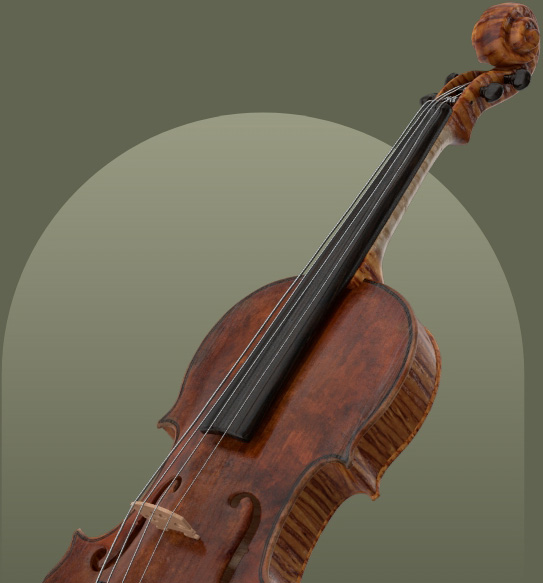
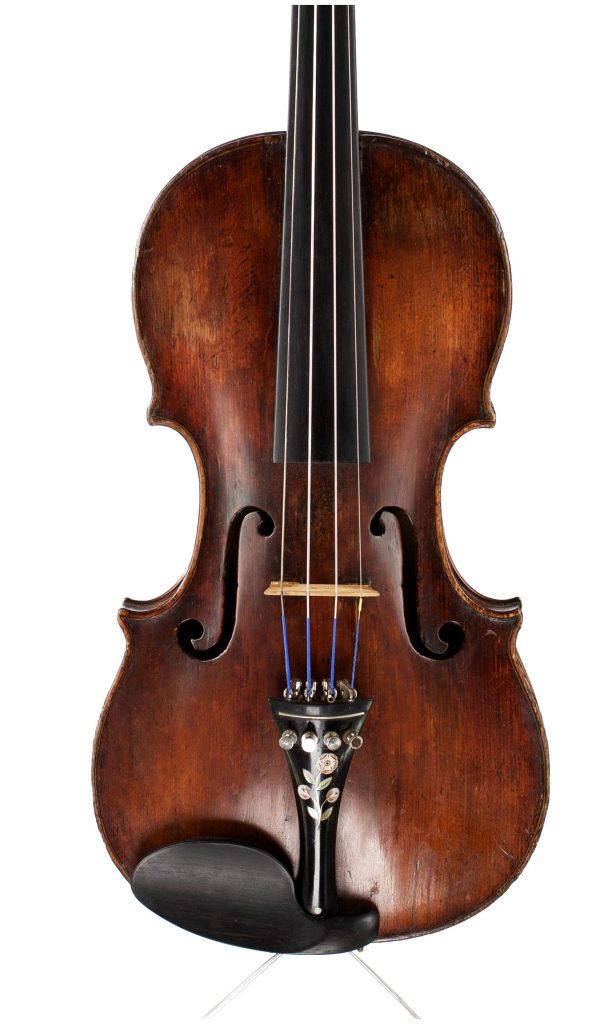
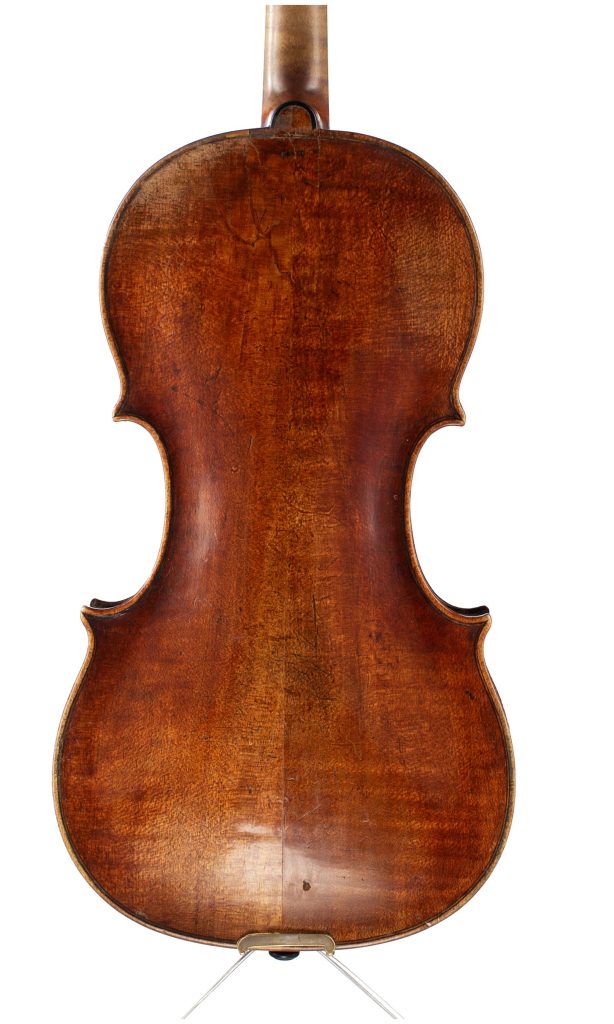
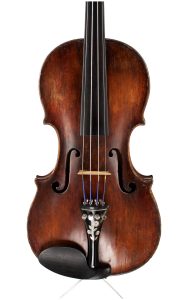
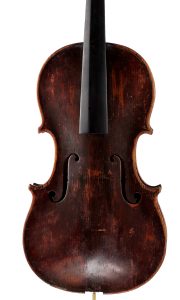
Benjamin (I) Banks (1727-1795) was a significant English luthier based in Salisbury, known for his pivotal role in shifting English violin making from the Stainer model to the Cremonese tradition, particularly that of Amati. He operated his workshop in Catherine Street, Salisbury, from 1747 until his death. Initially focusing on keyboard instruments, he later produced highly sophisticated violins, violas, and especially sought-after cellos. His instruments are characterized by fine workmanship and a rich, transparent varnish, often in deep red-brown or golden-orange hues. Banks collaborated with Longman & Broderip, supplying them with instruments, some of which were branded with the London firm's name. His work is identifiable by various internal and external brandings and printed labels.
Request an expert valuation or learn how our global auctions achieve the highest prices for your instruments.
Auction Price History
Highest auction price
61 results
| Type | Details | Auction house | Sold | Price |
|---|---|---|---|---|
| Viola | Labelled Benjamin Banks, Salisbury 1791, branded to the lower block B. Banks Sarum. Lot 26 | Tarisio | September 2025 | £10,302est. € 10.000-15.000 |
| Violin | Labelled Benjamin Banks, Salisbury, Fecit 1781, branded Banks, table probably by G.A. Chanot Lot 83 | Ingles & H. | March 2025 | £3,360est. £ 3,000-5,000 |
| Small Cello | Bearing the maker's label and signature to the back Lot 110 | Vichy | November 2023 | £36,760est. € 30.000-40.000 |
| Violin | Rosenberg collection, unlabelled Lot 190 | Ingles & Hayday | June 2023 | £10,200est. £ 3,500-5,000 |
| Cello | Labelled Benjamin Banks, Salisbury, Fecit. 1786, two further labels on the centre bout ribs Lot 90 | Ingles & Hayday | March 2022 | £22,800est. £ 15,000-20,000 |
| Violin | Labelled Benjamin Banks Sarum, Fecit. 1776 Lot 144 | Tarisio | November 2021 | £8,894est. $ 8,000-12,000 |
| Small Cello | Labelled Made by Benj Banks, Catherine-Street, Salisbury, 1779, inscribed to the block Benj Banks, 1779 Lot 2 | Tarisio | July 2020 | £44,250est. £ 40,000-60,000 |
| Violin | Literature: Albert Cooper, Benjamin Banks, pp. 71-72; inscribed Banks on the bottom block, branded Lot 4 | Ingles & Hayday | March 2019 | £7,200est. £ 7,000-10,000 |
| Violin | Labelled Benjamin Banks, Salisbury, Fecit 1781, branded Banks below the button Lot 125 | Ingles & Hayday | March 2019 | £3,000est. £ 3,000-5,000 |
| Cello | Lot 122 | Brompton's | June 2018 | £38,400 |
| Cello | Labelled Sanctus Seraphin ..., in a very fine state of preservation Lot 122 | Brompton’s | June 2018 | £38,400est. £ 30,000-50,000 |
| Violin | Bearing the original label Made by Benj. Banks, Catherine Street, Salisbury 1779 Lot 138 | Brompton’s | June 2017 | £7,200est. £ 6,000-8,000 |
| Violin | Labelled: Benjamin Banks, Sarum ... Lot 33 | Brompton’s | June 2016 | £7,200est. £ 6,000-10,000 |
| Small Cello | Possibly later scroll Lot 146 | Brompton’s | March 2016 | £45,600est. £ 40,000-60,000 |
| Violin | Labelled Benjamin Banks ..., branded to the inside back D.B. Doyle ... Lot 113 | Tarisio | February 2016 | £6,777est. $ 10,000-15,000 |
| Small Cello | Labelled Benjamin Banks, Salisbury 1790 Lot 20 | Tarisio | November 2015 | £47,200est. £ 40,000-60,000 |
| Violin | Illustrated in Benjamin Banks by Albert Cooper, pp. 61-64; labelled Made by Benj. Banks, Catherine ... Lot 2 | Ingles & Hayday | November 2015 | £5,400est. £ 5,000-7,000 |
| Violin | Labelled Benjamin Banks, Salisbury fecit. 1787, blocks initialled in ink BB Lot 411 | Brompton’s | June 2015 | £11,400est. £ 10,000-15,000 |
| Viola | Bearing an original label dated 1793, original neck and fingerboard, very fine state of preservation Lot 124 | Brompton’s | October 2014 | £20,400est. £ 7,000-10,000 |
| Cello | Labelled Benjamin Banks fecit Salisbury, further labelled Benjamin Banks Lot 135 | Brompton’s | March 2014 | £78,000est. £ 50,000-80,000 |
| Violin | Labelled Made by Benj. Banks ..., of an aged red amber brown colour Lot 32 | Bonhams | October 2013 | £9,375est. £ 6,000-8,000 |
| Violin | Branded Longman & Broderip N° 26 Cheapside & N° 16 Haymarket London on the back Lot 1 | Sotheby's | October 2012 | £6,875est. £ 3,000-5,000 |
| Small Cello | Bearing the maker's original label Lot 78 | Skinners | April 2012 | £20,543est. $ 18,000-22,000 |
| Viola | 39.7 cm Salisbury, 1775 c. | — | May 2011 | £4,261 |
| Violin | 35.3 cm Salisbury, 1775 c. | — | May 2011 | £12,073 |
| Violin | 35.7 cm 1779 (restorations) | — | March 2011 | £4,800 |
| Violin | 35.6 cm Salisbury, 1768 | — | October 2009 | £8,703 |
| Violin | 35.6 cm Attributed to | — | February 2009 | £4,085 |
| Violin | 35.4 cm Attributed to | — | December 2008 | £1,514 |
| Violin | 35.4 cm Salisbury, 1779, with Literature | — | March 2008 | £4,375 |
| Violin | 35.4 cm Salisbury, 1780 c., with Literature | — | March 2008 | £5,625 |
| Viola | 40.0 cm 1780 c. | — | March 2008 | £8,400 |
| Violin | 35.6 cm Salisbury, 1768 | — | April 2007 | £7,278 |
| Cello | 74.3 cm Salisbury, 1775 | — | July 2006 | £5,040 |
| Violin | 35.3 cm Salisbury, 1770 c. Probably by | — | July 2006 | £1,920 |
| Viola | 39.0 cm Salisbury, 1773 c. | — | May 2006 | £2,232 |
| Violin | 35.1 cm Salisbury, 1775 | — | April 2006 | £8,280 |
| Cello | Salisbury, 1774 | — | May 2005 | £21,600 |
| Violin | 1776 | — | June 2002 | £4,906 |
| Violin | 1760 | — | November 2001 | £1,600 |
| Violin | 1772 | — | March 2001 | £6,600 |
| Viola | 1778 | — | November 1999 | £3,800 |
| Violin | 1775 | — | November 1999 | £1,840 |
| Violin | 17-- | — | June 1996 | £6,325 |
| Violin | 1776 | — | March 1994 | £3,910 |
| Cello | 17-- | — | July 1992 | £14,300 |
| Violin | 1760 c. | — | April 1991 | £2,640 |
| Violin | 1779 | — | March 1990 | £1,760 |
| Violin | 1750-75 | — | November 1989 | £4,180 |
| Violin | 1751 | — | September 1989 | £1,210 |
| Cello | 1775 c. | — | November 1988 | £17,600 |
| Violin | 1773 | — | January 1988 | £3,800 |
| Viola | 39.1 cm 1770 c. | — | November 1987 | £5,720 |
| Violin | 1750-75 | — | November 1986 | £2,420 |
| Violin | 1764 | — | September 1986 | £1,760 |
| Cello | 17-- | — | November 1985 | £6,380 |
| Viola | 39.1 cm | — | April 1985 | £1,210 |
| Violin | 17-- | — | November 1983 | £990 |
| Violin | 1755 | — | November 1983 | £407 |
| Violin | 17-- | — | November 1980 | £308 |
| Cello | 1760 c. | — | October 1980 | £6,820 |
No results match those filters.
Maker Overview
Life
Benjamin (I) Banks (1727-1795) was born in 1727, with Cecie Stainer specifying July 14, 1727, and died in 1795, with Stainer noting February 18, 1795. Sources contain conflicting information regarding his early training; John Dilworth states he was apprenticed to his uncle William Hutoft in 1741, while Cecie Stainer identifies him as a pupil of Wamsley in London. Following his apprenticeship, he settled in Salisbury., he remained in occupation of Hutoft's workshop in Catherine Street from Hutoft's death in 1747 until Banks's own demise in 1795. From 1757 until the late 1760s, Banks primarily focused on keyboard instruments. Subsequently, his violins, violas, and cellos began to appear, demonstrating a high level of sophistication informed by the best London practices. He collaborated with the London shop of Longman & Broderip, who sold his violins in London, often stamped with the Longman name, in exchange for keyboard instruments supplied to Banks in Salisbury.
Characteristics
- Workmanship
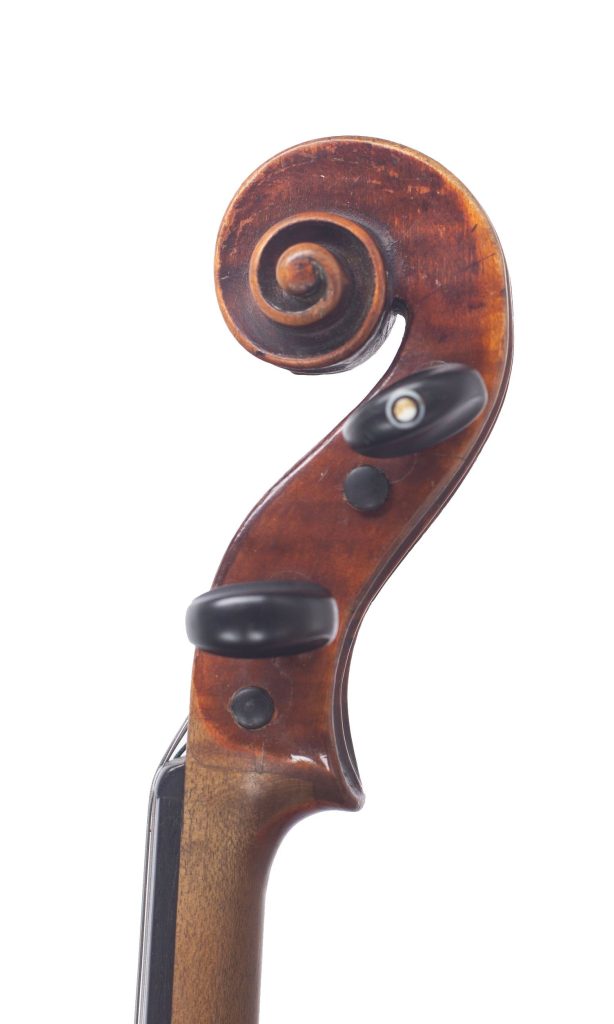
- His work is generally considered very fine and excellently made, though Cecie Stainer notes that the scrolls could sometimes be somewhat clumsy.
- Varnish
- Banks employed a transparent and rich varnish. John Dilworth describes it as deep red brown or golden orange. Cecie Stainer details a brownish-yellow color with a reddish tinge for his best instruments, and a deep red with a blackish tinge for others. Willibald Leo Lütgendorff also notes a beautiful transparency, with brownish-yellow, reddish hues for his best works and a blackish-dark red for ordinary pieces. Stainer, however, observed that the varnish sometimes clogged the fiber of the bellies, giving them a white appearance, or, technically, 'the grain was killed.'
- Models
- Benjamin (I) Banks was one of the first English makers to abandon the previously favored Stainer model, instead taking Amati and the Cremonese makers as his inspiration, copying them very closely.
- Instruments
- He built violins, violas, and violoncellos. His cellos are particularly sought-after and considered his best work, with his large violoncellos being especially prized for their tone. Cecie Stainer notes that smaller cellos, while equally well made, did not possess the same volume of tone. No double-bass of his is known, and it is doubtful if he or any member of his family ever made one.
- Tone
- The tone of his instruments is generally good, particularly that of his violoncellos.
- Inferior Instruments
- For Longman & Broderip, he produced inferior instruments, likely with the assistance of sons or other workmen. These instruments typically followed a longer pattern, more akin to the Stainer model, and featured red varnish.
- Benjamin Banks
Musical Instrument Maker
In Catherine Street, Salisbury, 1779John Dilworth - Made by Benjamin Banks
Catherine Street, Salisbury, 1770John Dilworth - Benjamin Banks
fecit
Catherine Street, Salisbury, 1775John Dilworth - Benjamin Banks
Catherine St., SarumJohn Dilworth
Influence and legacy
- Apprenticeship: Sources provide conflicting accounts of his apprenticeship. John Dilworth states he was apprenticed to his uncle William Hutoft in 1741. Conversely, Cecie Stainer identifies him as a pupil of Wamsley in London.
- Stylistic Influence: He was a pivotal figure in English violin making, being among the first to move away from the prevalent Stainer model and instead adopt the forms and principles of Amati and other Cremonese masters.
- Workshop Practices: It is suggested by Cecie Stainer that he was assisted by his sons or other workmen, particularly in the production of instruments for firms like Longman & Broderip.
- Market Value: Between 1790 and 1794, the average price for his best violoncellos ranged from ten to twelve guineas. In the century following his death, these instruments realized prices as high as £50.
Further Information
- Workshop Location: Benjamin (I) Banks operated his workshop in Catherine Street, Salisbury.
- Branding and Labels: Instruments were branded 'Banks' externally and on the inner linings, and frequently signed on the interior of the front. He also used a brand stamp with 'B. B.' on the back or beneath the button at the end of the neck, and 'B. Banks, Sarum.' Printed labels included variations such as 'Benjamin Banks / Musical Instrument Maker / In Catherine Street, Salisbury, 1779,' 'Made by Benjamin Banks / Catherine Street, Salisbury, 1770,' 'Benjamin Banks / fecit / Catherine Street, Salisbury, 1775,' and 'Benjamin Banks / Catherine St., Sarum.'
- Collaboration: He supplied instruments to the London firm of Longman & Broderip, with some instruments sold by them being stamped with the Longman name.
Biographies
The overview above is drawn from the following published accounts. Read them in the original:
John Dilworth+
BANKS, Benjamin (I) Born 1727, died 1795 Salisbury UK. Apprenticed to his uncle William Hutoft in 1741. As far as is known he remained in occupation of Hutoft’s workshop in Catherine Street from Hutoft’s death in 1747 until Bank’s own demise in 1795. From 1757 until the late 1760s he seemed to be mainly concerned with keyboard instruments, but when his violins, violas, and cellos started to appear they are highly sophisticated and fully informed by the best London practices. Worked with the London shop of Longman & Broderip, who seem to have sold his violins in London (where they were stamped with the Longman name) in return for the keyboard instruments supplied to Banks in Salisbury. His work is mostly very fine and beautifully varnished in deep red brown or golden orange, but like other London makers Banks supplied instruments in various qualities at different prices. He worked on an Amati or Stainer form, and his cellos are particularly sought-after. Instruments branded ‘Banks’ externally and on the inner linings, and frequently signed on the interior of the front. Branded on all parts of interior and beneath back button. Printed labels: Benjamin Banks / Musical Instrument Maker / In Catherine Street, Salisbury, 1779 Made by Benjamin Banks / Catherine Street, Salisbury, 1770 Benjamin Banks / fecit / Catherine Street, Salisbury, 1775 Benjamin Banks / Catherine St., Sarum
William Meredith Morris+
He was the second son of the great Benjamin Banks, and was born on Sept. 13, 1754, at Salisbury. He died in Hawk Street, Liverpool, where he last worked, on Jan. 22, 1820. He worked with his father for about ten years, but in 1780 he moved to 30 Sherrard Street, Golden Square, London. He did not remain long there, probably because he failed to command any attention. Very little of his work is known, and what there is does not entitle the maker to anything beyond a passing notice.
Willibald Leo Lütgendorff+
englischen Meister und wohl der erste, der das bis dahin in England bevorzugte
Stainermodell aufgab und Amati und die Cremoneser zum Vorbild nahm. In
der Arbeit ist er tadellos, sein Lack, von schöner Durchsichtigkeit, zeigt bei
seinen besten Werken braungelbe, ins Röthliche spielende Farbe, bei gewöhnlichen
Arbeiten ist er schwärzlich-dunkelroth. Er baute sowohl Violinen als
Violen und Violoncelli, namentlich die letzteren sind werthvoll, wobei die mit
breitem Modell vorzuziehen sind. Bässe dürfte er nie gebaut haben, auch nicht
für die Verlegerfirma Longman & Broderip, für die er nachweislich gearbeitet
hat. Ausser seinem Zettel verwendete er auch einen Brandstempel mit B. B.
Cecie Stainer+
Son of George and Barbary Banks, b. July 14, 1727 ; d. Feb. 18, 1795. Was one of the first English makers to follow the Amati instead of the Stainer pattern, copying it very closely. Pupil of Wamsley in London, then settled in Salisbury.
His instruments are excellently made, the scrolls perhaps somewhat clumsy; the tone is good, particularly that of the violoncellos. The varnish is transparent and rich; brownish-yellow colour with a reddish tinge is used for his best instruments, deep red with blackish tinge for others. He unfortunately let it clog the fibre of the bellies, which gave them a white appearance, or, technically, “the grain was killed.”
His large violoncellos are best, the smaller ones are equally well made but have not the same amount of tone, the style of finishing is very marked and decided, so that his instruments are easily recognised. A violoncello made after the Stainer model, with yellow brown-red varnish, had a fine tone. The average price of the best violoncellos between 1790 and 1794 was from ten to twelve guineas, but in this century they realised as much as £50.
Inferior instruments were made by him (probably assisted by sons or other workmen) for Longman and Broderip, music publishers, the pattern long, more on the Stainer model, with red varnish. The names of Longman and Broderip are stamped on the back under the button, but there is no writing or label to show who was the maker. No double-bass of his is known, and it is doubtful if he or any member of his family ever made one.
” B. B.” was stamped on the back or beneath the button at the end of the neck, also “B. Banks, Sarum.”
Sell your instrument with Amati
Get started by uploading photos of your instrument for our experts to review.
Sell your instrument with Amati
Get started by uploading photos of your instrument for our experts to review.